Ciri dan struktur
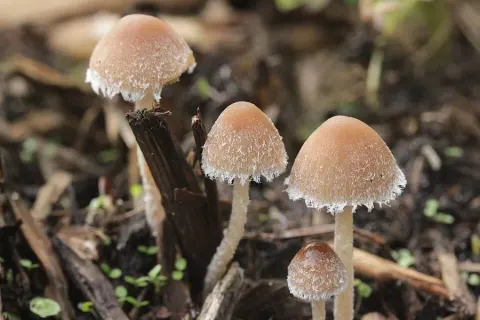
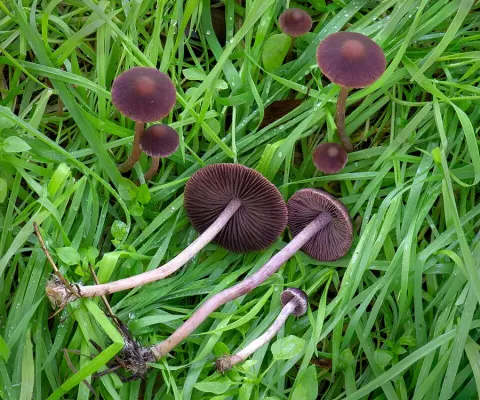
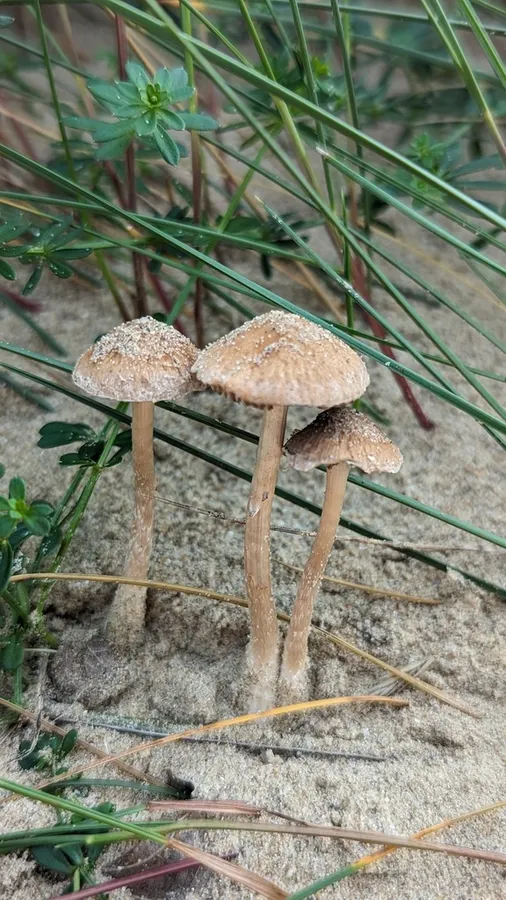
Typically small- to medium-sized, P. ammophila is found growing terrestrial or in small clumps near marram grass. The cap is a light clay-brown or tan when younger and about 1 to 4 cm in diameter. Although the cap is generally smooth, it possesses microscopically tiny hairs and is often coated with sand particles. The tissue is not hygrophanous and therefore does not change colour with moisture loss and absorption, but the mushrooms do darken to a dark brown as they age. Cap shape begins as campanulate or convex, gradually flattening and possibly becoming depressed in shape. The gills of P. ammophila are crowded and attached to the stem usually broadly (adnate) but occasionally narrowly (adnexed). At a very young age they may be a pallid brown, but for most of the lifespan are dark brown, sometimes turning black. The stipe/stem is light grey to pale brown and centrally attached to the cap. The surface is smooth, sometimes with small vertical ridges. It is deeply rooted in the substrate for feeding on the roots of marram grass and for stability in its sand dune habitat. Above ground, its height is typically 3 to 7 cm tall and its diameter is slender, about 2 to 5 mm. There is no ring. The basidia bear four spores. The spores are dark brown and smooth, ellipsoid in shape, and 10 to 11 μm × 6 to 7 μm. There is a large germ pore on each spore. Flesh of the cap and stem is pale, thin, and brittle. Neither the taste nor the odour of the mushroom is distinctive, and it is considered inedible, though not particularly noted as being toxic. Conocybe dunensis is a similar species that is mainly differentiated from P. ammophila by the rust colour of its gills.
Habitat dan peran ekologis
Psathyrella ammophila has a wide but sparse distribution throughout the European continent and in limited coastal locations outside Europe, with records of collection in Algeria, New Zealand, and Canada. It can sometimes be found near the shoreline, inside the littoral zone, but is most often encountered in more stable and established sand dunes and dune slacks inland. The presence of marram grass nearby is a key aspect of its habitat, as it has a symbiotic (specifically, commensal) relationship with the plants, using their decaying roots as food. The mushrooms grow singly or in clumps and are, to some degree, sympatric with the fly Delia albula. The fungivorous larvae of the fly develops in P. ammophila parasitically, though will also attack other fungi.
- Habitat atau konteks temuan
- Informasi belum tersedia pada sumber rilis ini.
- Substrat
- Informasi belum tersedia pada sumber rilis ini.
- Peran atau konteks
- Belum dikategorikan pada rilis ini.
Reproduksi
The basidia bear four spores. The spores are dark brown and smooth, ellipsoid in shape, and 10 to 11 μm × 6 to 7 μm. There is a large germ pore on each spore.
Catatan identitas dan cakupan
- Nama diterima mengikuti Catalogue of Life Base2026-09-11; uraian mempertahankan konsep dan nama sumber aslinya.
- Original geographic, specimen and life-cycle scope retained; source import awaits individual editorial review.
- Impor dan terjemahan otomatis belum diperiksa editorial per profil. Struktur reproduktif yang disebutkan tidak membuktikan seluruh siklus hidup diketahui.
- Pengukuran pada uraian mengikuti spesimen, kultur, dan metode sumber; angka tidak diperluas ke semua populasi.
Catatan distribusi dalam narasi mengikuti sumbernya. Dokumentasi spesimen atau foto mengikuti catatan sumber. Bukti wilayah Indonesia dan penilaian konservasi tidak disimpulkan dari gambar.
Melihat dengan konteks
Dokumentasi Psathyrella ammophila menurut asosiasi foto pada record takson iNaturalist. Kredit: Michel Langeveld. Identitas mengikuti sumber; bukan penentuan spesimen independen.
- Jenis
- Fotografi
- Kredit
- (c) Michel Langeveld, some rights reserved (CC BY), uploaded by Michel Langeveld
- Lisensi
- CC BY 4.0
- Sumber media
- Buka entri sumber
Dokumentasi tambahan
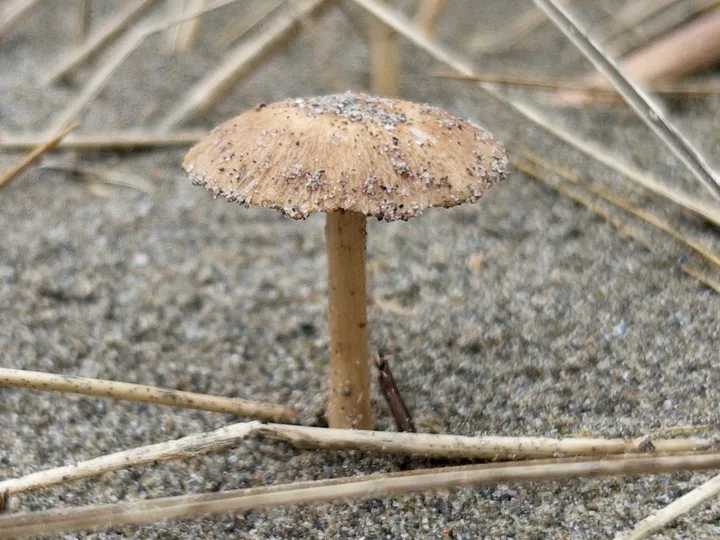
Foto yang diasosiasikan dengan Psathyrella ammophila pada iNaturalist. Identifikasi mengikuti sumber; bukan penentuan spesimen independen.
Kredit dan penggunaan
(c) Kieran Roy Powell, some rights reserved (CC BY), uploaded by Kieran Roy Powell
Ukuran dan format gambar disesuaikan tanpa pemotongan, retus, atau penambahan skala. Lisensi sumber dipertahankan.
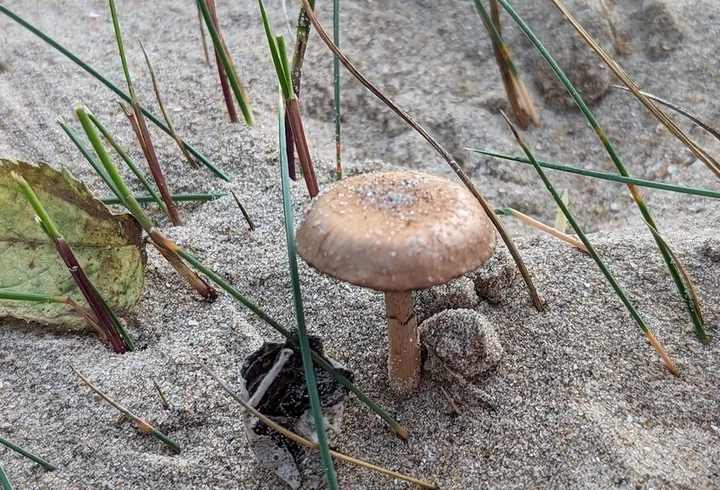
Foto yang diasosiasikan dengan Psathyrella ammophila pada iNaturalist. Identifikasi mengikuti sumber; bukan penentuan spesimen independen.
Kredit dan penggunaan
(c) Michel Langeveld, some rights reserved (CC BY), uploaded by Michel Langeveld
Ukuran dan format gambar disesuaikan tanpa pemotongan, retus, atau penambahan skala. Lisensi sumber dipertahankan.
Sumber profil
- [1] Psathyrella ammophila — Wikipedia (en)
- [2] Catalogue of Life Base2026-09-11 — Psathyrella ammophila
- [3] Dokumentasi visual — Psathyrella ammophila
- [4] Dokumentasi visual — Psathyrella ammophila
- [5] Dokumentasi visual — Psathyrella ammophila
Rujukan halaman ini
Fungi. Psathyrella ammophila. Rilis data fungi-2026-10-12-expansion-2. https://fungi-atlas.mgadib.chatgpt.site/jamur/psathyrella-ammophila/.
Status: impor sumber; pemeriksaan editorial per profil belum selesai. Untuk klaim biologis, gunakan rujukan pada bagian terkait dan periksa konteks sumber aslinya.