Ciri dan struktur
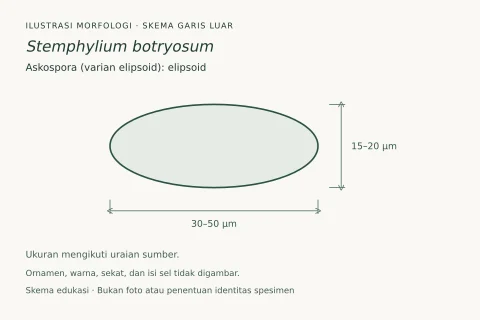
Tan spot terutama ditemukan pada gandum, tetapi juga ditemukan untuk menularkan sereal dan rumput lain termasuk triticale, cebong, dan rye, tetapi kurang sering terkena. While these tidak selalu menjadi tuan rumah tanaman pertanian seperti gandum, patogen dapat terbentuk dan bertahan hidup di banyak tuan rumah rumput, yang akhirnya dapat beranjak ke ladang gandum. Other important rumput yang rentan terhadap rumah tangga termasuk brom halus yang dapat ditemukan di padang rumput, serta rumput cacar yang ditemukan di lingkungan dan dianggap sebagai rumput dalam banyak tanaman pertanian. Lesions typically muncul pada permukaan daun atas dan bawah, dan awalnya berwarna cokelat sampai berwarna cokelat. Akhirnya, bintik-bintik cokelat ke cokelat berkembang menjadi bintik-bintik cokelat yang lebih besar, tidak teratur, oval, berbentuk lensa, elips, dengan cincin kuning di sekitar mereka. Cincin kuning sering disebut sebagai halo, perubahan warna kuning sebagai kloroid, dan cokelat / kematian jaringan daun sebagai nekrosis. Pengembangan titik coklat gelap ke hitam di tengah lesi adalah karakteristik penyakit. If warmer suhu dan kondisi kelembaban tetap, spora yang dikenal sebagai konidia akan bergerak ke atas tanaman sebagai inokulum sekunder dan juga dapat menginfeksi kepala / pucuk. Symptoms on kepala tidak jelas, tetapi dapat menyebabkan glum cokelat, dan biji-bijian dapat memiliki penampilan merah seperti patogen Fusarium. P. tritici-repentis bertahan hidup dan berhivernasi sebagai pseudothecia pada batang dari tanaman yang terinfeksi tahun sebelumnya. Pseudoothecia mengandung askospora (spora seksual). Such ascospores yang diproduksi besar dan biasanya dibuang oleh angin, tetapi tidak jauh karena ukuran mereka. askospora mendarat di permukaan daun dan mulai menghasilkan lesi akibat infeksi dari appressorium dan peg infeksi.
Habitat dan peran ekologis
Tan spot terutama ditemukan pada gandum, tetapi juga ditemukan untuk menularkan sereal dan rumput lain termasuk triticale, cebong, dan rye, tetapi kurang sering terkena. While these tidak selalu menjadi tuan rumah tanaman pertanian seperti gandum, patogen dapat terbentuk dan bertahan hidup di banyak tuan rumah rumput, yang akhirnya dapat beranjak ke ladang gandum. Other important rumput yang rentan terhadap rumah tangga termasuk brom halus yang dapat ditemukan di padang rumput, serta rumput cacar yang ditemukan di lingkungan dan dianggap sebagai rumput dalam banyak tanaman pertanian. Lesions typically muncul pada permukaan daun atas dan bawah, dan awalnya berwarna cokelat sampai berwarna cokelat. Akhirnya, bintik-bintik cokelat ke cokelat berkembang menjadi bintik-bintik cokelat yang lebih besar, tidak teratur, oval, berbentuk lensa, elips, dengan cincin kuning di sekitar mereka. Cincin kuning sering disebut sebagai halo, perubahan warna kuning sebagai kloroid, dan cokelat / kematian jaringan daun sebagai nekrosis. Pengembangan titik coklat gelap ke hitam di tengah lesi adalah karakteristik penyakit. If warmer suhu dan kondisi kelembaban tetap, spora yang dikenal sebagai konidia akan bergerak ke atas tanaman sebagai inokulum sekunder dan juga dapat menginfeksi kepala / pucuk. Symptoms on kepala tidak jelas, tetapi dapat menyebabkan glum cokelat, dan biji-bijian dapat memiliki penampilan merah seperti patogen Fusarium.
- Habitat atau konteks temuan
- Informasi belum tersedia pada sumber rilis ini.
- Substrat
- Informasi belum tersedia pada sumber rilis ini.
- Peran atau konteks
- Belum dikategorikan pada rilis ini.
Reproduksi
Tan spot terutama ditemukan pada gandum, tetapi juga ditemukan untuk menularkan sereal dan rumput lain termasuk triticale, cebong, dan rye, tetapi kurang sering terkena. While these tidak selalu menjadi tuan rumah tanaman pertanian seperti gandum, patogen dapat terbentuk dan bertahan hidup di banyak tuan rumah rumput, yang akhirnya dapat beranjak ke ladang gandum. Other important rumput yang rentan terhadap rumah tangga termasuk brom halus yang dapat ditemukan di padang rumput, serta rumput cacar yang ditemukan di lingkungan dan dianggap sebagai rumput dalam banyak tanaman pertanian. Lesions typically muncul pada permukaan daun atas dan bawah, dan awalnya berwarna cokelat sampai berwarna cokelat. Akhirnya, bintik-bintik cokelat ke cokelat berkembang menjadi bintik-bintik cokelat yang lebih besar, tidak teratur, oval, berbentuk lensa, elips, dengan cincin kuning di sekitar mereka.
Catatan identitas dan cakupan
- Nama diterima mengikuti Catalogue of Life Base2026-09-11; uraian mempertahankan konsep dan nama sumber aslinya.
- Original geographic, specimen and life-cycle scope retained; source import awaits individual editorial review.
- Impor dan terjemahan otomatis belum diperiksa editorial per profil. Struktur reproduktif yang disebutkan tidak membuktikan seluruh siklus hidup diketahui.
- Pengukuran pada uraian mengikuti spesimen, kultur, dan metode sumber; angka tidak diperluas ke semua populasi.
Catatan distribusi dalam narasi mengikuti sumbernya. Dokumentasi spesimen atau foto mengikuti catatan sumber. Bukti wilayah Indonesia dan penilaian konservasi tidak disimpulkan dari gambar.
Melihat dengan konteks
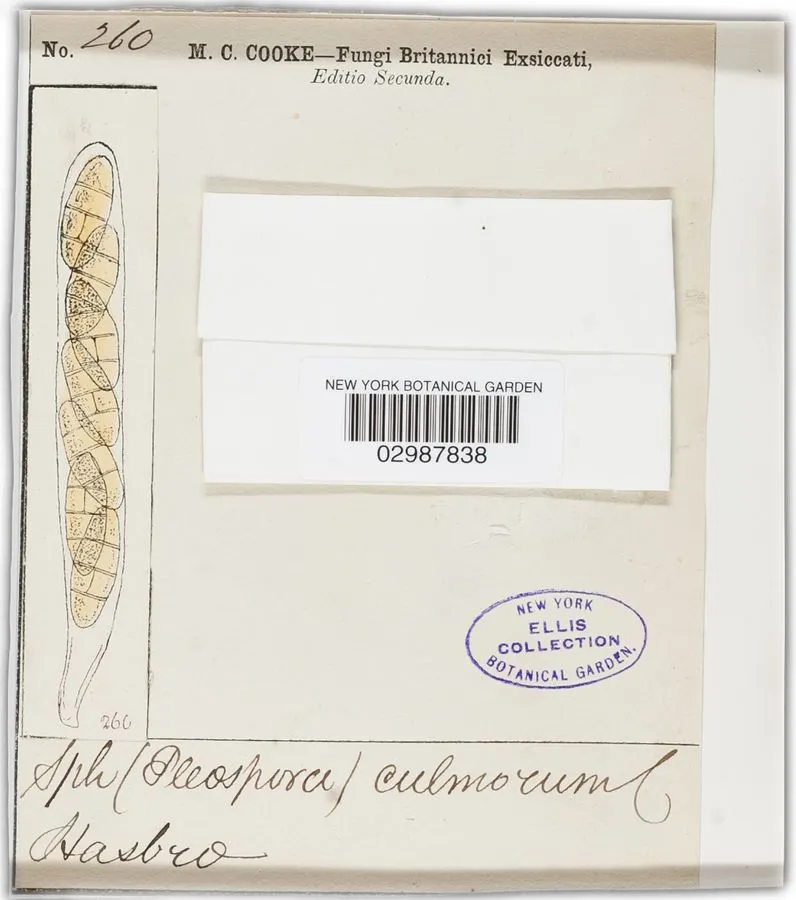
Voucher herbarium Pleospora culmorum (02987838), The New York Botanical Garden. Identifikasi mengikuti record spesimen sumber. Foto bahan, kemasan, atau label herbarium sebagaimana tersedia pada record institusi; bukan foto lapangan atau penentuan spesimen independen.
- Jenis
- Voucher herbarium
- Kredit
- The New York Botanical Garden
- Lisensi
- CC BY 4.0
- Sumber media
- Buka entri sumber
Sumber profil
- [1] Pyrenophora tritici-repentis — Wikipedia (en)
- [2] Catalogue of Life Base2026-09-11 — Pyrenophora tritici-repentis
- [3] Dokumentasi visual — Pleospora culmorum
Rujukan halaman ini
Fungi. Pyrenophora tritici-repentis. Rilis data fungi-2026-10-12-expansion-2. https://fungi-atlas.mgadib.chatgpt.site/jamur/pyrenophora-tritici-repentis/.
Status: impor sumber; pemeriksaan editorial per profil belum selesai. Untuk klaim biologis, gunakan rujukan pada bagian terkait dan periksa konteks sumber aslinya.