Ciri dan struktur
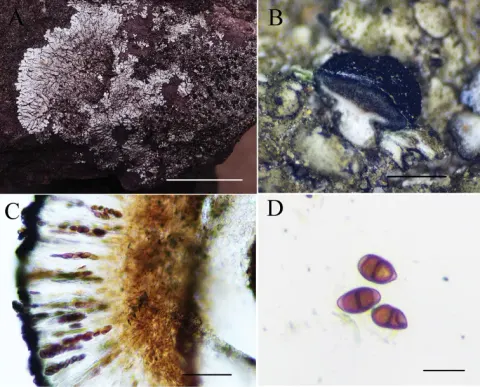
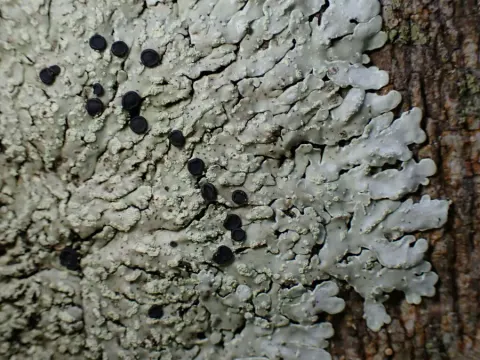
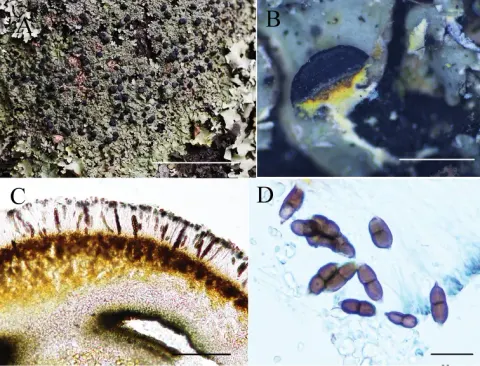
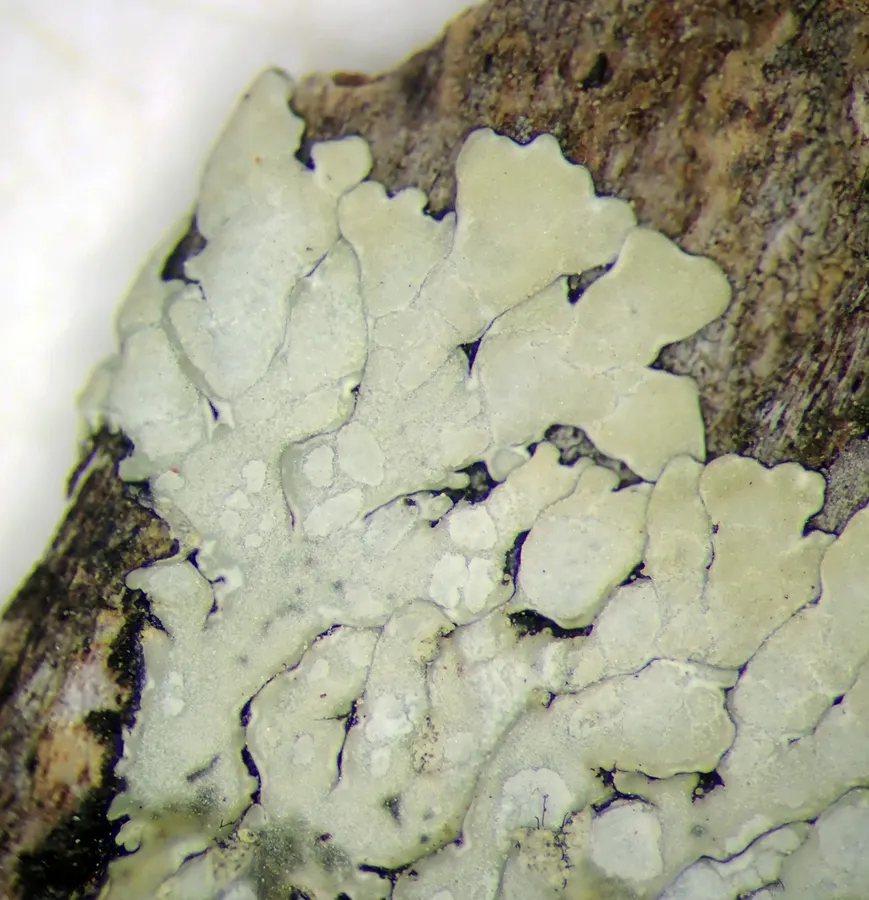
The thallus of Pyxine subcinerea is 3 – 8 cm wide, with an upper surface ranging in colour from yellowish grey to grey to brownish grey or olive-grey. The lobes that comprise the thallus are 0.3 – 1.5 mm wide, somewhat tightly apressed to the substrate and are more or less flat but often somewhat concave near the tips. The lobe surface are pruinose, with the pruina resembling dense points near the lobe tips. These pruina contain weddellite, a mineral form of calcium oxalate. There are distinct pseudocyphellae at the margins of the lobes. The soralia are near the lobe margins. The medulla is quite thin and yellow above. The lower surface is black in the centre, but becomes paler towards the margin. Rhizines are more or less dense, and divided into branches. The upper cortex is paraplectenchymatous (a cell arrangement where the hyphae are oriented in all directions), while the lower cortex is prosoplectenchymatous (a cell arrangement where the hyphae are all oriented in one direction). Apothecia (reproductive structures) are common in tropical and subtropical specimens; they measure 0.3 – 1.5 mm wide and have an indistinct internal stipe. In contrast, apothecia are not typically associated with European material. Ascospores measure 13–22 by 6–9 μm. The conidia are bacilliform, and measure 3–4 μm by about 1 μm. The secondary chemical in Pyxine subcinerea is lichexanthone. The presence of this compound results in a golden-yellow colour when illuminated with UV light. All lichen spot tests are negative.
Habitat dan peran ekologis
Pyxine subcinerea has a mostly pantropical distribution. Although it is generally found growing on bark, it has also been found growing on rock, and, in one instance, on mortar. In Europe, it has been reported from the Azores and Italy. It has been reported from Africa (Ethiopia, Uganda, Kenya, Tanzania, the Seychelles, Rwanda and Angola), throughout Asia (including China), Australia, New Zealand, In the eastern United States, its geographical range covers subtropical to more temperate regions, including the states of New York, Illinois, and Ohio to Florida, Louisiana, and Texas. Pyxine subcinerea has been recorded growing on hornbeam, hickory, hibiscus, juniper, sweetgum, magnolia, oak, locust, elm, and the genus Prunus. It tends to prefer low elevations, and occurs hardwood-pine forests as well as more open areas including farms, glades, and gardens. Pyxine subcinerea is relatively resistant to air pollution, and has been investigated for use as a candidate for biomonitoring. It bioaccumulates toxic heavy metals that it acquires from the air and retains the pollutants in the thallus, which can then be sampled and assayed to determine their concentration.
- Habitat atau konteks temuan
- hutan
- Substrat
- kulit kayu
- Peran atau konteks
- Pembentuk liken
Reproduksi
The thallus of Pyxine subcinerea is 3 – 8 cm wide, with an upper surface ranging in colour from yellowish grey to grey to brownish grey or olive-grey. The lobes that comprise the thallus are 0.3 – 1.5 mm wide, somewhat tightly apressed to the substrate and are more or less flat but often somewhat concave near the tips. The lobe surface are pruinose, with the pruina resembling dense points near the lobe tips. These pruina contain weddellite, a mineral form of calcium oxalate. There are distinct pseudocyphellae at the margins of the lobes. The soralia are near the lobe margins. The medulla is quite thin and yellow above. The lower surface is black in the centre, but becomes paler towards the margin.
Catatan identitas dan cakupan
- Nama diterima mengikuti Catalogue of Life Base2026-09-11; uraian mempertahankan konsep dan nama sumber aslinya.
- Original geographic, specimen and life-cycle scope retained; source import awaits individual editorial review.
- Impor dan terjemahan otomatis belum diperiksa editorial per profil. Struktur reproduktif yang disebutkan tidak membuktikan seluruh siklus hidup diketahui.
- Pengukuran pada uraian mengikuti spesimen, kultur, dan metode sumber; angka tidak diperluas ke semua populasi.
Catatan distribusi dalam narasi mengikuti sumbernya. Dokumentasi spesimen atau foto mengikuti catatan sumber. Bukti wilayah Indonesia dan penilaian konservasi tidak disimpulkan dari gambar.
Melihat dengan konteks
Dokumentasi Pyxine subcinerea menurut asosiasi foto pada record takson iNaturalist. Kredit: Peter de Lange. Identitas mengikuti sumber; bukan penentuan spesimen independen.
- Jenis
- Fotografi
- Kredit
- no rights reserved, uploaded by Peter de Lange
- Lisensi
- CC0 1.0
- Sumber media
- Buka entri sumber
Dokumentasi tambahan
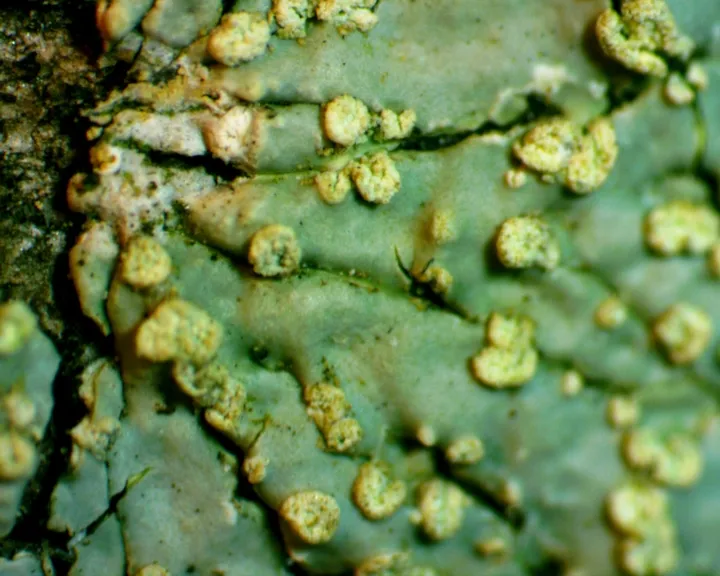
Foto yang diasosiasikan dengan Pyxine subcinerea pada iNaturalist. Identifikasi mengikuti sumber; bukan penentuan spesimen independen.
Kredit dan penggunaan
no rights reserved, uploaded by Ken Kneidel
Ukuran dan format gambar disesuaikan tanpa pemotongan, retus, atau penambahan skala. Lisensi sumber dipertahankan.
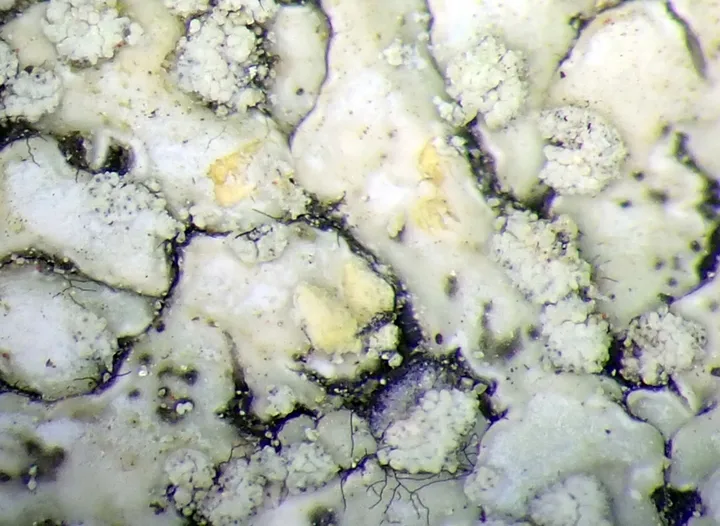
Foto yang diasosiasikan dengan Pyxine subcinerea pada iNaturalist. Identifikasi mengikuti sumber; bukan penentuan spesimen independen.
Kredit dan penggunaan
no rights reserved, uploaded by Peter de Lange
Ukuran dan format gambar disesuaikan tanpa pemotongan, retus, atau penambahan skala. Lisensi sumber dipertahankan.
Sumber profil
- [1] Pyxine subcinerea — Wikipedia (en)
- [2] Catalogue of Life Base2026-09-11 — Pyxine subcinerea
- [3] Dokumentasi visual — Pyxine subcinerea
- [4] Dokumentasi visual — Pyxine subcinerea
- [5] Dokumentasi visual — Pyxine subcinerea
Rujukan halaman ini
Fungi. Pyxine subcinerea. Rilis data fungi-2026-10-12-expansion-2. https://fungi-atlas.mgadib.chatgpt.site/jamur/pyxine-subcinerea/.
Status: impor sumber; pemeriksaan editorial per profil belum selesai. Untuk klaim biologis, gunakan rujukan pada bagian terkait dan periksa konteks sumber aslinya.