01 / Morfologi

Ciri dan struktur

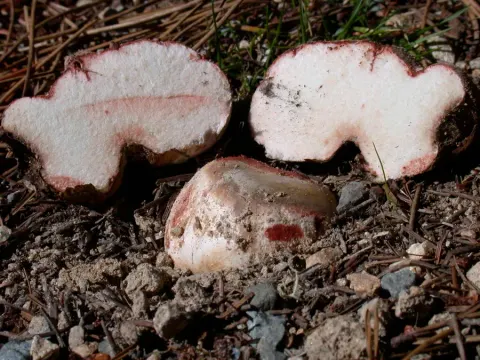
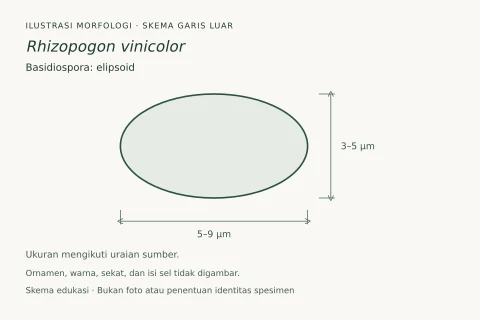
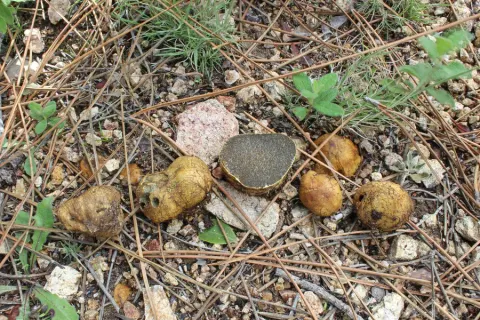
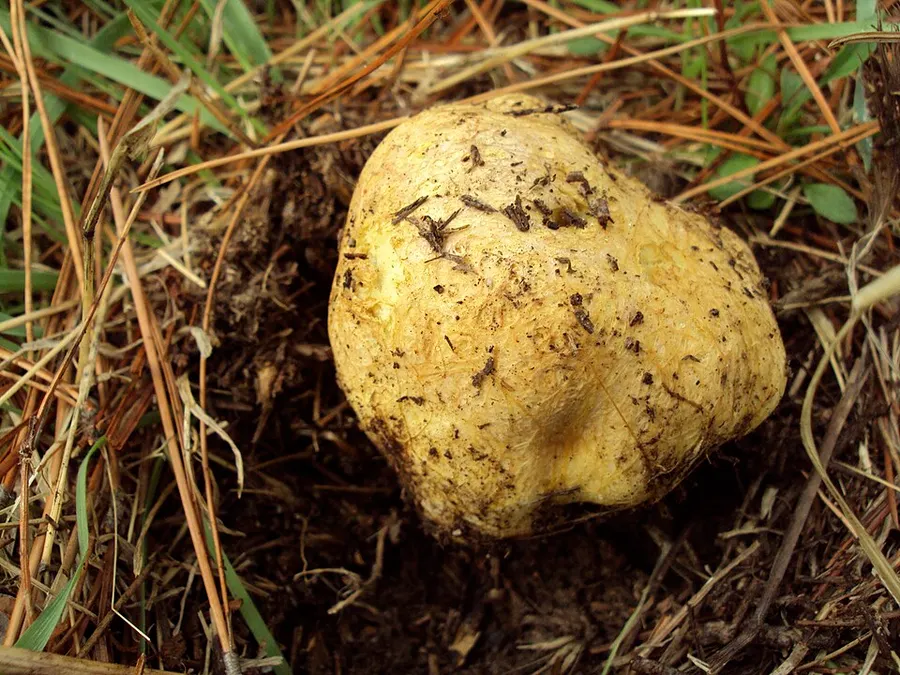
Their fruiting bodies (basidiocarps) are truffle-like and 1–4 cm in diameter when dried, with a yellow 60–240 μm-thick peridium and pale yellow gleba. Their basidia are clavate and contain 6 or 8 spores. The spores are smooth, ellipsoidal and 7–9 by 3–5 um. They lack clamp connections and deposits of what is thought to be calcium oxalate found on the mantles of some other members of their genus.

Sebagian uraian ditampilkan dalam bahasa sumber; terjemahannya belum tersedia atau belum lolos pemeriksaan.

Rujukan: [1]

Pengukuran mengikuti objek, spesimen atau kultur, dan metode yang disebutkan sumber. Baca uraian asli untuk konteks lengkap.

02 / Kehidupan

Habitat dan peran ekologis

They are distributed primarily across western North America from September to December. They colonize trees in sandy soils namely in coastal dunes and montane forests as well as interior pine forests. They are ectomycorrhizal mutualists primarily with two and three needle pines though they are also capable of forming ectomycorrhizal relationships with Sitka spruce. Early establishment after fire may also be aided by its spores greater heat resistance relative to some cooccurring ectomycorrhizal species. Their fruiting bodies grow underground and are eaten by small mammals, which disperse their spores. Once dispersed, spores can remain dormant for more than four years.

Sebagian uraian ditampilkan dalam bahasa sumber; terjemahannya belum tersedia atau belum lolos pemeriksaan.

Rujukan: [1]

Habitat atau konteks temuan
hutan
Substrat
Informasi belum tersedia pada sumber rilis ini.
Peran atau konteks
Mitra tumbuhan
Temukan hubungan serupa
03 / Siklus hidup

Reproduksi

Their fruiting bodies (basidiocarps) are truffle-like and 1–4 cm in diameter when dried, with a yellow 60–240 μm-thick peridium and pale yellow gleba. Their basidia are clavate and contain 6 or 8 spores. The spores are smooth, ellipsoidal and 7–9 by 3–5 um. They lack clamp connections and deposits of what is thought to be calcium oxalate found on the mantles of some other members of their genus.

Sebagian uraian ditampilkan dalam bahasa sumber; terjemahannya belum tersedia atau belum lolos pemeriksaan.

Rujukan: [1]

04 / Batas informasi

Catatan identitas dan cakupan

  • Nama diterima mengikuti Catalogue of Life Base2026-09-11; uraian mempertahankan konsep dan nama sumber aslinya.
  • Original geographic, specimen and life-cycle scope retained; source import awaits individual editorial review.
  • Impor dan terjemahan otomatis belum diperiksa editorial per profil. Struktur reproduktif yang disebutkan tidak membuktikan seluruh siklus hidup diketahui.
  • Pengukuran pada uraian mengikuti spesimen, kultur, dan metode sumber; angka tidak diperluas ke semua populasi.

Catatan distribusi dalam narasi mengikuti sumbernya. Dokumentasi spesimen atau foto mengikuti catatan sumber. Bukti wilayah Indonesia dan penilaian konservasi tidak disimpulkan dari gambar.

05 / Dokumentasi

Melihat dengan konteks

Dokumentasi Rhizopogon occidentalis dari Wikimedia Commons. The truffle-like fungus Rhizopogon occidentalis . Found in Lafayette Reservoir, Lafayette, California, USA. Identifikasi mengikuti record berkas sumber.

Jenis
Fotografi
Kredit
Richard Sullivan (enchplant)
Sumber media
Buka entri sumber

Gambar menunjukkan objek menurut identifikasi sumber, bukan verifikasi independen spesimen oleh Fungi. Tidak ada skala baru yang ditambahkan.

06 / Rujukan

Sumber profil

  1. [1] Rhizopogon occidentalis — Wikipedia (en)Bagian sumber: Frozen revision 1278581534
    Tanggal penghimpunan sumber: 2026-10-12
    Teks sumber: CC BY-SA4.0 · Wikipedia contributors
  2. [2] Catalogue of Life Base2026-09-11 — Rhizopogon occidentalisBagian sumber: ColDP NameUsage.tsv ID 4SD9T; accepted species; source 2073
    Tanggal penghimpunan sumber: 2026-10-12
  3. [3] Dokumentasi visual — Rhizopogon occidentalisBagian sumber: Individual media record; identification follows the source, not independent determination
    Tanggal penghimpunan sumber: 2026-10-12
    Media sumber: CC BY-SA 3.0 · Richard Sullivan (enchplant)

Adaptasi teks: CC BY-SA 4.0. Wikipedia contributors — Rhizopogon occidentalis — Wikipedia (en)

Uraian asli dan riwayat sumber

Riwayat atau halaman sumber

Ringkasan sumber

Their fruiting bodies (basidiocarps) are truffle-like and 1–4 cm in diameter when dried, with a yellow 60–240 μm-thick peridium and pale yellow gleba. Their basidia are clavate and contain 6 or 8 spores. The spores are smooth, ellipsoidal and 7–9 by 3–5 um. They lack clamp connections and deposits of what is thought to be calcium oxalate found on the mantles of some other members of their genus.

Revisi sumber

Morfologi sumber

Their fruiting bodies (basidiocarps) are truffle-like and 1–4 cm in diameter when dried, with a yellow 60–240 μm-thick peridium and pale yellow gleba. Their basidia are clavate and contain 6 or 8 spores. The spores are smooth, ellipsoidal and 7–9 by 3–5 um. They lack clamp connections and deposits of what is thought to be calcium oxalate found on the mantles of some other members of their genus.

Revisi sumber

Ekologi sumber

They are distributed primarily across western North America from September to December. They colonize trees in sandy soils namely in coastal dunes and montane forests as well as interior pine forests. They are ectomycorrhizal mutualists primarily with two and three needle pines though they are also capable of forming ectomycorrhizal relationships with Sitka spruce. Early establishment after fire may also be aided by its spores greater heat resistance relative to some cooccurring ectomycorrhizal species. Their fruiting bodies grow underground and are eaten by small mammals, which disperse their spores. Once dispersed, spores can remain dormant for more than four years.

Revisi sumber

Struktur reproduksi sumber

Their fruiting bodies (basidiocarps) are truffle-like and 1–4 cm in diameter when dried, with a yellow 60–240 μm-thick peridium and pale yellow gleba. Their basidia are clavate and contain 6 or 8 spores. The spores are smooth, ellipsoidal and 7–9 by 3–5 um. They lack clamp connections and deposits of what is thought to be calcium oxalate found on the mantles of some other members of their genus.

Revisi sumber

Rujukan halaman ini

Fungi. Rhizopogon occidentalis. Rilis data fungi-2026-10-12-expansion-2. https://fungi-atlas.mgadib.chatgpt.site/jamur/rhizopogon-occidentalis/.

Status: impor sumber; pemeriksaan editorial per profil belum selesai. Untuk klaim biologis, gunakan rujukan pada bagian terkait dan periksa konteks sumber aslinya.