Ciri dan struktur
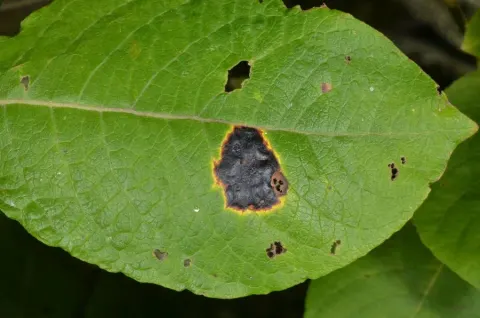
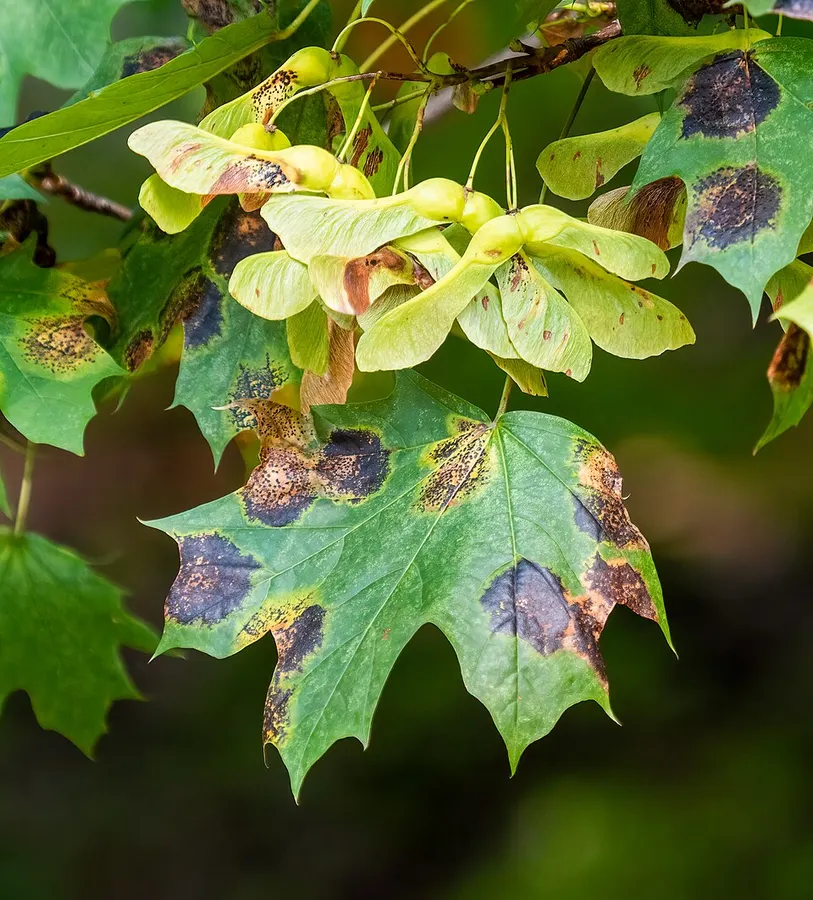
In late spring, chlorotic spots appear on tree leaves. These develop into brown-black lesions, retaining the yellow border. The lesions continue to grow, and by the end of summer form leaf spots that look like tar. The spot can grow up to 1.5 in in diameter. A microscopic sign of the pathogen are the stroma, mats of hyphae found in the lesions. These lesions can cause senescence of leaves but are mostly of cosmetic importance. Rhytisma acerinum is the teleomorph of tar spot. In the spring, needle-shaped ascospores are released from overwintering apothecia in fallen leaf debris. These spores are disseminated by the wind and have a sticky coat to attach to new healthy leaves. Once on the leaves, the spores germinate and penetrate through the stoma. Young trees growing in shade are therefore more susceptible. Under these conditions, conidiophores excrete a milky substance of conidia. In times of drought, the conidia stick together as one unit and form yellowish tendrils. Because the conidia are not infectious, this stage is not seen as often as the teleomorph, and it is not certain why the spores are produced.
Habitat dan peran ekologis
Tar spot paling umum ditemukan di Europe and Amerika Utara. Namun, sementara sulfur dioxide beracun bagi jamur dalam studi laboratorium (sulfur dioxide mencegah stroma menyebabkan infeksi berikutnya), tidak ada korelasi antara tingkat polusi dan penyakit. Sebaliknya, ditemukan bahwa di daerah perkotaan daun yang jatuh (terinfeksi) lebih mungkin untuk dibasmi dan dihapus, sehingga menghilangkan sumber infeksi untuk tanaman. Seperti yang disebutkan sebelumnya, penyakit ini muncul di musim panas terutama pada musim basah, tetapi juga dapat berkembang selama musim kering.
- Habitat atau konteks temuan
- Informasi belum tersedia pada sumber rilis ini.
- Substrat
- Informasi belum tersedia pada sumber rilis ini.
- Peran atau konteks
- Belum dikategorikan pada rilis ini.
Reproduksi
Rhytisma acerinum is the teleomorph of tar spot. In the spring, needle-shaped ascospores are released from overwintering apothecia in fallen leaf debris. These spores are disseminated by the wind and have a sticky coat to attach to new healthy leaves. Once on the leaves, the spores germinate and penetrate through the stoma. Young trees growing in shade are therefore more susceptible. Under these conditions, conidiophores excrete a milky substance of conidia. In times of drought, the conidia stick together as one unit and form yellowish tendrils. Because the conidia are not infectious, this stage is not seen as often as the teleomorph, and it is not certain why the spores are produced. Tar spot is a localized disease that causes mostly cosmetic symptoms and is therefore not a highly controlled disease.
Catatan identitas dan cakupan
- Nama diterima mengikuti Catalogue of Life Base2026-09-11; uraian mempertahankan konsep dan nama sumber aslinya.
- Original geographic, specimen and life-cycle scope retained; source import awaits individual editorial review.
- Impor dan terjemahan otomatis belum diperiksa editorial per profil. Struktur reproduktif yang disebutkan tidak membuktikan seluruh siklus hidup diketahui.
- Pengukuran pada uraian mengikuti spesimen, kultur, dan metode sumber; angka tidak diperluas ke semua populasi.
Catatan distribusi dalam narasi mengikuti sumbernya. Dokumentasi spesimen atau foto mengikuti catatan sumber. Bukti wilayah Indonesia dan penilaian konservasi tidak disimpulkan dari gambar.
Melihat dengan konteks
Dokumentasi Rhytisma acerinum dari Wikimedia Commons. Tar spot fungus on a maple tree in Green-Wood Cemetery Identifikasi mengikuti record berkas sumber.
- Jenis
- Fotografi
- Kredit
- Rhododendrites
- Lisensi
- CC BY-SA 4.0
- Sumber media
- Buka entri sumber
Sumber profil
- [1] Rhytisma acerinum — Wikipedia (en)
- [2] Catalogue of Life Base2026-09-11 — Rhytisma acerinum
- [3] Dokumentasi visual — Rhytisma acerinum
Rujukan halaman ini
Fungi. Rhytisma acerinum. Rilis data fungi-2026-10-12-expansion-2. https://fungi-atlas.mgadib.chatgpt.site/jamur/rhytisma-acerinum/.
Status: impor sumber; pemeriksaan editorial per profil belum selesai. Untuk klaim biologis, gunakan rujukan pada bagian terkait dan periksa konteks sumber aslinya.