01 / Morfologi

Ciri dan struktur

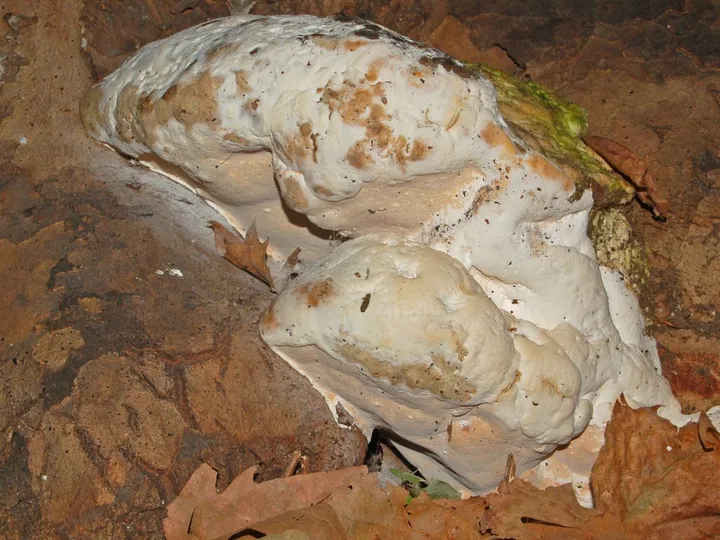
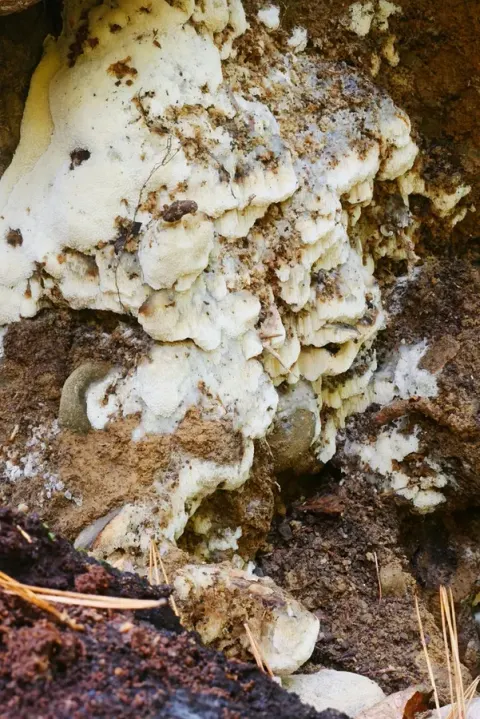
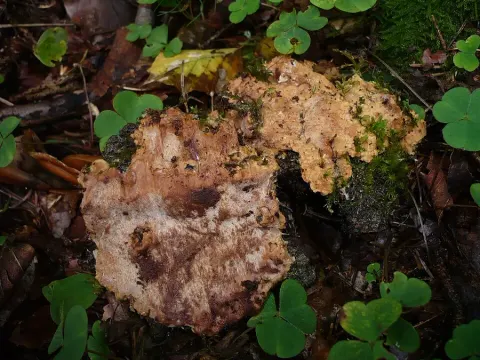
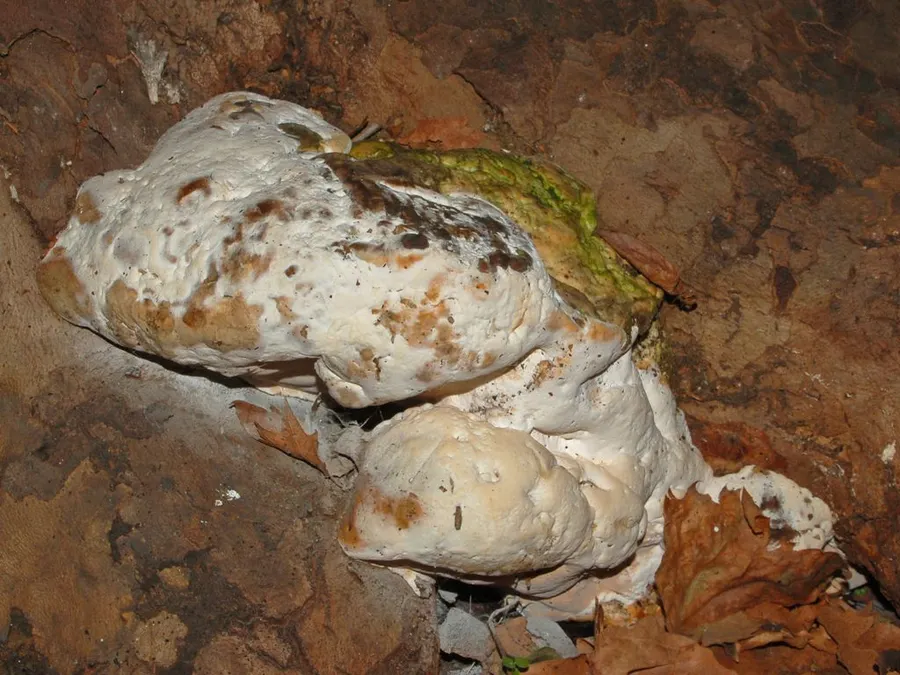
The fruiting bodies are white, knobbly and relatively hard, requiring a fair amount of force to break. Older bodies may be covered with green algae, or partially covered with vegetation and leaves making them difficult to spot. They often encapsulate grass, twigs and other debris. Tubes are 1–5 mm long in each layer, pinkish to orange when young, browning with age, each layer separated by a thin contrasting band of white flesh. Pores 5–8 per millimeter, red-orange fading to clay-pink or buff with age. Spores pale yellow, globose, 6–7.5 μm in diameter. Hyphal structure monomitic; generative hyphae lacking clamps. Habitat at the base of trunks of deciduous trees, usually elm. Season all year, perennial. Common. Not edible. Found in Europe.

Sebagian uraian ditampilkan dalam bahasa sumber; terjemahannya belum tersedia atau belum lolos pemeriksaan.

Rujukan: [1]

Pengukuran mengikuti objek, spesimen atau kultur, dan metode yang disebutkan sumber. Baca uraian asli untuk konteks lengkap.

02 / Kehidupan

Habitat dan peran ekologis

Tubes are 1–5 mm panjang di setiap lapisan, pinkish hingga oranye ketika muda, cokelat dengan usia, setiap lapisan dipisahkan oleh pita tipis kontras daging putih. Poros 5–8 per milimeter, merah-orange memudar menjadi tanah liat-merah atau buff dengan usia. Spores pale kuning, globosa, 6–7.5 μm diameter. Hyphal structure monomitic; generative hifa kurangnya penjepit. Habitat at the base of trunks of deciduous trees, usually elm. Season all tahun, abadi. Common. Not edible. Found in Eropa.

Sebagian uraian ditampilkan dalam bahasa sumber; terjemahannya belum tersedia atau belum lolos pemeriksaan.

Rujukan: [1]

Habitat atau konteks temuan
Informasi belum tersedia pada sumber rilis ini.
Substrat
Informasi belum tersedia pada sumber rilis ini.
Peran atau konteks
Belum dikategorikan pada rilis ini.
Temukan hubungan serupa
03 / Siklus hidup

Reproduksi

Tubes are 1–5 mm long in each layer, pinkish to orange when young, browning with age, each layer separated by a thin contrasting band of white flesh. Pores 5–8 per millimeter, red-orange fading to clay-pink or buff with age. Spores pale yellow, globose, 6–7.5 μm in diameter. Hyphal structure monomitic; generative hyphae lacking clamps. Habitat at the base of trunks of deciduous trees, usually elm. Season all year, perennial. Common. Not edible. Found in Europe.

Sebagian uraian ditampilkan dalam bahasa sumber; terjemahannya belum tersedia atau belum lolos pemeriksaan.

Rujukan: [1]

Sinonim menurut acuan taksonomi rilis: Boletus ulmarius; Coriolus actinobolus; Fomes cytisinus; Fomes geotropus; Fomes ulmarius; Fomitopsis cytisina; Fomitopsis ulmaria; Haploporus cytisinus; Leucofomes ulmarius; Mensularia ulmaria; Microporus actinobolus; Placodes incanus; Placodes ulmarius; Polyporus actinobolus; Polyporus cytisinus; Polyporus geotropus; Polyporus sublinguaeformis; Polyporus ulmarius; Polystictus actinobolus; Rigidoporus geotropus; Scindalma cytisinum; Scindalma geotropum; Scindalma ulmarium; Ungulina cytisina; Ungulina ulmaria
04 / Batas informasi

Catatan identitas dan cakupan

  • Nama diterima mengikuti Catalogue of Life Base2026-09-11; uraian mempertahankan konsep dan nama sumber aslinya.
  • Original geographic, specimen and life-cycle scope retained; source import awaits individual editorial review.
  • Impor dan terjemahan otomatis belum diperiksa editorial per profil. Struktur reproduktif yang disebutkan tidak membuktikan seluruh siklus hidup diketahui.
  • Pengukuran pada uraian mengikuti spesimen, kultur, dan metode sumber; angka tidak diperluas ke semua populasi.

Catatan distribusi dalam narasi mengikuti sumbernya. Dokumentasi spesimen atau foto mengikuti catatan sumber. Bukti wilayah Indonesia dan penilaian konservasi tidak disimpulkan dari gambar.

05 / Dokumentasi

Melihat dengan konteks

Dokumentasi Rigidoporus ulmarius menurut asosiasi foto pada record takson iNaturalist. Kredit: Ettore Balocchi. Identitas mengikuti sumber; bukan penentuan spesimen independen.

Jenis
Fotografi
Kredit
(c) Ettore Balocchi, some rights reserved (CC BY)
Lisensi
CC BY 4.0
Sumber media
Buka entri sumber

Gambar menunjukkan objek menurut identifikasi sumber, bukan verifikasi independen spesimen oleh Fungi. Tidak ada skala baru yang ditambahkan.

Dokumentasi tambahan

06 / Rujukan

Sumber profil

  1. [1] Rigidoporus ulmarius — Wikipedia (en)Bagian sumber: Frozen revision 1224567473
    Tanggal penghimpunan sumber: 2026-10-12
    Teks sumber: CC BY-SA4.0 · Wikipedia contributors
  2. [2] Catalogue of Life Base2026-09-11 — Rigidoporus ulmariusBagian sumber: ColDP NameUsage.tsv ID 4T38K; accepted species; source 2073
    Tanggal penghimpunan sumber: 2026-10-12
  3. [3] Dokumentasi visual — Rigidoporus ulmariusBagian sumber: Identitas mengikuti sumber dokumentasi; bukan penentuan spesimen independen.
    Tanggal penghimpunan sumber: 2026-10-17
    Media sumber: CC BY 4.0 · (c) Ettore Balocchi, some rights reserved (CC BY)
  4. [4] Dokumentasi visual — Rigidoporus ulmariusBagian sumber: Identitas mengikuti sumber dokumentasi; bukan penentuan spesimen independen.
    Tanggal penghimpunan sumber: 2026-10-17
    Teks sumber: CC BY 4.0 · (c) Ettore Balocchi, some rights reserved (CC BY)

Adaptasi teks: CC BY-SA 4.0. Wikipedia contributors — Rigidoporus ulmarius — Wikipedia (en)

Uraian asli dan riwayat sumber

Riwayat atau halaman sumber

Ringkasan sumber

Rigidoporus ulmarius is a fungal plant pathogen found mainly on broad-leaved trees. Elm is considered particularly susceptible. The fruiting bodies are white, knobbly and relatively hard, requiring a fair amount of force to break. Older bodies may be covered with green algae, or partially covered with vegetation and leaves making them difficult to spot. They often encapsulate grass, twigs and other debris. Tubes are 1–5 mm long in each layer, pinkish to orange when young, browning with age, each layer separated by a thin contrasting band of white flesh.

Revisi sumber

Morfologi sumber

The fruiting bodies are white, knobbly and relatively hard, requiring a fair amount of force to break. Older bodies may be covered with green algae, or partially covered with vegetation and leaves making them difficult to spot. They often encapsulate grass, twigs and other debris. Tubes are 1–5 mm long in each layer, pinkish to orange when young, browning with age, each layer separated by a thin contrasting band of white flesh. Pores 5–8 per millimeter, red-orange fading to clay-pink or buff with age. Spores pale yellow, globose, 6–7.5 μm in diameter. Hyphal structure monomitic; generative hyphae lacking clamps. Habitat at the base of trunks of deciduous trees, usually elm. Season all year, perennial. Common. Not edible. Found in Europe.

Revisi sumber

Ekologi sumber

Tubes are 1–5 mm long in each layer, pinkish to orange when young, browning with age, each layer separated by a thin contrasting band of white flesh. Pores 5–8 per millimeter, red-orange fading to clay-pink or buff with age. Spores pale yellow, globose, 6–7.5 μm in diameter. Hyphal structure monomitic; generative hyphae lacking clamps. Habitat at the base of trunks of deciduous trees, usually elm. Season all year, perennial. Common. Not edible. Found in Europe.

Revisi sumber

Struktur reproduksi sumber

Tubes are 1–5 mm long in each layer, pinkish to orange when young, browning with age, each layer separated by a thin contrasting band of white flesh. Pores 5–8 per millimeter, red-orange fading to clay-pink or buff with age. Spores pale yellow, globose, 6–7.5 μm in diameter. Hyphal structure monomitic; generative hyphae lacking clamps. Habitat at the base of trunks of deciduous trees, usually elm. Season all year, perennial. Common. Not edible. Found in Europe.

Revisi sumber

Rujukan halaman ini

Fungi. Rigidoporus ulmarius. Rilis data fungi-2026-10-12-expansion-2. https://fungi-atlas.mgadib.chatgpt.site/jamur/rigidoporus-ulmarius/.

Status: impor sumber; pemeriksaan editorial per profil belum selesai. Untuk klaim biologis, gunakan rujukan pada bagian terkait dan periksa konteks sumber aslinya.