01 / Morfologi

Ciri dan struktur

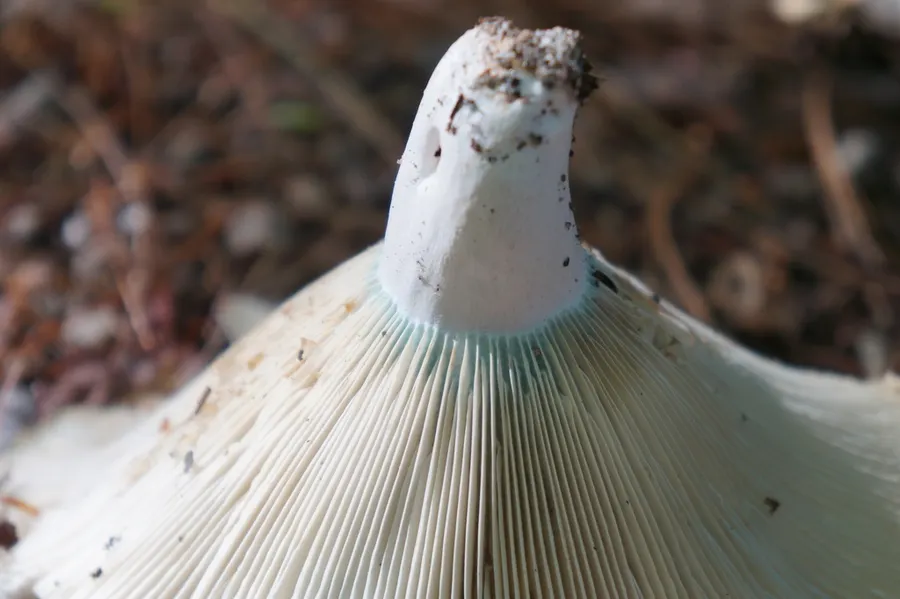
Fully grown, the cap can range from 7 to 30 cm in diameter, whitish to dull-yellow, and is funnel-shaped with a central depression. The gills are narrow and thin, decurrent in attachment, nearly white when young but becoming pale yellow to buff with age, and sometimes forked near the stipe. The stipe is 3–8 cm long and 2.5–4 cm thick. It is initially white but develops yellowish-brownish discolorations with age. The mushroom sometimes develops a pale green band at the top of the stipe. The spore print is white to light cream. The spores of R. brevipes are egg-shaped to more or less spherical, and measure 7.5–10 by 6.5–8.5 μm; they have a partially reticulate (network-like) surface dotted with warts measuring up to 1 μm high. The cap cuticle is arranged in the form of a cutis (characterized by hyphae that run parallel to the cap surface) comprising interwoven hyphae with rounded tips. There are no cystidia on the cap (pileocystidia). The variant R. brevipes var. acrior Shaffer has a subtle green shading at the stipe apex and on the gills. R. brevipes var. megaspora has spores measuring 9–14 by 8–12 μm.

Sebagian uraian ditampilkan dalam bahasa sumber; terjemahannya belum tersedia atau belum lolos pemeriksaan.

Rujukan: [1]

Pengukuran mengikuti objek, spesimen atau kultur, dan metode yang disebutkan sumber. Baca uraian asli untuk konteks lengkap.

02 / Kehidupan

Habitat dan peran ekologis

It is a common ectomycorrhizal fungus associated with several hosts across temperate forest ecosystems. Typical hosts termasuk pohon dalam genus Abies, Picea, Pseudotsuga, dan Tsuga. (terutama pada akhir musim gugur). Jamur biasanya ditemukan sebagai "kumis" ⁇ rendah, sebagian muncul bukit di lantai hutan, dan sering sebagian dikonsumsi oleh mamalia seperti tikus atau rusa. Studies have menunjukkan bahwa populasi yang terpisah secara geografis R. brevipes (global dan benua) mengembangkan diferensiasi genetik yang signifikan, menunjukkan bahwa aliran gen antara populasi ini kecil. Sebaliknya, sedikit perbedaan genetik yang diamati antara populasi yang diambil dari area yang lebih kecil (kurang dari sekitar 1000 m). R. brevipes adalah salah satu dari beberapa Russula species yang berhubungan dengan orkida mikoheterotropik Limodorum abortivum.

Sebagian uraian ditampilkan dalam bahasa sumber; terjemahannya belum tersedia atau belum lolos pemeriksaan.

Rujukan: [1]

Habitat atau konteks temuan
hutan
Substrat
Informasi belum tersedia pada sumber rilis ini.
Peran atau konteks
Mitra tumbuhan
Temukan hubungan serupa
03 / Siklus hidup

Reproduksi

Fully grown, the cap can range from 7 to 30 cm in diameter, whitish to dull-yellow, and is funnel-shaped with a central depression. The gills are narrow and thin, decurrent in attachment, nearly white when young but becoming pale yellow to buff with age, and sometimes forked near the stipe. The stipe is 3–8 cm long and 2.5–4 cm thick. It is initially white but develops yellowish-brownish discolorations with age. The mushroom sometimes develops a pale green band at the top of the stipe. The spore print is white to light cream. The spores of R. brevipes are egg-shaped to more or less spherical, and measure 7.5–10 by 6.5–8.5 μm; they have a partially reticulate (network-like) surface dotted with warts measuring up to 1 μm high.

Sebagian uraian ditampilkan dalam bahasa sumber; terjemahannya belum tersedia atau belum lolos pemeriksaan.

Rujukan: [1]

Sinonim menurut acuan taksonomi rilis: Russula brevipes var. acrior; Russula brevipes var. megaspora
04 / Batas informasi

Catatan identitas dan cakupan

  • Nama diterima mengikuti Catalogue of Life Base2026-09-11; uraian mempertahankan konsep dan nama sumber aslinya.
  • Original geographic, specimen and life-cycle scope retained; source import awaits individual editorial review.
  • Impor dan terjemahan otomatis belum diperiksa editorial per profil. Struktur reproduktif yang disebutkan tidak membuktikan seluruh siklus hidup diketahui.
  • Pengukuran pada uraian mengikuti spesimen, kultur, dan metode sumber; angka tidak diperluas ke semua populasi.

Catatan distribusi dalam narasi mengikuti sumbernya. Dokumentasi spesimen atau foto mengikuti catatan sumber. Bukti wilayah Indonesia dan penilaian konservasi tidak disimpulkan dari gambar.

05 / Dokumentasi

Melihat dengan konteks

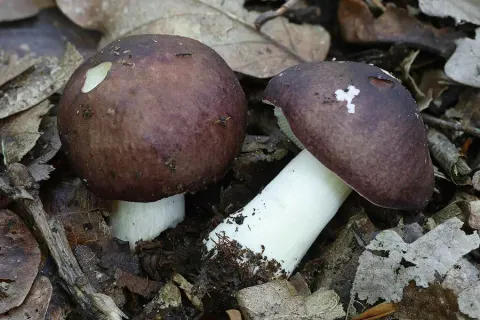
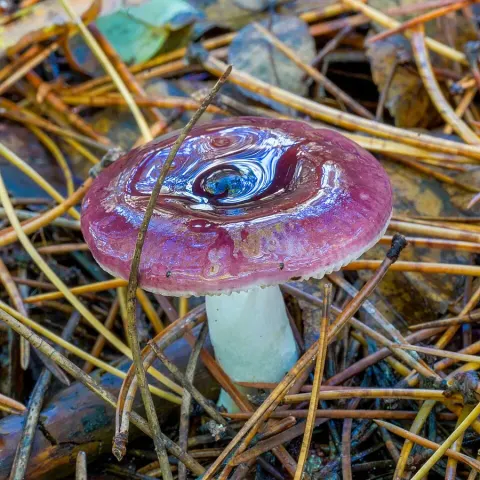
Dokumentasi Russula brevipes menurut asosiasi foto pada record takson iNaturalist. Kredit: Erlon Bailey. Identitas mengikuti sumber; bukan penentuan spesimen independen.

Jenis
Fotografi
Kredit
(c) Erlon Bailey, some rights reserved (CC BY-SA), uploaded by Erlon Bailey
Sumber media
Buka entri sumber

Gambar menunjukkan objek menurut identifikasi sumber, bukan verifikasi independen spesimen oleh Fungi. Tidak ada skala baru yang ditambahkan.

06 / Rujukan

Sumber profil

  1. [1] Russula brevipes — Wikipedia (en)Bagian sumber: Frozen revision 1299592077
    Tanggal penghimpunan sumber: 2026-10-12
    Teks sumber: CC BY-SA4.0 · Wikipedia contributors
  2. [2] Catalogue of Life Base2026-09-11 — Russula brevipesBagian sumber: ColDP NameUsage.tsv ID 4TRP7; accepted species; source 2073
    Tanggal penghimpunan sumber: 2026-10-12
  3. [3] Dokumentasi visual — Russula brevipesBagian sumber: Individual media record; identification follows the source, not independent determination
    Tanggal penghimpunan sumber: 2026-10-12
    Media sumber: CC BY-SA 4.0 · (c) Erlon Bailey, some rights reserved (CC BY-SA), uploaded by Erlon Bailey

Adaptasi teks: CC BY-SA 4.0. Wikipedia contributors — Russula brevipes — Wikipedia (en)

Uraian asli dan riwayat sumber

Riwayat atau halaman sumber

Ringkasan sumber

Russula brevipes is a species of mushroom commonly known as the short-stemmed russula or the stubby brittlegill. The fruit bodies are white and large, with convex to funnel-shaped caps measuring 7–30 cm wide set atop a thick stipe up to 8 cm long. The gills on the cap underside are closely spaced and sometimes have a faint bluish tint. The spores are roughly spherical and have a network-like surface dotted with warts. Forms of the mushroom that develop a bluish band at the top of the stipe are sometimes referred to as variety acrior.

Revisi sumber

Morfologi sumber

Fully grown, the cap can range from 7 to 30 cm in diameter, whitish to dull-yellow, and is funnel-shaped with a central depression. The gills are narrow and thin, decurrent in attachment, nearly white when young but becoming pale yellow to buff with age, and sometimes forked near the stipe. The stipe is 3–8 cm long and 2.5–4 cm thick. It is initially white but develops yellowish-brownish discolorations with age. The mushroom sometimes develops a pale green band at the top of the stipe. The spore print is white to light cream. The spores of R. brevipes are egg-shaped to more or less spherical, and measure 7.5–10 by 6.5–8.5 μm; they have a partially reticulate (network-like) surface dotted with warts measuring up to 1 μm high. The cap cuticle is arranged in the form of a cutis (characterized by hyphae that run parallel to the cap surface) comprising interwoven hyphae with rounded tips. There are no cystidia on the cap (pileocystidia). The variant R. brevipes var. acrior Shaffer has a subtle green shading at the stipe apex and on the gills. R. brevipes var. megaspora has spores measuring 9–14 by 8–12 μm.

Revisi sumber

Ekologi sumber

It is a common ectomycorrhizal fungus associated with several hosts across temperate forest ecosystems. Typical hosts include trees in the genera Abies, Picea, Pseudotsuga, and Tsuga. (most abundantly in late autumn). The mushrooms are usually found as "shrumps"—low, partially emerged mounds on the forest floor, and have often been partially consumed by mammals such as rodents or deer. Studies have demonstrated that geographically separated R. brevipes populations (globally and continentally) develop significant genetic differentiation, suggesting that gene flow between these populations is small. In contrast, there was little genetic differentiation observed between populations sampled from a smaller area (less than about 1000 m). R. brevipes is one of several Russula species that associates with the myco-heterotrophic orchid Limodorum abortivum.

Revisi sumber

Struktur reproduksi sumber

Fully grown, the cap can range from 7 to 30 cm in diameter, whitish to dull-yellow, and is funnel-shaped with a central depression. The gills are narrow and thin, decurrent in attachment, nearly white when young but becoming pale yellow to buff with age, and sometimes forked near the stipe. The stipe is 3–8 cm long and 2.5–4 cm thick. It is initially white but develops yellowish-brownish discolorations with age. The mushroom sometimes develops a pale green band at the top of the stipe. The spore print is white to light cream. The spores of R. brevipes are egg-shaped to more or less spherical, and measure 7.5–10 by 6.5–8.5 μm; they have a partially reticulate (network-like) surface dotted with warts measuring up to 1 μm high.

Revisi sumber

Rujukan halaman ini

Fungi. Russula brevipes. Rilis data fungi-2026-10-12-expansion-2. https://fungi-atlas.mgadib.chatgpt.site/jamur/russula-brevipes/.

Status: impor sumber; pemeriksaan editorial per profil belum selesai. Untuk klaim biologis, gunakan rujukan pada bagian terkait dan periksa konteks sumber aslinya.