Ciri dan struktur
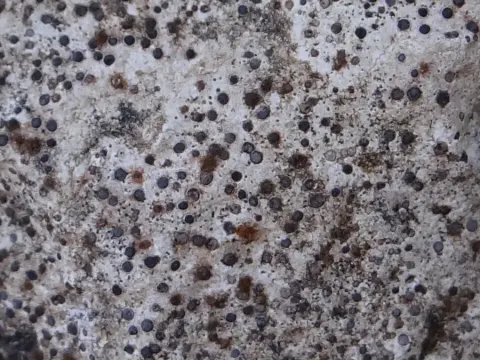
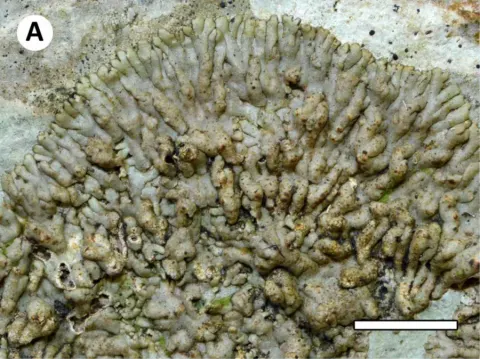
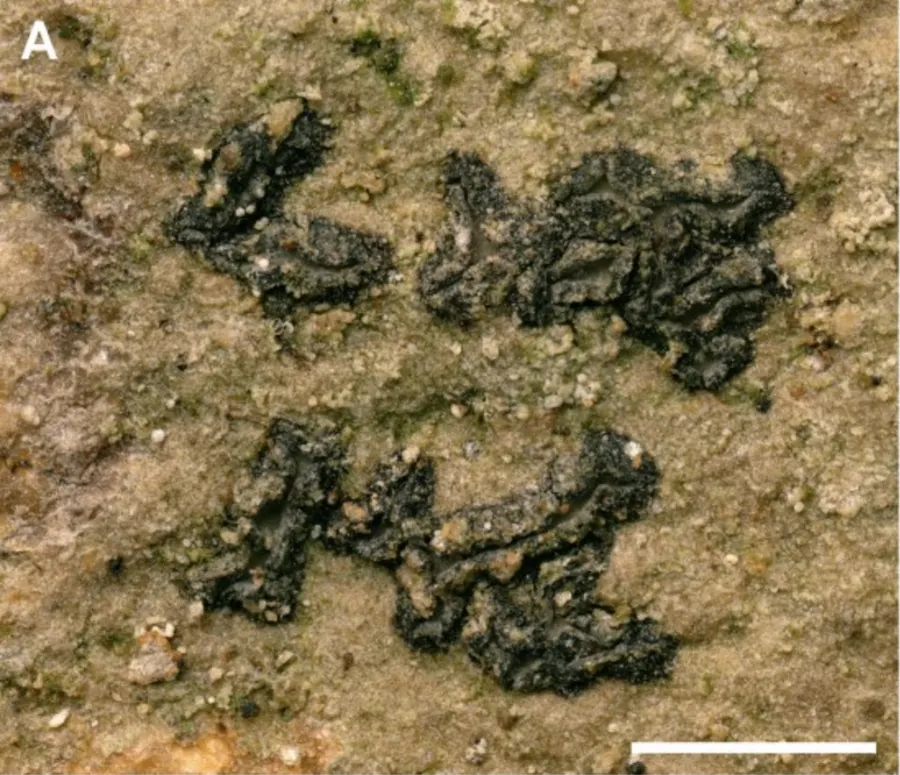
Sagiolechia monoseptata has a thin, pale greyish-green thallus (the main body of the lichen), which is smooth or slightly granular in texture. The thallus lacks a prothallus, a structure found in some lichens that forms a border around the main body. Its , the photosynthetic partner, belongs to the genus Trentepohlia, though no distinct orange bodies (a typical feature of this photobiont) were observed in fresh samples. The photobiont cells form short chains, appearing round to oblong. The species produces black, elongated fruiting bodies (ascomata), which are initially cup-shaped but later develop into slit-like structures () with lobed edges resembling small black teeth. These ascomata can measure between 0.5 and 2 mm in length and often branch, sometimes forming clusters up to 2 mm in diameter. The interior surface (hymenial ) is white and mostly covered by the black outer layer (), which has a somewhat uneven texture. The asci (spore-producing cells) are cylindrical to club-shaped, each producing eight spores. These spores are translucent (hyaline), ellipsoid in shape, and divided by a single wall (monoseptate). They measure between 12 and 16 μm in length and 5 to 6 μm in width. No secondary metabolites were detected in the species through typical lichen chemical spot tests (C−, K−, PD−, UV−), and no asexual reproductive structures (pycnidia have been observed in this species.
Habitat dan peran ekologis
At the time of its original publication, Sagiolechia monoseptata was known to occur only from its type locality in northern Norway, specifically in the Nordland region. It was discovered growing on the shaded, horizontal surface of a siliceous rock under a boulder in a small, steep scree facing north. The scree overlooks an intermediate fen and supports a variety of lichen species, including Lepraria incana and an unidentified crustose lichen. Nearby plants included small birch trees (Betula pubescens) and spruce Picea abies), while other lichens in the vicinity included Gyalecta friesii and Psilolechia clavulifera. This species appears to be restricted to a cold, boreal environment and may only occur in similar shaded, rocky habitats in the Northern Hemisphere, although further research is needed to determine its full range.
- Habitat atau konteks temuan
- Informasi belum tersedia pada sumber rilis ini.
- Substrat
- Informasi belum tersedia pada sumber rilis ini.
- Peran atau konteks
- Pembentuk liken
Reproduksi
The asci (spore-producing cells) are cylindrical to club-shaped, each producing eight spores. These spores are translucent (hyaline), ellipsoid in shape, and divided by a single wall (monoseptate). They measure between 12 and 16 μm in length and 5 to 6 μm in width. No secondary metabolites were detected in the species through typical lichen chemical spot tests (C−, K−, PD−, UV−), and no asexual reproductive structures (pycnidia have been observed in this species.
Catatan identitas dan cakupan
- Nama diterima mengikuti Catalogue of Life Base2026-09-11; uraian mempertahankan konsep dan nama sumber aslinya.
- Original geographic, specimen and life-cycle scope retained; source import awaits individual editorial review.
- Impor dan terjemahan otomatis belum diperiksa editorial per profil. Struktur reproduktif yang disebutkan tidak membuktikan seluruh siklus hidup diketahui.
- Pengukuran pada uraian mengikuti spesimen, kultur, dan metode sumber; angka tidak diperluas ke semua populasi.
Catatan distribusi dalam narasi mengikuti sumbernya. Dokumentasi spesimen atau foto mengikuti catatan sumber. Bukti wilayah Indonesia dan penilaian konservasi tidak disimpulkan dari gambar.
Melihat dengan konteks
Dokumentasi Sagiolechia monoseptata dari Wikimedia Commons. The rock-dwelling, crustose, Norwegian lichen species Sagiolechia monoseptata Identifikasi mengikuti record berkas sumber.
- Jenis
- Fotografi
- Kredit
- Tor Tønsberg
- Lisensi
- CC BY 4.0
- Sumber media
- Buka entri sumber
Sumber profil
- [1] Sagiolechia monoseptata — Wikipedia (en)
- [2] Catalogue of Life Base2026-09-11 — Sagiolechia monoseptata
- [3] Dokumentasi visual — Sagiolechia monoseptata
Rujukan halaman ini
Fungi. Sagiolechia monoseptata. Rilis data fungi-2026-10-12-expansion-2. https://fungi-atlas.mgadib.chatgpt.site/jamur/sagiolechia-monoseptata/.
Status: impor sumber; pemeriksaan editorial per profil belum selesai. Untuk klaim biologis, gunakan rujukan pada bagian terkait dan periksa konteks sumber aslinya.