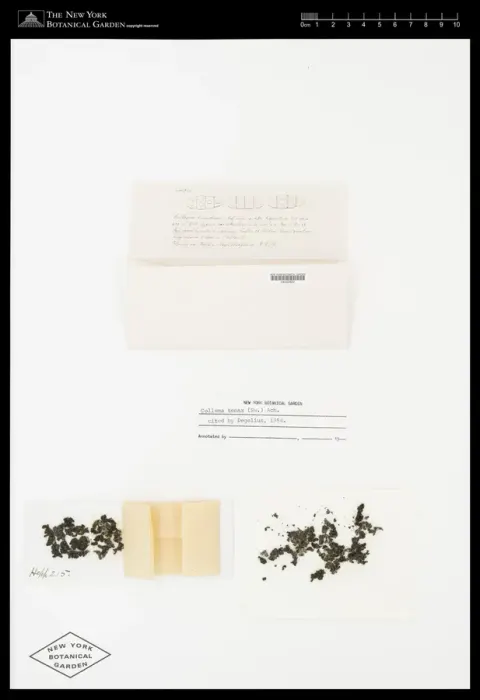
Ciri dan struktur
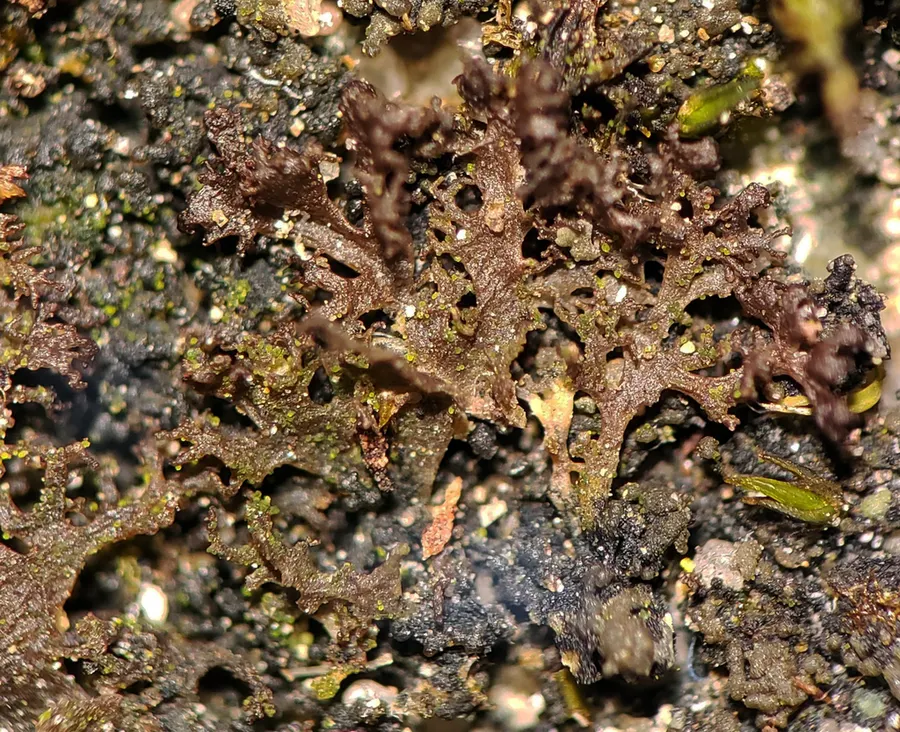
Scytinium lichenoides is a jelly lichen with that often look fringed: the lobe margins, and sometimes their surfaces, bear many small cylindrical outgrowths that resemble isidia (minute, finger-like vegetative propagules). These may be or branched and can be so dense that the edges appear . The upper surface is smooth to wrinkled, sometimes with a few ridges, and typically shiny. The lower surface is usually conspicuously ridged, often with vertically oriented ribs, and may become slightly cobwebby near the base. In section, the thallus shows a distinct cortex of angular cells over a medulla of intertwined fungal hyphae. Fruiting bodies (apothecia) are uncommon and tiny, about 0.3–1 mm across, with a that also bears isidia. The ascospores are (divided by internal septa into a brick-like pattern) and typically measure 33–45 μm long (occasionally 26–50 μm) by 12–15 μm wide, usually with around seven transverse septa (range five to nine).
Habitat dan peran ekologis
Scytinium lichenoides typically grows among moss cushions on rock or thin soil over rock, and will also occur on the lower parts of tree trunks in persistently moist climates. Field floras consistently note a preference for base-rich substrates: it is commonly found on mossy calcareous rock in northern Canada, intermixed with moss on outcrops and scree in the Pacific Northwest, and among mosses over rocks in montane forests of the Sonoran Desert region. The species is widespread across the Holarctic, from Arctic and boreal regions of North America through temperate zones extending south to Arizona and Baja California, and is well documented throughout Europe. It occurs from montane to subalpine elevations and is well recorded within the British Isles.
- Habitat atau konteks temuan
- hutan
- Substrat
- Informasi belum tersedia pada sumber rilis ini.
- Peran atau konteks
- Pembentuk liken
Reproduksi
Scytinium lichenoides is a jelly lichen with that often look fringed: the lobe margins, and sometimes their surfaces, bear many small cylindrical outgrowths that resemble isidia (minute, finger-like vegetative propagules). These may be or branched and can be so dense that the edges appear . The upper surface is smooth to wrinkled, sometimes with a few ridges, and typically shiny. The lower surface is usually conspicuously ridged, often with vertically oriented ribs, and may become slightly cobwebby near the base. In section, the thallus shows a distinct cortex of angular cells over a medulla of intertwined fungal hyphae. Fruiting bodies (apothecia) are uncommon and tiny, about 0.3–1 mm across, with a that also bears isidia.
Catatan identitas dan cakupan
- Nama diterima mengikuti Catalogue of Life Base2026-09-11; uraian mempertahankan konsep dan nama sumber aslinya.
- Original geographic, specimen and life-cycle scope retained; source import awaits individual editorial review.
- Impor dan terjemahan otomatis belum diperiksa editorial per profil. Struktur reproduktif yang disebutkan tidak membuktikan seluruh siklus hidup diketahui.
- Pengukuran pada uraian mengikuti spesimen, kultur, dan metode sumber; angka tidak diperluas ke semua populasi.
Catatan distribusi dalam narasi mengikuti sumbernya. Dokumentasi spesimen atau foto mengikuti catatan sumber. Bukti wilayah Indonesia dan penilaian konservasi tidak disimpulkan dari gambar.
Melihat dengan konteks
Dokumentasi Scytinium lichenoides menurut asosiasi foto pada record takson iNaturalist. Kredit: aarongunnar. Identitas mengikuti sumber; bukan penentuan spesimen independen.
- Jenis
- Fotografi
- Kredit
- (c) aarongunnar, some rights reserved (CC BY), uploaded by aarongunnar
- Lisensi
- CC BY 4.0
- Sumber media
- Buka entri sumber
Sumber profil
- [1] Scytinium lichenoides — Wikipedia (en)
- [2] Catalogue of Life Base2026-09-11 — Scytinium lichenoides
- [3] Dokumentasi visual — Scytinium lichenoides
Rujukan halaman ini
Fungi. Scytinium lichenoides. Rilis data fungi-2026-10-12-expansion-2. https://fungi-atlas.mgadib.chatgpt.site/jamur/scytinium-lichenoides/.
Status: impor sumber; pemeriksaan editorial per profil belum selesai. Untuk klaim biologis, gunakan rujukan pada bagian terkait dan periksa konteks sumber aslinya.