Ciri dan struktur
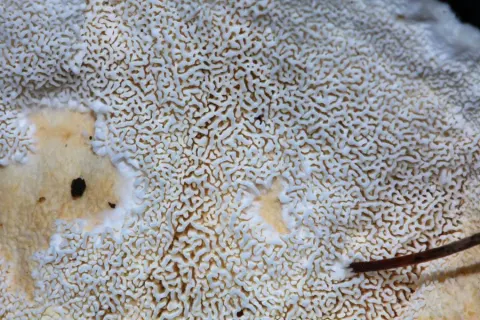
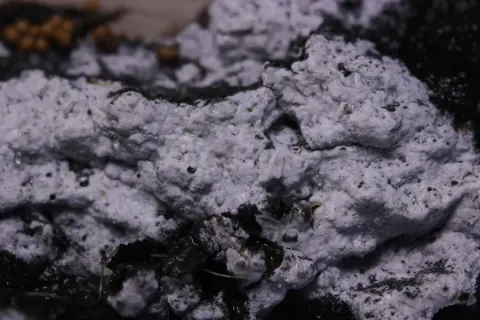
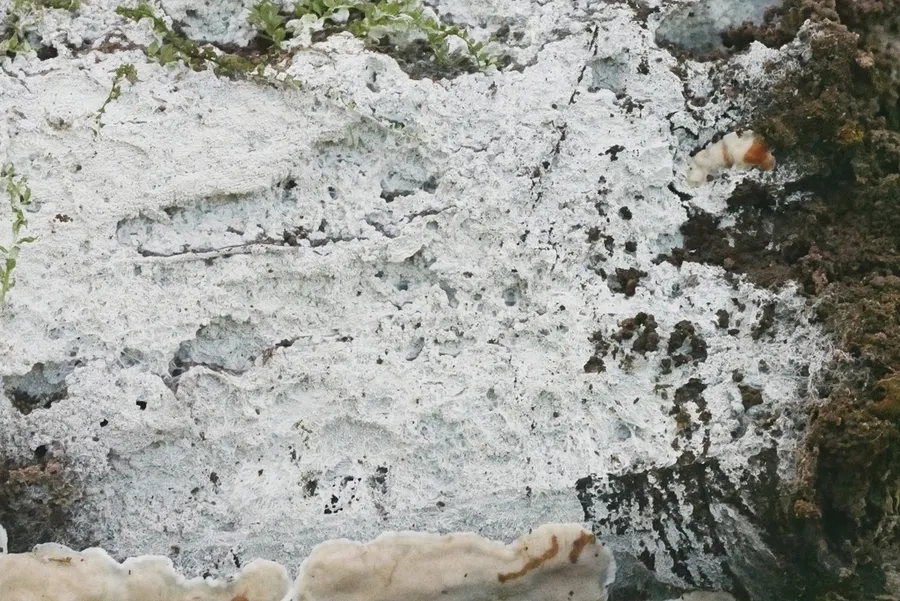
In 1994, Adan found that about 30% of the fungi floating in the air is Sistotrema brinkmannii in England, and the proportion increases to near 60% in winter. On the other hand, the presence of this fungus in the air significantly decreases in summer and autumn. His study indicates that Sistotrema brinkmannii is not a dominant fungus in the air throughout the year, compared to other airborne fungi such as Penicillium, Cladosporium, and mycelia sterilia. The membrane of this fungus is white and has waxy and soft texture when it is fresh. When it gets dry, it becomes pale cream and its texture gets ashy and brittle. It is oxidase negative and the hyphae containing numerous clamps are oil-rich, contributing to its coarse granular appearance. The mycelium of this fungus can cultivate on trama of Trametes hirsuta fruit bodies, as well as on wood-inhabiting basidiomycetes, with the help of a technique called "moisture gradient technique".
Habitat dan peran ekologis
Both outdoor and indoor airs may contain Sistotrema brinkmannii. It was found that this fungus can contaminate washing machines in houses, but it is not a causative agent of human diseases or formation of malodour. The number of spores in dwellings increases as a result of surface disturbance such as vacuum cleaning of floors. This fungus may contaminate biofilms called endobronchial stents as well, which are used as an antibiotic treatment for airway complications such as lung transplantation. However, this contamination does not cause any serious issues in human health while some other fungi, including Scedosporium, which possibly contaminate the biofilms are known to be opportunistic pathogens in human. This fungus can reproduce sexually by both breeding and self-breeding which systems are called heterothallism and homothallism, respectively. There are three different incompatibility groups identified based on the reproductive mechanisms: bipolar heterothallic forms, tetrapolar heterothallic forms, and homothallic forms. These reproductive forms are dependent on its genetics. It was believed that homothallic forms are intersterile while both bipolar and tetrapolar heterothallic forms are capable of mating.
- Habitat atau konteks temuan
- Informasi belum tersedia pada sumber rilis ini.
- Substrat
- Informasi belum tersedia pada sumber rilis ini.
- Peran atau konteks
- Belum dikategorikan pada rilis ini.
Reproduksi
The membrane of this fungus is white and has waxy and soft texture when it is fresh. When it gets dry, it becomes pale cream and its texture gets ashy and brittle. It is oxidase negative and the hyphae containing numerous clamps are oil-rich, contributing to its coarse granular appearance. The mycelium of this fungus can cultivate on trama of Trametes hirsuta fruit bodies, as well as on wood-inhabiting basidiomycetes, with the help of a technique called "moisture gradient technique".
Catatan identitas dan cakupan
- Nama diterima mengikuti Catalogue of Life Base2026-09-11; uraian mempertahankan konsep dan nama sumber aslinya.
- Original geographic, specimen and life-cycle scope retained; source import awaits individual editorial review.
- Impor dan terjemahan otomatis belum diperiksa editorial per profil. Struktur reproduktif yang disebutkan tidak membuktikan seluruh siklus hidup diketahui.
- Pengukuran pada uraian mengikuti spesimen, kultur, dan metode sumber; angka tidak diperluas ke semua populasi.
Catatan distribusi dalam narasi mengikuti sumbernya. Dokumentasi spesimen atau foto mengikuti catatan sumber. Bukti wilayah Indonesia dan penilaian konservasi tidak disimpulkan dari gambar.
Melihat dengan konteks
Dokumentasi Sistotrema brinkmannii menurut asosiasi foto pada record takson iNaturalist. Kredit: Garrett Taylor. Identitas mengikuti sumber; bukan penentuan spesimen independen.
- Jenis
- Fotografi
- Kredit
- no rights reserved, uploaded by Garrett Taylor
- Lisensi
- CC0 1.0
- Sumber media
- Buka entri sumber
Dokumentasi tambahan
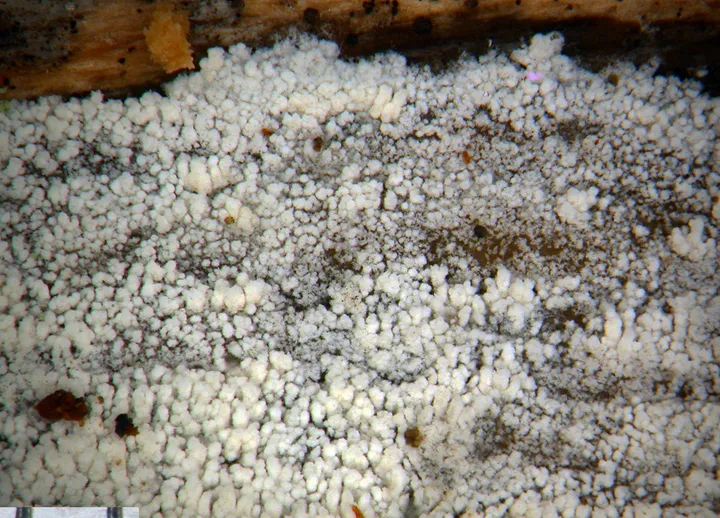
Foto yang diasosiasikan dengan Sistotrema brinkmannii pada iNaturalist. Identifikasi mengikuti sumber; bukan penentuan spesimen independen.
Kredit dan penggunaan
(c) Jerry Cooper, some rights reserved (CC BY), uploaded by Jerry Cooper
Ukuran dan format gambar disesuaikan tanpa pemotongan, retus, atau penambahan skala. Lisensi sumber dipertahankan.
Sumber profil
- [1] Sistotrema brinkmannii — Wikipedia (en)
- [2] Catalogue of Life Base2026-09-11 — Sistotrema brinkmannii
- [3] Dokumentasi visual — Sistotrema brinkmannii
- [4] Dokumentasi visual — Sistotrema brinkmannii
Rujukan halaman ini
Fungi. Sistotrema brinkmannii. Rilis data fungi-2026-10-12-expansion-2. https://fungi-atlas.mgadib.chatgpt.site/jamur/sistotrema-brinkmannii/.
Status: impor sumber; pemeriksaan editorial per profil belum selesai. Untuk klaim biologis, gunakan rujukan pada bagian terkait dan periksa konteks sumber aslinya.