Ciri dan struktur
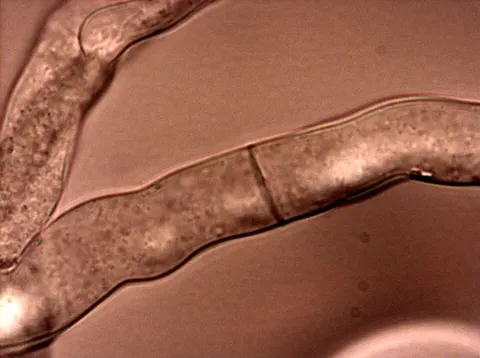
Sordaria fimicola is an ascomycete fungus that grows well on nutrient agar, dung, and in decaying matter in soil. As an ascoymcete it has a sexual teleomorph form and an asexual anamorph form. S. fimicola typically follows the life cycle of an obligate dung fungus; sexual reproduction that is obligate to herbivore dung after passage through the herbivore's gastrointestinal tract. Following meiosis on dung, ascospores are discharged and stick onto plant surfaces where they are thought to remain epiphyllous. S. fimicola grows septate hyphae which at the macro level look like small dark brown fibers forming a fluffy sheet over the substrate. Small black spots will form when sexual reproduction occurs, as these spots are the location of the ascii. Additionally, there are tan and grey mutant strains of S. fimicola. S. fimicola grows best in carbon rich substrates, but it also needs access to nitrogen. Research has shown that S. fimicola grows best with a carbon:nitrogen ratio between 5:1 and 10:1, as S. fimicola grown under these conditions produces markedly more perithecium than in those with higher carbon ratios or higher nitrogen ratios. S. fimicola grows well in a laboratory setting and because of that it is often used in introductory biology laboratories and also as a model organism for research. S. fimicola is also a good tool for teaching meiosis as it quickly produces diploid perithecium which undergoes meiosis to produce ascii with ordered linear tetrads of haploid ascospores.
Habitat dan peran ekologis
Meskipun S. fimicola secara tradisional dipahami tumbuh di pupuk hewan herbivora atau dalam bahan tumbuhan yang membusuk, juga telah ditemukan bahwa tumbuh secara simbiotik dengan beberapa tumbuhan. New research menunjukkan bahwa S. fimicola adalah jamur pupuk fakultatif dan S. fimicola telah ditemukan tumbuh di antara akar rumput rye dan rumput gandum. Di tanah yang disterilisasi dan tidak disterilisasi, S. fimicola mendorong pertumbuhan inang dan mencegah kematian. Research shows bahwa S. fimicola dalam tanaman kentang dekstrosa mampu menghasilkan triacontanol dan indole-3-carboxaldehyde, yang keduanya memiliki sifat antibakteri yang dapat membantu mencegah penyakit inang. S. fimicola juga telah terbukti menghambat pertumbuhan spesies jamur lain yang patogen terhadap tanaman termasuk Pestalotiopsis guepinii, Colletotrichum capsici, Curvularia lunata [Cochliobolus lunatus], Alternaria alternata dan Fusarium oxysporum. S. fimicola juga telah terbukti mempengaruhi kesehatan beberapa tumbuhan yang dapat ditemukan tumbuh di. Ketika S. fimicola pertama kali diisolasi dari jagung, para peneliti percaya bahwa kemungkinan besar itu adalah patogen oportunis. Healthy maize tanaman di laboratorium tidak tumbuh S. fimicola menunjukkan bahwa tanaman jagung sehat dapat mengecualikan itu.
- Habitat atau konteks temuan
- Informasi belum tersedia pada sumber rilis ini.
- Substrat
- Informasi belum tersedia pada sumber rilis ini.
- Peran atau konteks
- Belum dikategorikan pada rilis ini.
Reproduksi
Sordaria fimicola is an ascomycete fungus that grows well on nutrient agar, dung, and in decaying matter in soil. As an ascoymcete it has a sexual teleomorph form and an asexual anamorph form. S. fimicola typically follows the life cycle of an obligate dung fungus; sexual reproduction that is obligate to herbivore dung after passage through the herbivore's gastrointestinal tract. Following meiosis on dung, ascospores are discharged and stick onto plant surfaces where they are thought to remain epiphyllous. S. fimicola grows septate hyphae which at the macro level look like small dark brown fibers forming a fluffy sheet over the substrate. Small black spots will form when sexual reproduction occurs, as these spots are the location of the ascii.
Catatan identitas dan cakupan
- Nama diterima mengikuti Catalogue of Life Base2026-09-11; uraian mempertahankan konsep dan nama sumber aslinya.
- Original geographic, specimen and life-cycle scope retained; source import awaits individual editorial review.
- Impor dan terjemahan otomatis belum diperiksa editorial per profil. Struktur reproduktif yang disebutkan tidak membuktikan seluruh siklus hidup diketahui.
- Pengukuran pada uraian mengikuti spesimen, kultur, dan metode sumber; angka tidak diperluas ke semua populasi.
Catatan distribusi dalam narasi mengikuti sumbernya. Dokumentasi spesimen atau foto mengikuti catatan sumber. Bukti wilayah Indonesia dan penilaian konservasi tidak disimpulkan dari gambar.
Melihat dengan konteks
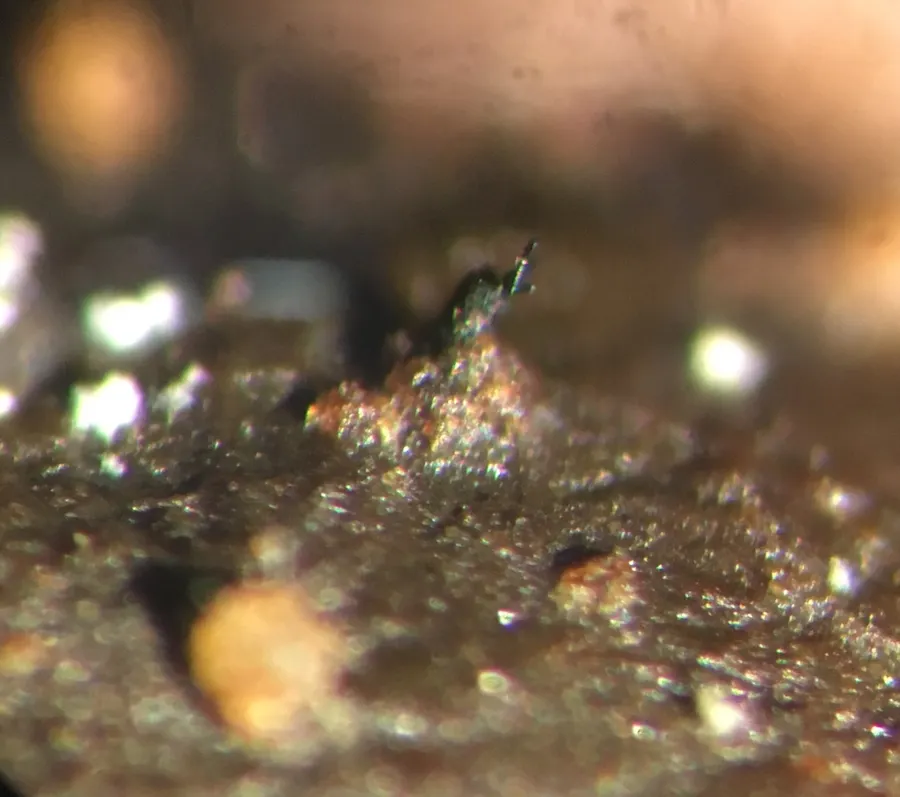
Dokumentasi Sordaria fimicola menurut asosiasi foto pada record takson iNaturalist. Kredit: Sigrid Jakob. Identitas mengikuti sumber; bukan penentuan spesimen independen.
- Jenis
- Fotografi
- Kredit
- no rights reserved, uploaded by Sigrid Jakob
- Lisensi
- CC0 1.0
- Sumber media
- Buka entri sumber
Sumber profil
- [1] Sordaria fimicola — Wikipedia (en)
- [2] Catalogue of Life Base2026-09-11 — Sordaria fimicola
- [3] Dokumentasi visual — Sordaria fimicola
Rujukan halaman ini
Fungi. Sordaria fimicola. Rilis data fungi-2026-10-12-expansion-2. https://fungi-atlas.mgadib.chatgpt.site/jamur/sordaria-fimicola/.
Status: impor sumber; pemeriksaan editorial per profil belum selesai. Untuk klaim biologis, gunakan rujukan pada bagian terkait dan periksa konteks sumber aslinya.