01 / Morfologi

Ciri dan struktur

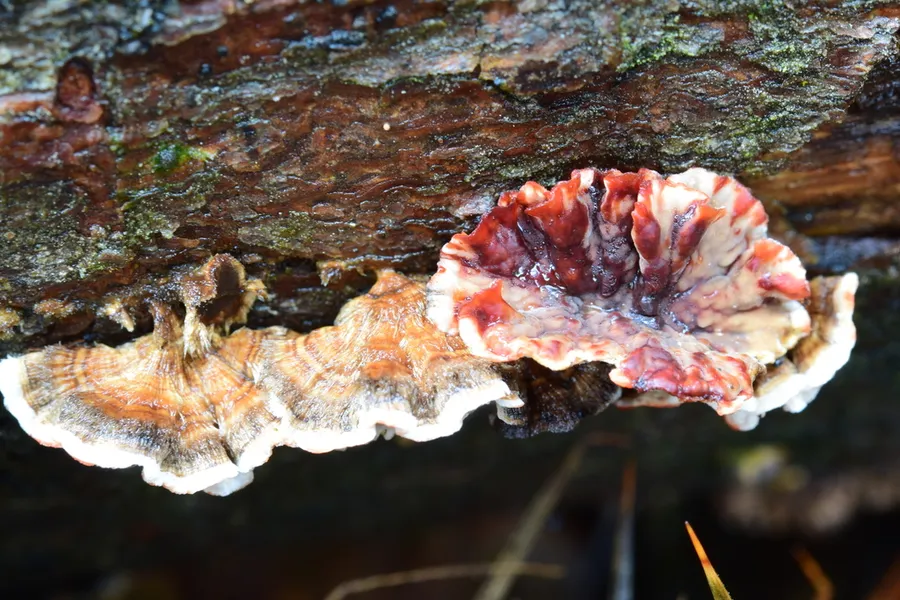
Hymenophore annual, coriaceous, solitary, caespitose, or imbricate. Pilei effused-reflexed with broad resupinate bases, or almost resupinate with reflexed margins, loosely attached, 5-10 mm radius, 5-30 mm wide, or when laterally connate to 10 x 2.5 cm; pileus surface straw colour or bay, radiately zoned with darker bands, sulcate and striate, covered with appressed tomentum, somewhat strigose near the base; hymenial surface at first even, wood colour or ochre, becoming ferruginous, pallid umber or sometimes plum when old, finally deeply radiately, sometimes.areolately creviced. Context white, then isabelline, to 0.5 mm thick, of radiately arranged parallel hyphae with a coloured cortex beneath the abhymenial hairs and sometimes also coloured beneath the hymenium; generative hyphae 4-6 µm diameter, walls 0.5-1 µm thick, without clamp connections. Conducting hyphae arising in the context and extending through the hymenial layer, scarcely projecting, 80-200 x 4-6 µm, walls 0.5 µm thick, contents granular and discoloured. Hymenial layer to 90 µm deep, a dense palisade of basidia, paraphyses, and conducting hyphae. Basidia subclavate, 25-32 x 4-5.5 µm, bearing 2 spores; sterigmata slender, erect to 6 µm long. Paraphyses subclavate, 18-26 x 4-4.5 µm. Spores cylindrical or allantoid, with rounded ends, 6-8 x 2.5-3 µm, walls smooth, hyaline, 0.2 µm thick.

Sebagian uraian ditampilkan dalam bahasa sumber; terjemahannya belum tersedia atau belum lolos pemeriksaan.

Rujukan: [1]

Pengukuran mengikuti objek, spesimen atau kultur, dan metode yang disebutkan sumber. Baca uraian asli untuk konteks lengkap.

02 / Kehidupan

Habitat dan peran ekologis

DISTRIBUTION: Europe, Great. Britain, North America, South Africa, Australia, New Zealand. HABITAT: Bark of dead branches and trunks of conifers.

Sebagian uraian ditampilkan dalam bahasa sumber; terjemahannya belum tersedia atau belum lolos pemeriksaan.

Rujukan: [1]

Habitat atau konteks temuan
Informasi belum tersedia pada sumber rilis ini.
Substrat
Informasi belum tersedia pada sumber rilis ini.
Peran atau konteks
Belum dikategorikan pada rilis ini.
Temukan hubungan serupa
03 / Siklus hidup

Reproduksi

Hymenophore annual, coriaceous, solitary, caespitose, or imbricate. Pilei effused-reflexed with broad resupinate bases, or almost resupinate with reflexed margins, loosely attached, 5-10 mm radius, 5-30 mm wide, or when laterally connate to 10 x 2.5 cm; pileus surface straw colour or bay, radiately zoned with darker bands, sulcate and striate, covered with appressed tomentum, somewhat strigose near the base; hymenial surface at first even, wood colour or ochre, becoming ferruginous, pallid umber or sometimes plum when old, finally deeply radiately, sometimes.areolately creviced. Context white, then isabelline, to 0.5 mm thick, of radiately arranged parallel hyphae with a coloured cortex beneath the abhymenial hairs and sometimes also coloured beneath the hymenium; generative hyphae 4-6 µm diameter, walls 0.5-1 µm thick, without clamp connections.

Sebagian uraian ditampilkan dalam bahasa sumber; terjemahannya belum tersedia atau belum lolos pemeriksaan.

Rujukan: [1]

Sinonim menurut acuan taksonomi rilis: Auricularia sanguinolenta; Haematostereum sanguinolentum; Merulius sanguinolentus; Stereum balsameum; Stereum balsameum f. reflexum; Stereum rigens; Stereum sanguinolentum f. alpinum; Stereum sanguinolentum subsp. rigens; Thelephora sanguinolenta; Thelephora sericea var. sanguinolenta
04 / Batas informasi

Catatan identitas dan cakupan

  • Nama diterima mengikuti Catalogue of Life Base2026-09-11; uraian mempertahankan konsep dan nama sumber aslinya.
  • Historical description as cited by BiotaNZ. Preserve explicit New Zealand/locality, host and specimen qualifiers. Distribution is the cited source scope, not a current global range.
  • Impor dan terjemahan otomatis belum diperiksa editorial per profil. Struktur reproduktif yang disebutkan tidak membuktikan seluruh siklus hidup diketahui.
  • Pengukuran pada uraian mengikuti spesimen, kultur, dan metode sumber; angka tidak diperluas ke semua populasi.

Catatan distribusi dalam narasi mengikuti sumbernya. Dokumentasi spesimen atau foto mengikuti catatan sumber. Bukti wilayah Indonesia dan penilaian konservasi tidak disimpulkan dari gambar.

05 / Dokumentasi

Melihat dengan konteks

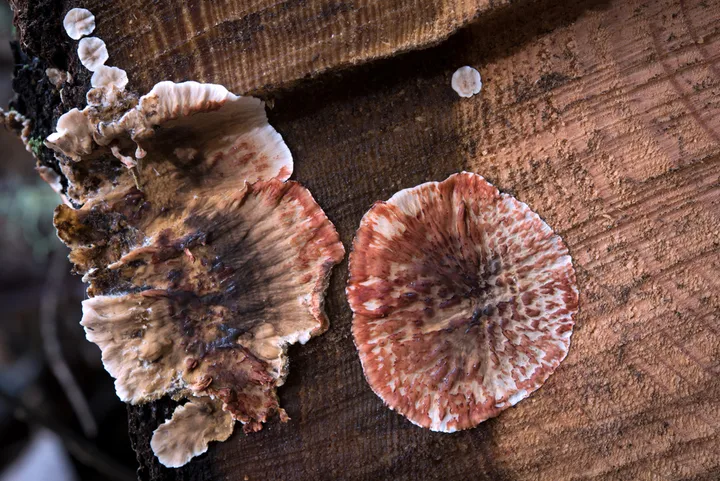
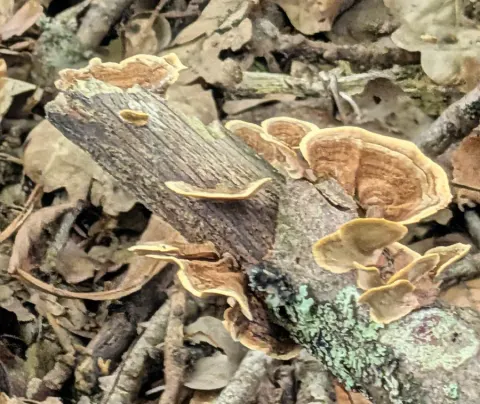
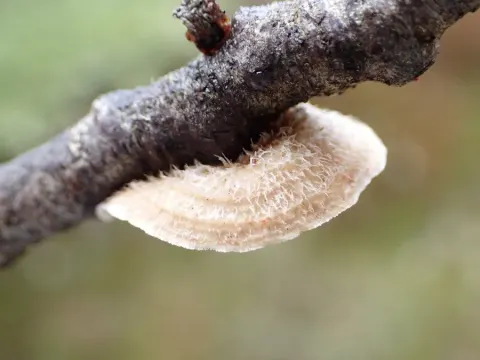
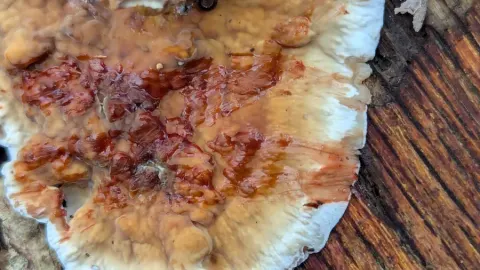
Dokumentasi Stereum sanguinolentum menurut asosiasi foto pada record takson iNaturalist. Kredit: Jose Castro. Identitas mengikuti sumber; bukan penentuan spesimen independen.

Jenis
Fotografi
Kredit
(c) Jose Castro, some rights reserved (CC BY), uploaded by Jose Castro
Lisensi
CC BY 4.0
Sumber media
Buka entri sumber

Gambar menunjukkan objek menurut identifikasi sumber, bukan verifikasi independen spesimen oleh Fungi. Tidak ada skala baru yang ditambahkan.

Dokumentasi tambahan

06 / Rujukan

Sumber profil

  1. [1] Cunningham, G.H. 1963: The Thelephoraceae of Australia and New Zealand. New Zealand Department of Scientific and Industrial Research, Bulletin. 145. — Stereum sanguinolentumBagian sumber: biota:1cb0defb-36b9-11d5-9548-00d0592d548c:1cb1a5f5-36b9-11d5-9548-00d0592d548c
    Tanggal penghimpunan sumber: 2026-10-12
    Teks sumber: CC BY 4.0 · Cunningham, G.H. 1963: The Thelephoraceae of Australia and New Zealand. New Zealand Department of Scientific and Industrial Research, Bulletin. 145.
  2. [2] Catalogue of Life Base2026-09-11 — Stereum sanguinolentumBagian sumber: ColDP NameUsage.tsv ID 6ZQPS; accepted species; source 2073
    Tanggal penghimpunan sumber: 2026-10-12
  3. [3] Dokumentasi visual — Stereum sanguinolentumBagian sumber: Identitas mengikuti sumber dokumentasi; bukan penentuan spesimen independen.
    Tanggal penghimpunan sumber: 2026-10-17
    Media sumber: CC BY 4.0 · (c) Jose Castro, some rights reserved (CC BY), uploaded by Jose Castro
  4. [4] Dokumentasi visual — Stereum sanguinolentumBagian sumber: Identitas mengikuti sumber dokumentasi; bukan penentuan spesimen independen.
    Tanggal penghimpunan sumber: 2026-10-17
    Teks sumber: CC BY 4.0 · (c) Alan Rockefeller, some rights reserved (CC BY), uploaded by Alan Rockefeller

Adaptasi teks: CC BY 4.0. Cunningham, G.H. 1963: The Thelephoraceae of Australia and New Zealand. New Zealand Department of Scientific and Industrial Research, Bulletin. 145. — Cunningham, G.H. 1963: The Thelephoraceae of Australia and New Zealand. New Zealand Department of Scientific and Industrial Research, Bulletin. 145. — Stereum sanguinolentum

Uraian asli dan riwayat sumber

Riwayat atau halaman sumber

Ringkasan sumber

Hymenophore annual, coriaceous, solitary, caespitose, or imbricate. Pilei effused-reflexed with broad resupinate bases, or almost resupinate with reflexed margins, loosely attached, 5-10 mm radius, 5-30 mm wide, or when laterally connate to 10 x 2.5 cm; pileus surface straw colour or bay, radiately zoned with darker bands, sulcate and striate, covered with appressed tomentum, somewhat strigose near the base; hymenial surface at first even, wood colour or ochre, becoming ferruginous, pallid umber or sometimes plum when old, finally deeply radiately, sometimes.areolately creviced.

Revisi sumber

Morfologi sumber

Hymenophore annual, coriaceous, solitary, caespitose, or imbricate. Pilei effused-reflexed with broad resupinate bases, or almost resupinate with reflexed margins, loosely attached, 5-10 mm radius, 5-30 mm wide, or when laterally connate to 10 x 2.5 cm; pileus surface straw colour or bay, radiately zoned with darker bands, sulcate and striate, covered with appressed tomentum, somewhat strigose near the base; hymenial surface at first even, wood colour or ochre, becoming ferruginous, pallid umber or sometimes plum when old, finally deeply radiately, sometimes.areolately creviced. Context white, then isabelline, to 0.5 mm thick, of radiately arranged parallel hyphae with a coloured cortex beneath the abhymenial hairs and sometimes also coloured beneath the hymenium; generative hyphae 4-6 µm diameter, walls 0.5-1 µm thick, without clamp connections. Conducting hyphae arising in the context and extending through the hymenial layer, scarcely projecting, 80-200 x 4-6 µm, walls 0.5 µm thick, contents granular and discoloured. Hymenial layer to 90 µm deep, a dense palisade of basidia, paraphyses, and conducting hyphae. Basidia subclavate, 25-32 x 4-5.5 µm, bearing 2 spores; sterigmata slender, erect to 6 µm long. Paraphyses subclavate, 18-26 x 4-4.5 µm. Spores cylindrical or allantoid, with rounded ends, 6-8 x 2.5-3 µm, walls smooth, hyaline, 0.2 µm thick.

Revisi sumber

Ekologi sumber

DISTRIBUTION: Europe, Great. Britain, North America, South Africa, Australia, New Zealand. HABITAT: Bark of dead branches and trunks of conifers.

Revisi sumber

Struktur reproduksi sumber

Hymenophore annual, coriaceous, solitary, caespitose, or imbricate. Pilei effused-reflexed with broad resupinate bases, or almost resupinate with reflexed margins, loosely attached, 5-10 mm radius, 5-30 mm wide, or when laterally connate to 10 x 2.5 cm; pileus surface straw colour or bay, radiately zoned with darker bands, sulcate and striate, covered with appressed tomentum, somewhat strigose near the base; hymenial surface at first even, wood colour or ochre, becoming ferruginous, pallid umber or sometimes plum when old, finally deeply radiately, sometimes.areolately creviced. Context white, then isabelline, to 0.5 mm thick, of radiately arranged parallel hyphae with a coloured cortex beneath the abhymenial hairs and sometimes also coloured beneath the hymenium; generative hyphae 4-6 µm diameter, walls 0.5-1 µm thick, without clamp connections.

Revisi sumber

Rujukan halaman ini

Fungi. Stereum sanguinolentum. Rilis data fungi-2026-10-12-expansion-2. https://fungi-atlas.mgadib.chatgpt.site/jamur/stereum-sanguinolentum/.

Status: impor sumber; pemeriksaan editorial per profil belum selesai. Untuk klaim biologis, gunakan rujukan pada bagian terkait dan periksa konteks sumber aslinya.