Ciri dan struktur
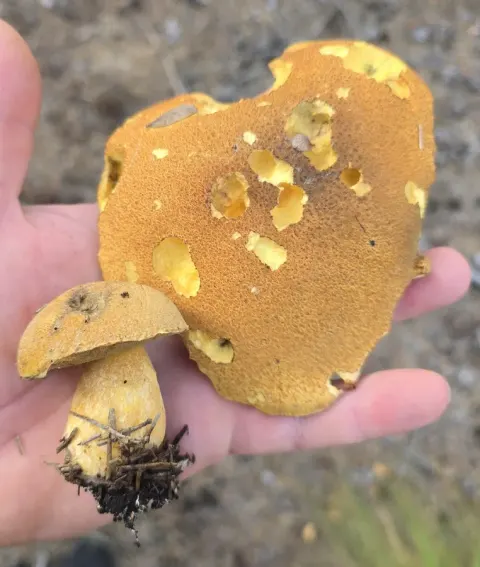
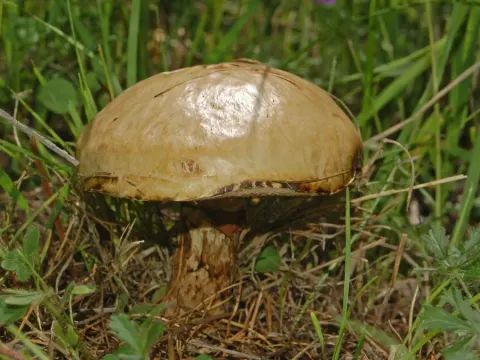
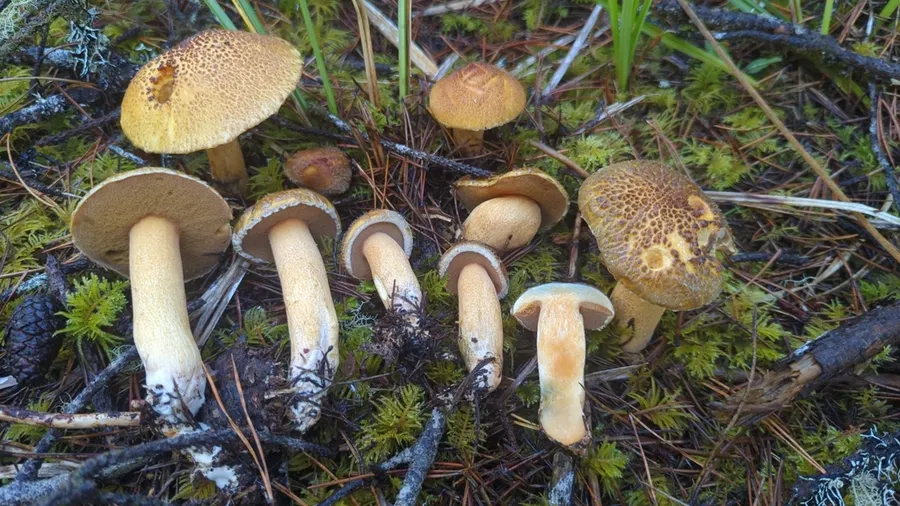
The cap is 5-12 cm wide, pale to orange-yellow with grayish brownish or reddish tomentum, and viscid while fresh. The tubes are yellow and become blue when bruised. It has no veil. glandular dotted and the color is similar to the cap. The spore print is dark olive brown to brown. The spores are brownish when they are young. The species stains fingers blue. The yellow interior of the mushroom should slowly turn green-blue when cut with a knife.
Habitat dan peran ekologis
Spesies ini biasanya ditemukan di Rocky Mountains of Idaho and di Pasifik Barat Laut. Hal ini kurang umum di negara-negara danau. Spesies ini berbuah di musim panas di Rockies and di musim gugur di sepanjang Pacific coast dan di negara-negara danau. Spesies ini biasanya dapat ditemukan di bawah pohon pinus lodgepole atau pohon pinus dua jarum lainnya. Hal ini jarang ditemukan di bawah pohon pinus. Suillus tomentosus membentuk ectomycorrhizae tuberkulis (mikorisae yang nodular) dengan pinus lodgepole (Pinus contorta var. latifolia). Recent work telah menunjukkan bahwa asetilen dikurangi oleh nodul yang berarti bahwa nitrogen ditempatkan oleh bakteri di dalam nodul. Sistem ini secara fungsional mirip dengan nodul akar dalam kacang seperti cengkeh. Lodgepole pine dapat ditemukan tumbuh di lubang tanah atau tanah yang sangat kekurangan nitrogen lainnya. Lodgepole pine dengan simbiontnya S. tomentosus adalah salah satu spesies pelopor yang paling umum di hutan utara. Ini mengkolonisasi tanah yang sangat terganggu dan menciptakan lingkungan yang cocok untuk spesies lain untuk mengkolonisasi.
- Habitat atau konteks temuan
- hutan
- Substrat
- Informasi belum tersedia pada sumber rilis ini.
- Peran atau konteks
- Mitra tumbuhan
Reproduksi
The spore print is dark olive brown to brown. The spores are brownish when they are young. The species stains fingers blue. The yellow interior of the mushroom should slowly turn green-blue when cut with a knife.
Catatan identitas dan cakupan
- Nama diterima mengikuti Catalogue of Life Base2026-09-11; uraian mempertahankan konsep dan nama sumber aslinya.
- Original geographic, specimen and life-cycle scope retained; source import awaits individual editorial review.
- Impor dan terjemahan otomatis belum diperiksa editorial per profil. Struktur reproduktif yang disebutkan tidak membuktikan seluruh siklus hidup diketahui.
- Pengukuran pada uraian mengikuti spesimen, kultur, dan metode sumber; angka tidak diperluas ke semua populasi.
Catatan distribusi dalam narasi mengikuti sumbernya. Dokumentasi spesimen atau foto mengikuti catatan sumber. Bukti wilayah Indonesia dan penilaian konservasi tidak disimpulkan dari gambar.
Melihat dengan konteks
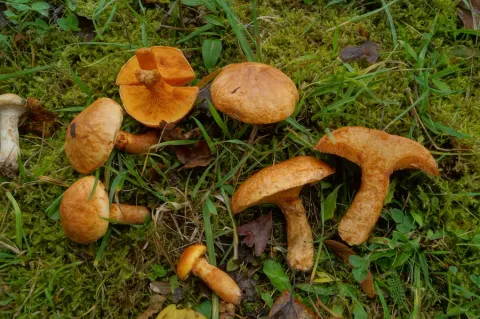
Dokumentasi Suillus tomentosus menurut asosiasi foto pada record takson iNaturalist. Kredit: Alan Rockefeller. Identitas mengikuti sumber; bukan penentuan spesimen independen.
- Jenis
- Fotografi
- Kredit
- (c) Alan Rockefeller, some rights reserved (CC BY), uploaded by Alan Rockefeller
- Lisensi
- CC BY 4.0
- Sumber media
- Buka entri sumber
Sumber profil
- [1] Suillus tomentosus — Wikipedia (en)
- [2] Catalogue of Life Base2026-09-11 — Suillus tomentosus
- [3] Dokumentasi visual — Suillus tomentosus
Rujukan halaman ini
Fungi. Suillus tomentosus. Rilis data fungi-2026-10-12-expansion-2. https://fungi-atlas.mgadib.chatgpt.site/jamur/suillus-tomentosus/.
Status: impor sumber; pemeriksaan editorial per profil belum selesai. Untuk klaim biologis, gunakan rujukan pada bagian terkait dan periksa konteks sumber aslinya.