Ciri dan struktur
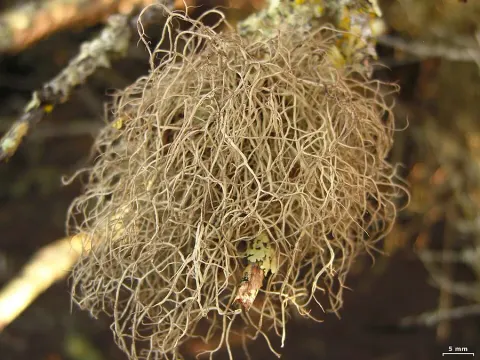
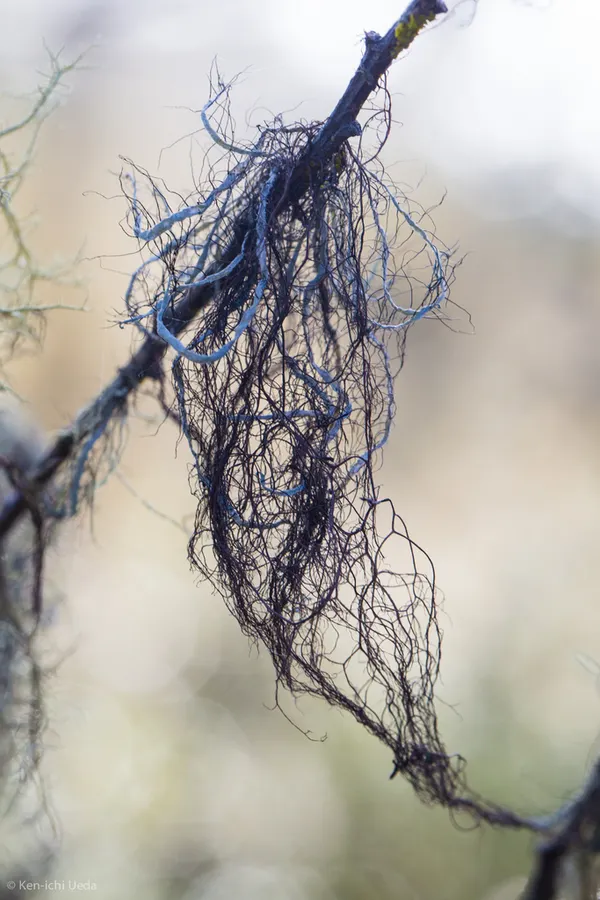
The thallus of Sulcaria spiralifera usually hangs in a more or less fashion, extending from 4 – 12 cm in length. Displaying colors ranging from pale to dark brown, the exterior can either be dull or exhibit a subtle sheen, frequently appearing , or powdery, in the norstictic acid chemotype. The darkest brown coloration is typically found on thalli growing at the western edges of dune forests, where they are exposed to sand abrasion, salt spray, wind, and high light levels, suggesting this coloration may be an environmental adaptation rather than a genetic trait. It features predominantly irregular branching without any apparent primary branches, and the angles created at these junctions are usually acute. The branches themselves have diameters falling between 0.10 and 0.35 mm, with small, spine-like side branches emerging near the tips. One of the distinguishing characteristics of this lichen is the presence of pseudocyphellae, or small pores on the surface of the thallus. These typically stand out due to their white color and can be straight or wrap around the branches in a spiral fashion. Their size ranges from 1 to 4 mm in length, they sometimes exhibit a furrowed texture, and they may be found either densely packed or sporadically. However, soralia and isidia, structures associated with vegetative reproduction, are absent in this species. The presence of apothecia and conidiomata, structures linked to sexual and asexual reproduction, respectively, have yet to be observed in this species. Chemically, Sulcaria spiralifera presents two distinct chemotypes which are now recognized as taxonomic varieties.
Habitat dan peran ekologis
Found along the west coast of North America, Sulcaria spiralifera is a seldom seen yet occasionally locally abundant species native to regions spanning from northern California to Washington. Its preferred habitats include open or shaded maritime forests, where it is found growing on lodgepole pines (Pinus contorta), Sitka spruces (Picea sitchensis), and an array of shrubs and deciduous trees. The species is most abundant in high exposure sites such as forest edges along sand dunes and large canopy gaps. In lodgepole pine stands, which have relatively open canopies, it occurs abundantly in both the understory and upper canopy. However, in Sitka spruce stands with more closed canopies, it is mostly restricted to the upper tree crowns. The species thrives in a climate characterized by cool rainy winters and mild dry summers, where fog plays a significant role in its moisture requirements. Its distribution closely correlates with the coastal summer fog zone, occurring in areas that experience between 60 and 80 foggy days per year. On a typical foggy day in coastal northern California forests, these lichens can receive moisture equivalent to 0.3 cm of rainfall.
- Habitat atau konteks temuan
- hutan
- Substrat
- Informasi belum tersedia pada sumber rilis ini.
- Peran atau konteks
- Pembentuk liken
Reproduksi
One of the distinguishing characteristics of this lichen is the presence of pseudocyphellae, or small pores on the surface of the thallus. These typically stand out due to their white color and can be straight or wrap around the branches in a spiral fashion. Their size ranges from 1 to 4 mm in length, they sometimes exhibit a furrowed texture, and they may be found either densely packed or sporadically. However, soralia and isidia, structures associated with vegetative reproduction, are absent in this species. The presence of apothecia and conidiomata, structures linked to sexual and asexual reproduction, respectively, have yet to be observed in this species.
Catatan identitas dan cakupan
- Nama diterima mengikuti Catalogue of Life Base2026-09-11; uraian mempertahankan konsep dan nama sumber aslinya.
- Original geographic, specimen and life-cycle scope retained; source import awaits individual editorial review.
- Impor dan terjemahan otomatis belum diperiksa editorial per profil. Struktur reproduktif yang disebutkan tidak membuktikan seluruh siklus hidup diketahui.
- Pengukuran pada uraian mengikuti spesimen, kultur, dan metode sumber; angka tidak diperluas ke semua populasi.
Catatan distribusi dalam narasi mengikuti sumbernya. Dokumentasi spesimen atau foto mengikuti catatan sumber. Bukti wilayah Indonesia dan penilaian konservasi tidak disimpulkan dari gambar.
Melihat dengan konteks
Dokumentasi Sulcaria spiralifera menurut asosiasi foto pada record takson iNaturalist. Kredit: Ken-ichi Ueda. Identitas mengikuti sumber; bukan penentuan spesimen independen.
- Jenis
- Fotografi
- Kredit
- (c) Ken-ichi Ueda, some rights reserved (CC BY), uploaded by Ken-ichi Ueda
- Lisensi
- CC BY 4.0
- Sumber media
- Buka entri sumber
Dokumentasi tambahan
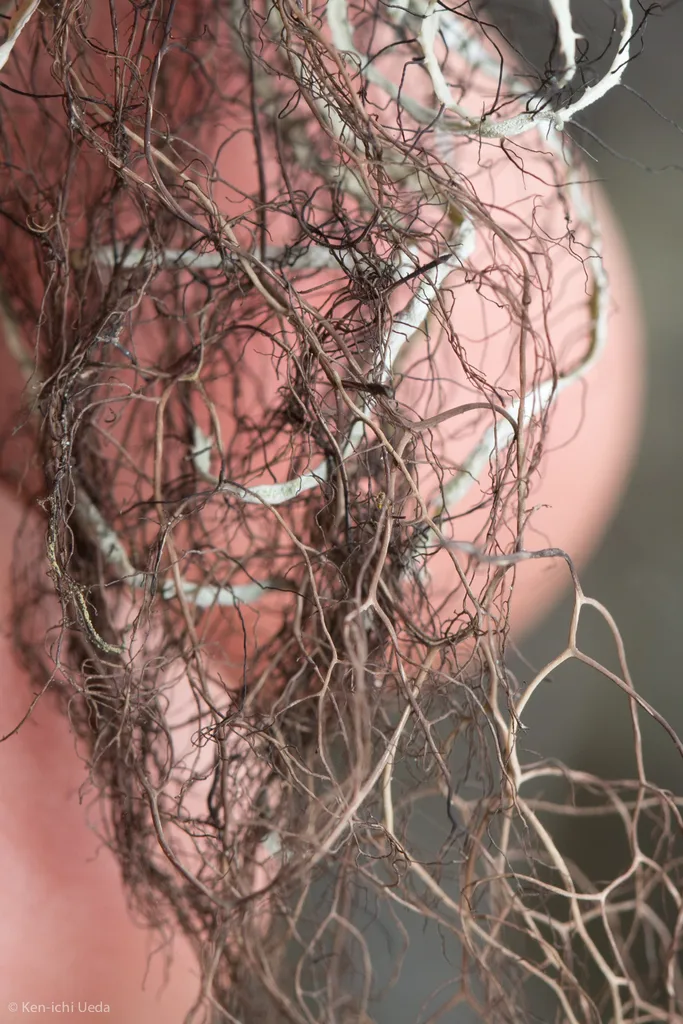
Foto yang diasosiasikan dengan Sulcaria spiralifera pada iNaturalist. Identifikasi mengikuti sumber; bukan penentuan spesimen independen.
Kredit dan penggunaan
(c) Ken-ichi Ueda, some rights reserved (CC BY), uploaded by Ken-ichi Ueda
Ukuran dan format gambar disesuaikan tanpa pemotongan, retus, atau penambahan skala. Lisensi sumber dipertahankan.
Sumber profil
- [1] Sulcaria spiralifera — Wikipedia (en)
- [2] Catalogue of Life Base2026-09-11 — Sulcaria spiralifera
- [3] Dokumentasi visual — Sulcaria spiralifera
- [4] Dokumentasi visual — Sulcaria spiralifera
Rujukan halaman ini
Fungi. Sulcaria spiralifera. Rilis data fungi-2026-10-12-expansion-2. https://fungi-atlas.mgadib.chatgpt.site/jamur/sulcaria-spiralifera/.
Status: impor sumber; pemeriksaan editorial per profil belum selesai. Untuk klaim biologis, gunakan rujukan pada bagian terkait dan periksa konteks sumber aslinya.