01 / Morfologi

Ciri dan struktur

The surface of the gall eventually becomes corrugate and coated with the fungus, showing as a white bloom of ascospore producing hyphae. The totally inedible fruits shrivel and most fall. The airborne spores released from the whitish 'bloom' on the fruit are thought to settle in the host's bark and bud scales, growing at first without causing obvious signs, but in the spring the fungus invades the plant tissues, causing swollen and deformed shoots. The fungus remains in these as a mycelium. The gall inducing fungus then grows into the flowers and the developing fruit. The cycle then repeats itself. The fungus infects the ovaries causing a pseudo-pollination and an enhanced cell division, resulting in the infested fruit being larger than the healthy one. As a fungus, cool and wet weather conditions promote the germination of spores, while warm and dry weather results in infection rarely taking place. Removing and destroying the galls may help to reduce the infestation. Colonisation can become extensive and eradication very difficult. The disease can to some degree be controlled by carefully removing infected branches, witches' brooms and fruit before the infective air-borne spores are produced.

Sebagian uraian ditampilkan dalam bahasa sumber; terjemahannya belum tersedia atau belum lolos pemeriksaan.

Rujukan: [1]

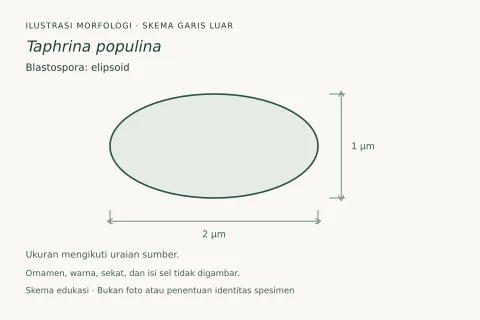
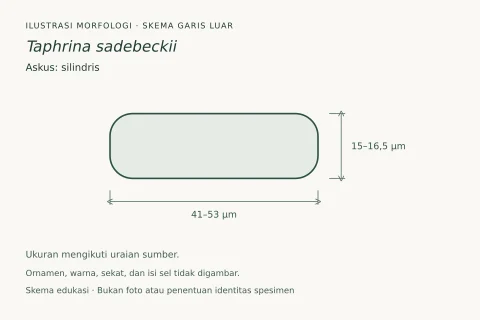
Pengukuran mengikuti objek, spesimen atau kultur, dan metode yang disebutkan sumber. Baca uraian asli untuk konteks lengkap.

02 / Kehidupan

Habitat dan peran ekologis

Taphrina padi, "jamur lidah", menghasilkan pertumbuhan yang khas, memanjang, seperti lidah pada ceri burung, mirip dengan spesies lain yang terkait erat seperti Taphrina alni pada ader (Alnus glutinosa) dan Taphrina pruni pada blackthorn (Prunus spinosa). Gulai ini tersebar luas, dan mungkin kurang tercatat di Inggris, tetapi ditemukan di seluruh belahan bumi utara yang sedang. T. padi telah direkam di India.

Rujukan: [1]

Habitat atau konteks temuan
Informasi belum tersedia pada sumber rilis ini.
Substrat
Informasi belum tersedia pada sumber rilis ini.
Peran atau konteks
Belum dikategorikan pada rilis ini.
Temukan hubungan serupa
03 / Siklus hidup

Reproduksi

The surface of the gall eventually becomes corrugate and coated with the fungus, showing as a white bloom of ascospore producing hyphae. The totally inedible fruits shrivel and most fall. The airborne spores released from the whitish 'bloom' on the fruit are thought to settle in the host's bark and bud scales, growing at first without causing obvious signs, but in the spring the fungus invades the plant tissues, causing swollen and deformed shoots. The fungus remains in these as a mycelium. The gall inducing fungus then grows into the flowers and the developing fruit. The cycle then repeats itself. As a fungus, cool and wet weather conditions promote the germination of spores, while warm and dry weather results in infection rarely taking place.

Sebagian uraian ditampilkan dalam bahasa sumber; terjemahannya belum tersedia atau belum lolos pemeriksaan.

Rujukan: [1]

Sinonim menurut acuan taksonomi rilis: Taphrina pruni var. padi
04 / Batas informasi

Catatan identitas dan cakupan

  • Nama diterima mengikuti Catalogue of Life Base2026-09-11; uraian mempertahankan konsep dan nama sumber aslinya.
  • Original geographic, specimen and life-cycle scope retained; source import awaits individual editorial review.
  • Impor dan terjemahan otomatis belum diperiksa editorial per profil. Struktur reproduktif yang disebutkan tidak membuktikan seluruh siklus hidup diketahui.
  • Pengukuran pada uraian mengikuti spesimen, kultur, dan metode sumber; angka tidak diperluas ke semua populasi.

Catatan distribusi dalam narasi mengikuti sumbernya. Dokumentasi spesimen atau foto mengikuti catatan sumber. Bukti wilayah Indonesia dan penilaian konservasi tidak disimpulkan dari gambar.

05 / Dokumentasi

Melihat dengan konteks

Dokumentasi visual yang memenuhi pemeriksaan subjek dan hak penggunaan belum tersedia. Foto gejala, label, dan gambar yang meragukan tidak dihitung.

06 / Rujukan

Sumber profil

  1. [1] Taphrina padi — Wikipedia (en)Bagian sumber: Frozen revision 1213793274
    Tanggal penghimpunan sumber: 2026-10-12
    Teks sumber: CC BY-SA4.0 · Wikipedia contributors
  2. [2] Catalogue of Life Base2026-09-11 — Taphrina padiBagian sumber: ColDP NameUsage.tsv ID 54S9G; accepted species; source 2073
    Tanggal penghimpunan sumber: 2026-10-12

Adaptasi teks: CC BY-SA 4.0. Wikipedia contributors — Taphrina padi — Wikipedia (en)

Uraian asli dan riwayat sumber

Riwayat atau halaman sumber

Ringkasan sumber

The surface of the gall eventually becomes corrugate and coated with the fungus, showing as a white bloom of ascospore producing hyphae. The totally inedible fruits shrivel and most fall. The airborne spores released from the whitish 'bloom' on the fruit are thought to settle in the host's bark and bud scales, growing at first without causing obvious signs, but in the spring the fungus invades the plant tissues, causing swollen and deformed shoots. The fungus remains in these as a mycelium. The gall inducing fungus then grows into the flowers and the developing fruit.

Revisi sumber

Morfologi sumber

The surface of the gall eventually becomes corrugate and coated with the fungus, showing as a white bloom of ascospore producing hyphae. The totally inedible fruits shrivel and most fall. The airborne spores released from the whitish 'bloom' on the fruit are thought to settle in the host's bark and bud scales, growing at first without causing obvious signs, but in the spring the fungus invades the plant tissues, causing swollen and deformed shoots. The fungus remains in these as a mycelium. The gall inducing fungus then grows into the flowers and the developing fruit. The cycle then repeats itself. The fungus infects the ovaries causing a pseudo-pollination and an enhanced cell division, resulting in the infested fruit being larger than the healthy one. As a fungus, cool and wet weather conditions promote the germination of spores, while warm and dry weather results in infection rarely taking place. Removing and destroying the galls may help to reduce the infestation. Colonisation can become extensive and eradication very difficult. The disease can to some degree be controlled by carefully removing infected branches, witches' brooms and fruit before the infective air-borne spores are produced.

Revisi sumber

Ekologi sumber

Taphrina padi, a 'tongue fungus', produces a distinctive, elongated, tongue-like growth on bird cherry, similar to other closely related species such as Taphrina alni on ader (Alnus glutinosa) and Taphrina pruni on blackthorn (Prunus spinosa). The gall is widely distributed, and may be under recorded in the United Kingdom, but it is found throughout the temperate Northern Hemisphere. T. padi has been recorded in India.

Revisi sumber

Struktur reproduksi sumber

The surface of the gall eventually becomes corrugate and coated with the fungus, showing as a white bloom of ascospore producing hyphae. The totally inedible fruits shrivel and most fall. The airborne spores released from the whitish 'bloom' on the fruit are thought to settle in the host's bark and bud scales, growing at first without causing obvious signs, but in the spring the fungus invades the plant tissues, causing swollen and deformed shoots. The fungus remains in these as a mycelium. The gall inducing fungus then grows into the flowers and the developing fruit. The cycle then repeats itself. As a fungus, cool and wet weather conditions promote the germination of spores, while warm and dry weather results in infection rarely taking place.

Revisi sumber

Rujukan halaman ini

Fungi. Taphrina padi. Rilis data fungi-2026-10-12-expansion-2. https://fungi-atlas.mgadib.chatgpt.site/jamur/taphrina-padi/.

Status: impor sumber; pemeriksaan editorial per profil belum selesai. Untuk klaim biologis, gunakan rujukan pada bagian terkait dan periksa konteks sumber aslinya.