01 / Morfologi

Ciri dan struktur

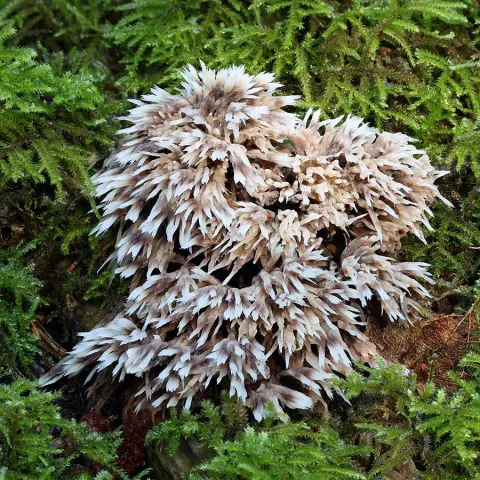
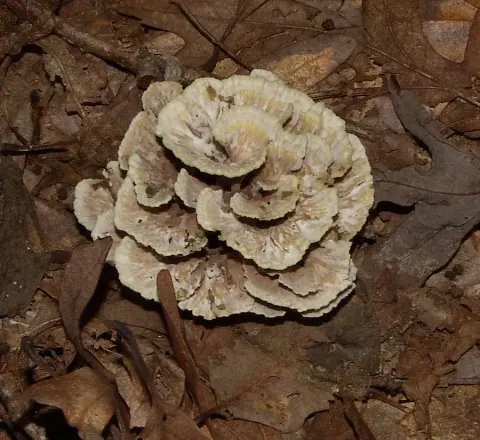
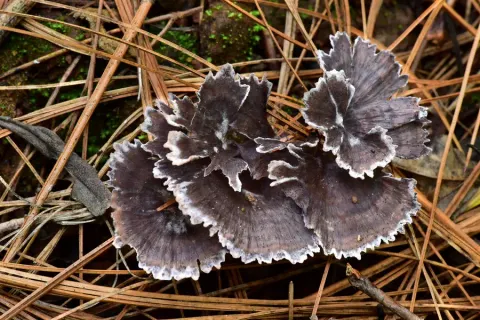
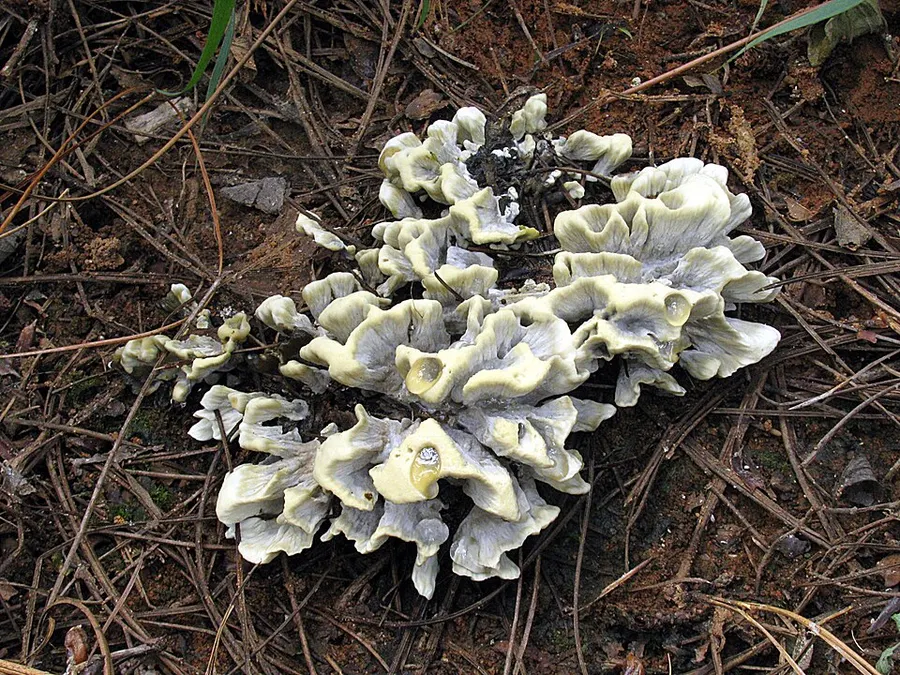
Thelephora ganbajun is annual, has a clustered, coral-like fruiting bodies which is 5-14cm in height and 4-14cm in width. Branching repeatedly from a thick, ringed base, with narrow, fan-shaped or broom-like tips extending from the upper portions. The coloration ranging from greyish white to greyish black. Young fruiting bodies are soft in texture, becoming dry and tough upon maturity. Under microscopic examination, the basidiospores are 7–12 × 6–8 μm, which are angular and echinulate, hyaline to pale brown, and non-amyloid. Basidia measure 25–35 × 9–12 μm, with 3–8 μm long sterigmata. Hyphae are hyaline with clamp connections. The flesh is thick and fibrous, with a pleasant odor and taste, this species is considered edible.

Sebagian uraian ditampilkan dalam bahasa sumber; terjemahannya belum tersedia atau belum lolos pemeriksaan.

Rujukan: [1]

Pengukuran mengikuti objek, spesimen atau kultur, dan metode yang disebutkan sumber. Baca uraian asli untuk konteks lengkap.

02 / Kehidupan

Habitat dan peran ekologis

Thelephora ganbajun is an ectomycorrhizal fungus, forming associations with Pinus yunnanensis, Pinus massoniana, and Pinus kesiya var. langbianensis. It grows in pine forests at elevations between 800 and 2200 meters. The species is endemic to China, primarily distributed in Yunnan Province, with scattered records from western Guizhou and southern Sichuan.

Sebagian uraian ditampilkan dalam bahasa sumber; terjemahannya belum tersedia atau belum lolos pemeriksaan.

Rujukan: [1]

Habitat atau konteks temuan
hutan
Substrat
Informasi belum tersedia pada sumber rilis ini.
Peran atau konteks
Mitra tumbuhan
Temukan hubungan serupa
03 / Siklus hidup

Reproduksi

Under microscopic examination, the basidiospores are 7–12 × 6–8 μm, which are angular and echinulate, hyaline to pale brown, and non-amyloid. Basidia measure 25–35 × 9–12 μm, with 3–8 μm long sterigmata. Hyphae are hyaline with clamp connections.

Sebagian uraian ditampilkan dalam bahasa sumber; terjemahannya belum tersedia atau belum lolos pemeriksaan.

Rujukan: [1]

04 / Batas informasi

Catatan identitas dan cakupan

  • Nama diterima mengikuti Catalogue of Life Base2026-09-11; uraian mempertahankan konsep dan nama sumber aslinya.
  • Original geographic, specimen and life-cycle scope retained; source import awaits individual editorial review.
  • Impor dan terjemahan otomatis belum diperiksa editorial per profil. Struktur reproduktif yang disebutkan tidak membuktikan seluruh siklus hidup diketahui.
  • Pengukuran pada uraian mengikuti spesimen, kultur, dan metode sumber; angka tidak diperluas ke semua populasi.

Catatan distribusi dalam narasi mengikuti sumbernya. Dokumentasi spesimen atau foto mengikuti catatan sumber. Bukti wilayah Indonesia dan penilaian konservasi tidak disimpulkan dari gambar.

05 / Dokumentasi

Melihat dengan konteks

Dokumentasi Thelephora ganbajun dari Wikimedia Commons. For more information about this, see the observation page at Mushroom Observer. Identifikasi mengikuti record berkas sumber.

Jenis
Fotografi
Kredit
This image was created by user wombata at Mushroom Observer , a source for mycological images. You can contact this user here .
Sumber media
Buka entri sumber

Gambar menunjukkan objek menurut identifikasi sumber, bukan verifikasi independen spesimen oleh Fungi. Tidak ada skala baru yang ditambahkan.

06 / Rujukan

Sumber profil

  1. [1] Thelephora ganbajun — Wikipedia (en)Bagian sumber: Frozen revision 1348012316
    Tanggal penghimpunan sumber: 2026-10-12
    Teks sumber: CC BY-SA4.0 · Wikipedia contributors
  2. [2] Catalogue of Life Base2026-09-11 — Thelephora ganbajunBagian sumber: ColDP NameUsage.tsv ID 567W2; accepted species; source 2073
    Tanggal penghimpunan sumber: 2026-10-12
  3. [3] Dokumentasi visual — Thelephora ganbajunBagian sumber: Individual media record; identification follows the source, not independent determination
    Tanggal penghimpunan sumber: 2026-10-12
    Media sumber: CC BY-SA 3.0 · This image was created by user wombata at Mushroom Observer , a source for mycological images. You can contact this user here .

Adaptasi teks: CC BY-SA 4.0. Wikipedia contributors — Thelephora ganbajun — Wikipedia (en)

Uraian asli dan riwayat sumber

Riwayat atau halaman sumber

Ringkasan sumber

Thelephora ganbajun is annual, has a clustered, coral-like fruiting bodies which is 5-14cm in height and 4-14cm in width. Branching repeatedly from a thick, ringed base, with narrow, fan-shaped or broom-like tips extending from the upper portions. The coloration ranging from greyish white to greyish black. Young fruiting bodies are soft in texture, becoming dry and tough upon maturity. Under microscopic examination, the basidiospores are 7–12 × 6–8 μm, which are angular and echinulate, hyaline to pale brown, and non-amyloid.

Revisi sumber

Morfologi sumber

Thelephora ganbajun is annual, has a clustered, coral-like fruiting bodies which is 5-14cm in height and 4-14cm in width. Branching repeatedly from a thick, ringed base, with narrow, fan-shaped or broom-like tips extending from the upper portions. The coloration ranging from greyish white to greyish black. Young fruiting bodies are soft in texture, becoming dry and tough upon maturity. Under microscopic examination, the basidiospores are 7–12 × 6–8 μm, which are angular and echinulate, hyaline to pale brown, and non-amyloid. Basidia measure 25–35 × 9–12 μm, with 3–8 μm long sterigmata. Hyphae are hyaline with clamp connections. The flesh is thick and fibrous, with a pleasant odor and taste, this species is considered edible.

Revisi sumber

Ekologi sumber

Thelephora ganbajun is an ectomycorrhizal fungus, forming associations with Pinus yunnanensis, Pinus massoniana, and Pinus kesiya var. langbianensis. It grows in pine forests at elevations between 800 and 2200 meters. The species is endemic to China, primarily distributed in Yunnan Province, with scattered records from western Guizhou and southern Sichuan.

Revisi sumber

Struktur reproduksi sumber

Under microscopic examination, the basidiospores are 7–12 × 6–8 μm, which are angular and echinulate, hyaline to pale brown, and non-amyloid. Basidia measure 25–35 × 9–12 μm, with 3–8 μm long sterigmata. Hyphae are hyaline with clamp connections.

Revisi sumber

Rujukan halaman ini

Fungi. Thelephora ganbajun. Rilis data fungi-2026-10-12-expansion-2. https://fungi-atlas.mgadib.chatgpt.site/jamur/thelephora-ganbajun/.

Status: impor sumber; pemeriksaan editorial per profil belum selesai. Untuk klaim biologis, gunakan rujukan pada bagian terkait dan periksa konteks sumber aslinya.