Ciri dan struktur
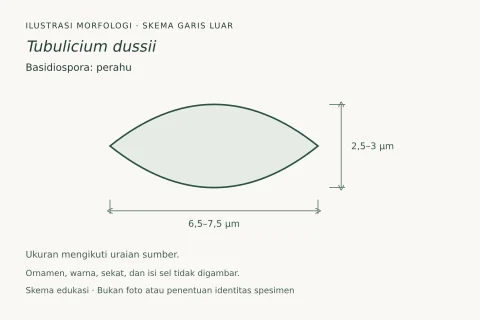
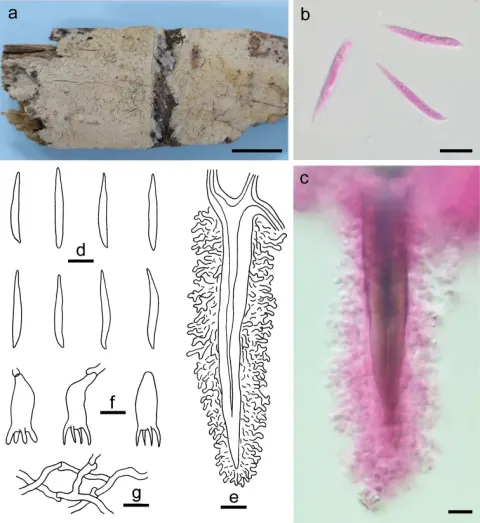
Ecologically, T. curvisporum frequently grows on Japanese andromeda (Pieris japonica) (Ushijima et al. 2019). However, we found two specimens (19744 and WEI 19-095) on tree fern in Japan and Taiwan, respectively. These observations indicate that the species may have a wider host range than previously documented. Morphologically, Tubulicium curvisporum resembles T. dussii and T. junci-acuti in having a smooth hymenophore, distinctive lyocystidia, curved basidiospores, and in growing on ferns. However, T. dussii differs by its smaller basidiospores (T. dussii: 6.5–7.5 × 2.5–3 μm; T. curvisporum: 16.5–25.5 × 4.5–7 μm) (Dämon and Hausknecht 2003; Ushijima et al. 2019), whereas T. junci-acuti has narrower basidiospores that are often slightly constricted halfway (T. junci-acuti: 15–20 × 3–4.3 μm; Boidin and Gaignon 1992).
Habitat dan peran ekologis
On living Pieris japonica or tree ferns in Japan (Ushijima et al. 2019) and Taiwan (new record; this study). Mar, Jun, Jul, Sep to Nov.
- Habitat atau konteks temuan
- Informasi belum tersedia pada sumber rilis ini.
- Substrat
- Informasi belum tersedia pada sumber rilis ini.
- Peran atau konteks
- Belum dikategorikan pada rilis ini.
Reproduksi
Ecologically, T. curvisporum frequently grows on Japanese andromeda (Pieris japonica) (Ushijima et al. 2019). However, we found two specimens (19744 and WEI 19-095) on tree fern in Japan and Taiwan, respectively. These observations indicate that the species may have a wider host range than previously documented. Morphologically, Tubulicium curvisporum resembles T. dussii and T. junci-acuti in having a smooth hymenophore, distinctive lyocystidia, curved basidiospores, and in growing on ferns. However, T. dussii differs by its smaller basidiospores (T. dussii: 6.5–7.5 × 2.5–3 μm; T. curvisporum: 16.5–25.5 × 4.5–7 μm) (Dämon and Hausknecht 2003; Ushijima et al. 2019), whereas T. junci-acuti has narrower basidiospores that are often slightly constricted halfway (T. junci-acuti: 15–20 × 3–4.3 μm; Boidin and Gaignon 1992).
Catatan identitas dan cakupan
- Nama diterima mengikuti Catalogue of Life Base2026-09-11; uraian mempertahankan konsep dan nama sumber aslinya.
- Preserve original treatment localities, hosts and substrate scope. Materials examined describe documented specimens, not the full global range.
- Impor dan terjemahan otomatis belum diperiksa editorial per profil. Struktur reproduktif yang disebutkan tidak membuktikan seluruh siklus hidup diketahui.
- Pengukuran pada uraian mengikuti spesimen, kultur, dan metode sumber; angka tidak diperluas ke semua populasi.
Catatan distribusi dalam narasi mengikuti sumbernya. Dokumentasi spesimen atau foto mengikuti catatan sumber. Bukti wilayah Indonesia dan penilaian konservasi tidak disimpulkan dari gambar.
Melihat dengan konteks
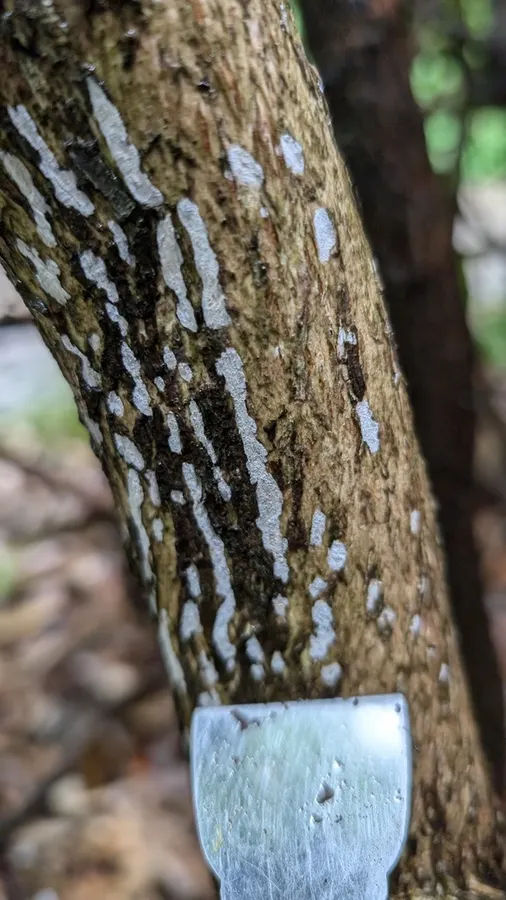
Dokumentasi Tubulicium curvisporum menurut asosiasi foto pada record takson iNaturalist. Kredit: Atsushi Nakajima. Identitas mengikuti sumber; bukan penentuan spesimen independen.
- Jenis
- Fotografi
- Kredit
- (c) Atsushi Nakajima, some rights reserved (CC BY)
- Lisensi
- CC BY 4.0
- Sumber media
- Buka entri sumber
Dokumentasi tambahan
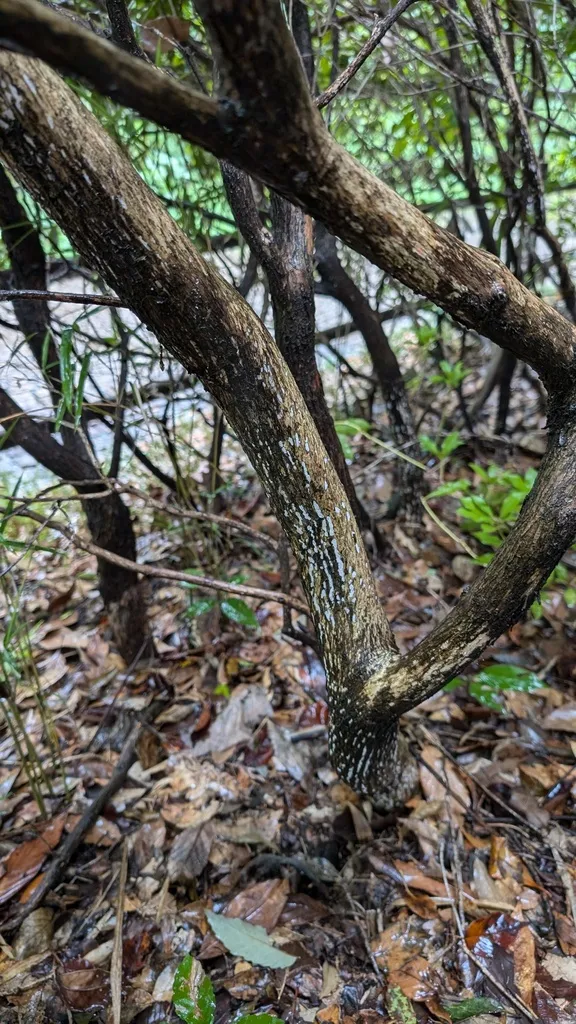
Foto yang diasosiasikan dengan Tubulicium curvisporum pada iNaturalist. Identifikasi mengikuti sumber; bukan penentuan spesimen independen.
Kredit dan penggunaan
(c) Atsushi Nakajima, some rights reserved (CC BY)
Ukuran dan format gambar disesuaikan tanpa pemotongan, retus, atau penambahan skala. Lisensi sumber dipertahankan.
Sumber profil
- [1] Taxonomy and phylogeny of Litschauerella (Hymenochaetales) and Tubulicium (Trechisporales) in East Asia: Three new species and six new records — Tubulicium curvisporum
- [2] Catalogue of Life Base2026-09-11 — Tubulicium curvisporum
- [3] Dokumentasi visual — Tubulicium curvisporum
- [4] Dokumentasi visual — Tubulicium curvisporum
Rujukan halaman ini
Fungi. Tubulicium curvisporum. Rilis data fungi-2026-10-12-expansion-2. https://fungi-atlas.mgadib.chatgpt.site/jamur/tubulicium-curvisporum/.
Status: impor sumber; pemeriksaan editorial per profil belum selesai. Untuk klaim biologis, gunakan rujukan pada bagian terkait dan periksa konteks sumber aslinya.