Ciri dan struktur
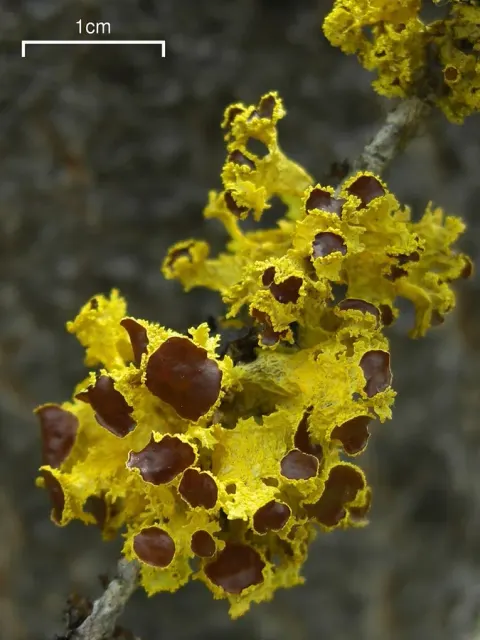
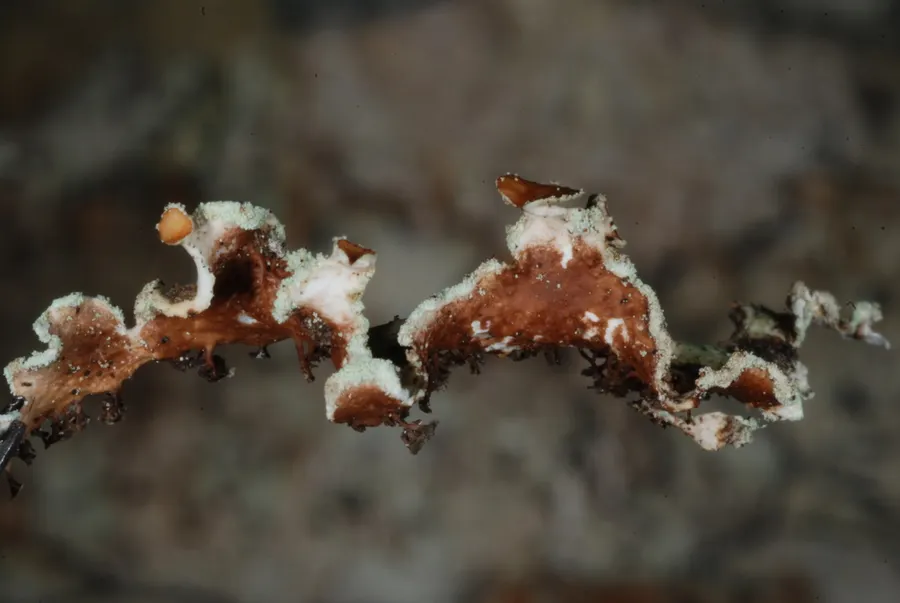
Usnocetraria oakesiana is a foliose lichen, meaning it has a leafy appearance with a structure that is dorsiventral, indicating that the upper and lower surfaces are distinctly different. The thallus is closely attached to its , forming irregular patches. The of the lichen are elongated and typically measure 4 to 10 mm in width. They are usually concave with their edges raised, and these edges are covered with soredia—powdery propagules of algae and fungal cells. The upper surface of the lichen is yellowish-green, smooth, and somewhat glossy, while the lower surface is tan to pale brown. The lower surface also features scattered rhizines, which are root-like structures that help anchor the lichen to its substrate. These rhizines are or forked, pale brown in color, and there are no pseudocyphellae—tiny pores that some lichens have on their surface. Both the upper and lower cortices, or outer layers, of the lichen are , which means they are made of tightly packed cells with thick walls, although these layers are relatively thin. The medulla, or inner layer, is white. Apothecia, the fruiting bodies where spores are produced, are extremely rare in this species. When present, they are (a type of apothecium with both and ), usually located near the edges of the lobes, and can be up to 7 mm across with a pale brown disc. The asci (spore-bearing structures within the apothecia) are (club-shaped) and typically contain eight spores. The ascospores are one-celled, hyaline (transparent), and nearly spherical, about 5 μm in diameter. Pycnidia, which are small, flask-shaped structures that produce asexual spores, are also rare in this species.
Habitat dan peran ekologis
Usnocetraria oakesiana occurs in Asia, Europe, and North America. It grows on bark, on wood, and on rock, often preferring older, shaded forests. In Nepal, it has been reported from 3900 to 4200 m elevation in a compilation of published records.
- Habitat atau konteks temuan
- hutan
- Substrat
- kayu; kulit kayu
- Peran atau konteks
- Pembentuk liken
Reproduksi
Usnocetraria oakesiana is a foliose lichen, meaning it has a leafy appearance with a structure that is dorsiventral, indicating that the upper and lower surfaces are distinctly different. The thallus is closely attached to its , forming irregular patches. The of the lichen are elongated and typically measure 4 to 10 mm in width. They are usually concave with their edges raised, and these edges are covered with soredia—powdery propagules of algae and fungal cells. The upper surface of the lichen is yellowish-green, smooth, and somewhat glossy, while the lower surface is tan to pale brown. The lower surface also features scattered rhizines, which are root-like structures that help anchor the lichen to its substrate.
Catatan identitas dan cakupan
- Nama diterima mengikuti Catalogue of Life Base2026-09-11; uraian mempertahankan konsep dan nama sumber aslinya.
- Original geographic, specimen and life-cycle scope retained; source import awaits individual editorial review.
- Impor dan terjemahan otomatis belum diperiksa editorial per profil. Struktur reproduktif yang disebutkan tidak membuktikan seluruh siklus hidup diketahui.
- Pengukuran pada uraian mengikuti spesimen, kultur, dan metode sumber; angka tidak diperluas ke semua populasi.
Catatan distribusi dalam narasi mengikuti sumbernya. Dokumentasi spesimen atau foto mengikuti catatan sumber. Bukti wilayah Indonesia dan penilaian konservasi tidak disimpulkan dari gambar.
Melihat dengan konteks
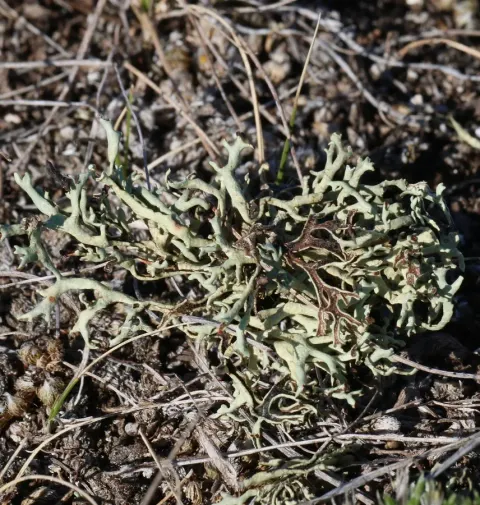
Dokumentasi Usnocetraria oakesiana menurut asosiasi foto pada record takson iNaturalist. Kredit: Douglas Goldman. Identitas mengikuti sumber; bukan penentuan spesimen independen.
- Jenis
- Fotografi
- Kredit
- (c) Douglas Goldman, some rights reserved (CC BY-SA), uploaded by Douglas Goldman
- Lisensi
- CC BY-SA 4.0
- Sumber media
- Buka entri sumber
Dokumentasi tambahan
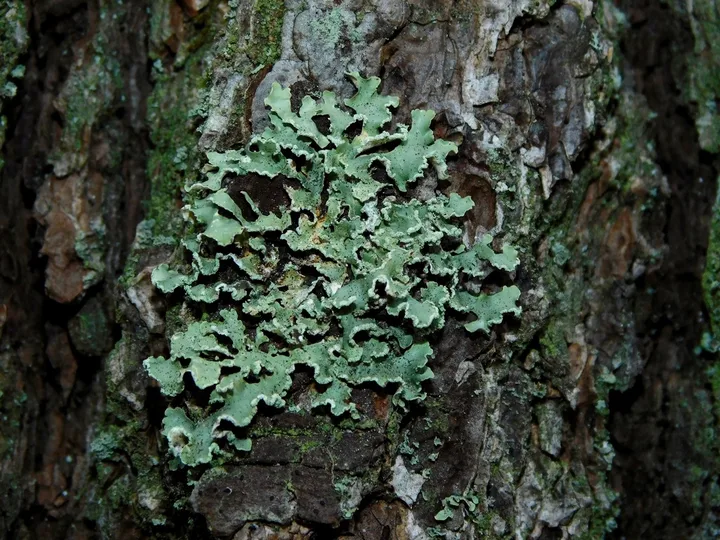
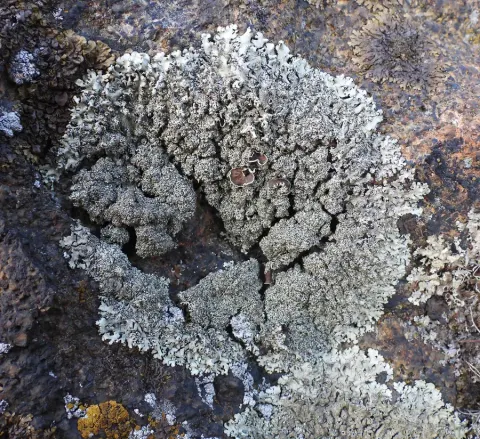
Foto yang diasosiasikan dengan Usnocetraria oakesiana pada iNaturalist. Identifikasi mengikuti sumber; bukan penentuan spesimen independen.
Kredit dan penggunaan
(c) Michael J. Papay, some rights reserved (CC BY), uploaded by Michael J. Papay
Ukuran dan format gambar disesuaikan tanpa pemotongan, retus, atau penambahan skala. Lisensi sumber dipertahankan.
Sumber profil
- [1] Usnocetraria oakesiana — Wikipedia (en)
- [2] Catalogue of Life Base2026-09-11 — Usnocetraria oakesiana
- [3] Dokumentasi visual — Usnocetraria oakesiana
- [4] Dokumentasi visual — Usnocetraria oakesiana
Rujukan halaman ini
Fungi. Usnocetraria oakesiana. Rilis data fungi-2026-10-12-expansion-2. https://fungi-atlas.mgadib.chatgpt.site/jamur/usnocetraria-oakesiana/.
Status: impor sumber; pemeriksaan editorial per profil belum selesai. Untuk klaim biologis, gunakan rujukan pada bagian terkait dan periksa konteks sumber aslinya.