01 / Morfologi

Ciri dan struktur

The cap of this fungus (known technically as an apothecium) is 2 to 4 cm in diameter and 2 to 5 cm long, with a conical or bell shape. It is folded into longitudinal ridges that often fuse together (anastomose) The spores, which number two (more rarely three) per ascus are characteristic for this species. The smooth, elliptical asci measure 275–350 μm long by 16–23 μm wide. The British-Canadian mycologist Arthur Henry Reginald Buller determined that the asci are heliotropic—they bend toward light. As he noted, "I cut transverse sections though their pilei, examined these sections under the microscope, and at once perceived that in all the hymenial grooves and depressions the asci were curved outwards so that their opercula must have faced the strongest rays of light to which the ends of the asci has been subjected in the places where the fruit-bodies developed." This response to the stimulus of light is significant because it permits a fruit body to point and later discharge its asci towards open spaces, thus increasing the chances that the spores will be dispersed by wind. The paraphyses are thick and club-shaped, with diameters of 7–8 μm at their tips.

Sebagian uraian ditampilkan dalam bahasa sumber; terjemahannya belum tersedia atau belum lolos pemeriksaan.

Rujukan: [1]

Pengukuran mengikuti objek, spesimen atau kultur, dan metode yang disebutkan sumber. Baca uraian asli untuk konteks lengkap.

02 / Kehidupan

Habitat dan peran ekologis

Jamur ini tersebar luas di seluruh Amerika Utara utara; rentangnya membentang ke selatan ke Great Lakes in Amerika Serikat Barat Tengah, dan ke selatan ke utara California on Pantai Barat. Di Eropa, jamur ini tersebar luas, dan telah dikumpulkan dari Austria, Republik Ceko, Denmark, Finlandia, Jerman, Norwegia, Polandia, Rusia, Rumania, Slovenia, Spanyol, Swedia, dan Ukraina. In Asia, it has been recorded from India and Turkey. The fruit bodies of V. bohemica grow singly or scattered on the ground in woods in early spring, often before the appearance of the morel, and throughout the morel season. Hal ini sering ditemukan di sepanjang tepi sungai, dekat kayu kapas, willow dan aspens, sering dikuburkan di sampah tanaman. Jamur ini lebih memilih buah di daerah lembab dengan sinar matahari yang cukup. Suhu pertumbuhan minimalnya adalah 3 C, dengan maksimum 22 C, dan maksimum sekitar 30 C. Sebuah studi tentang rasio karbon dan nitrogen menunjukkan bahwa V. bohemica adalah saprobik, yaitu mendapatkan nutrisi dari bahan organik yang membusuk. Namun, telah disarankan bahwa jamur ini mikoriza setidaknya sebagian dari siklus hidupnya. A 10-year study of the distribution, time of fruiting and habitats of morel and false morel population in Iowa showed that early false morels are the first morels to fruit in the spring, appearing shortly after leaves begin to form on deciduous trees.

Sebagian uraian ditampilkan dalam bahasa sumber; terjemahannya belum tersedia atau belum lolos pemeriksaan.

Rujukan: [1]

Habitat atau konteks temuan
Informasi belum tersedia pada sumber rilis ini.
Substrat
tanah
Peran atau konteks
Pengurai; Mitra tumbuhan
Temukan hubungan serupa
03 / Siklus hidup

Reproduksi

The cap of this fungus (known technically as an apothecium) is 2 to 4 cm in diameter and 2 to 5 cm long, with a conical or bell shape. It is folded into longitudinal ridges that often fuse together (anastomose) The spores, which number two (more rarely three) per ascus are characteristic for this species. The smooth, elliptical asci measure 275–350 μm long by 16–23 μm wide. The British-Canadian mycologist Arthur Henry Reginald Buller determined that the asci are heliotropic—they bend toward light. As he noted, "I cut transverse sections though their pilei, examined these sections under the microscope, and at once perceived that in all the hymenial grooves and depressions the asci were curved outwards so that their opercula must have faced the strongest rays of light to which the ends of the asci has been subjected in the places where the fruit-bodies developed." This response to the stimulus of light is significant because it permits a fruit body to point and later discharge its asci towards open spaces, thus increasing the chances that the spores will be dispersed by wind.

Sebagian uraian ditampilkan dalam bahasa sumber; terjemahannya belum tersedia atau belum lolos pemeriksaan.

Rujukan: [1]

Sinonim menurut acuan taksonomi rilis: Mitrophora bohemica; Morchella bispora; Morchella bispora var. truncata; Morchella bohemica; Morchella bohemica var. bispora; Morilla speciosa var. bohemica; Phalloboletus bisporus; Phalloboletus bohemicus; Ptychoverpa bohemica; Ptychoverpa bohemica var. pallida; Verpa bispora; Verpa bohemica var. bispora; Verpa bohemica var. pallida
04 / Batas informasi

Catatan identitas dan cakupan

  • Nama diterima mengikuti Catalogue of Life Base2026-09-11; uraian mempertahankan konsep dan nama sumber aslinya.
  • Original geographic, specimen and life-cycle scope retained; source import awaits individual editorial review.
  • Impor dan terjemahan otomatis belum diperiksa editorial per profil. Struktur reproduktif yang disebutkan tidak membuktikan seluruh siklus hidup diketahui.
  • Pengukuran pada uraian mengikuti spesimen, kultur, dan metode sumber; angka tidak diperluas ke semua populasi.

Catatan distribusi dalam narasi mengikuti sumbernya. Dokumentasi spesimen atau foto mengikuti catatan sumber. Bukti wilayah Indonesia dan penilaian konservasi tidak disimpulkan dari gambar.

05 / Dokumentasi

Melihat dengan konteks

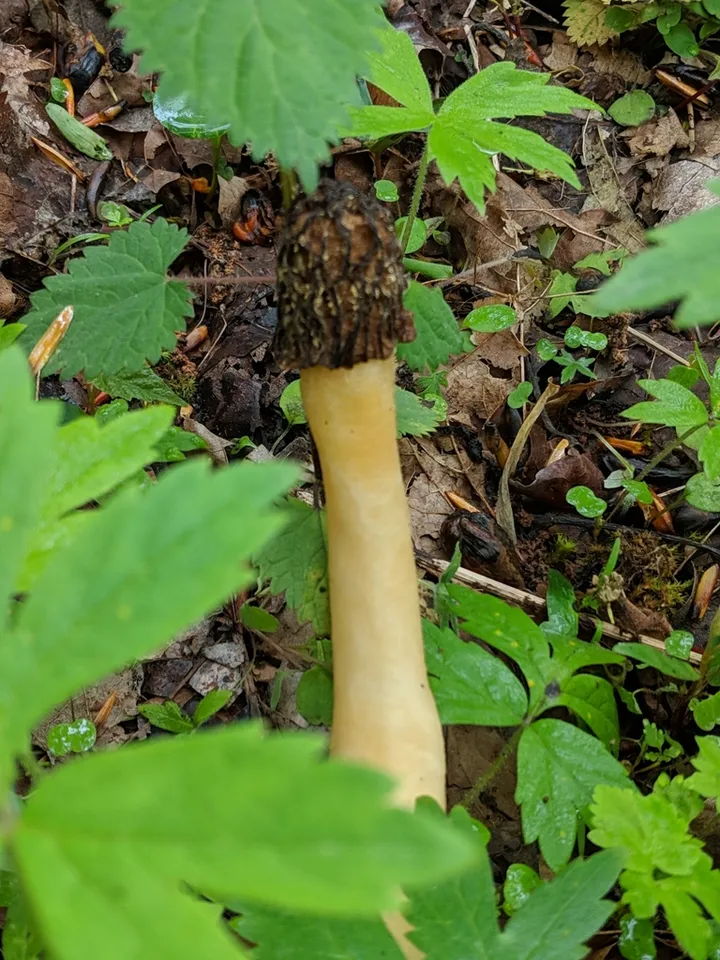
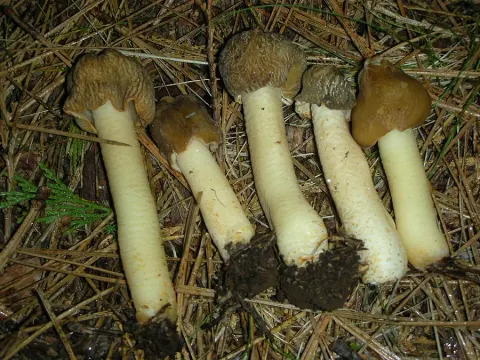
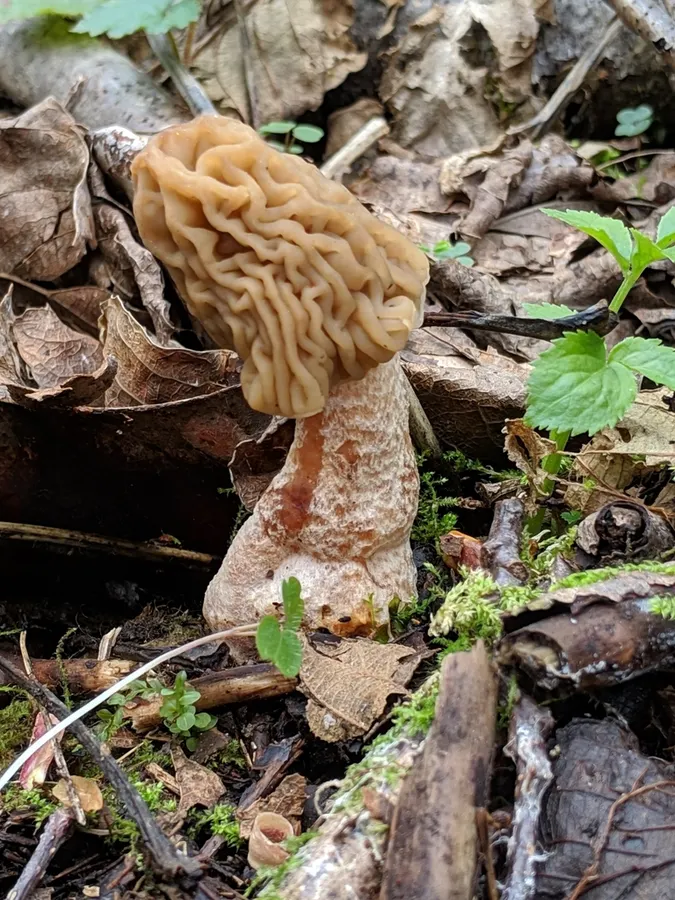
Dokumentasi Verpa bohemica menurut asosiasi foto pada record takson iNaturalist. Kredit: Sharon Squazzo. Identitas mengikuti sumber; bukan penentuan spesimen independen.

Jenis
Fotografi
Kredit
(c) Sharon Squazzo, some rights reserved (CC BY), uploaded by Sharon Squazzo
Lisensi
CC BY 4.0
Sumber media
Buka entri sumber

Gambar menunjukkan objek menurut identifikasi sumber, bukan verifikasi independen spesimen oleh Fungi. Tidak ada skala baru yang ditambahkan.

Dokumentasi tambahan

06 / Rujukan

Sumber profil

  1. [1] Verpa bohemica — Wikipedia (en)Bagian sumber: Frozen revision 1368169825
    Tanggal penghimpunan sumber: 2026-10-12
    Teks sumber: CC BY-SA4.0 · Wikipedia contributors
  2. [2] Catalogue of Life Base2026-09-11 — Verpa bohemicaBagian sumber: ColDP NameUsage.tsv ID 5B7M9; accepted species; source 2073
    Tanggal penghimpunan sumber: 2026-10-12
  3. [3] Dokumentasi visual — Verpa bohemicaBagian sumber: Identitas mengikuti sumber dokumentasi; bukan penentuan spesimen independen.
    Tanggal penghimpunan sumber: 2026-10-17
    Media sumber: CC BY 4.0 · (c) Sharon Squazzo, some rights reserved (CC BY), uploaded by Sharon Squazzo
  4. [4] Dokumentasi visual — Verpa bohemicaBagian sumber: Identitas mengikuti sumber dokumentasi; bukan penentuan spesimen independen.
    Tanggal penghimpunan sumber: 2026-10-17
    Teks sumber: CC BY 4.0 · (c) Brodie Cass Talbott, some rights reserved (CC BY), uploaded by Brodie Cass Talbott

Adaptasi teks: CC BY-SA 4.0. Wikipedia contributors — Verpa bohemica — Wikipedia (en)

Uraian asli dan riwayat sumber

Riwayat atau halaman sumber

Ringkasan sumber

Verpa bohemica is a species of fungus in the family Morchellaceae. The synonym Ptychoverpa bohemica is often used by European mycologists and it is commonly known as the early morel or the wrinkled thimble-cap. The mushroom has a pale yellow or brown thimble-shaped cap—2 to 4 cm in diameter by 2 to 5 cm long—that has a surface wrinkled and ribbed with brain-like convolutions. A feature distinguishing the species from true morels (genus Morchella), the cap hangs free from the top of the stem, which is lighter in color, brittle, and up to 12 cm long by 1 to 2.5 cm thick.

Revisi sumber

Morfologi sumber

The cap of this fungus (known technically as an apothecium) is 2 to 4 cm in diameter and 2 to 5 cm long, with a conical or bell shape. It is folded into longitudinal ridges that often fuse together (anastomose) The spores, which number two (more rarely three) per ascus are characteristic for this species. The smooth, elliptical asci measure 275–350 μm long by 16–23 μm wide. The British-Canadian mycologist Arthur Henry Reginald Buller determined that the asci are heliotropic—they bend toward light. As he noted, "I cut transverse sections though their pilei, examined these sections under the microscope, and at once perceived that in all the hymenial grooves and depressions the asci were curved outwards so that their opercula must have faced the strongest rays of light to which the ends of the asci has been subjected in the places where the fruit-bodies developed." This response to the stimulus of light is significant because it permits a fruit body to point and later discharge its asci towards open spaces, thus increasing the chances that the spores will be dispersed by wind. The paraphyses are thick and club-shaped, with diameters of 7–8 μm at their tips.

Revisi sumber

Ekologi sumber

The fungus has a wide distribution throughout northern North America; its range extends south to the Great Lakes in the Midwestern United States, and south to northern California on the West Coast. In Europe, the fungus is widely distributed, and has been collected from Austria, the Czech Republic, Denmark, Finland, Germany, Norway, Poland, Russia, Romania, Slovenia, Spain, Sweden, and Ukraine. In Asia, it has been recorded from India and Turkey. The fruit bodies of V. bohemica grow singly or scattered on the ground in woods in early spring, often before the appearance of the morel, and throughout the morel season. It is often found along riverbanks, near cottonwoods, willows and aspens, often buried in plant litter. The fungus prefers to fruit in moist areas with ample sunlight. Its minimum growth temperature is 3 C, with an optimum of 22 C, and a maximum of about 30 C. A study of carbon and nitrogen isotope ratios indicated that V. bohemica is saprobic, that is, obtaining nutrients from decomposing organic matter. It has been suggested, however, that the fungus is mycorrhizal for at least part of its life cycle. A 10-year study of the distribution, time of fruiting and habitats of morel and false morel population in Iowa showed that early false morels are the first morels to fruit in the spring, appearing shortly after leaves begin to form on deciduous trees.

Revisi sumber

Struktur reproduksi sumber

The cap of this fungus (known technically as an apothecium) is 2 to 4 cm in diameter and 2 to 5 cm long, with a conical or bell shape. It is folded into longitudinal ridges that often fuse together (anastomose) The spores, which number two (more rarely three) per ascus are characteristic for this species. The smooth, elliptical asci measure 275–350 μm long by 16–23 μm wide. The British-Canadian mycologist Arthur Henry Reginald Buller determined that the asci are heliotropic—they bend toward light. As he noted, "I cut transverse sections though their pilei, examined these sections under the microscope, and at once perceived that in all the hymenial grooves and depressions the asci were curved outwards so that their opercula must have faced the strongest rays of light to which the ends of the asci has been subjected in the places where the fruit-bodies developed." This response to the stimulus of light is significant because it permits a fruit body to point and later discharge its asci towards open spaces, thus increasing the chances that the spores will be dispersed by wind.

Revisi sumber

Rujukan halaman ini

Fungi. Verpa bohemica. Rilis data fungi-2026-10-12-expansion-2. https://fungi-atlas.mgadib.chatgpt.site/jamur/verpa-bohemica/.

Status: impor sumber; pemeriksaan editorial per profil belum selesai. Untuk klaim biologis, gunakan rujukan pada bagian terkait dan periksa konteks sumber aslinya.