Ciri dan struktur
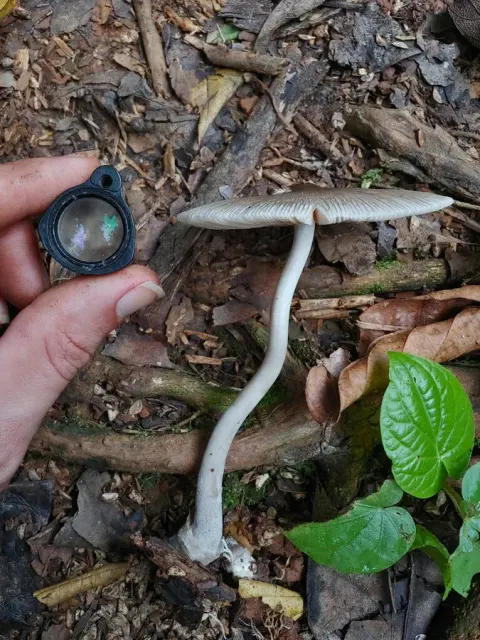
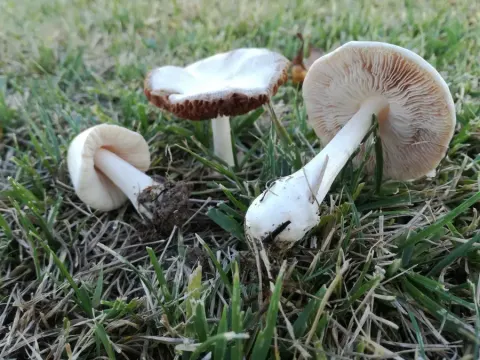
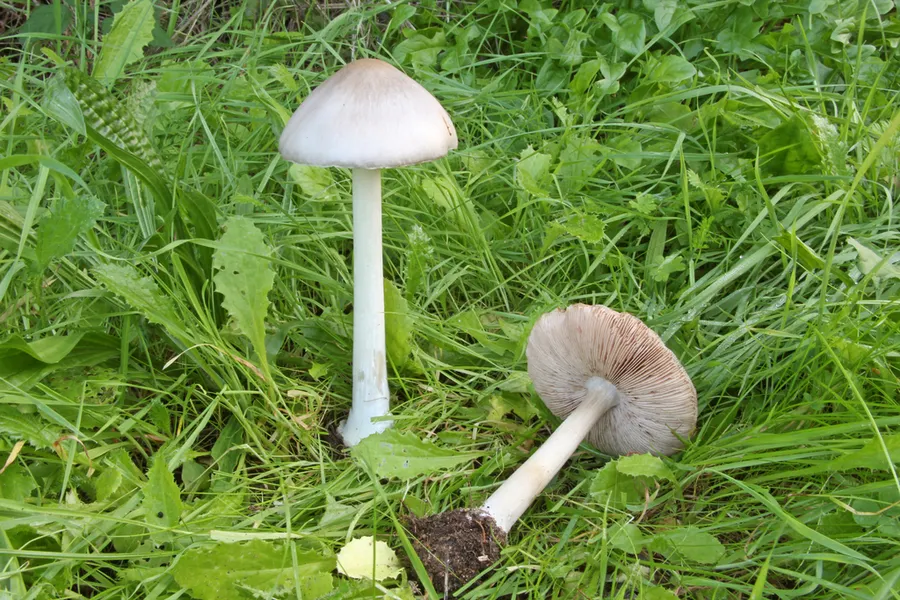
The cap of V. gloiocephalus is between 5 and 15 cm in diameter, more or less ovate or conical when young, then expands to convex or flat, sometimes with a slight central depression in old specimens. The surface is markedly viscid in fresh basidiocarps; the color ranges from pure white to grey or greyish brown. The gills are crowded, free from the stipe, ventricose (swollen in the middle), and up to 2 cm broad; they are white when young but turn pink with age. The stipe is 5 – 22.5 cm long and 0.7 – 2.5 cm wide, cylindrical, broadening towards the base; the surface is white, smooth or slightly pruinose (covered with fine white powdery granules). The volva is 2 – 3 cm high, sacciform (pouch-like), white and has a smooth surface. The flesh is white on stipe and cap and it does not change when bruised or exposed to air. Smell and taste vary from indistinct to raphanoid (radish-like) or similar to raw peeled potatoes. The spore print is pinkish brown. The basidiospores are ellipsoid and measure 12–16 by 8–9.5 μm. Basidia are 20–35 by 7–15 μm and usually four-spored, but sometimes two-spored basidia can occur. Pleurocystidia are 60–90 by 20–50 μm with variable morphology: club-shaped, fusiform, ovoid, and sometimes with a small apical papilla. Cheilocystidia are 55–100 by 15–40 μm with similar morphology to the pleurocystidia; they completely cover the gill edge. The cap cuticle (pileipellis) is an ixocutis (parallel hyphae wide embedded in a gelatinous matrix). Stipitipellis is a cutis (parallel hyphae not embedded in a gelatinous matrix). Caulocystidia are sometimes present, measuring 70–180 by 10–25 μm; they are mostly cylindrical.
Habitat dan peran ekologis
Volvopluteus gloiocephalus adalah jamur saprotrof yang tumbuh di tanah di kebun, ladang rumput, baik di dalam dan di luar hutan, dan pada akumulasi bahan sayuran seperti kompost atau tumpukan kayu. Hal ini juga dilaporkan berbuah di rumah kaca. Di Cina, tumbuh di semak bambu. Biasanya buahnya dalam kelompok beberapa basidiocarps tetapi juga dapat ditemukan tumbuh kesepian. Tidak jarang musim berbuah yang "pantas" diikuti oleh beberapa tahun tanpa munculnya jamur. Spesies ini telah dilaporkan dari semua benua kecuali Antartika, biasanya dengan nama seperti Volvariella gloiocephala atau V. speciosa. Molecular data sejauh ini telah mengkonfirmasi kejadian di Europe and Utara America but catatan dari benua lain tetap tidak dikonfirmasi.
- Habitat atau konteks temuan
- hutan
- Substrat
- tanah
- Peran atau konteks
- Pengurai
Reproduksi
The cap of V. gloiocephalus is between 5 and 15 cm in diameter, more or less ovate or conical when young, then expands to convex or flat, sometimes with a slight central depression in old specimens. The surface is markedly viscid in fresh basidiocarps; the color ranges from pure white to grey or greyish brown. The gills are crowded, free from the stipe, ventricose (swollen in the middle), and up to 2 cm broad; they are white when young but turn pink with age. The stipe is 5 – 22.5 cm long and 0.7 – 2.5 cm wide, cylindrical, broadening towards the base; the surface is white, smooth or slightly pruinose (covered with fine white powdery granules). The volva is 2 – 3 cm high, sacciform (pouch-like), white and has a smooth surface.
Catatan identitas dan cakupan
- Nama diterima mengikuti Catalogue of Life Base2026-09-11; uraian mempertahankan konsep dan nama sumber aslinya.
- Original geographic, specimen and life-cycle scope retained; source import awaits individual editorial review.
- Impor dan terjemahan otomatis belum diperiksa editorial per profil. Struktur reproduktif yang disebutkan tidak membuktikan seluruh siklus hidup diketahui.
- Pengukuran pada uraian mengikuti spesimen, kultur, dan metode sumber; angka tidak diperluas ke semua populasi.
Catatan distribusi dalam narasi mengikuti sumbernya. Dokumentasi spesimen atau foto mengikuti catatan sumber. Bukti wilayah Indonesia dan penilaian konservasi tidak disimpulkan dari gambar.
Melihat dengan konteks
Dokumentasi Volvopluteus gloiocephalus menurut asosiasi foto pada record takson iNaturalist. Kredit: Davide Puddu. Identitas mengikuti sumber; bukan penentuan spesimen independen.
- Jenis
- Fotografi
- Kredit
- (c) Davide Puddu, some rights reserved (CC BY), uploaded by Davide Puddu
- Lisensi
- CC BY 4.0
- Sumber media
- Buka entri sumber
Dokumentasi tambahan
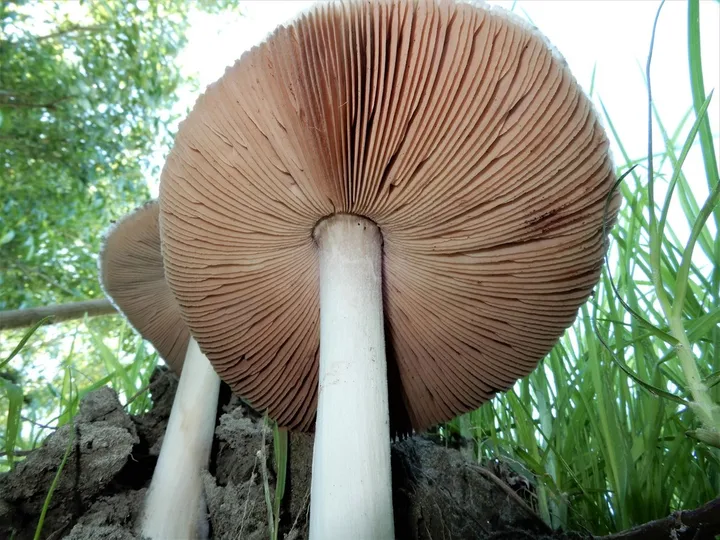
Foto yang diasosiasikan dengan Volvopluteus gloiocephalus pada iNaturalist. Identifikasi mengikuti sumber; bukan penentuan spesimen independen.
Kredit dan penggunaan
(c) Grey Smith, some rights reserved (CC BY), uploaded by Grey Smith
Ukuran dan format gambar disesuaikan tanpa pemotongan, retus, atau penambahan skala. Lisensi sumber dipertahankan.
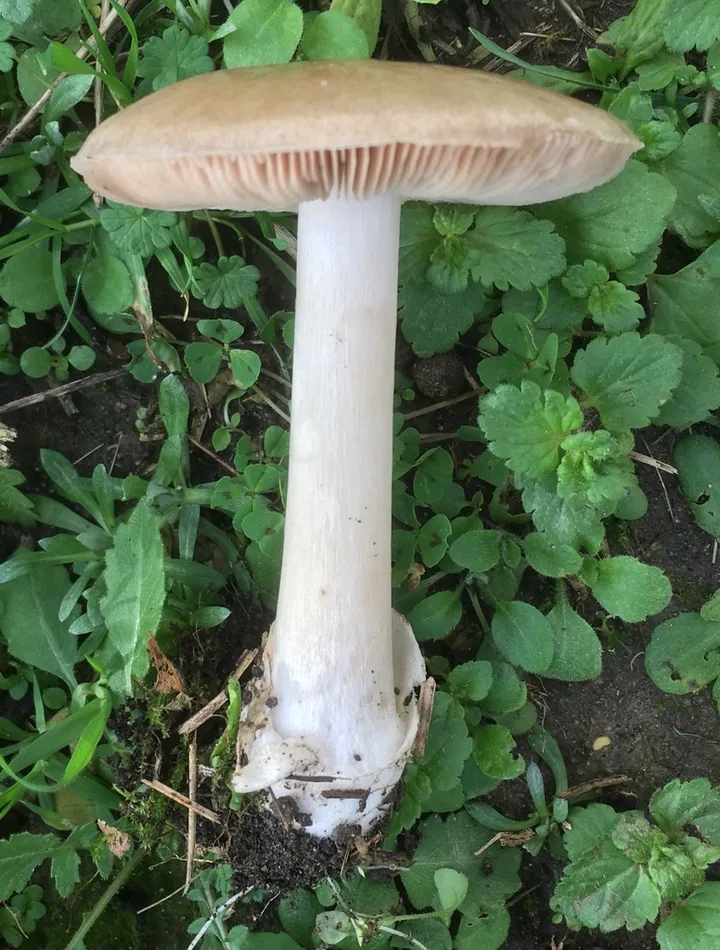
Foto yang diasosiasikan dengan Volvopluteus gloiocephalus pada iNaturalist. Identifikasi mengikuti sumber; bukan penentuan spesimen independen.
Kredit dan penggunaan
(c) Paul Cook, some rights reserved (CC BY), uploaded by Paul Cook
Ukuran dan format gambar disesuaikan tanpa pemotongan, retus, atau penambahan skala. Lisensi sumber dipertahankan.
Sumber profil
- [1] Volvopluteus gloiocephalus — Wikipedia (en)
- [2] Catalogue of Life Base2026-09-11 — Volvopluteus gloiocephalus
- [3] Dokumentasi visual — Volvopluteus gloiocephalus
- [4] Dokumentasi visual — Volvopluteus gloiocephalus
- [5] Dokumentasi visual — Volvopluteus gloiocephalus
Rujukan halaman ini
Fungi. Volvopluteus gloiocephalus. Rilis data fungi-2026-10-12-expansion-2. https://fungi-atlas.mgadib.chatgpt.site/jamur/volvopluteus-gloiocephalus/.
Status: impor sumber; pemeriksaan editorial per profil belum selesai. Untuk klaim biologis, gunakan rujukan pada bagian terkait dan periksa konteks sumber aslinya.