Ciri dan struktur
Diagnosis: Morphologically this species is similar to Xylodon raduloides, but can be distinguished by the narrowly ellipsoid to subcylindrical basidiospores, (4.5–)5–6 × 2.5–3.5 μm (Q = 1.70), instead of the ellipsoid ones, (4.5–)5–5.5(− 7) × (2.5–)3–3.5(− 4.5) μm (Q = 1.60) in X. raduloides. Description: Basidioma resupinate, effuse, adnate; hymenophore poroid to labyrinthiform, 1–4 pores/mm, dissepiments lacerate to dentate in old specimens, on vertical substrata irregularly irpicoid with flattened teeth, orange-yellow (70. l. OY – 71. m. OY); margin not clearly differentiated. Hyphal system monomitic; generative hyphae hyaline, thin to thick-walled, sparsely branched, with clamps, 3–5 μm wide; subicular hyphae not seen; subhymenial hyphae loosely interwoven, perpendicular to substratum. Cystidia or rather cystidial elements present: (1) capitate and subulate cystidia, sometimes encrusted, arise from the hymenium, thin-walled, with basal clamp, 14–32 × 3.5–5 μm; (2) capitate hyphae sometimes encrusted, thin-walled, with basal clamp, 25–46 × 3–4 μm, apex to 8 μm diam; and (3) tubular hyphae or “skeletocystidia” sometimes encrusted, with very thick walls narrowing to the apex, with basal clamp, 170–200 × 3.5–5.5 μm. Basidia cylindrical to suburniform, (13–)18–26 × 4.5–5.5 μm, four sterigmata, with basal clamp. Basidiospores narrowly ellipsoidal to subcylindrical, (4.5–)5–6 × 2.5–3.5 μm, hyaline, thin-walled, smooth, guttulate. L = 5.22, W = 3.08, Q = 1.70.
Habitat dan peran ekologis
Ecology and habitat: On dead wood of Quercus. Present in areas with a seasonal climate, warm and dry summers and cold winters. Known distribution: Reported from Central and Eastern USA (Minnesota and Washington DC).
- Habitat atau konteks temuan
- Informasi belum tersedia pada sumber rilis ini.
- Substrat
- kayu
- Peran atau konteks
- Belum dikategorikan pada rilis ini.
Reproduksi
Diagnosis: Morphologically this species is similar to Xylodon raduloides, but can be distinguished by the narrowly ellipsoid to subcylindrical basidiospores, (4.5–)5–6 × 2.5–3.5 μm (Q = 1.70), instead of the ellipsoid ones, (4.5–)5–5.5(− 7) × (2.5–)3–3.5(− 4.5) μm (Q = 1.60) in X. raduloides. Description: Basidioma resupinate, effuse, adnate; hymenophore poroid to labyrinthiform, 1–4 pores/mm, dissepiments lacerate to dentate in old specimens, on vertical substrata irregularly irpicoid with flattened teeth, orange-yellow (70. l. OY – 71. m. OY); margin not clearly differentiated. Hyphal system monomitic; generative hyphae hyaline, thin to thick-walled, sparsely branched, with clamps, 3–5 μm wide; subicular hyphae not seen; subhymenial hyphae loosely interwoven, perpendicular to substratum.
Catatan identitas dan cakupan
- Nama diterima mengikuti Catalogue of Life Base2026-09-11; uraian mempertahankan konsep dan nama sumber aslinya.
- Preserve original treatment localities, hosts and substrate scope. Materials examined describe documented specimens, not the full global range.
- Impor dan terjemahan otomatis belum diperiksa editorial per profil. Struktur reproduktif yang disebutkan tidak membuktikan seluruh siklus hidup diketahui.
- Pengukuran pada uraian mengikuti spesimen, kultur, dan metode sumber; angka tidak diperluas ke semua populasi.
Catatan distribusi dalam narasi mengikuti sumbernya. Dokumentasi spesimen atau foto mengikuti catatan sumber. Bukti wilayah Indonesia dan penilaian konservasi tidak disimpulkan dari gambar.
Melihat dengan konteks
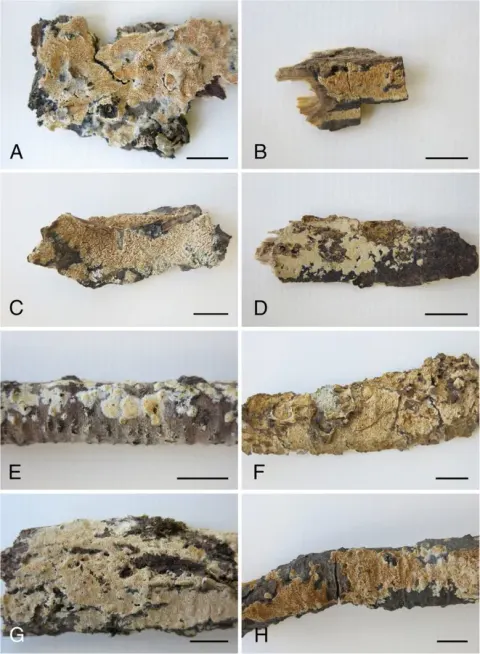
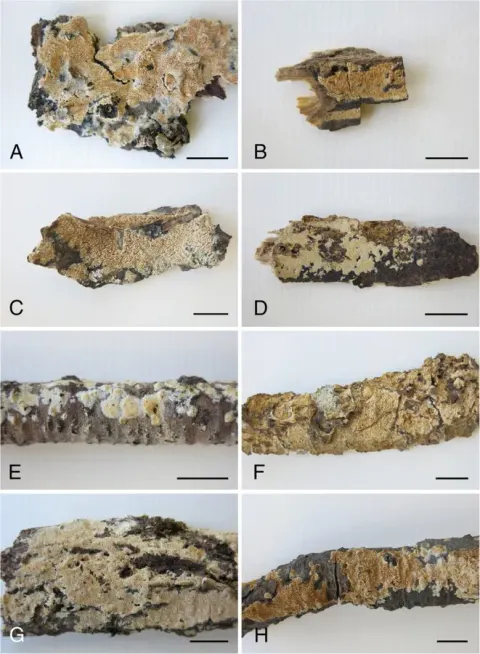
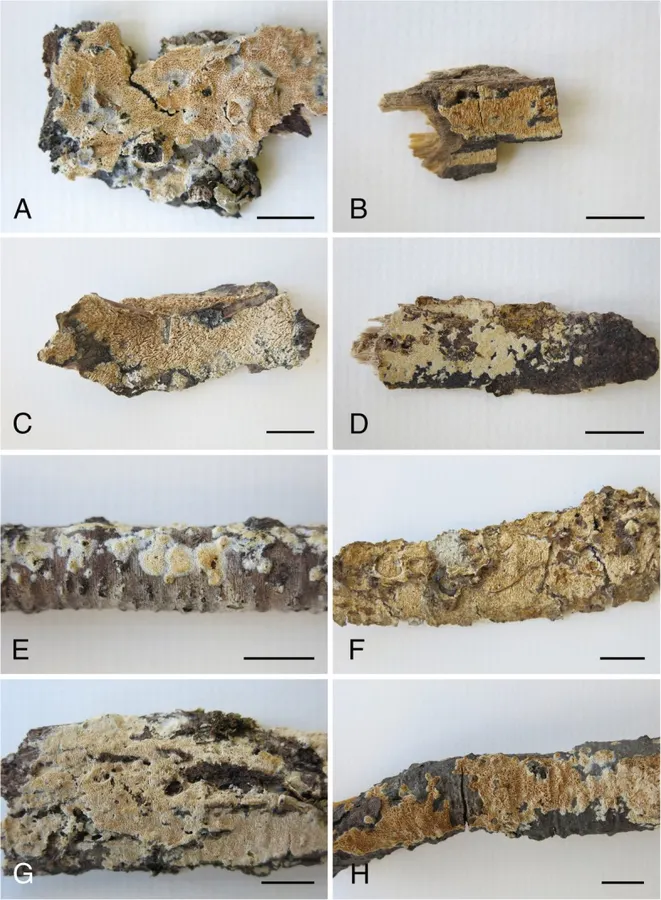
Basidioma of Xylodon species. a. Xylodon raduloides (755MD, MA-Fungi 12,864). b, c. Xylodon laurentianus (B. HHB-719, CFMR, holotype; C. DLL2009–049, CFMR). d–f. Xylodon patagonicus (D. 19684Tell., MA-Fungi 90,707, holotype; E. 14,180 MD, MA-Fungi 90,702, young specimen; F. 19705Tell., MA-Fungi 90,706, old specimen). g, h. Xylodon novozelandicus (G. Paulus 98/20, PDD 70718, holotype; H. Paulus 98/104, PDD 70720). Bars = 1 mm
- Jenis
- Pelat ilmiah
- Kredit
- © The Author(s) 2019
- Lisensi
- CC BY 4.0
- Sumber media
- Buka entri sumber
Dokumentasi tambahan
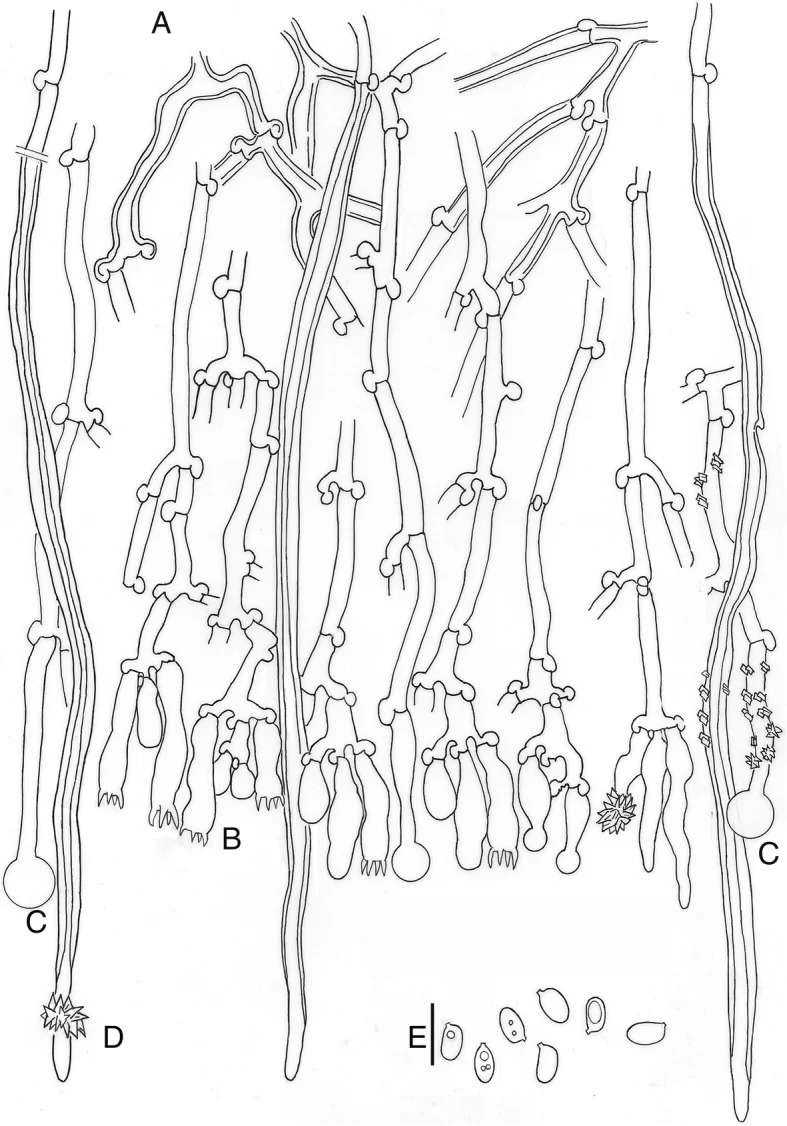
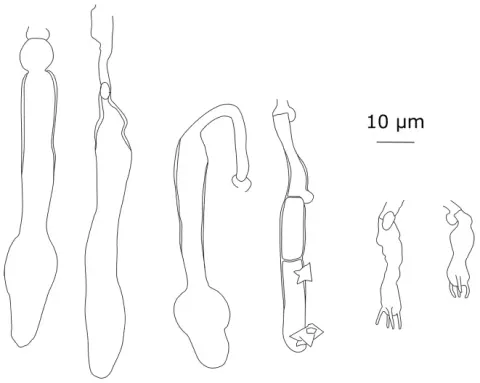
Xylodon laurentianus, HHB-719, CFMR, holotype. a. Subhymenial hyphae. b. Hymenium with cystidia and basidia. c. Capitate hyphae. d. Tubular hyphae or “skeletocystidia”. e. Basidiospores. Bar = 10 μm
Kredit dan penggunaan
© The Author(s) 2019
Ukuran dan format gambar disesuaikan tanpa pemotongan, retus, atau penambahan skala. Lisensi sumber dipertahankan.
Sumber profil
- [1] Addressing the diversity of Xylodon raduloides complex through integrative taxonomy — Xylodon laurentianus
- [2] Catalogue of Life Base2026-09-11 — Xylodon laurentianus
- [3] Dokumentasi visual — Xylodon laurentianus
- [4] Dokumentasi visual — Xylodon laurentianus
Rujukan halaman ini
Fungi. Xylodon laurentianus. Rilis data fungi-2026-10-12-expansion-2. https://fungi-atlas.mgadib.chatgpt.site/jamur/xylodon-laurentianus/.
Status: impor sumber; pemeriksaan editorial per profil belum selesai. Untuk klaim biologis, gunakan rujukan pada bagian terkait dan periksa konteks sumber aslinya.