01 / Morfologi

Ciri dan struktur

In YM broth after 3 days at 25 °C, cells are subglobosal to globosal (2–3 × 2–4 μm) and occur singly or in pairs. Budding is multilateral. Sediment is formed after a month, but a pellicle is not observed. On YM agar after 3 days at 25 °C, colonies are cream, smooth, opalescent, convex and glistening. In Dalmau plate culture on corn meal agar, pseudohyphae and true hyphae are formed. Asci or signs of conjugation are not observed on sporulation media. Fermentation of sugars is absent. Glucose, galactose (weak), glucosamine, d-ribose (weak), d-xylose, d-arabinose (weak), l-arabinose (weak), l-rhamnose (weak), sucrose (weak), maltose (weak), trehalose, methyl α-d-glucoside (weak), cellobiose (weak), salicin, melibiose, lactose (weak), raffinose, melezitose (weak), inulin (weak), glycerol (weak), erythritol, ribitol (weak), xylitol (weak), d-glucitol (weak), d-mannitol (weak), galactitol (weak), myo -inositol (weak), d-glucono-1, 5-lactone, 2-keto-d-gluconate, d-gluconate (weak), d-glucuronate (weak), dl-lactate (weak), succinate (weak), and ethanol are assimilated as sole carbon sources. l-sorbose, citrate, and methanol are not assimilated. Ethylamine, glucosamine, and l-lysine are assimilated as sole nitrogen sources. Nitrate, nitrite, cadaverine, creatine, creatinine, imidazole, and d-tryptophan are not assimilated. Minimum growth temperature is 15 °C, and maximum growth temperature is 37 °C. Growth in the presence of 0.1% cycloheximide is present, but growth in the presence of 10% NaCl plus 5% glucose and 1% acetic acid is absent. Starch-like compounds are not produced. Urease activity and diazonium blue B reactions are negative.

Sebagian uraian ditampilkan dalam bahasa sumber; terjemahannya belum tersedia atau belum lolos pemeriksaan.

Rujukan: [1]

Pengukuran mengikuti objek, spesimen atau kultur, dan metode yang disebutkan sumber. Baca uraian asli untuk konteks lengkap.

02 / Kehidupan

Habitat dan peran ekologis

Two strains were collected from two different substrates, both representing Z. detingensis, branched separately from the Zygoascus clade. Z. detingensis differed from the other Zygoascus species by more than 9.7% substitutions in the D1/D2 domain and 11.5% substitutions in the ITS region, respectively. Physiologically, Z. detingensis differs from its closely related species, Z. bituminiphila (V. Robert, B. Bonjean, Karutz, Paschold, W. Peeters & Wubbolts) Nagatsuka, Kiyuna & Sugiyama (Nagatsuka et al. 2016), in its inability to assimilate l-sorbose and its ability to assimilate l-rhamnose, methyl α-d-glucoside, melibiose, lactose, inulin melezitose, erythritol, and 2-keto-d-gluconate. Moreover, Z. bituminiphila ferments glucose, galactose, trehalose, and cellobiose, while Z. detingensis does not.

Sebagian uraian ditampilkan dalam bahasa sumber; terjemahannya belum tersedia atau belum lolos pemeriksaan.

Rujukan: [1]

Habitat atau konteks temuan
Informasi belum tersedia pada sumber rilis ini.
Substrat
Informasi belum tersedia pada sumber rilis ini.
Peran atau konteks
Belum dikategorikan pada rilis ini.
Temukan hubungan serupa
03 / Siklus hidup

Reproduksi

In YM broth after 3 days at 25 °C, cells are subglobosal to globosal (2–3 × 2–4 μm) and occur singly or in pairs. Budding is multilateral. Sediment is formed after a month, but a pellicle is not observed. On YM agar after 3 days at 25 °C, colonies are cream, smooth, opalescent, convex and glistening. In Dalmau plate culture on corn meal agar, pseudohyphae and true hyphae are formed. Asci or signs of conjugation are not observed on sporulation media. Fermentation of sugars is absent. Glucose, galactose (weak), glucosamine, d-ribose (weak), d-xylose, d-arabinose (weak), l-arabinose (weak), l-rhamnose (weak), sucrose (weak), maltose (weak), trehalose, methyl α-d-glucoside (weak), cellobiose (weak), salicin, melibiose, lactose (weak), raffinose, melezitose (weak), inulin (weak), glycerol (weak), erythritol, ribitol (weak), xylitol (weak), d-glucitol (weak), d-mannitol (weak), galactitol (weak), myo -inositol (weak), d-glucono-1, 5-lactone, 2-keto-d-gluconate, d-gluconate (weak), d-glucuronate (weak), dl-lactate (weak), succinate (weak), and ethanol are assimilated as sole carbon sources. l-sorbose, citrate, and methanol are not assimilated.

Sebagian uraian ditampilkan dalam bahasa sumber; terjemahannya belum tersedia atau belum lolos pemeriksaan.

Rujukan: [1]

04 / Batas informasi

Catatan identitas dan cakupan

  • Nama diterima mengikuti Catalogue of Life Base2026-09-11; uraian mempertahankan konsep dan nama sumber aslinya.
  • Preserve original treatment localities, hosts and substrate scope. Materials examined describe documented specimens, not the full global range.
  • Impor dan terjemahan otomatis belum diperiksa editorial per profil. Struktur reproduktif yang disebutkan tidak membuktikan seluruh siklus hidup diketahui.
  • Pengukuran pada uraian mengikuti spesimen, kultur, dan metode sumber; angka tidak diperluas ke semua populasi.

Catatan distribusi dalam narasi mengikuti sumbernya. Dokumentasi spesimen atau foto mengikuti catatan sumber. Bukti wilayah Indonesia dan penilaian konservasi tidak disimpulkan dari gambar.

05 / Dokumentasi

Melihat dengan konteks

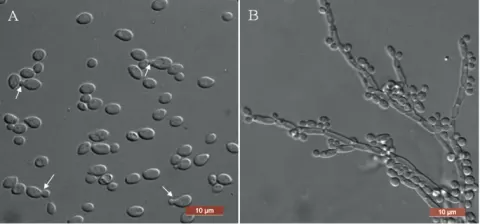
Morphology of Z. detingensis (NYNU 201087, holotype) A budding cells were indicated by arrows in YM broth after 3 d B pseudohyphae and true hyphae on CM agar after 14 d. Scale bars: 10 μm.

Jenis
Pelat ilmiah
Kredit
Chun-Yue Chai, Wan-Li Gao, Zhen-Li Yan, Feng-Li Hui
Lisensi
CC BY 4.0
Sumber media
Buka entri sumber

Gambar menunjukkan objek menurut identifikasi sumber, bukan verifikasi independen spesimen oleh Fungi. Tidak ada skala baru yang ditambahkan.

06 / Rujukan

Sumber profil

  1. [1] Four new species of Trichomonascaceae (Saccharomycetales, Saccharomycetes) from Central China — Zygoascus detingensisBagian sumber: PMC9849089_section_27
    Tanggal penghimpunan sumber: 2026-10-12
    Teks sumber: CC BY 4.0 · Chai CY, Gao WL, Yan ZL, Hui FL.
  2. [2] Catalogue of Life Base2026-09-11 — Zygoascus detingensisBagian sumber: ColDP NameUsage.tsv ID B2PMK; accepted species; source 2073
    Tanggal penghimpunan sumber: 2026-10-12
  3. [3] Dokumentasi visual — Zygoascus detingensisBagian sumber: Individual media record; identification follows the source, not independent determination
    Tanggal penghimpunan sumber: 2026-10-12
    Media sumber: CC BY 4.0 · Chun-Yue Chai, Wan-Li Gao, Zhen-Li Yan, Feng-Li Hui

Adaptasi teks: CC BY 4.0. Chai CY, Gao WL, Yan ZL, Hui FL. — Four new species of Trichomonascaceae (Saccharomycetales, Saccharomycetes) from Central China — Zygoascus detingensis

Uraian asli dan riwayat sumber

Riwayat atau halaman sumber

Ringkasan sumber

In YM broth after 3 days at 25 °C, cells are subglobosal to globosal (2–3 × 2–4 μm) and occur singly or in pairs. Budding is multilateral. Sediment is formed after a month, but a pellicle is not observed. On YM agar after 3 days at 25 °C, colonies are cream, smooth, opalescent, convex and glistening. In Dalmau plate culture on corn meal agar, pseudohyphae and true hyphae are formed. Asci or signs of conjugation are not observed on sporulation media. Fermentation of sugars is absent. Glucose, galactose (weak), glucosamine, d-ribose (weak), d-xylose, d-arabinose (weak), l-arabinose (weak), l-rhamnose (weak), sucrose (weak), maltose (weak), trehalose, methyl α-d-glucoside (weak), cellobiose (weak), salicin, melibiose, lactose (weak), raffinose, melezitose (weak), inulin (weak), glycerol (weak), erythritol, ribitol (weak), xylitol (weak), d-glucitol (weak), d-mannitol (weak), galactitol (weak), myo -inositol (weak), d-glucono-1, 5-lactone, 2-keto-d-gluconate, d-gluconate (weak), d-glucuronate (weak), dl-lactate (weak), succinate (weak), and ethanol are assimilated as sole carbon sources. l-sorbose, citrate, and methanol are not assimilated.

Revisi sumber

Morfologi sumber

In YM broth after 3 days at 25 °C, cells are subglobosal to globosal (2–3 × 2–4 μm) and occur singly or in pairs. Budding is multilateral. Sediment is formed after a month, but a pellicle is not observed. On YM agar after 3 days at 25 °C, colonies are cream, smooth, opalescent, convex and glistening. In Dalmau plate culture on corn meal agar, pseudohyphae and true hyphae are formed. Asci or signs of conjugation are not observed on sporulation media. Fermentation of sugars is absent. Glucose, galactose (weak), glucosamine, d-ribose (weak), d-xylose, d-arabinose (weak), l-arabinose (weak), l-rhamnose (weak), sucrose (weak), maltose (weak), trehalose, methyl α-d-glucoside (weak), cellobiose (weak), salicin, melibiose, lactose (weak), raffinose, melezitose (weak), inulin (weak), glycerol (weak), erythritol, ribitol (weak), xylitol (weak), d-glucitol (weak), d-mannitol (weak), galactitol (weak), myo -inositol (weak), d-glucono-1, 5-lactone, 2-keto-d-gluconate, d-gluconate (weak), d-glucuronate (weak), dl-lactate (weak), succinate (weak), and ethanol are assimilated as sole carbon sources. l-sorbose, citrate, and methanol are not assimilated. Ethylamine, glucosamine, and l-lysine are assimilated as sole nitrogen sources. Nitrate, nitrite, cadaverine, creatine, creatinine, imidazole, and d-tryptophan are not assimilated. Minimum growth temperature is 15 °C, and maximum growth temperature is 37 °C. Growth in the presence of 0.1% cycloheximide is present, but growth in the presence of 10% NaCl plus 5% glucose and 1% acetic acid is absent. Starch-like compounds are not produced. Urease activity and diazonium blue B reactions are negative.

Revisi sumber

Ekologi sumber

Two strains were collected from two different substrates, both representing Z. detingensis, branched separately from the Zygoascus clade. Z. detingensis differed from the other Zygoascus species by more than 9.7% substitutions in the D1/D2 domain and 11.5% substitutions in the ITS region, respectively. Physiologically, Z. detingensis differs from its closely related species, Z. bituminiphila (V. Robert, B. Bonjean, Karutz, Paschold, W. Peeters & Wubbolts) Nagatsuka, Kiyuna & Sugiyama (Nagatsuka et al. 2016), in its inability to assimilate l-sorbose and its ability to assimilate l-rhamnose, methyl α-d-glucoside, melibiose, lactose, inulin melezitose, erythritol, and 2-keto-d-gluconate. Moreover, Z. bituminiphila ferments glucose, galactose, trehalose, and cellobiose, while Z. detingensis does not.

Revisi sumber

Struktur reproduksi sumber

In YM broth after 3 days at 25 °C, cells are subglobosal to globosal (2–3 × 2–4 μm) and occur singly or in pairs. Budding is multilateral. Sediment is formed after a month, but a pellicle is not observed. On YM agar after 3 days at 25 °C, colonies are cream, smooth, opalescent, convex and glistening. In Dalmau plate culture on corn meal agar, pseudohyphae and true hyphae are formed. Asci or signs of conjugation are not observed on sporulation media. Fermentation of sugars is absent. Glucose, galactose (weak), glucosamine, d-ribose (weak), d-xylose, d-arabinose (weak), l-arabinose (weak), l-rhamnose (weak), sucrose (weak), maltose (weak), trehalose, methyl α-d-glucoside (weak), cellobiose (weak), salicin, melibiose, lactose (weak), raffinose, melezitose (weak), inulin (weak), glycerol (weak), erythritol, ribitol (weak), xylitol (weak), d-glucitol (weak), d-mannitol (weak), galactitol (weak), myo -inositol (weak), d-glucono-1, 5-lactone, 2-keto-d-gluconate, d-gluconate (weak), d-glucuronate (weak), dl-lactate (weak), succinate (weak), and ethanol are assimilated as sole carbon sources. l-sorbose, citrate, and methanol are not assimilated.

Revisi sumber

Rujukan halaman ini

Fungi. Zygoascus detingensis. Rilis data fungi-2026-10-12-expansion-2. https://fungi-atlas.mgadib.chatgpt.site/jamur/zygoascus-detingensis/.

Status: impor sumber; pemeriksaan editorial per profil belum selesai. Untuk klaim biologis, gunakan rujukan pada bagian terkait dan periksa konteks sumber aslinya.