Ciri dan struktur
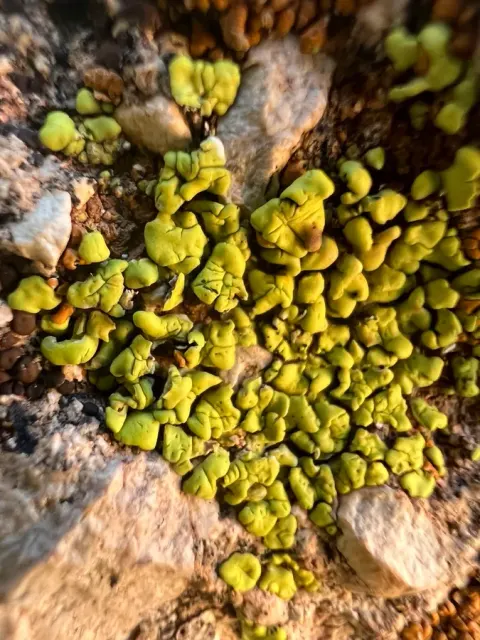
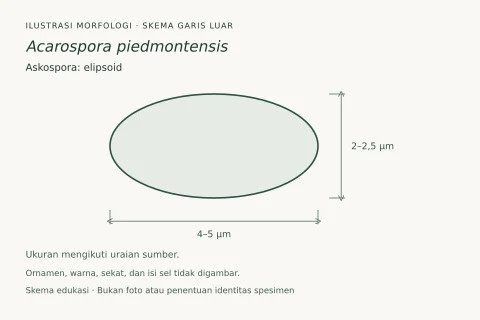
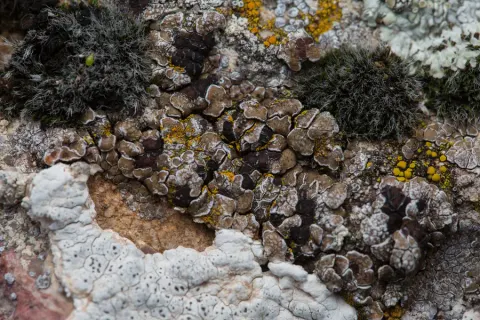
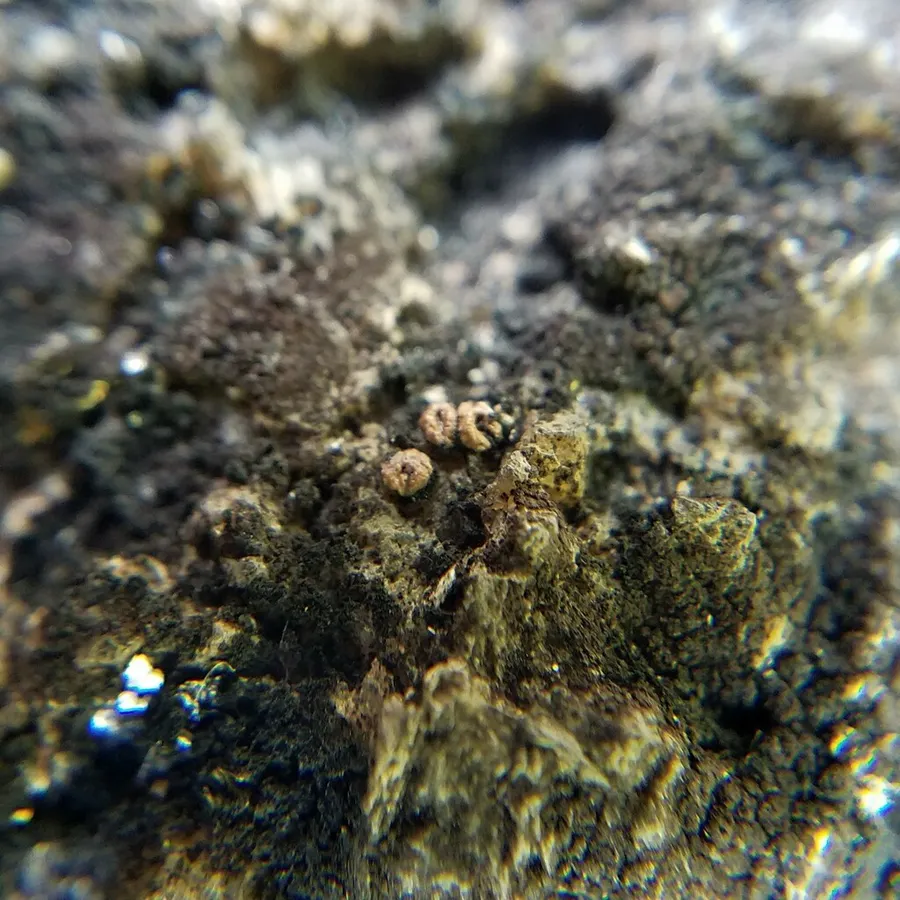
The lichen thallus (body) consists of dispersed (a small rounded area that is more or less polygonal or angular, and delimited by cracks) that are dark to light brown in color. The surface of the areoles often have fine grooves. The of the apothecium (a round, plate-like spore-producing part of the fruit body) has a rough texture and is either the same color as the thallus or darker. It sometimes has umbos and ridges, but these tend to disappear as the disc fully dilates. The hymenium (spore-bearing tissue) is about 100 μm thick and contains paraphyses that have a diameter of 2 μm μm. The asci (spore-bearing cells) are club-shaped, measure 60 by 20 μm, and contain roughly 100 ascospores. The spores are 3–4 by 2 μm μm. Most specimens are (lacking a pale, powdery coating), although slight pruina has been observed in some collections. The species typically develops a single apothecium per areole, but in certain microhabitats an areole may temporarily produce several apothecia; these generally separate again as the areole divides into smaller units, each bearing one apothecium. The colour of the lower surface appears variable: it was described as white in the holotype, while an isotype (duplicate) is brown, and some eastern specimens have a darker, melanized lower surface that may reflect interaction with the substrate.
Habitat dan peran ekologis
Acarospora janae grows on rock. It was described from sandstone at the type locality in New Mexico, and it has since been documented on a range of substrates including sandstone, granite, schist and gneiss, rhyolite and other igneous rocks, and locally on limestone or calcareous sandstone. In addition to the original southwestern records (including New Mexico and Colorado), published records extend eastward across parts of the central and eastern United States; reported localities include Arkansas, Kansas, Georgia, Missouri, Oklahoma, Pennsylvania, North Carolina, and South Carolina. It has also been reported from Newfoundland in Canada.
- Habitat atau konteks temuan
- Informasi belum tersedia pada sumber rilis ini.
- Substrat
- Informasi belum tersedia pada sumber rilis ini.
- Peran atau konteks
- Pembentuk liken
Reproduksi
The lichen thallus (body) consists of dispersed (a small rounded area that is more or less polygonal or angular, and delimited by cracks) that are dark to light brown in color. The surface of the areoles often have fine grooves. The of the apothecium (a round, plate-like spore-producing part of the fruit body) has a rough texture and is either the same color as the thallus or darker. It sometimes has umbos and ridges, but these tend to disappear as the disc fully dilates. The hymenium (spore-bearing tissue) is about 100 μm thick and contains paraphyses that have a diameter of 2 μm μm. The asci (spore-bearing cells) are club-shaped, measure 60 by 20 μm, and contain roughly 100 ascospores. The spores are 3–4 by 2 μm μm.
Catatan identitas dan cakupan
- Nama diterima mengikuti Catalogue of Life Base2026-09-11; uraian mempertahankan konsep dan nama sumber aslinya.
- Original geographic, specimen and life-cycle scope retained; source import awaits individual editorial review.
- Impor dan terjemahan otomatis belum diperiksa editorial per profil. Struktur reproduktif yang disebutkan tidak membuktikan seluruh siklus hidup diketahui.
- Pengukuran pada uraian mengikuti spesimen, kultur, dan metode sumber; angka tidak diperluas ke semua populasi.
Catatan distribusi dalam narasi mengikuti sumbernya. Dokumentasi spesimen atau foto mengikuti catatan sumber. Bukti wilayah Indonesia dan penilaian konservasi tidak disimpulkan dari gambar.
Melihat dengan konteks
Dokumentasi Acarospora janae menurut asosiasi foto pada record takson iNaturalist. Kredit: Leila Dasher. Identitas mengikuti sumber; bukan penentuan spesimen independen.
- Jenis
- Fotografi
- Kredit
- (c) Leila Dasher, some rights reserved (CC BY)
- Lisensi
- CC BY 4.0
- Sumber media
- Buka entri sumber
Dokumentasi tambahan
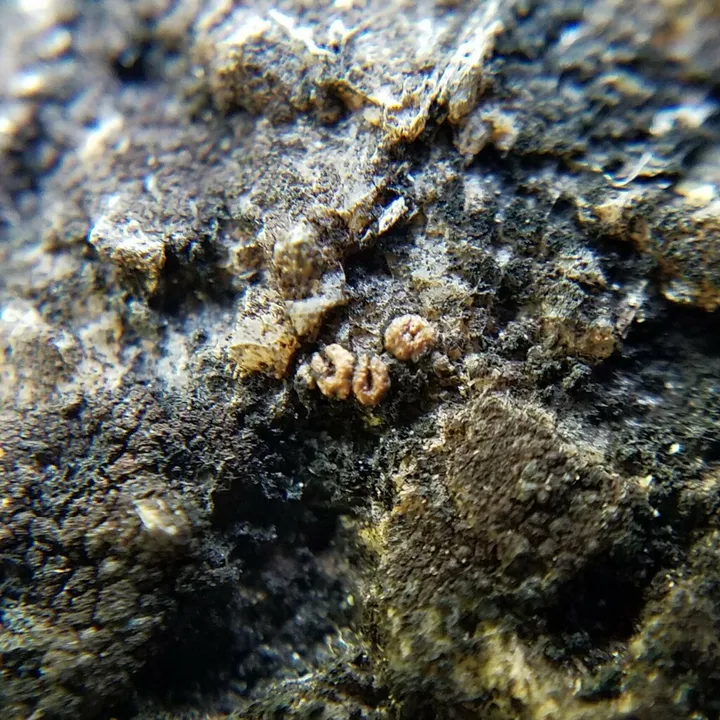
Foto yang diasosiasikan dengan Acarospora janae pada iNaturalist. Identifikasi mengikuti sumber; bukan penentuan spesimen independen.
Kredit dan penggunaan
(c) Leila Dasher, some rights reserved (CC BY)
Ukuran dan format gambar disesuaikan tanpa pemotongan, retus, atau penambahan skala. Lisensi sumber dipertahankan.
Sumber profil
- [1] Acarospora janae — Wikipedia (en)
- [2] Catalogue of Life Base2026-09-11 — Acarospora janae
- [3] Dokumentasi visual — Acarospora janae
- [4] Dokumentasi visual — Acarospora janae
Rujukan halaman ini
Fungi. Acarospora janae. Rilis data fungi-2026-10-12-expansion-2. https://fungi-atlas.mgadib.chatgpt.site/jamur/acarospora-janae/.
Status: impor sumber; pemeriksaan editorial per profil belum selesai. Untuk klaim biologis, gunakan rujukan pada bagian terkait dan periksa konteks sumber aslinya.