Ciri dan struktur
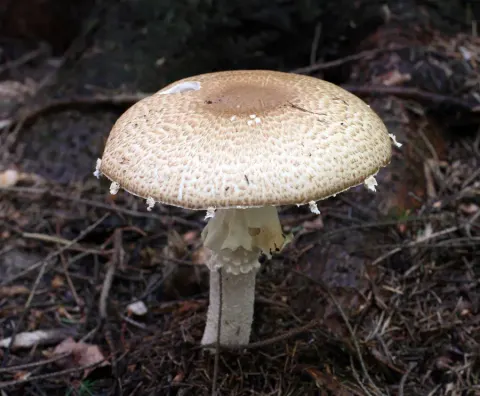
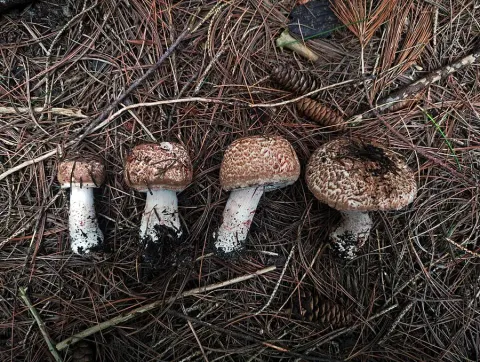
The cap is 3–7 cm wide and convex before becoming flattening. It is white to reddish, with brownish fibrils or scales in the center and sometimes elsewhere. The gills are free and close. They are pinkish at first then become dark brown. The spores are 4–5.5 x 3–4 μm, elliptical, and smooth. They are inequilateral in profile and moderately thick-walled, lacking a germ pore. The stipe is 5–14 cm long and 0.5–2 cm thick. At the base, it is slightly enlarged and becomes stuffed at maturity. The white veil is rather membranous and yields a thin ring. When cut, the cortex discolours to pinkish-orange. The stipe base changes brown to rusty-brown from handling. The margin is sometimes light brown. The apex surface is white and patchy fibrillose over a dull-buff ground color.
Habitat dan peran ekologis
Agaricus arorae pertama kali digambarkan dari Santa Cruz County, California, dan sejak itu telah ditemukan di San Mateo and Alameda counties.
- Habitat atau konteks temuan
- Informasi belum tersedia pada sumber rilis ini.
- Substrat
- Informasi belum tersedia pada sumber rilis ini.
- Peran atau konteks
- Belum dikategorikan pada rilis ini.
Reproduksi
The gills are free and close. They are pinkish at first then become dark brown. The spores are 4–5.5 x 3–4 μm, elliptical, and smooth. They are inequilateral in profile and moderately thick-walled, lacking a germ pore.
Catatan identitas dan cakupan
- Nama diterima mengikuti Catalogue of Life Base2026-09-11; uraian mempertahankan konsep dan nama sumber aslinya.
- Original geographic, specimen and life-cycle scope retained; source import awaits individual editorial review.
- Impor dan terjemahan otomatis belum diperiksa editorial per profil. Struktur reproduktif yang disebutkan tidak membuktikan seluruh siklus hidup diketahui.
- Pengukuran pada uraian mengikuti spesimen, kultur, dan metode sumber; angka tidak diperluas ke semua populasi.
Catatan distribusi dalam narasi mengikuti sumbernya. Dokumentasi spesimen atau foto mengikuti catatan sumber. Bukti wilayah Indonesia dan penilaian konservasi tidak disimpulkan dari gambar.
Melihat dengan konteks
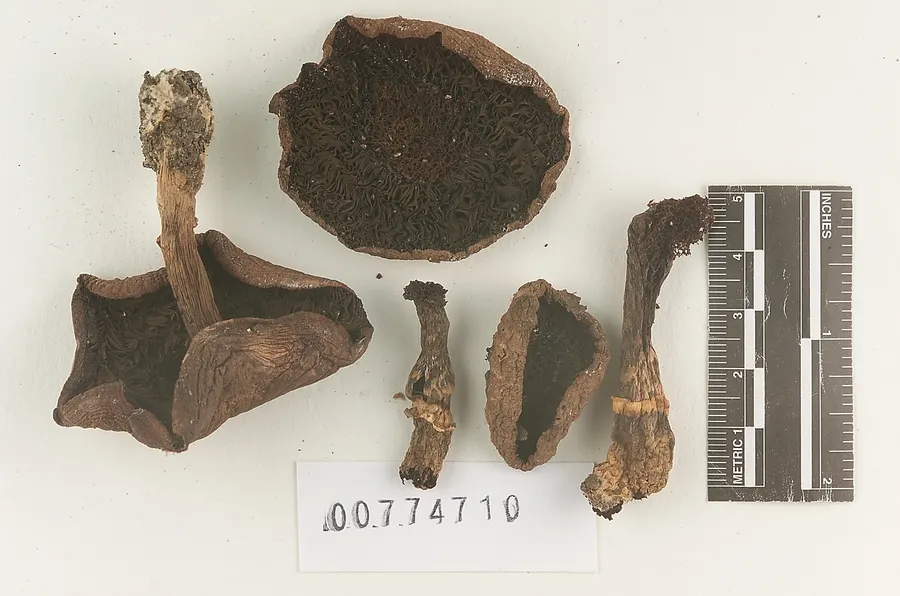
Voucher herbarium Agaricus arorae (774710), The New York Botanical Garden. Identifikasi mengikuti record spesimen sumber. Foto bahan, kemasan, atau label herbarium sebagaimana tersedia pada record institusi; bukan foto lapangan atau penentuan spesimen independen.
- Jenis
- Voucher herbarium
- Kredit
- The New York Botanical Garden
- Lisensi
- CC BY 4.0
- Sumber media
- Buka entri sumber
Sumber profil
- [1] Agaricus arorae — Wikipedia (en)
- [2] Catalogue of Life Base2026-09-11 — Agaricus arorae
- [3] Dokumentasi visual — Agaricus arorae
Rujukan halaman ini
Fungi. Agaricus arorae. Rilis data fungi-2026-10-12-expansion-2. https://fungi-atlas.mgadib.chatgpt.site/jamur/agaricus-arorae/.
Status: impor sumber; pemeriksaan editorial per profil belum selesai. Untuk klaim biologis, gunakan rujukan pada bagian terkait dan periksa konteks sumber aslinya.