01 / Morfologi

Ciri dan struktur

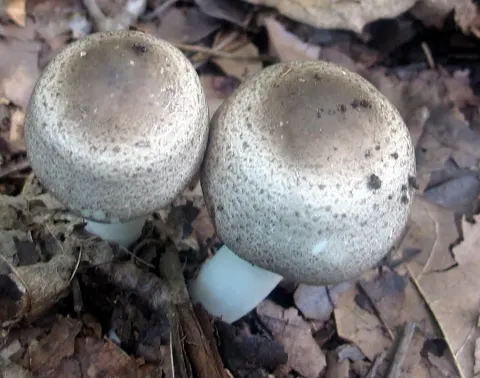
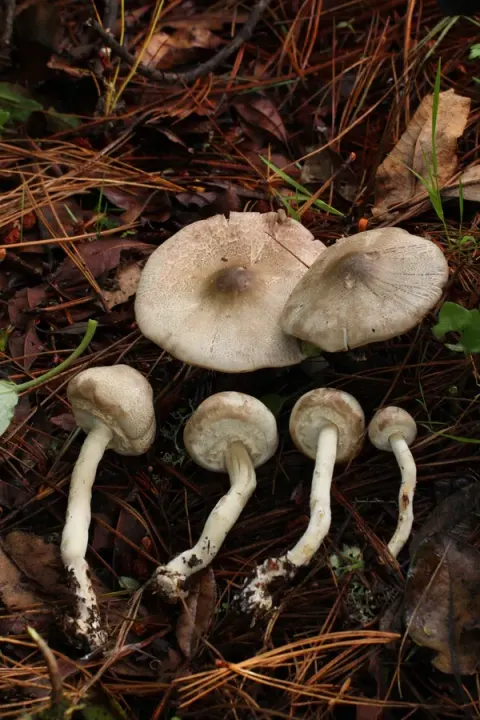
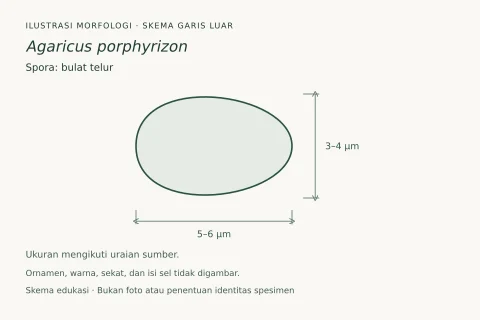
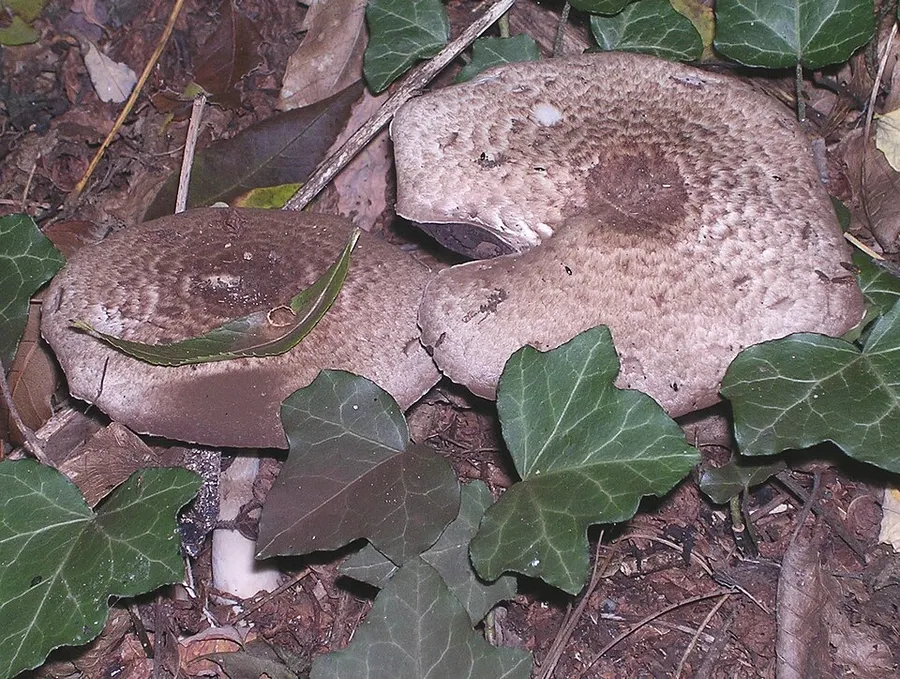
The cap is 8–12 cm broad, and becomes deeply convex to flattened. The surface is dry, with a uniformly dark-brown disc. The disc can be either flattened or depressed, and is appressed fibrillose-squamulose. Towards the margin, it begins to diffuse. It is brown over a pallid ground color. Meanwhile, the margin is incurved in youth, then decurved, and eventually turns straight or slightly raised. The cap cuticle bruises slowly tawny-brown, and yellows in KOH. The flesh is white, soft, and can be up to 1.5 cm thick. When injured, it can change to a cream color to tawny. The odor is that of anise, with a mild taste. The gills are free, close, and relatively broad. When young, they have a whitish color, though they turn blackish-brownat maturity. The gills can be either five or six-seried. The stipe can be 6–12 cm long, and 1.5–2 cm thick. Often tapered to a bulbous base, it can be stuffed to hollow at maturity. The surface of apex is white, and silky-striate. The lower portion is white, with the fibrils forming scattered appressed squamules. In contrast, the base of the stipe discolors slowly a dull orange-brown where handled. The flesh changes sporadically from a cream-yellow to tawny-brown when injured or cut. The partial veil is white, membranous, and has small brown floccose scales concentrated near the margin. The annulus is thin and pendulous on the stipe. The spores are 6.5–8.0 μm by 4.5–5.0 μm, smooth, thick-walled, and ellipsoid. They are inequilateral in profile, without a conspicuous hilar appendage. Their germ pore is not evident, and the spore print is a blackish-brown color.

Sebagian uraian ditampilkan dalam bahasa sumber; terjemahannya belum tersedia atau belum lolos pemeriksaan.

Rujukan: [1]

Pengukuran mengikuti objek, spesimen atau kultur, dan metode yang disebutkan sumber. Baca uraian asli untuk konteks lengkap.

02 / Kehidupan

Habitat dan peran ekologis

Agaricus perobscurus is often solitary or in small groups under conifers and hardwoods. Primarily found di taman kota dengan pohon seperti Monterey cypress, Monterey pine, dan Eucalyptus, mereka berbuah di Barat Coast of Utara America from pertengahan hingga akhir musim dingin. Ini penduduk di San Francisco Bay Area.

Sebagian uraian ditampilkan dalam bahasa sumber; terjemahannya belum tersedia atau belum lolos pemeriksaan.

Rujukan: [1]

Habitat atau konteks temuan
Informasi belum tersedia pada sumber rilis ini.
Substrat
Informasi belum tersedia pada sumber rilis ini.
Peran atau konteks
Belum dikategorikan pada rilis ini.
Temukan hubungan serupa
03 / Siklus hidup

Reproduksi

The stipe can be 6–12 cm long, and 1.5–2 cm thick. Often tapered to a bulbous base, it can be stuffed to hollow at maturity. The surface of apex is white, and silky-striate. The lower portion is white, with the fibrils forming scattered appressed squamules. In contrast, the base of the stipe discolors slowly a dull orange-brown where handled. The flesh changes sporadically from a cream-yellow to tawny-brown when injured or cut. The partial veil is white, membranous, and has small brown floccose scales concentrated near the margin. The annulus is thin and pendulous on the stipe. The spores are 6.5–8.0 μm by 4.5–5.0 μm, smooth, thick-walled, and ellipsoid. They are inequilateral in profile, without a conspicuous hilar appendage.

Sebagian uraian ditampilkan dalam bahasa sumber; terjemahannya belum tersedia atau belum lolos pemeriksaan.

Rujukan: [1]

04 / Batas informasi

Catatan identitas dan cakupan

  • Nama diterima mengikuti Catalogue of Life Base2026-09-11; uraian mempertahankan konsep dan nama sumber aslinya.
  • Original geographic, specimen and life-cycle scope retained; source import awaits individual editorial review.
  • Impor dan terjemahan otomatis belum diperiksa editorial per profil. Struktur reproduktif yang disebutkan tidak membuktikan seluruh siklus hidup diketahui.
  • Pengukuran pada uraian mengikuti spesimen, kultur, dan metode sumber; angka tidak diperluas ke semua populasi.

Catatan distribusi dalam narasi mengikuti sumbernya. Dokumentasi spesimen atau foto mengikuti catatan sumber. Bukti wilayah Indonesia dan penilaian konservasi tidak disimpulkan dari gambar.

05 / Dokumentasi

Melihat dengan konteks

Dokumentasi Agaricus perobscurus dari Wikimedia Commons. Agaricus perobscurus Identifikasi mengikuti record berkas sumber.

Jenis
Fotografi
Kredit
Roberto Zanon
Sumber media
Buka entri sumber

Gambar menunjukkan objek menurut identifikasi sumber, bukan verifikasi independen spesimen oleh Fungi. Tidak ada skala baru yang ditambahkan.

06 / Rujukan

Sumber profil

  1. [1] Agaricus perobscurus — Wikipedia (en)Bagian sumber: Frozen revision 1363759660
    Tanggal penghimpunan sumber: 2026-10-12
    Teks sumber: CC BY-SA4.0 · Wikipedia contributors
  2. [2] Catalogue of Life Base2026-09-11 — Agaricus perobscurusBagian sumber: ColDP NameUsage.tsv ID 65P46; accepted species; source 2073
    Tanggal penghimpunan sumber: 2026-10-12
  3. [3] Dokumentasi visual — Agaricus perobscurusBagian sumber: Individual media record; identification follows the source, not independent determination
    Tanggal penghimpunan sumber: 2026-10-12
    Media sumber: CC BY-SA 3.0 · Roberto Zanon

Adaptasi teks: CC BY-SA 4.0. Wikipedia contributors — Agaricus perobscurus — Wikipedia (en)

Uraian asli dan riwayat sumber

Riwayat atau halaman sumber

Ringkasan sumber

The cap is 8–12 cm broad, and becomes deeply convex to flattened. The surface is dry, with a uniformly dark-brown disc. The disc can be either flattened or depressed, and is appressed fibrillose-squamulose. Towards the margin, it begins to diffuse. It is brown over a pallid ground color. Meanwhile, the margin is incurved in youth, then decurved, and eventually turns straight or slightly raised. The cap cuticle bruises slowly tawny-brown, and yellows in KOH. The flesh is white, soft, and can be up to 1.5 cm thick.

Revisi sumber

Morfologi sumber

The cap is 8–12 cm broad, and becomes deeply convex to flattened. The surface is dry, with a uniformly dark-brown disc. The disc can be either flattened or depressed, and is appressed fibrillose-squamulose. Towards the margin, it begins to diffuse. It is brown over a pallid ground color. Meanwhile, the margin is incurved in youth, then decurved, and eventually turns straight or slightly raised. The cap cuticle bruises slowly tawny-brown, and yellows in KOH. The flesh is white, soft, and can be up to 1.5 cm thick. When injured, it can change to a cream color to tawny. The odor is that of anise, with a mild taste. The gills are free, close, and relatively broad. When young, they have a whitish color, though they turn blackish-brownat maturity. The gills can be either five or six-seried. The stipe can be 6–12 cm long, and 1.5–2 cm thick. Often tapered to a bulbous base, it can be stuffed to hollow at maturity. The surface of apex is white, and silky-striate. The lower portion is white, with the fibrils forming scattered appressed squamules. In contrast, the base of the stipe discolors slowly a dull orange-brown where handled. The flesh changes sporadically from a cream-yellow to tawny-brown when injured or cut. The partial veil is white, membranous, and has small brown floccose scales concentrated near the margin. The annulus is thin and pendulous on the stipe. The spores are 6.5–8.0 μm by 4.5–5.0 μm, smooth, thick-walled, and ellipsoid. They are inequilateral in profile, without a conspicuous hilar appendage. Their germ pore is not evident, and the spore print is a blackish-brown color.

Revisi sumber

Ekologi sumber

Agaricus perobscurus is often solitary or in small groups under conifers and hardwoods. Primarily found in urban parks with trees like Monterey cypress, Monterey pine, and Eucalyptus, they fruit on the West Coast of North America from mid to late winter. It is populous in the San Francisco Bay Area.

Revisi sumber

Struktur reproduksi sumber

The stipe can be 6–12 cm long, and 1.5–2 cm thick. Often tapered to a bulbous base, it can be stuffed to hollow at maturity. The surface of apex is white, and silky-striate. The lower portion is white, with the fibrils forming scattered appressed squamules. In contrast, the base of the stipe discolors slowly a dull orange-brown where handled. The flesh changes sporadically from a cream-yellow to tawny-brown when injured or cut. The partial veil is white, membranous, and has small brown floccose scales concentrated near the margin. The annulus is thin and pendulous on the stipe. The spores are 6.5–8.0 μm by 4.5–5.0 μm, smooth, thick-walled, and ellipsoid. They are inequilateral in profile, without a conspicuous hilar appendage.

Revisi sumber

Rujukan halaman ini

Fungi. Agaricus perobscurus. Rilis data fungi-2026-10-12-expansion-2. https://fungi-atlas.mgadib.chatgpt.site/jamur/agaricus-perobscurus/.

Status: impor sumber; pemeriksaan editorial per profil belum selesai. Untuk klaim biologis, gunakan rujukan pada bagian terkait dan periksa konteks sumber aslinya.