Ciri dan struktur
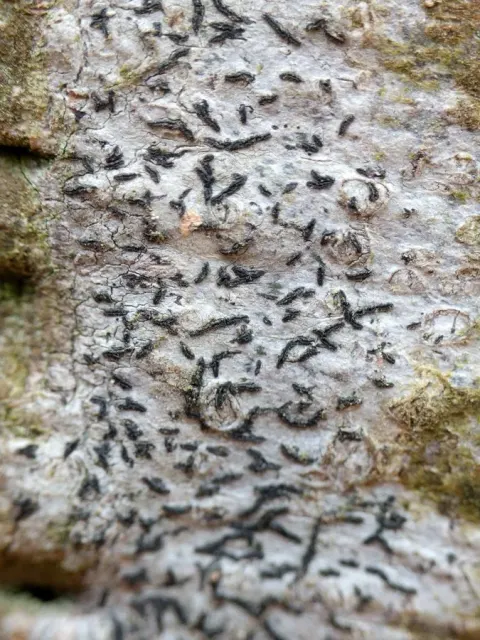
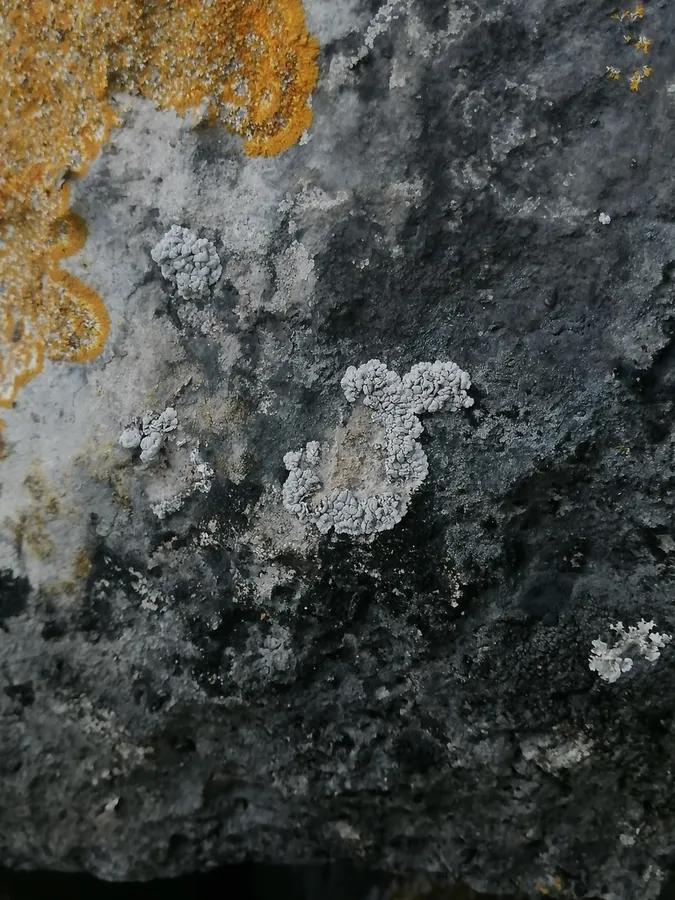
The thallus of Alyxoria sierramadrensis forms patches about 1–3 cm across, composed of convex, elongate or whose pale brown surface is usually masked by a dense white pruina. In section it shows a well-developed upper , a layer of orange-stained medulla containing anthraquinones, and a dark, loosely hyphal lower surface, with a green alga as . The black ascomata (fruiting bodies) are scattered, rounded to shortly elongated, with a slightly raised margin surrounding a flat, widely exposed that is thickly covered in white pruina. Ascospores are hyaline, narrowly oblong to somewhat club-shaped, three-septate, typically 19–23 μm long and 7–9 μm wide, and surrounded by a distinct gelatinous sheath. Chemical tests and thin-layer chromatography reveal several unidentified anthraquinones and UV-fluorescent compounds, and together with the distinctive ascomata and spores these features separate the species from superficially similar placodioid lichens in genera such as Placolecis and Roccellina.
Habitat dan peran ekologis
The species grows on exposed limestone outcrops in semi-humid parts of the Sierra Madre Oriental, where it occurs on steep or vertical rock walls within xerophytic and Piedmont scrubland communities that include scattered oaks. It has been recorded from six localities in the Mexican states of Coahuila and Nuevo León, at elevations of roughly 800 – 1500 m, and often co-occurs with other calcicolous lichens such as Bagliettoa calciseda, Psora pseudorussellii, Squamulea galactophylla, and Xanthopsorella texana. Field observations indicate that Alyxoria sierramadrensis can be locally frequent in suitable habitats, but many populations fall within the rapidly expanding metropolitan area of Monterrey, where quarrying of limestone and poor air quality are ongoing concerns; the authors therefore suggest that similar habitats in neighboring Mexican states and in adjacent Texas should be surveyed to clarify its full range and conservation status.
- Habitat atau konteks temuan
- Informasi belum tersedia pada sumber rilis ini.
- Substrat
- Informasi belum tersedia pada sumber rilis ini.
- Peran atau konteks
- Pembentuk liken
Reproduksi
The thallus of Alyxoria sierramadrensis forms patches about 1–3 cm across, composed of convex, elongate or whose pale brown surface is usually masked by a dense white pruina. In section it shows a well-developed upper , a layer of orange-stained medulla containing anthraquinones, and a dark, loosely hyphal lower surface, with a green alga as . The black ascomata (fruiting bodies) are scattered, rounded to shortly elongated, with a slightly raised margin surrounding a flat, widely exposed that is thickly covered in white pruina. Ascospores are hyaline, narrowly oblong to somewhat club-shaped, three-septate, typically 19–23 μm long and 7–9 μm wide, and surrounded by a distinct gelatinous sheath.
Catatan identitas dan cakupan
- Nama diterima mengikuti Catalogue of Life Base2026-09-11; uraian mempertahankan konsep dan nama sumber aslinya.
- Original geographic, specimen and life-cycle scope retained; source import awaits individual editorial review.
- Impor dan terjemahan otomatis belum diperiksa editorial per profil. Struktur reproduktif yang disebutkan tidak membuktikan seluruh siklus hidup diketahui.
- Pengukuran pada uraian mengikuti spesimen, kultur, dan metode sumber; angka tidak diperluas ke semua populasi.
Catatan distribusi dalam narasi mengikuti sumbernya. Dokumentasi spesimen atau foto mengikuti catatan sumber. Bukti wilayah Indonesia dan penilaian konservasi tidak disimpulkan dari gambar.
Melihat dengan konteks
Dokumentasi Alyxoria sierramadrensis menurut asosiasi foto pada record takson iNaturalist. Kredit: Erick Vélez Sánchez. Identitas mengikuti sumber; bukan penentuan spesimen independen.
- Jenis
- Fotografi
- Kredit
- (c) Erick Vélez Sánchez, some rights reserved (CC BY)
- Lisensi
- CC BY 4.0
- Sumber media
- Buka entri sumber
Dokumentasi tambahan
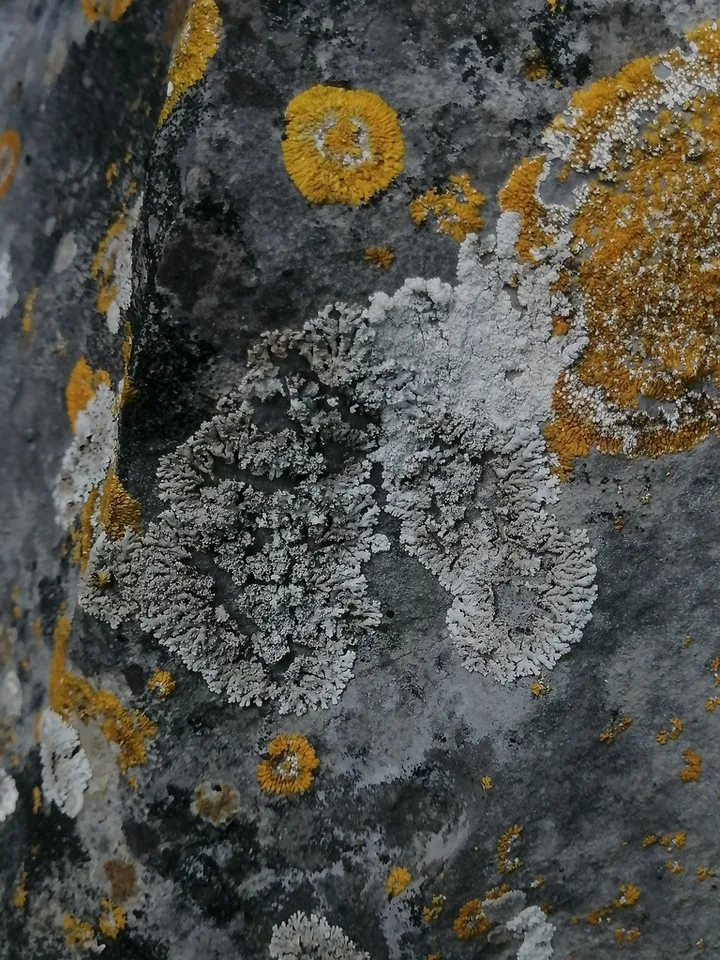
Foto yang diasosiasikan dengan Alyxoria sierramadrensis pada iNaturalist. Identifikasi mengikuti sumber; bukan penentuan spesimen independen.
Kredit dan penggunaan
(c) Erick Vélez Sánchez, some rights reserved (CC BY)
Ukuran dan format gambar disesuaikan tanpa pemotongan, retus, atau penambahan skala. Lisensi sumber dipertahankan.
Sumber profil
- [1] Alyxoria sierramadrensis — Wikipedia (en)
- [2] Catalogue of Life Base2026-09-11 — Alyxoria sierramadrensis
- [3] Dokumentasi visual — Alyxoria sierramadrensis
- [4] Dokumentasi visual — Alyxoria sierramadrensis
Rujukan halaman ini
Fungi. Alyxoria sierramadrensis. Rilis data fungi-2026-10-12-expansion-2. https://fungi-atlas.mgadib.chatgpt.site/jamur/alyxoria-sierramadrensis/.
Status: impor sumber; pemeriksaan editorial per profil belum selesai. Untuk klaim biologis, gunakan rujukan pada bagian terkait dan periksa konteks sumber aslinya.