01 / Morfologi

Ciri dan struktur

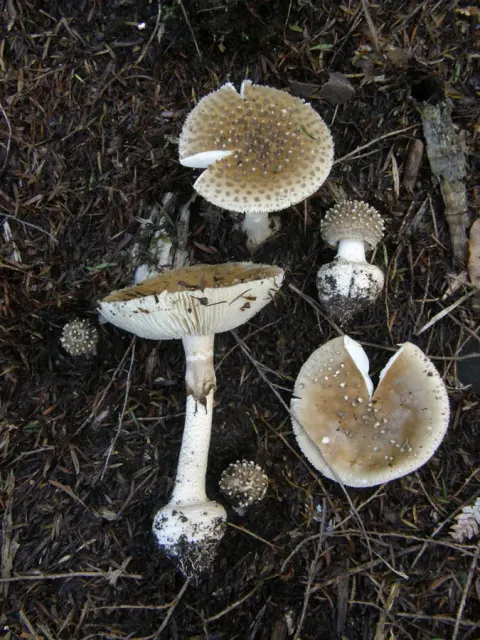
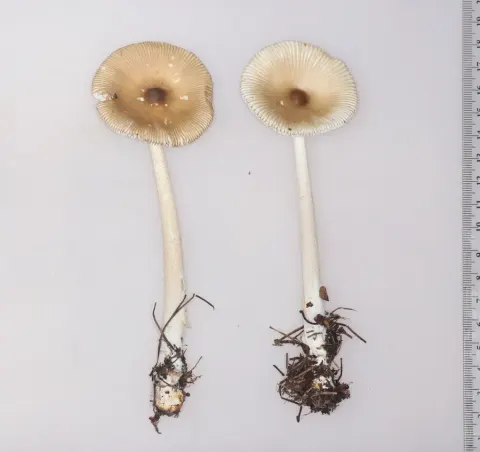
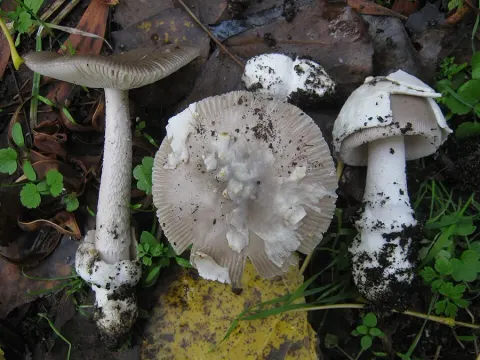
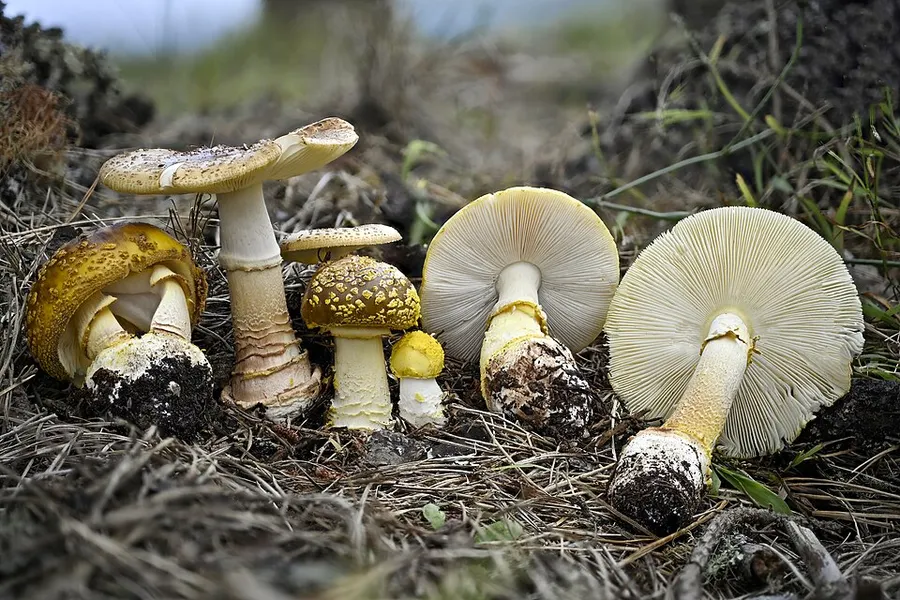
The cap of A. augusta ranges from 4–12 cm across with a plano-convex curve. The surface of the cap is smooth and ranges in various shades of brown. The surface also contains scattered yellow to brown colored warts formed from the remains of the universal veil. The flesh of the mushroom is soft and tends to be white to light yellow. The lamellae consist of close, white gills that are free or mildly attached to the upper stipe. The stipe ranges from 5–15 cm long and 1–2 cm thick. Most stipes contain a partial veil that resembles a secondary, smaller ring, the same color as the cap. The surface of the stipe is white and scattered with occasional scales. Yellow to gray warts are remnants of the universal veil on the basal bulb. The spores are elliptical, ranging from 8x12 - 6x8 μm, and amyloid. Clamps are not present at the base of basidia. Like many other mushrooms of the Amanita genus, A. augusta contains a white spore print.

Sebagian uraian ditampilkan dalam bahasa sumber; terjemahannya belum tersedia atau belum lolos pemeriksaan.

Rujukan: [1]

Pengukuran mengikuti objek, spesimen atau kultur, dan metode yang disebutkan sumber. Baca uraian asli untuk konteks lengkap.

02 / Kehidupan

Habitat dan peran ekologis

Amanita augusta is mycorrhizal with a range of trees in mixed woodlands. Usually found in small groups or alone. This mushroom is most commonly found in Northern and Central California. The fungus is also found along the Pacific Northwest and has been seen in Montana and Idaho. This species forms ectomycorrhizal associations with conifers and a variety of other hardwoods, such as oak, spruce, and Pinus species. When the fungi reappear and grow mycorrhizae, they form small communities rather than grow in a large group. Two of the most established hosts of A. augusta are P. muricata and Ps. menziesii.

Sebagian uraian ditampilkan dalam bahasa sumber; terjemahannya belum tersedia atau belum lolos pemeriksaan.

Rujukan: [1]

Habitat atau konteks temuan
Informasi belum tersedia pada sumber rilis ini.
Substrat
Informasi belum tersedia pada sumber rilis ini.
Peran atau konteks
Mitra tumbuhan
Temukan hubungan serupa
03 / Siklus hidup

Reproduksi

The cap of A. augusta ranges from 4–12 cm across with a plano-convex curve. The surface of the cap is smooth and ranges in various shades of brown. The surface also contains scattered yellow to brown colored warts formed from the remains of the universal veil. The flesh of the mushroom is soft and tends to be white to light yellow. The lamellae consist of close, white gills that are free or mildly attached to the upper stipe. The stipe ranges from 5–15 cm long and 1–2 cm thick. Most stipes contain a partial veil that resembles a secondary, smaller ring, the same color as the cap. The surface of the stipe is white and scattered with occasional scales. Yellow to gray warts are remnants of the universal veil on the basal bulb.

Sebagian uraian ditampilkan dalam bahasa sumber; terjemahannya belum tersedia atau belum lolos pemeriksaan.

Rujukan: [1]

04 / Batas informasi

Catatan identitas dan cakupan

  • Nama diterima mengikuti Catalogue of Life Base2026-09-11; uraian mempertahankan konsep dan nama sumber aslinya.
  • Original geographic, specimen and life-cycle scope retained; source import awaits individual editorial review.
  • Impor dan terjemahan otomatis belum diperiksa editorial per profil. Struktur reproduktif yang disebutkan tidak membuktikan seluruh siklus hidup diketahui.
  • Pengukuran pada uraian mengikuti spesimen, kultur, dan metode sumber; angka tidak diperluas ke semua populasi.

Catatan distribusi dalam narasi mengikuti sumbernya. Dokumentasi spesimen atau foto mengikuti catatan sumber. Bukti wilayah Indonesia dan penilaian konservasi tidak disimpulkan dari gambar.

05 / Dokumentasi

Melihat dengan konteks

Dokumentasi Amanita augusta dari Wikimedia Commons. Amanita augusta from Pacifica, California, growing under Pinus radiata. https://mushroomobserver.org/462985 Identifikasi mengikuti record berkas sumber.

Jenis
Fotografi
Kredit
Alan Rockefeller
Sumber media
Buka entri sumber

Gambar menunjukkan objek menurut identifikasi sumber, bukan verifikasi independen spesimen oleh Fungi. Tidak ada skala baru yang ditambahkan.

06 / Rujukan

Sumber profil

  1. [1] Amanita augusta — Wikipedia (en)Bagian sumber: Frozen revision 1333504765
    Tanggal penghimpunan sumber: 2026-10-12
    Teks sumber: CC BY-SA4.0 · Wikipedia contributors
  2. [2] Catalogue of Life Base2026-09-11 — Amanita augustaBagian sumber: ColDP NameUsage.tsv ID 65XNC; accepted species; source 2073
    Tanggal penghimpunan sumber: 2026-10-12
  3. [3] Dokumentasi visual — Amanita augustaBagian sumber: Individual media record; identification follows the source, not independent determination
    Tanggal penghimpunan sumber: 2026-10-12
    Media sumber: CC BY-SA 4.0 · Alan Rockefeller

Adaptasi teks: CC BY-SA 4.0. Wikipedia contributors — Amanita augusta — Wikipedia (en)

Uraian asli dan riwayat sumber

Riwayat atau halaman sumber

Ringkasan sumber

Amanita augusta, commonly known as the western yellow-veil or western yellow-veiled amanita, is a small tannish-brown mushroom with cap colors bright yellow to dark brown and various combinations of the two colors. The mushroom is often recognizable by the fragmented yellow remnants of the universal veil. This mushroom grows year-round in the Pacific Northwest, but fruiting tends to occur in late fall to mid-winter. The fungus grows in an ectomycorrhizal relationship with hardwoods and conifers, often in mixed woodlands.

Revisi sumber

Morfologi sumber

The cap of A. augusta ranges from 4–12 cm across with a plano-convex curve. The surface of the cap is smooth and ranges in various shades of brown. The surface also contains scattered yellow to brown colored warts formed from the remains of the universal veil. The flesh of the mushroom is soft and tends to be white to light yellow. The lamellae consist of close, white gills that are free or mildly attached to the upper stipe. The stipe ranges from 5–15 cm long and 1–2 cm thick. Most stipes contain a partial veil that resembles a secondary, smaller ring, the same color as the cap. The surface of the stipe is white and scattered with occasional scales. Yellow to gray warts are remnants of the universal veil on the basal bulb. The spores are elliptical, ranging from 8x12 - 6x8 μm, and amyloid. Clamps are not present at the base of basidia. Like many other mushrooms of the Amanita genus, A. augusta contains a white spore print.

Revisi sumber

Ekologi sumber

Amanita augusta is mycorrhizal with a range of trees in mixed woodlands. Usually found in small groups or alone. This mushroom is most commonly found in Northern and Central California. The fungus is also found along the Pacific Northwest and has been seen in Montana and Idaho. This species forms ectomycorrhizal associations with conifers and a variety of other hardwoods, such as oak, spruce, and Pinus species. When the fungi reappear and grow mycorrhizae, they form small communities rather than grow in a large group. Two of the most established hosts of A. augusta are P. muricata and Ps. menziesii.

Revisi sumber

Struktur reproduksi sumber

The cap of A. augusta ranges from 4–12 cm across with a plano-convex curve. The surface of the cap is smooth and ranges in various shades of brown. The surface also contains scattered yellow to brown colored warts formed from the remains of the universal veil. The flesh of the mushroom is soft and tends to be white to light yellow. The lamellae consist of close, white gills that are free or mildly attached to the upper stipe. The stipe ranges from 5–15 cm long and 1–2 cm thick. Most stipes contain a partial veil that resembles a secondary, smaller ring, the same color as the cap. The surface of the stipe is white and scattered with occasional scales. Yellow to gray warts are remnants of the universal veil on the basal bulb.

Revisi sumber

Rujukan halaman ini

Fungi. Amanita augusta. Rilis data fungi-2026-10-12-expansion-2. https://fungi-atlas.mgadib.chatgpt.site/jamur/amanita-augusta/.

Status: impor sumber; pemeriksaan editorial per profil belum selesai. Untuk klaim biologis, gunakan rujukan pada bagian terkait dan periksa konteks sumber aslinya.