01 / Morfologi

Ciri dan struktur

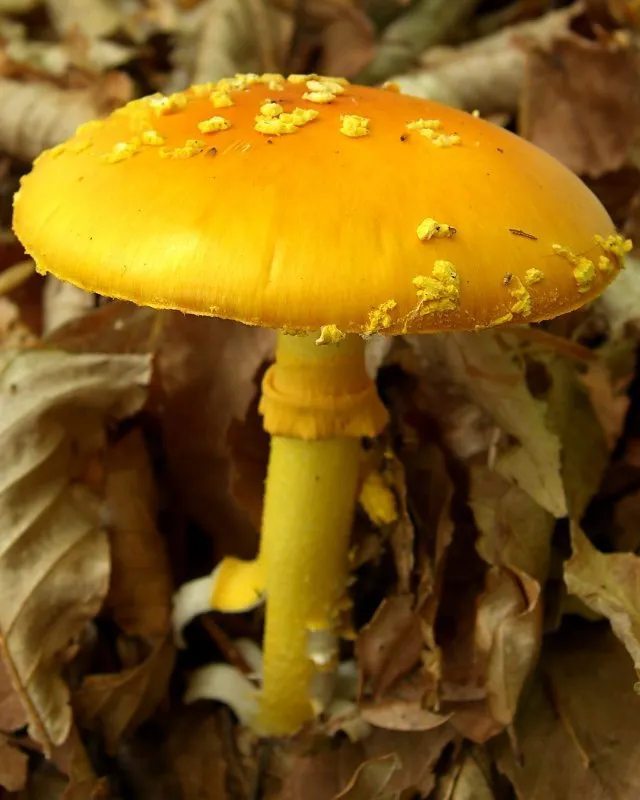
The cap is initially ovoid in shape, but in maturity becomes convex and eventually flattened. Orange to bright yellow-orange in color, it reaches diameters of 3 to 9 cm. Young specimens are covered with chrome yellow warts that may be easily rubbed off or washed away with rain. The cap surface is smooth and sticky (viscid) beneath the warts; the edge of the cap is striate, reflecting the arrangement of the gills underneath. The flesh is white. The gills are barely free from the stem, and packed close together. They are white or tinged yellow on the edges, and initially covered with a yellowish partial veil. The stem is typically 5.5 to 11.5 cm long by 0.7 to 1.4 cm thick, equal or slightly tapered upward from a small rounded bulb at the base. Its color may range from white to yellowish orange, and the surface may be smooth, or covered with small flakes. The base of the stem usually has chrome yellow flakes of universal veil material adhering loosely to the bulb, or in the soil around the base. The partial veil leaves a skirt-like ring, (annulus) on the upper stem. The spore print is white. Campbell and Petersen published a detailed description of the characteristics of A. flavoconia grown in culture. In the era prior to the commonplace use of DNA analysis and phylogenetics, cultural characters were often used to help provide additional taxonomic information; they found considerable variability between different isolates. Two variants have been reported from Colombia, collected from Quercus humboldtii forests: A. flavoconia var. sinapicolor and var. inquinata. The spores are elliptical, smooth, and have dimensions of 7–9 by 5–8 μm.

Sebagian uraian ditampilkan dalam bahasa sumber; terjemahannya belum tersedia atau belum lolos pemeriksaan.

Rujukan: [1]

Pengukuran mengikuti objek, spesimen atau kultur, dan metode yang disebutkan sumber. Baca uraian asli untuk konteks lengkap.

02 / Kehidupan

Habitat dan peran ekologis

Jamur umum mikoriza, A. flavoconia tumbuh sendirian atau dalam kelompok di tanah pada musim panas hingga musim gugur, di hutan berdaun lebar dan bercampur. Noted for lebih memilih hemlock, itu juga terkait dengan hutan ceri merah ketinggian tinggi. Di Amerika Utara, A. flavoconia tersebar luas dan telah dikumpulkan dari beberapa lokasi, termasuk Ontario, Kanada; Amerika Serikat (Iowa), dan Meksiko. Hal ini telah dijelaskan sebagai "spesies yang paling umum dan tersebar luas di Amerika Utara timur Amanita in".

Rujukan: [1]

Habitat atau konteks temuan
hutan
Substrat
tanah
Peran atau konteks
Mitra tumbuhan
Temukan hubungan serupa
03 / Siklus hidup

Reproduksi

The cap surface is smooth and sticky (viscid) beneath the warts; the edge of the cap is striate, reflecting the arrangement of the gills underneath. The flesh is white. The gills are barely free from the stem, and packed close together. They are white or tinged yellow on the edges, and initially covered with a yellowish partial veil. The stem is typically 5.5 to 11.5 cm long by 0.7 to 1.4 cm thick, equal or slightly tapered upward from a small rounded bulb at the base. Its color may range from white to yellowish orange, and the surface may be smooth, or covered with small flakes. The base of the stem usually has chrome yellow flakes of universal veil material adhering loosely to the bulb, or in the soil around the base.

Sebagian uraian ditampilkan dalam bahasa sumber; terjemahannya belum tersedia atau belum lolos pemeriksaan.

Rujukan: [1]

Sinonim menurut acuan taksonomi rilis: Amanita flavoconia var. inquinata; Amanita flavoconia var. sinapicolor; Amplariella flavoconia; Venenarius flavoconius
04 / Batas informasi

Catatan identitas dan cakupan

  • Nama diterima mengikuti Catalogue of Life Base2026-09-11; uraian mempertahankan konsep dan nama sumber aslinya.
  • Original geographic, specimen and life-cycle scope retained; source import awaits individual editorial review.
  • Impor dan terjemahan otomatis belum diperiksa editorial per profil. Struktur reproduktif yang disebutkan tidak membuktikan seluruh siklus hidup diketahui.
  • Pengukuran pada uraian mengikuti spesimen, kultur, dan metode sumber; angka tidak diperluas ke semua populasi.

Catatan distribusi dalam narasi mengikuti sumbernya. Dokumentasi spesimen atau foto mengikuti catatan sumber. Bukti wilayah Indonesia dan penilaian konservasi tidak disimpulkan dari gambar.

05 / Dokumentasi

Melihat dengan konteks

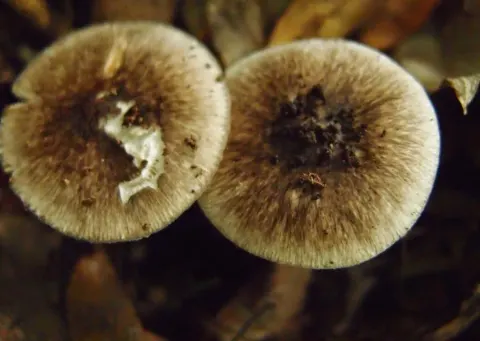
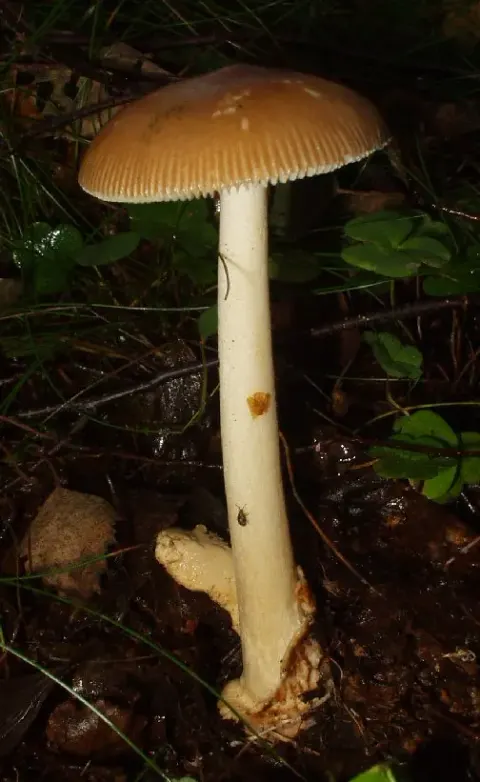
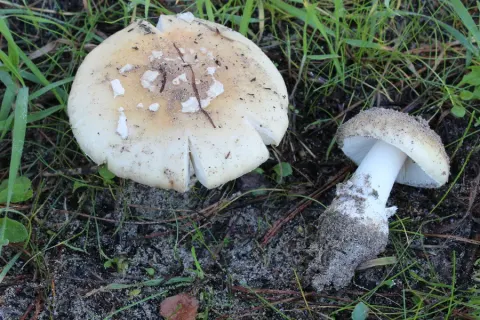
Dokumentasi Amanita flavoconia menurut asosiasi foto pada record takson iNaturalist. Kredit: Jason Hollinger. Identitas mengikuti sumber; bukan penentuan spesimen independen.

Jenis
Fotografi
Kredit
(c) Jason Hollinger, some rights reserved (CC BY)
Lisensi
CC BY 4.0
Sumber media
Buka entri sumber

Gambar menunjukkan objek menurut identifikasi sumber, bukan verifikasi independen spesimen oleh Fungi. Tidak ada skala baru yang ditambahkan.

06 / Rujukan

Sumber profil

  1. [1] Amanita flavoconia — Wikipedia (en)Bagian sumber: Frozen revision 1306685373
    Tanggal penghimpunan sumber: 2026-10-12
    Teks sumber: CC BY-SA4.0 · Wikipedia contributors
  2. [2] Catalogue of Life Base2026-09-11 — Amanita flavoconiaBagian sumber: ColDP NameUsage.tsv ID 65ZGK; accepted species; source 2073
    Tanggal penghimpunan sumber: 2026-10-12
  3. [3] Dokumentasi visual — Amanita flavoconiaBagian sumber: Individual media record; identification follows the source, not independent determination
    Tanggal penghimpunan sumber: 2026-10-12
    Media sumber: CC BY 4.0 · (c) Jason Hollinger, some rights reserved (CC BY)

Adaptasi teks: CC BY-SA 4.0. Wikipedia contributors — Amanita flavoconia — Wikipedia (en)

Uraian asli dan riwayat sumber

Riwayat atau halaman sumber

Ringkasan sumber

The cap is initially ovoid in shape, but in maturity becomes convex and eventually flattened. Orange to bright yellow-orange in color, it reaches diameters of 3 to 9 cm. Young specimens are covered with chrome yellow warts that may be easily rubbed off or washed away with rain. The cap surface is smooth and sticky (viscid) beneath the warts; the edge of the cap is striate, reflecting the arrangement of the gills underneath. The flesh is white. The gills are barely free from the stem, and packed close together.

Revisi sumber

Morfologi sumber

The cap is initially ovoid in shape, but in maturity becomes convex and eventually flattened. Orange to bright yellow-orange in color, it reaches diameters of 3 to 9 cm. Young specimens are covered with chrome yellow warts that may be easily rubbed off or washed away with rain. The cap surface is smooth and sticky (viscid) beneath the warts; the edge of the cap is striate, reflecting the arrangement of the gills underneath. The flesh is white. The gills are barely free from the stem, and packed close together. They are white or tinged yellow on the edges, and initially covered with a yellowish partial veil. The stem is typically 5.5 to 11.5 cm long by 0.7 to 1.4 cm thick, equal or slightly tapered upward from a small rounded bulb at the base. Its color may range from white to yellowish orange, and the surface may be smooth, or covered with small flakes. The base of the stem usually has chrome yellow flakes of universal veil material adhering loosely to the bulb, or in the soil around the base. The partial veil leaves a skirt-like ring, (annulus) on the upper stem. The spore print is white. Campbell and Petersen published a detailed description of the characteristics of A. flavoconia grown in culture. In the era prior to the commonplace use of DNA analysis and phylogenetics, cultural characters were often used to help provide additional taxonomic information; they found considerable variability between different isolates. Two variants have been reported from Colombia, collected from Quercus humboldtii forests: A. flavoconia var. sinapicolor and var. inquinata. The spores are elliptical, smooth, and have dimensions of 7–9 by 5–8 μm.

Revisi sumber

Ekologi sumber

A common mycorrhizal mushroom, A. flavoconia grows solitarily or in groups on the ground in the summer to the fall, in broad-leaved and mixed woods. Noted for preferring hemlock, it is also associated with high elevation red spruce forests. In North America, A. flavoconia has a wide distribution and has been collected from several locations, including Ontario, Canada; the United States (Iowa), and Mexico. It has been described as "of the most common and widespread species of Amanita in eastern North America."

Revisi sumber

Struktur reproduksi sumber

The cap surface is smooth and sticky (viscid) beneath the warts; the edge of the cap is striate, reflecting the arrangement of the gills underneath. The flesh is white. The gills are barely free from the stem, and packed close together. They are white or tinged yellow on the edges, and initially covered with a yellowish partial veil. The stem is typically 5.5 to 11.5 cm long by 0.7 to 1.4 cm thick, equal or slightly tapered upward from a small rounded bulb at the base. Its color may range from white to yellowish orange, and the surface may be smooth, or covered with small flakes. The base of the stem usually has chrome yellow flakes of universal veil material adhering loosely to the bulb, or in the soil around the base.

Revisi sumber

Rujukan halaman ini

Fungi. Amanita flavoconia. Rilis data fungi-2026-10-12-expansion-2. https://fungi-atlas.mgadib.chatgpt.site/jamur/amanita-flavoconia/.

Status: impor sumber; pemeriksaan editorial per profil belum selesai. Untuk klaim biologis, gunakan rujukan pada bagian terkait dan periksa konteks sumber aslinya.