Ciri dan struktur
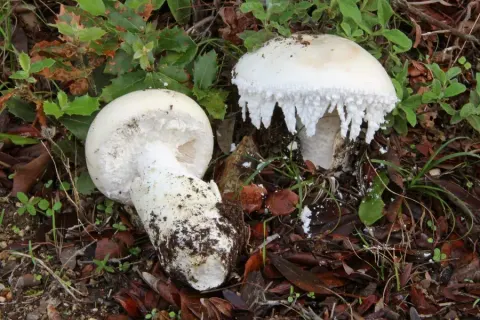
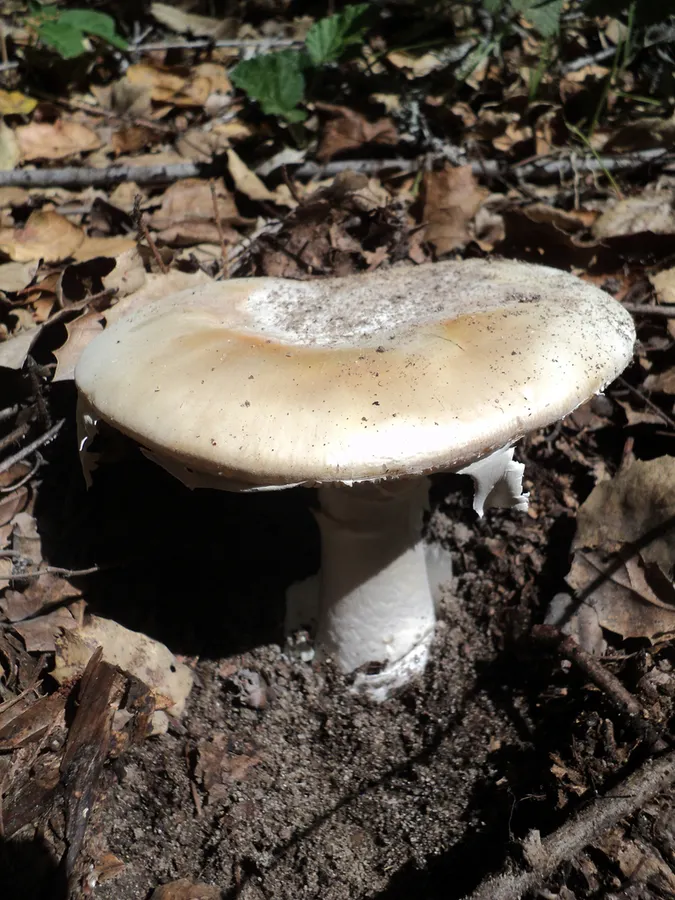
Amanita ocreata is generally stouter than the other fungi termed destroying angels. It first appears as a white egg-shaped object covered with a universal veil. As it grows, the mushroom breaks free, though there may rarely be ragged patches of veil left at the cap edges. The cap is initially hemispherical, before becoming more convex and flattening, sometimes irregularly. This may result in undulations in the cap, which may be between 5–15 cm in diameter. The colour varies from white, through yellowish-white to shades of ochre, sometimes with a brownish centre. Occasionally parts of the fruiting bodies may have pinkish tones. The rest of the fungus below the cap is white. The crowded gills are adnate to adnexed, or sometimes later free.
Habitat dan peran ekologis
Appearing from January to April, A. ocreata occurs later in the year than other amanitas except A. calyptroderma. It is found in mixed woodland on the Pacific coast of North America, from Washington south through California to Baja California in Mexico. It forms ectomycorrhizal relationships and is found in association with coast live oak (Quercus agrifolia), as well as hazel (Corylus spp.). In Oregon and Washington, it may also be associated with the Garry oak (Quercus garryana).
- Habitat atau konteks temuan
- hutan
- Substrat
- Informasi belum tersedia pada sumber rilis ini.
- Peran atau konteks
- Mitra tumbuhan
Reproduksi
Amanita ocreata, commonly known as one of the many destroying angels, or more precisely the western North American destroying angel, is a deadly poisonous basidiomycete fungus, one of many in the genus Amanita. The large fruiting bodies (the mushrooms) generally appear in spring; the cap may be white or ochre and often develops a brownish centre, while the stipe, ring, gill and volva are all white. A. ocreata resembles several edible species commonly consumed by humans, increasing the risk of accidental poisoning. Mature fruiting bodies can be confused with the edible A. velosa (springtime amanita), A. lanei or Volvopluteus gloiocephalus, while immature specimens may be difficult to distinguish from edible Agaricus mushrooms or puffballs.
Catatan identitas dan cakupan
- Nama diterima mengikuti Catalogue of Life Base2026-09-11; uraian mempertahankan konsep dan nama sumber aslinya.
- Original geographic, specimen and life-cycle scope retained; source import awaits individual editorial review.
- Impor dan terjemahan otomatis belum diperiksa editorial per profil. Struktur reproduktif yang disebutkan tidak membuktikan seluruh siklus hidup diketahui.
- Pengukuran pada uraian mengikuti spesimen, kultur, dan metode sumber; angka tidak diperluas ke semua populasi.
Catatan distribusi dalam narasi mengikuti sumbernya. Dokumentasi spesimen atau foto mengikuti catatan sumber. Bukti wilayah Indonesia dan penilaian konservasi tidak disimpulkan dari gambar.
Melihat dengan konteks
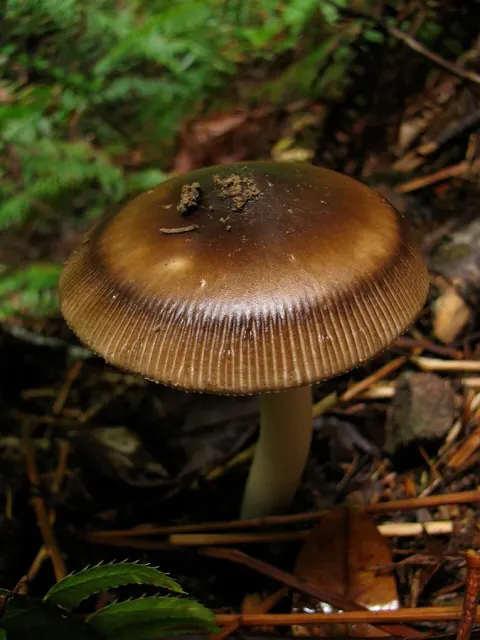
Dokumentasi Amanita ocreata menurut asosiasi foto pada record takson iNaturalist. Kredit: Thomas Laxton. Identitas mengikuti sumber; bukan penentuan spesimen independen.
- Jenis
- Fotografi
- Kredit
- (c) Thomas Laxton, some rights reserved (CC BY-SA), uploaded by Thomas Laxton
- Lisensi
- CC BY-SA 4.0
- Sumber media
- Buka entri sumber
Dokumentasi tambahan
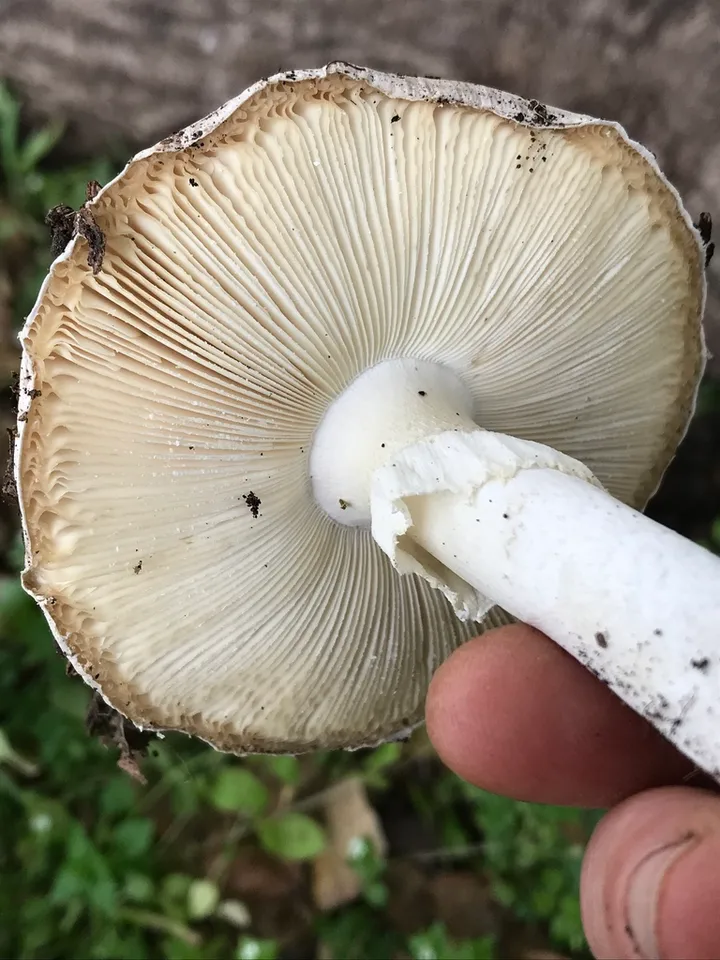
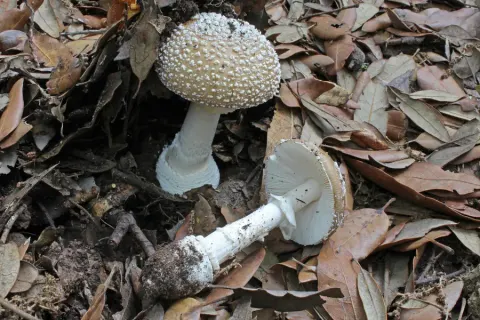
Foto yang diasosiasikan dengan Amanita ocreata pada iNaturalist. Identifikasi mengikuti sumber; bukan penentuan spesimen independen.
Kredit dan penggunaan
(c) LJ Moore-McClelland, some rights reserved (CC BY), uploaded by LJ Moore-McClelland
Ukuran dan format gambar disesuaikan tanpa pemotongan, retus, atau penambahan skala. Lisensi sumber dipertahankan.
Sumber profil
- [1] Amanita ocreata — Wikipedia (en)
- [2] Catalogue of Life Base2026-09-11 — Amanita ocreata
- [3] Dokumentasi visual — Amanita ocreata
- [4] Dokumentasi visual — Amanita ocreata
Rujukan halaman ini
Fungi. Amanita ocreata. Rilis data fungi-2026-10-12-expansion-2. https://fungi-atlas.mgadib.chatgpt.site/jamur/amanita-ocreata/.
Status: impor sumber; pemeriksaan editorial per profil belum selesai. Untuk klaim biologis, gunakan rujukan pada bagian terkait dan periksa konteks sumber aslinya.