Ciri dan struktur
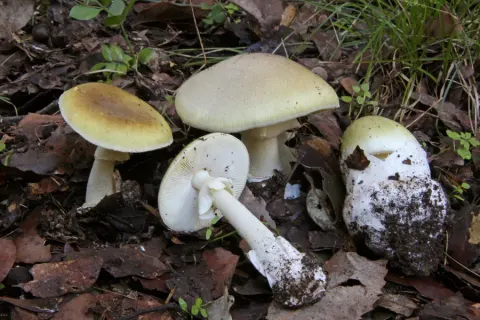
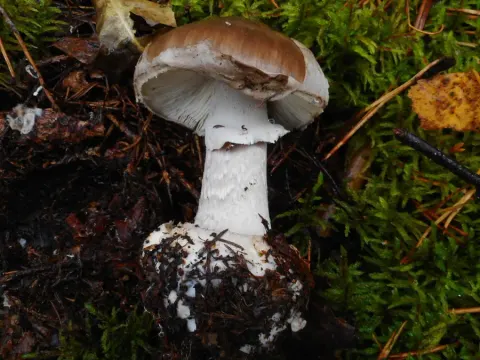
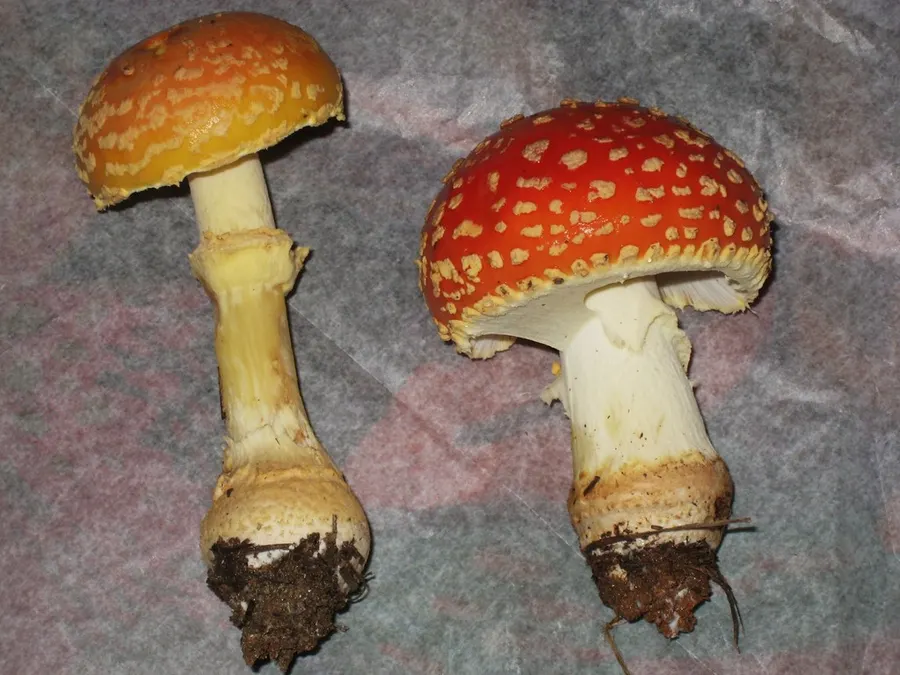
The cap is 4–13 cm wide, hemispheric to convex when young, becoming plano-convex to plano-depressed in age. It is pinkish-melon-colored to peach-orange, sometimes pastel red towards the disc. The cap is slightly appendiculate. The volva is distributed over the cap as thin pale yellowish to pale tannish warts; it is otherwise smooth and subviscid, and the margin becomes slightly to moderately striate in age. The flesh is white and does not stain when cut or injured. The flesh has a pleasant taste and odor. Amanita persicina spores are white in deposit, ellipsoid to elongate, infrequently broadly ellipsoid, rarely cylindric, inamyloid, and are (8.0) 9.4–12.7 (18.0) x (5.5) 6.5–8.5 (11.1) μm. The stipe is 4–10.5 cm long, 1–2 cm wide, and more or less equal or narrowing upwards and slightly flaring at the apex. It is pale yellow in the superior region, tannish white below, and densely stuffed with a pith. The ring is fragile, white above and yellowish below, and poorly formed or absent. Remnants of the universal veil on the vasal bulb as concentric rings are fragile or absent. Image:Amanitamuscariavarpersicina1.jpg| Two wild specimens Image:amanita muscaria var. persicina.jpg| Close-up of cap
Habitat dan peran ekologis
A. persicina ditemukan tumbuh bersendirian atau gregariously. It is mycorrhizal with conifers (Pine) and deciduous (Oak) trees in North America. Sering berbuah pada musim gugur, tetapi kadang-kadang di musim semi dan musim panas. The fungus is common in the southeast United States, from Texas to Georgia, and north to New Jersey.
- Habitat atau konteks temuan
- Informasi belum tersedia pada sumber rilis ini.
- Substrat
- Informasi belum tersedia pada sumber rilis ini.
- Peran atau konteks
- Mitra tumbuhan
Reproduksi
Amanita persicina, commonly known as the peach-colored fly agaric, is a basidiomycete fungus of the genus Amanita with a peach-colored center. Until c., the fungus was believed to be a variety of A. muscaria. Amanita persicina spores are white in deposit, ellipsoid to elongate, infrequently broadly ellipsoid, rarely cylindric, inamyloid, and are (8.0) 9.4–12.7 (18.0) x (5.5) 6.5–8.5 (11.1) μm.
Catatan identitas dan cakupan
- Nama diterima mengikuti Catalogue of Life Base2026-09-11; uraian mempertahankan konsep dan nama sumber aslinya.
- Original geographic, specimen and life-cycle scope retained; source import awaits individual editorial review.
- Impor dan terjemahan otomatis belum diperiksa editorial per profil. Struktur reproduktif yang disebutkan tidak membuktikan seluruh siklus hidup diketahui.
- Pengukuran pada uraian mengikuti spesimen, kultur, dan metode sumber; angka tidak diperluas ke semua populasi.
Catatan distribusi dalam narasi mengikuti sumbernya. Dokumentasi spesimen atau foto mengikuti catatan sumber. Bukti wilayah Indonesia dan penilaian konservasi tidak disimpulkan dari gambar.
Melihat dengan konteks
Dokumentasi Amanita persicina menurut asosiasi foto pada record takson iNaturalist. Kredit: Amanita77. Identitas mengikuti sumber; bukan penentuan spesimen independen.
- Jenis
- Fotografi
- Kredit
- (c) Amanita77, some rights reserved (CC BY)
- Lisensi
- CC BY 4.0
- Sumber media
- Buka entri sumber
Dokumentasi tambahan
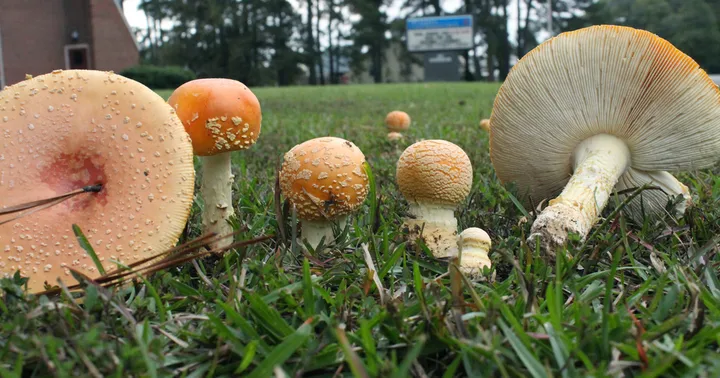
Foto yang diasosiasikan dengan Amanita persicina pada iNaturalist. Identifikasi mengikuti sumber; bukan penentuan spesimen independen.
Kredit dan penggunaan
(c) anonymous, some rights reserved (CC BY-SA)
Ukuran dan format gambar disesuaikan tanpa pemotongan, retus, atau penambahan skala. Lisensi sumber dipertahankan.
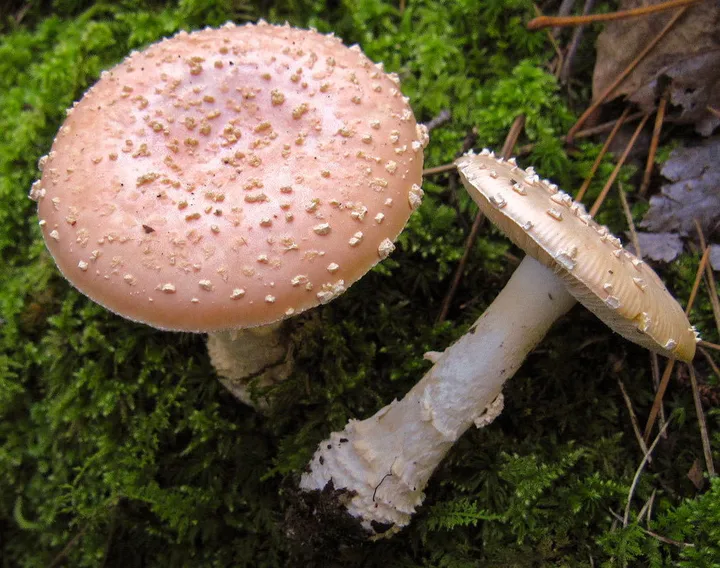
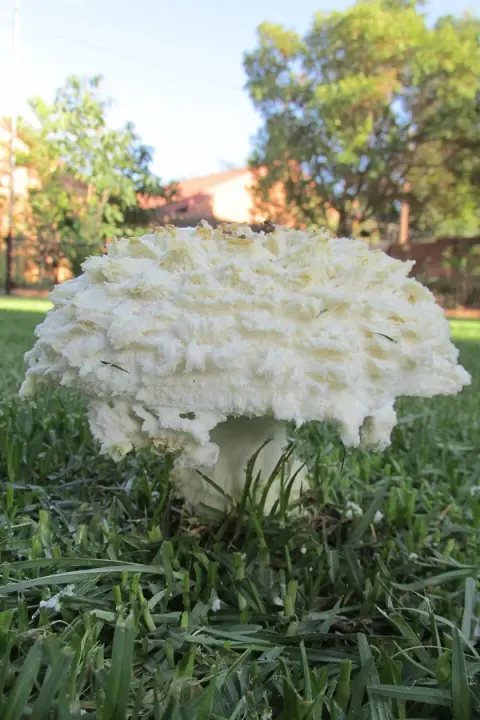
Foto yang diasosiasikan dengan Amanita persicina pada iNaturalist. Identifikasi mengikuti sumber; bukan penentuan spesimen independen.
Kredit dan penggunaan
(c) anonymous, some rights reserved (CC BY-SA)
Ukuran dan format gambar disesuaikan tanpa pemotongan, retus, atau penambahan skala. Lisensi sumber dipertahankan.
Sumber profil
- [1] Amanita persicina — Wikipedia (en)
- [2] Catalogue of Life Base2026-09-11 — Amanita persicina
- [3] Dokumentasi visual — Amanita persicina
- [4] Dokumentasi visual — Amanita persicina
- [5] Dokumentasi visual — Amanita persicina
Rujukan halaman ini
Fungi. Amanita persicina. Rilis data fungi-2026-10-12-expansion-2. https://fungi-atlas.mgadib.chatgpt.site/jamur/amanita-persicina/.
Status: impor sumber; pemeriksaan editorial per profil belum selesai. Untuk klaim biologis, gunakan rujukan pada bagian terkait dan periksa konteks sumber aslinya.