Ciri dan struktur
Stromata superficial, hemispherical, up to 2 cm long × 0.2–0.8 cm wide, with inconspicuous perithecial mounds; surface Olivaceous (48) to brown when young, becoming Brown Vinaceous (84); blackish granules immediately beneath surface; with KOH-extractable pigments Yellowish Green (18) or Green (20). Perithecia spherical to obovoid 0.5–0.75 mm high × 0.25–0.65 mm wide; ostioles coarsely papillate, encircled with a convex truncatum -type disc 0.3–0.5 mm diam. Asci 8-spored, cylindrical, with weakly amyloid, discoid apical apparatus, 0.5 µm high × 1–1.5 µm wide, stipe up to 50 µm, and spore-bearing portion 60–70 × 4–5 µm. Ascospores brown to dark brown, unicellular, ellipsoid-inequilateral, with narrowly rounded ends, (7–)8.0–11.0(–12) × 3–4 µm, with straight germ slit spore-length on the convex side; perispore dehiscent in 10% KOH, smooth with a thickening on the convex side; epispore smooth. Annulohypoxylon annulatum and A. truncatum share stromatic features, such as truncatum -type ostiolar discs and KOH-extractable pigments. Annulohypoxylon annulatum can be differentiated from A. truncatum by the shape of its stromata (hemispherical or massively pulvinate in A. annulatum and hemispherical, glomerate, pulvinate, or effused-pulvinate in A. truncatum), stromatal secondary metabolites (hypoxylonols C and F in A. annulatum and truncatone A and truncaquinones A and B in A. truncatum), and molecular phylogeny (Kuhnert et al. 2017; Li et al. 2025). Most of the characters of the Iranian specimens are in accordance with the type description (Ju and Rogers 1996; Kuhnert et al. 2017), aside from insignificant variations in the size of ascospores [(7–)8.0–11.0(–12) × 3–4 vs. 7.5–10.5(–11) × 3.5–5(–6) µm].
Habitat dan peran ekologis
Iran • Guilan Province, Rasht County, Saravan forest, 37°04'26"N, 49°38'13"E, 183 m elev., on fallen branch of Quercus castaneifolia, 9 October 2016, M.J. Pourmoghaddam (GUM 1614; living culture MUCL 57733; IRAN 3726C); • Guilan Province, Siahkal County, Ziaratgah forest, 37°08'07.34"N, 49°55'36.14"E, 260 m elev., on dead branches (host unknown), 14 October 2016, M.J. Pourmoghaddam.
- Habitat atau konteks temuan
- hutan
- Substrat
- Informasi belum tersedia pada sumber rilis ini.
- Peran atau konteks
- Belum dikategorikan pada rilis ini.
Reproduksi
Stromata superficial, hemispherical, up to 2 cm long × 0.2–0.8 cm wide, with inconspicuous perithecial mounds; surface Olivaceous (48) to brown when young, becoming Brown Vinaceous (84); blackish granules immediately beneath surface; with KOH-extractable pigments Yellowish Green (18) or Green (20). Perithecia spherical to obovoid 0.5–0.75 mm high × 0.25–0.65 mm wide; ostioles coarsely papillate, encircled with a convex truncatum -type disc 0.3–0.5 mm diam. Asci 8-spored, cylindrical, with weakly amyloid, discoid apical apparatus, 0.5 µm high × 1–1.5 µm wide, stipe up to 50 µm, and spore-bearing portion 60–70 × 4–5 µm. Ascospores brown to dark brown, unicellular, ellipsoid-inequilateral, with narrowly rounded ends, (7–)8.0–11.0(–12) × 3–4 µm, with straight germ slit spore-length on the convex side; perispore dehiscent in 10% KOH, smooth with a thickening on the convex side; epispore smooth.
Catatan identitas dan cakupan
- Nama diterima mengikuti Catalogue of Life Base2026-09-11; uraian mempertahankan konsep dan nama sumber aslinya.
- Preserve original treatment localities, hosts and substrate scope. Materials examined describe documented specimens, not the full global range.
- Impor dan terjemahan otomatis belum diperiksa editorial per profil. Struktur reproduktif yang disebutkan tidak membuktikan seluruh siklus hidup diketahui.
- Pengukuran pada uraian mengikuti spesimen, kultur, dan metode sumber; angka tidak diperluas ke semua populasi.
Catatan distribusi dalam narasi mengikuti sumbernya. Dokumentasi spesimen atau foto mengikuti catatan sumber. Bukti wilayah Indonesia dan penilaian konservasi tidak disimpulkan dari gambar.
Melihat dengan konteks
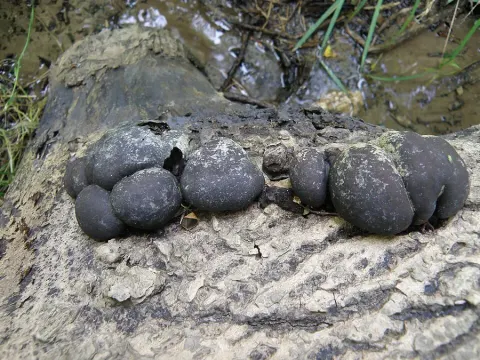
Dokumentasi Annulohypoxylon annulatum menurut asosiasi foto pada record takson iNaturalist. Kredit: Bill Sheehan. Identitas mengikuti sumber; bukan penentuan spesimen independen.
- Jenis
- Fotografi
- Kredit
- (c) Bill Sheehan, some rights reserved (CC BY-SA), uploaded by Bill Sheehan
- Lisensi
- CC BY-SA 4.0
- Sumber media
- Buka entri sumber
Dokumentasi tambahan
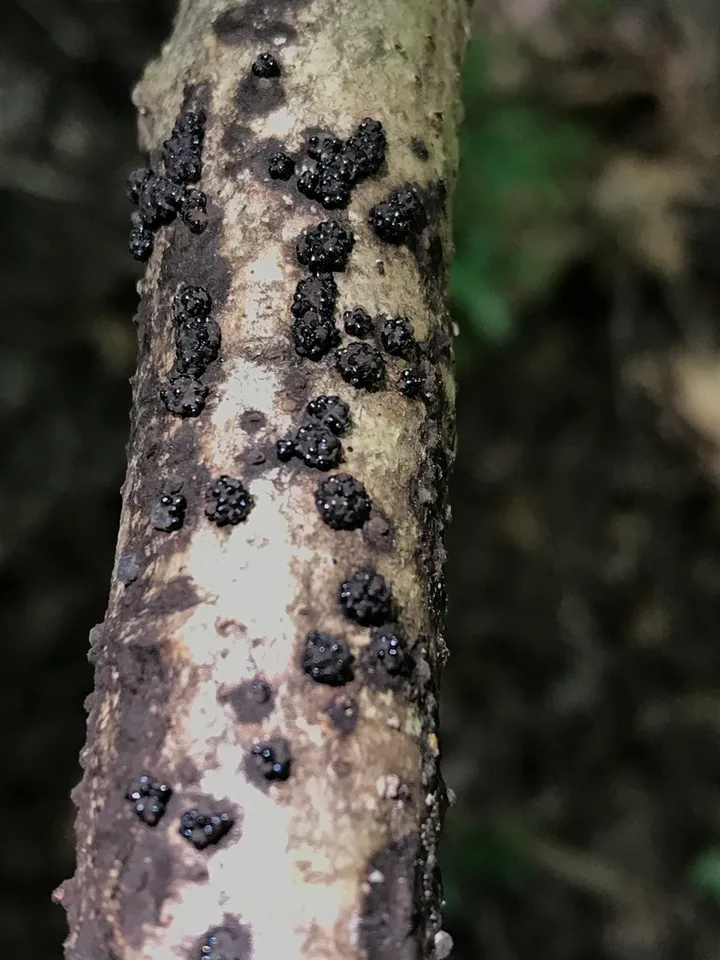
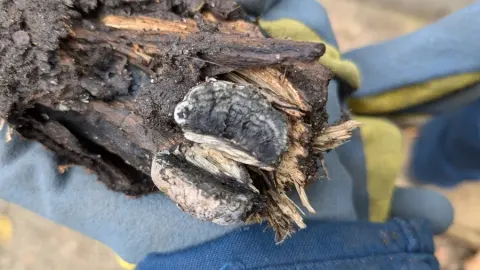
Foto yang diasosiasikan dengan Annulohypoxylon annulatum pada iNaturalist. Identifikasi mengikuti sumber; bukan penentuan spesimen independen.
Kredit dan penggunaan
(c) Brian C. Hunt, some rights reserved (CC BY), uploaded by Brian C. Hunt
Ukuran dan format gambar disesuaikan tanpa pemotongan, retus, atau penambahan skala. Lisensi sumber dipertahankan.
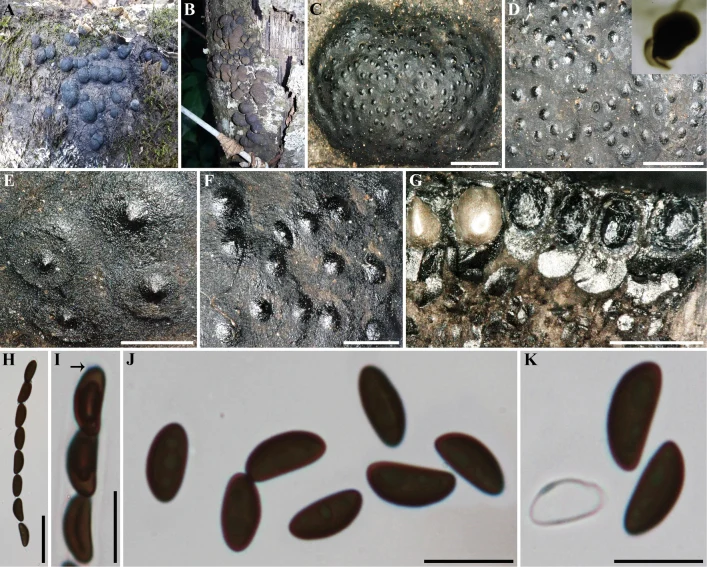
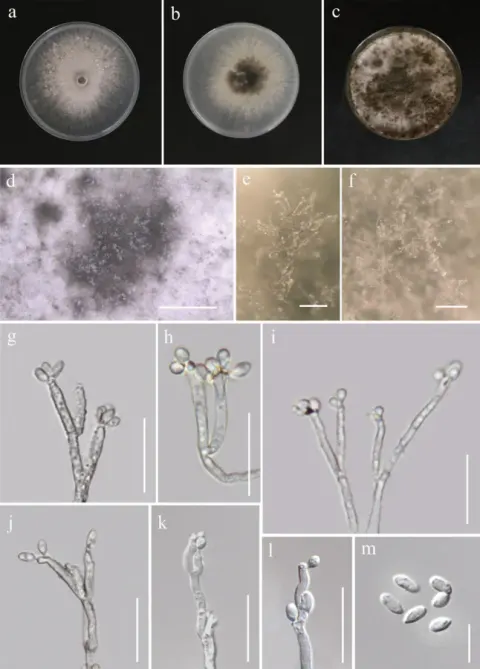
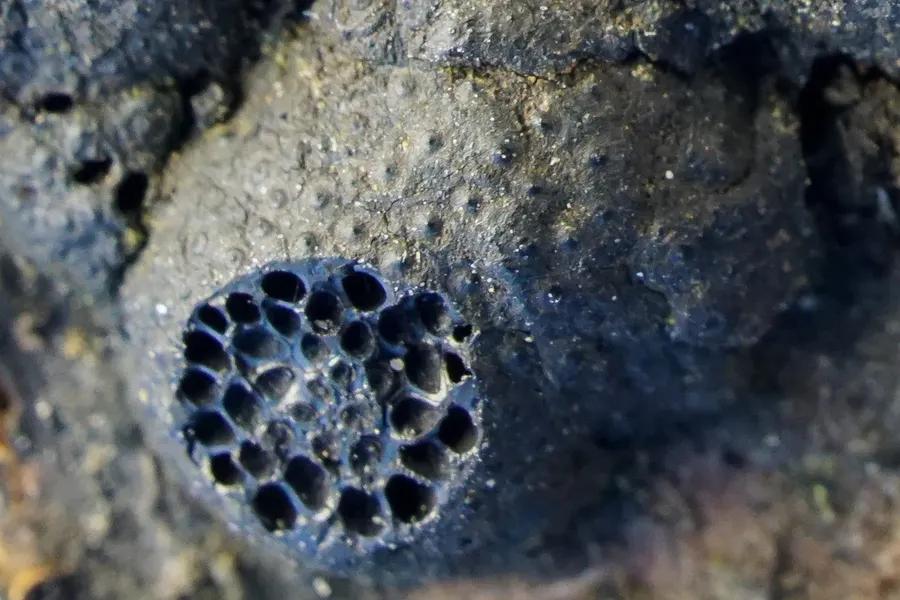
Annulohypoxylon annulatum (GUM 1614). A, B. Old and young stromatal habit; C. Close-up view of stroma surface; D. Close-up view of stroma surface with KOH-extractable pigments from stroma; E, F. Close-up view of ostiolar discs; G. Stroma in vertical section showing perithecia; H. Mature ascus in water; I. Ascus tip in Melzer’s reagent (black arrow); J. Ascospore in water; K. Ascospores in 10% KOH with dehiscent perispore showing thickening. Scale bars: 2 mm (C); 1.5 mm (D); 0.5 mm (E, F); 1 mm (G); 20 µm (H); 10 µm (I–K).
Kredit dan penggunaan
Mohammad Javad Pourmoghaddam, Christopher Lambert, Hermann Voglmayr, Seyed Akbar Khodaparast, Marc Stadler
Ukuran dan format gambar disesuaikan tanpa pemotongan, retus, atau penambahan skala. Lisensi sumber dipertahankan.
Sumber profil
- [1] A polyphasic study of Hypoxylaceae (Xylariales, Ascomycota) in Iran: new species and records from Hyrcanian forests — Annulohypoxylon annulatum
- [2] Catalogue of Life Base2026-09-11 — Annulohypoxylon annulatum
- [3] Dokumentasi visual — Annulohypoxylon annulatum
- [4] Dokumentasi visual — Annulohypoxylon annulatum
- [5] Dokumentasi visual — Annulohypoxylon annulatum
Rujukan halaman ini
Fungi. Annulohypoxylon annulatum. Rilis data fungi-2026-10-12-expansion-2. https://fungi-atlas.mgadib.chatgpt.site/jamur/annulohypoxylon-annulatum/.
Status: impor sumber; pemeriksaan editorial per profil belum selesai. Untuk klaim biologis, gunakan rujukan pada bagian terkait dan periksa konteks sumber aslinya.