01 / Morfologi

Ciri dan struktur

Gabura borbonica is recognised by its foliose (leaf-like) thallus, which is typically crumpled and varies in colour from blue-grey to brown. The thallus does not typically exceed 1 cm in diameter, and lobes, when well-developed, are up to 0.2–0.3 mm wide. The surface of the lichen is often wrinkled, even in young lobes. A notable characteristic of G. borbonica is the formation of , primarily at the margins but also on the upper surface. These goniocysts contain chains of cyanobacterial Nostoc cells. When mature, the goniocysts disrupt to form a soredioid margin.

Sebagian uraian ditampilkan dalam bahasa sumber; terjemahannya belum tersedia atau belum lolos pemeriksaan.

Rujukan: [1]

Pengukuran mengikuti objek, spesimen atau kultur, dan metode yang disebutkan sumber. Baca uraian asli untuk konteks lengkap.

02 / Kehidupan

Habitat dan peran ekologis

Gabura borbonica has been found in various sites across Réunion Island, including in highly disturbed secondary thickets with Eucalyptus plantations. It has been observed growing on trunks of Eucalyptus and Acacia heterophylla trees, as well as on the main stems of Erica thickets. The species appears to be widespread across the island and is found in typical habitats such as the Acacia mountain forest and the Philippia mountain thicket.

Sebagian uraian ditampilkan dalam bahasa sumber; terjemahannya belum tersedia atau belum lolos pemeriksaan.

Rujukan: [1]

Habitat atau konteks temuan
hutan
Substrat
Informasi belum tersedia pada sumber rilis ini.
Peran atau konteks
Pembentuk liken
Temukan hubungan serupa
03 / Siklus hidup

Reproduksi

Gabura borbonica is recognised by its foliose (leaf-like) thallus, which is typically crumpled and varies in colour from blue-grey to brown. The thallus does not typically exceed 1 cm in diameter, and lobes, when well-developed, are up to 0.2–0.3 mm wide. The surface of the lichen is often wrinkled, even in young lobes. A notable characteristic of G. borbonica is the formation of , primarily at the margins but also on the upper surface. These goniocysts contain chains of cyanobacterial Nostoc cells. When mature, the goniocysts disrupt to form a soredioid margin.

Sebagian uraian ditampilkan dalam bahasa sumber; terjemahannya belum tersedia atau belum lolos pemeriksaan.

Rujukan: [1]

Sinonim menurut acuan taksonomi rilis: Gabura borbonica
04 / Batas informasi

Catatan identitas dan cakupan

  • Nama diterima mengikuti Catalogue of Life Base2026-09-11; uraian mempertahankan konsep dan nama sumber aslinya.
  • Original geographic, specimen and life-cycle scope retained; source import awaits individual editorial review.
  • Impor dan terjemahan otomatis belum diperiksa editorial per profil. Struktur reproduktif yang disebutkan tidak membuktikan seluruh siklus hidup diketahui.
  • Pengukuran pada uraian mengikuti spesimen, kultur, dan metode sumber; angka tidak diperluas ke semua populasi.

Catatan distribusi dalam narasi mengikuti sumbernya. Dokumentasi spesimen atau foto mengikuti catatan sumber. Bukti wilayah Indonesia dan penilaian konservasi tidak disimpulkan dari gambar.

05 / Dokumentasi

Melihat dengan konteks

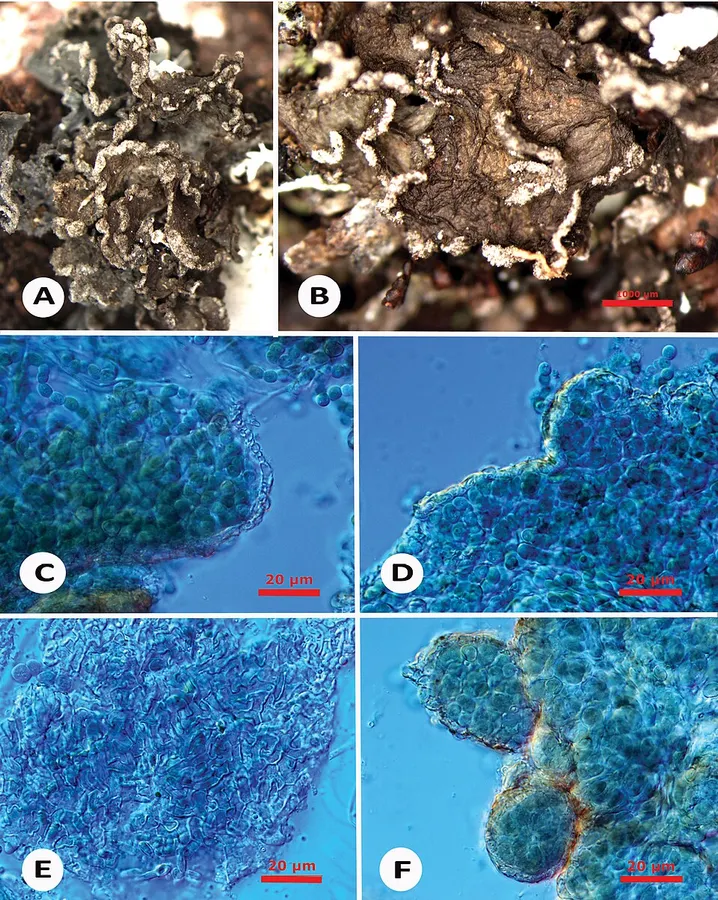
Dokumentasi Gabura borbonica dari Wikimedia Commons. Figure 2; Arctomia borbonica (holotype). A–B macroscopic view of the thallus, with details of the wrinkled surface B and soredioid margin, made of disintegrating goniocysts C–D cross section through the thallus, showing the cortex with small, isodiametric cells, and the Nostoc chains E surface view of the cortex F young goniocysts formed at the lobes margins. Scale: A–B = 1 mm; C–E = 20 µm. Identifikasi mengikuti record berkas sumber.

Jenis
Fotografi
Kredit
Magain N, Sérusiaux E (2012) A further new species in the lichen genus Arctomia: A. borbonica from Reunion (Mascarene archipelago). MycoKeys 4: 9-21. https://doi.org/10.3897/mycokeys.4.2809
Lisensi
CC BY 3.0
Sumber media
Buka entri sumber

Gambar menunjukkan objek menurut identifikasi sumber, bukan verifikasi independen spesimen oleh Fungi. Tidak ada skala baru yang ditambahkan.

06 / Rujukan

Sumber profil

  1. [1] Gabura borbonica — Wikipedia (en)Bagian sumber: Frozen revision 1223736798
    Tanggal penghimpunan sumber: 2026-10-12
    Teks sumber: CC BY-SA4.0 · Wikipedia contributors
  2. [2] Catalogue of Life Base2026-09-11 — Arctomia borbonicaBagian sumber: ColDP NameUsage.tsv ID GB4S; accepted species; source 2073
    Tanggal penghimpunan sumber: 2026-10-12
  3. [3] Dokumentasi visual — Gabura borbonicaBagian sumber: Individual media record; identification follows the source, not independent determination
    Tanggal penghimpunan sumber: 2026-10-12
    Media sumber: CC BY 3.0 · Magain N, Sérusiaux E (2012) A further new species in the lichen genus Arctomia: A. borbonica from Reunion (Mascarene archipelago). MycoKeys 4: 9-21. https://doi.org/10.3897/mycokeys.4.2809

Adaptasi teks: CC BY-SA 4.0. Wikipedia contributors — Gabura borbonica — Wikipedia (en)

Uraian asli dan riwayat sumber

Riwayat atau halaman sumber

Ringkasan sumber

Gabura borbonica, previously known as Arctomia borbonica, is a species of foliose lichen found on Réunion, an island in the Mascarene archipelago. This species is unique due to its distinct features such as a crumpled, blue-grey to brown thallus (the main body of the lichen) and the production of structures called at its margins. G. borbonica was transferred to the genus Gabura in 2020, and is distinguished from its sister species, Gabura insignis, both genetically and morphologically.

Revisi sumber

Morfologi sumber

Gabura borbonica is recognised by its foliose (leaf-like) thallus, which is typically crumpled and varies in colour from blue-grey to brown. The thallus does not typically exceed 1 cm in diameter, and lobes, when well-developed, are up to 0.2–0.3 mm wide. The surface of the lichen is often wrinkled, even in young lobes. A notable characteristic of G. borbonica is the formation of , primarily at the margins but also on the upper surface. These goniocysts contain chains of cyanobacterial Nostoc cells. When mature, the goniocysts disrupt to form a soredioid margin.

Revisi sumber

Ekologi sumber

Gabura borbonica has been found in various sites across Réunion Island, including in highly disturbed secondary thickets with Eucalyptus plantations. It has been observed growing on trunks of Eucalyptus and Acacia heterophylla trees, as well as on the main stems of Erica thickets. The species appears to be widespread across the island and is found in typical habitats such as the Acacia mountain forest and the Philippia mountain thicket.

Revisi sumber

Struktur reproduksi sumber

Gabura borbonica is recognised by its foliose (leaf-like) thallus, which is typically crumpled and varies in colour from blue-grey to brown. The thallus does not typically exceed 1 cm in diameter, and lobes, when well-developed, are up to 0.2–0.3 mm wide. The surface of the lichen is often wrinkled, even in young lobes. A notable characteristic of G. borbonica is the formation of , primarily at the margins but also on the upper surface. These goniocysts contain chains of cyanobacterial Nostoc cells. When mature, the goniocysts disrupt to form a soredioid margin.

Revisi sumber

Rujukan halaman ini

Fungi. Arctomia borbonica. Rilis data fungi-2026-10-12-expansion-2. https://fungi-atlas.mgadib.chatgpt.site/jamur/arctomia-borbonica/.

Status: impor sumber; pemeriksaan editorial per profil belum selesai. Untuk klaim biologis, gunakan rujukan pada bagian terkait dan periksa konteks sumber aslinya.