Ciri dan struktur
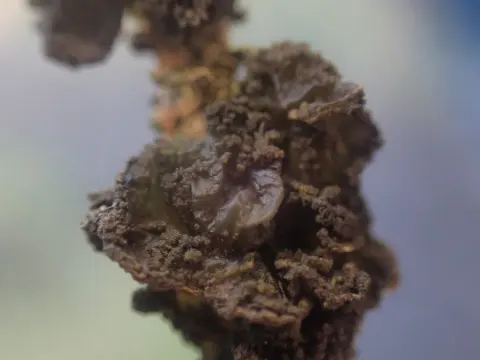
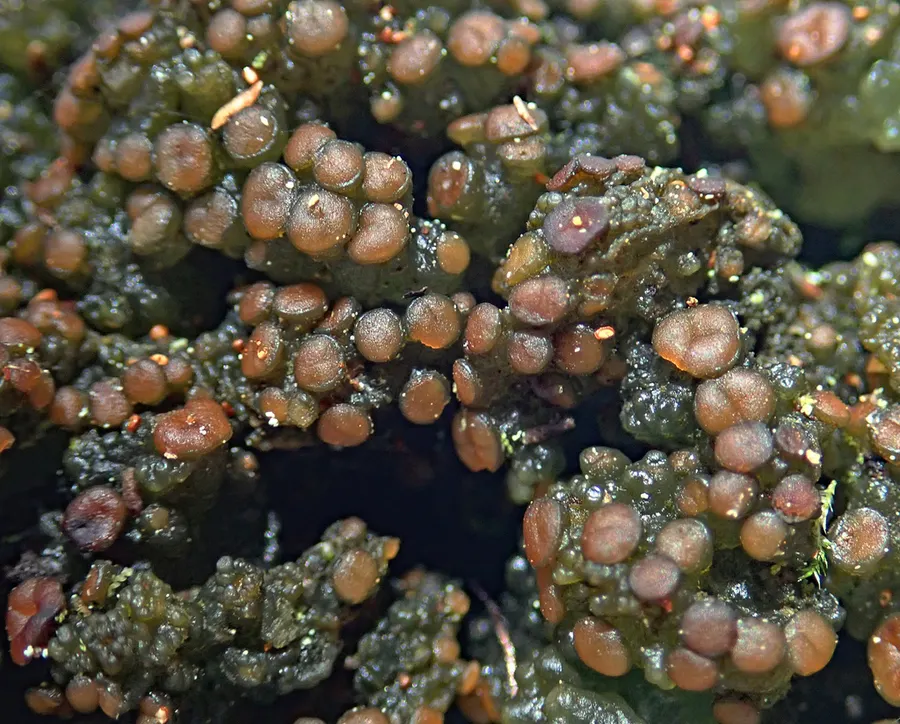
The thallus (lichen body) forms small, rounded cushions to about 1.5 cm across. It is crustose to small-foliose and very swollen and pulpy when hydrated, reaching about 10 mm thick. The surface is coarsely nodulose-wrinkled and only indistinctly lobed; when present, the lobes are short, flattened, closely and often overlapping, with tiny secondary that arise from the wrinkles. The upper surface is dark olive-green to brown-black in the dry state, turning grey-green to olivaceous when wet, and is usually strongly ridged. Vegetative propagules are absent: there are no isidia or soredia (outgrowths or powdery patches used by many lichens for asexual dispersal). Apothecia (disc-like fruiting bodies) develop from the lobules. Although not always abundant, but when present the apothecia can be numerous and conspicuous, often covering the thallus surface. The are 0.8–2 mm across, usually flat, the same colour as the thallus, and commonly bordered by a thick, somewhat wrinkled rim of thallus tissue (a ). The asci (spore sacs) usually contain eight spores (sometimes six). The ascospores measure 50–95 × 4.5–5 micrometres, are divided by 9–16 cross-walls (septae), are or "worm-like", and lie helically twisted inside the ascus; they often taper at one or both ends and lack any surrounding gelatinous sheath.
Habitat dan peran ekologis
Gabura fascicularis is a widely distributed epiphytic lichen with a fragmented Holarctic range. It occurs in oceanic and sub-oceanic regions of Europe and has been recorded in adjacent parts of North Africa and Asia. The species is also present in the Southern Hemisphere, having been documented in Australasia (including Australia and New Zealand) as part of its cosmopolitan distribution. This lichen grows primarily on the bark of old broad-leaved trees, especially those with relatively base-rich bark. In Europe, it has been found on mature elm (Ulmus) and ash (Fraxinus) trees, and occasionally on hazel (Corylus). It often occurs over mosses that carpet the bark or rock, and has even been recorded among mosses on calcareous rock outcrops. In the humid montane forests of Australasia, G. fascicularis inhabits very wet, shaded microhabitats on the lower parts of trees, such as understory branches and trunk buttresses. Throughout its range, it shows a preference for moist, shaded sites; in Britain, it "appears to favour moist, shady" woodland habitats. Ecologically, Gabura fascicularis is a cyanolichen that contains a filamentous cyanobacterial photobiont (Nostoc), enabling it to fix atmospheric nitrogen.
- Habitat atau konteks temuan
- hutan
- Substrat
- Informasi belum tersedia pada sumber rilis ini.
- Peran atau konteks
- Pembentuk liken
Reproduksi
The thallus (lichen body) forms small, rounded cushions to about 1.5 cm across. It is crustose to small-foliose and very swollen and pulpy when hydrated, reaching about 10 mm thick. The surface is coarsely nodulose-wrinkled and only indistinctly lobed; when present, the lobes are short, flattened, closely and often overlapping, with tiny secondary that arise from the wrinkles. The upper surface is dark olive-green to brown-black in the dry state, turning grey-green to olivaceous when wet, and is usually strongly ridged. Vegetative propagules are absent: there are no isidia or soredia (outgrowths or powdery patches used by many lichens for asexual dispersal). Apothecia (disc-like fruiting bodies) develop from the lobules.
Catatan identitas dan cakupan
- Nama diterima mengikuti Catalogue of Life Base2026-09-11; uraian mempertahankan konsep dan nama sumber aslinya.
- Original geographic, specimen and life-cycle scope retained; source import awaits individual editorial review.
- Impor dan terjemahan otomatis belum diperiksa editorial per profil. Struktur reproduktif yang disebutkan tidak membuktikan seluruh siklus hidup diketahui.
- Pengukuran pada uraian mengikuti spesimen, kultur, dan metode sumber; angka tidak diperluas ke semua populasi.
Catatan distribusi dalam narasi mengikuti sumbernya. Dokumentasi spesimen atau foto mengikuti catatan sumber. Bukti wilayah Indonesia dan penilaian konservasi tidak disimpulkan dari gambar.
Melihat dengan konteks
Dokumentasi Gabura fascicularis menurut asosiasi foto pada record takson iNaturalist. Kredit: Peter de Lange. Identitas mengikuti sumber; bukan penentuan spesimen independen.
- Jenis
- Fotografi
- Kredit
- no rights reserved, uploaded by Peter de Lange
- Lisensi
- CC0 1.0
- Sumber media
- Buka entri sumber
Dokumentasi tambahan
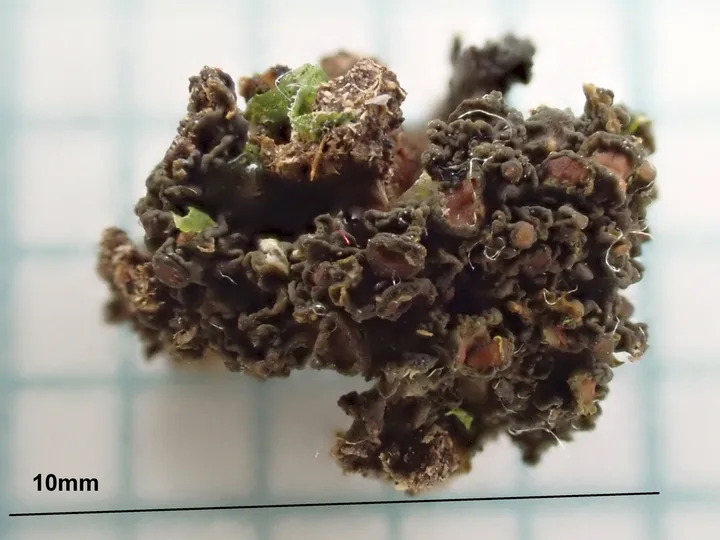
Foto yang diasosiasikan dengan Arctomia fascicularis pada iNaturalist. Identifikasi mengikuti sumber; bukan penentuan spesimen independen.
Kredit dan penggunaan
(c) Jamie O'Neill, some rights reserved (CC BY), uploaded by Jamie O'Neill
Ukuran dan format gambar disesuaikan tanpa pemotongan, retus, atau penambahan skala. Lisensi sumber dipertahankan.
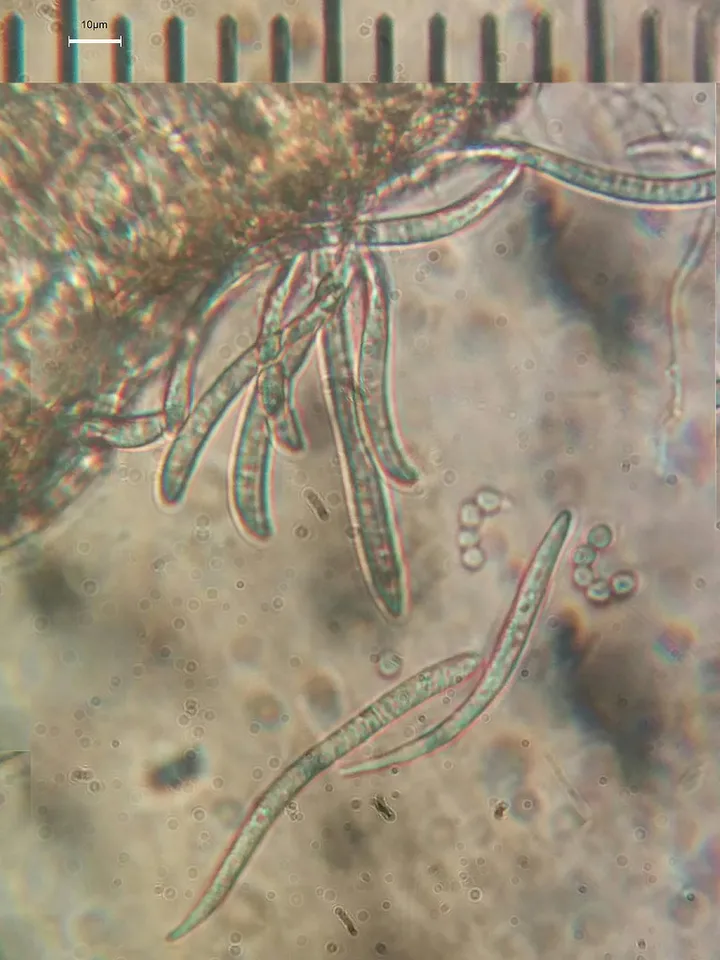
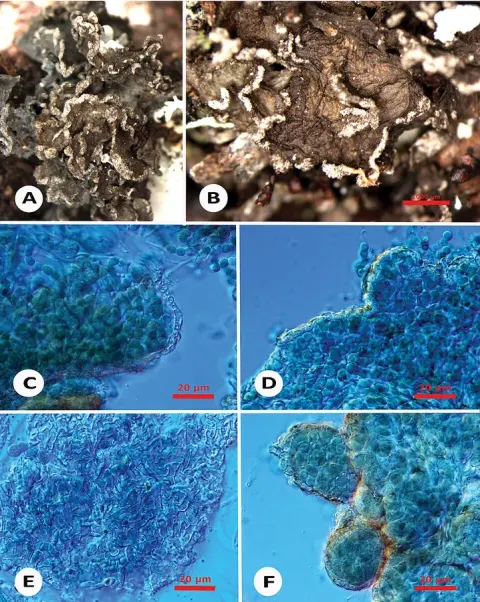
Mikrograf struktur jamur yang dicatat sebagai Arctomia fascicularis pada sumber. Identifikasi mengikuti sumber, bukan penentuan spesimen independen.
Kredit dan penggunaan
(c) Ben Mitchell, some rights reserved (CC BY), uploaded by Ben Mitchell
Ukuran dan format gambar disesuaikan tanpa pemotongan, retus, atau penambahan skala. Lisensi sumber dipertahankan.
Sumber profil
- [1] Gabura fascicularis — Wikipedia (en)
- [2] Catalogue of Life Base2026-09-11 — Arctomia fascicularis
- [3] Dokumentasi visual — Arctomia fascicularis
- [4] Dokumentasi visual — Arctomia fascicularis
- [5] Dokumentasi visual — Arctomia fascicularis
Rujukan halaman ini
Fungi. Arctomia fascicularis. Rilis data fungi-2026-10-12-expansion-2. https://fungi-atlas.mgadib.chatgpt.site/jamur/arctomia-fascicularis/.
Status: impor sumber; pemeriksaan editorial per profil belum selesai. Untuk klaim biologis, gunakan rujukan pada bagian terkait dan periksa konteks sumber aslinya.