Ciri dan struktur
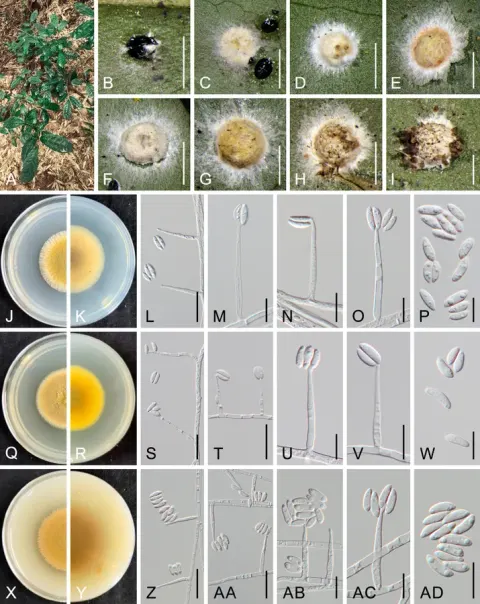
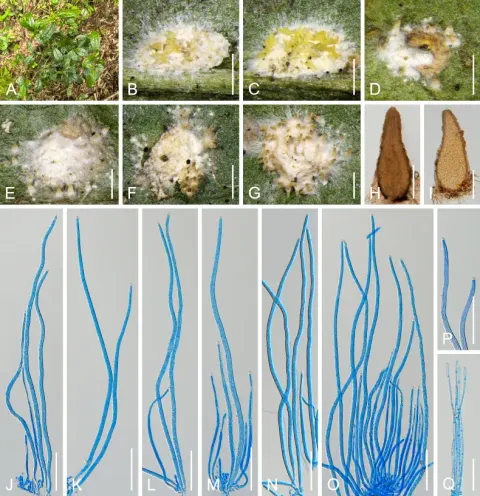
The stroma of Aschersonia aleyrodis forms a hemispherical or cushion-shaped mass about 2 mm wide and 2 mm high, surrounded by a thin ring of hyphae that spreads across the leaf-surface. The conidia-forming zones consist of shallow pits in the stroma with pore-like openings. The conidia are elongated and cigar-shaped, and do not have septa. This fungus is cream, pink or pale orange, and the massed conidia are darker orange. The teleomorph of this fungus is Hypocrella.
Habitat dan peran ekologis
Whitefly are an increasing pest of greenhouse crops such as cucumber and tomato. The classical biological control is by the use of parasitoid wasps such as Encarsia formosa , but aggressive strains of whitefly have emerged and results are unpredictable. Another approach is with the use of entomopathogenic fungi such as Aschersonia aleyrodis and this has met with some success, the main target insect being greenhouse whitefly (Trialeurodes vaporariorum). Infectivity and persistence is greater on some crops than others. Germination of conidia tends to be low on the leaves, but the conidia remain viable there for a month or more, as can be shown by washing them off with water onto an agar plate. Infectivity of whitefly nymphs was highest on cucumbers (90%) at 31 days, whereas on gerberas it was 80% initially but had decreased to 40% by day 31, and on poinsettia, germination capacity of the conidia was still 60% at 31 days after application, but nymphal mortality, initially 70%, fell to 10% after three days and remained low for the rest of the month. The pathogen is an effective biocontrol agent for silverleaf whitefly under the conditions found in greenhouse and laboratory.
- Habitat atau konteks temuan
- kultur yang didokumentasikan
- Substrat
- Informasi belum tersedia pada sumber rilis ini.
- Peran atau konteks
- Belum dikategorikan pada rilis ini.
Reproduksi
The stroma of Aschersonia aleyrodis forms a hemispherical or cushion-shaped mass about 2 mm wide and 2 mm high, surrounded by a thin ring of hyphae that spreads across the leaf-surface. The conidia-forming zones consist of shallow pits in the stroma with pore-like openings. The conidia are elongated and cigar-shaped, and do not have septa. This fungus is cream, pink or pale orange, and the massed conidia are darker orange. The teleomorph of this fungus is Hypocrella.
Catatan identitas dan cakupan
- Nama diterima mengikuti Catalogue of Life Base2026-09-11; uraian mempertahankan konsep dan nama sumber aslinya.
- Original geographic, specimen and life-cycle scope retained; source import awaits individual editorial review.
- Impor dan terjemahan otomatis belum diperiksa editorial per profil. Struktur reproduktif yang disebutkan tidak membuktikan seluruh siklus hidup diketahui.
- Pengukuran pada uraian mengikuti spesimen, kultur, dan metode sumber; angka tidak diperluas ke semua populasi.
Catatan distribusi dalam narasi mengikuti sumbernya. Dokumentasi spesimen atau foto mengikuti catatan sumber. Bukti wilayah Indonesia dan penilaian konservasi tidak disimpulkan dari gambar.
Melihat dengan konteks
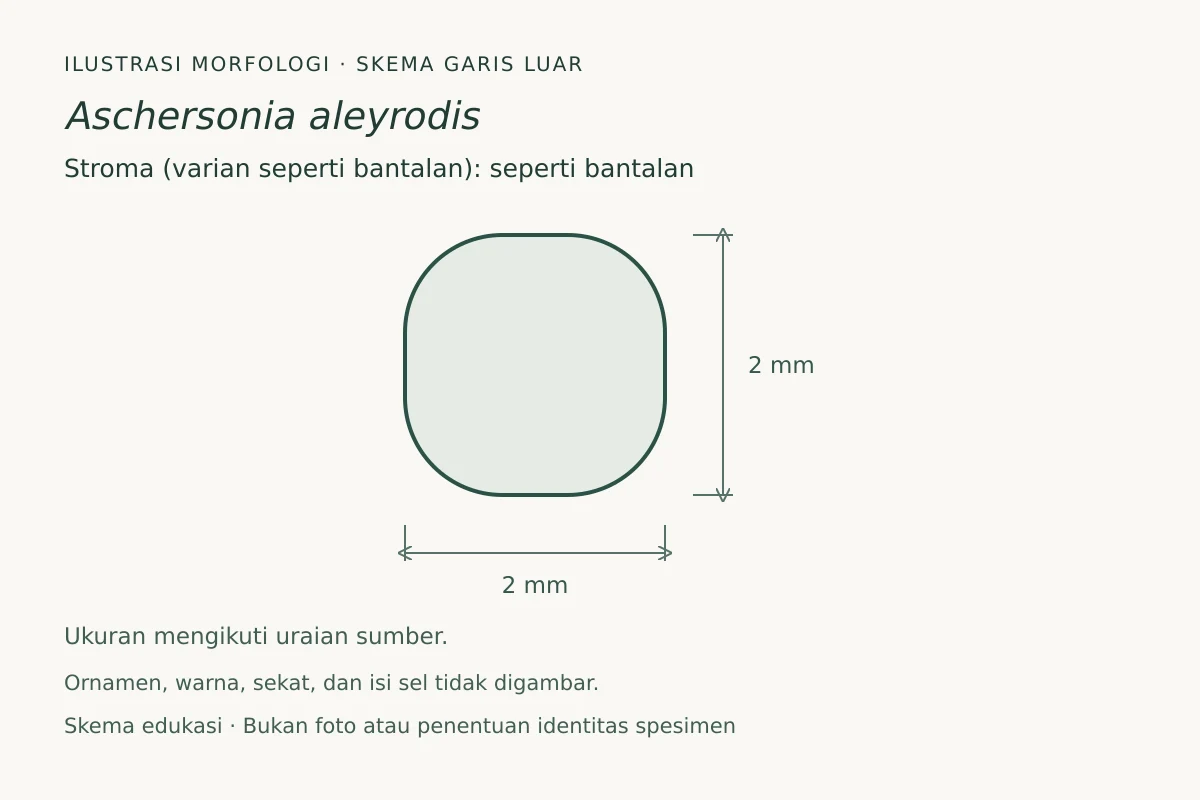
Ilustrasi skematis garis luar stroma (varian seperti bantalan) Aschersonia aleyrodis, berdasarkan uraian sumber; ukuran yang dilaporkan 2 × 2 mm dalam urutan sumber. Proporsi disederhanakan, bukan salinan satu spesimen. Ornamen permukaan, warna, sekat, dan isi sel tidak direkonstruksi. Stroma berbentuk seperti bantalan, sekitar 2 mm lebar dan 2 mm tinggi. Ukuran ini bukan ukuran konidium; cincin hifa dan lubang pembentuk konidium tidak digambar.
- Jenis
- Ilustrasi skematis
- Kredit
- Fungi, ilustrasi orisinal (2026); fakta morfologi berdasarkan Wikipedia contributors
- Lisensi
- CC BY-SA 4.0
- Sumber media
- Buka entri sumber
Sumber profil
- [1] Aschersonia aleyrodis — Wikipedia (en)
- [2] Catalogue of Life Base2026-09-11 — Aschersonia aleyrodis
Rujukan halaman ini
Fungi. Aschersonia aleyrodis. Rilis data fungi-2026-10-12-expansion-2. https://fungi-atlas.mgadib.chatgpt.site/jamur/aschersonia-aleyrodis/.
Status: impor sumber; pemeriksaan editorial per profil belum selesai. Untuk klaim biologis, gunakan rujukan pada bagian terkait dan periksa konteks sumber aslinya.