Ciri dan struktur
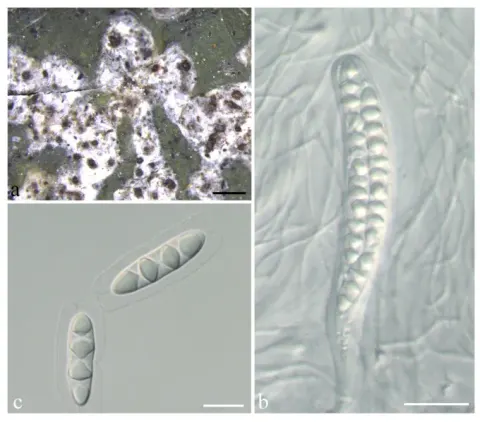
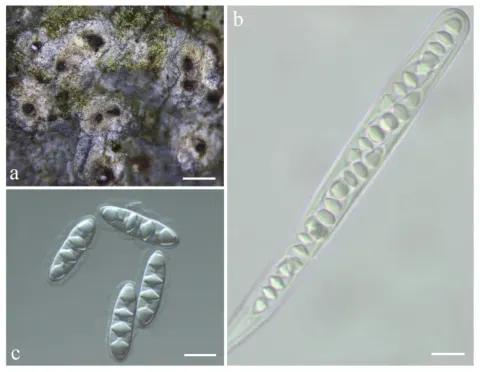
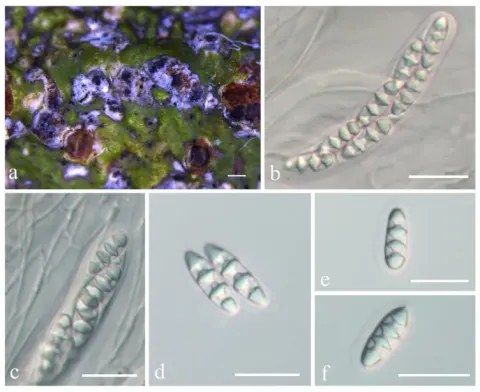
The thallus is (a thin, protective overlies the surface) olive-brown, and smooth to slightly uneven. The spore-bearing structures (ascomata) are : each has a single chamber that opens through an apical pore (ostiole). They are arranged in diffuse, tic clusters, about 0.2–0.3 mm in diameter, initially immersed in the thallus and then breaking through (); when exposed they appear brown-black. The internal tissue between asci () is clear. Each ascus contains eight colorless (hyaline) spores that are 3-septate and spindle-to-ellipsoid in outline, measuring roughly 20–27 × 7–10 μm; they do not react with iodine (IKI−). Standard spot tests are negative on both the thallus and the pseudostromata (UV−, K−), and thin-layer chromatography detects no secondary metabolites.
Habitat dan peran ekologis
Astrothelium nigratum has a neotropical distribution. It was previously reported only from Cuba but has also been collected in Puerto Rico (Maricao State Forest) and in Guyana.
- Habitat atau konteks temuan
- hutan
- Substrat
- Informasi belum tersedia pada sumber rilis ini.
- Peran atau konteks
- Pembentuk liken
Reproduksi
The thallus is (a thin, protective overlies the surface) olive-brown, and smooth to slightly uneven. The spore-bearing structures (ascomata) are : each has a single chamber that opens through an apical pore (ostiole). They are arranged in diffuse, tic clusters, about 0.2–0.3 mm in diameter, initially immersed in the thallus and then breaking through (); when exposed they appear brown-black. The internal tissue between asci () is clear. Each ascus contains eight colorless (hyaline) spores that are 3-septate and spindle-to-ellipsoid in outline, measuring roughly 20–27 × 7–10 μm; they do not react with iodine (IKI−).
Catatan identitas dan cakupan
- Nama diterima mengikuti Catalogue of Life Base2026-09-11; uraian mempertahankan konsep dan nama sumber aslinya.
- Original geographic, specimen and life-cycle scope retained; source import awaits individual editorial review.
- Impor dan terjemahan otomatis belum diperiksa editorial per profil. Struktur reproduktif yang disebutkan tidak membuktikan seluruh siklus hidup diketahui.
- Pengukuran pada uraian mengikuti spesimen, kultur, dan metode sumber; angka tidak diperluas ke semua populasi.
Catatan distribusi dalam narasi mengikuti sumbernya. Dokumentasi spesimen atau foto mengikuti catatan sumber. Bukti wilayah Indonesia dan penilaian konservasi tidak disimpulkan dari gambar.
Melihat dengan konteks
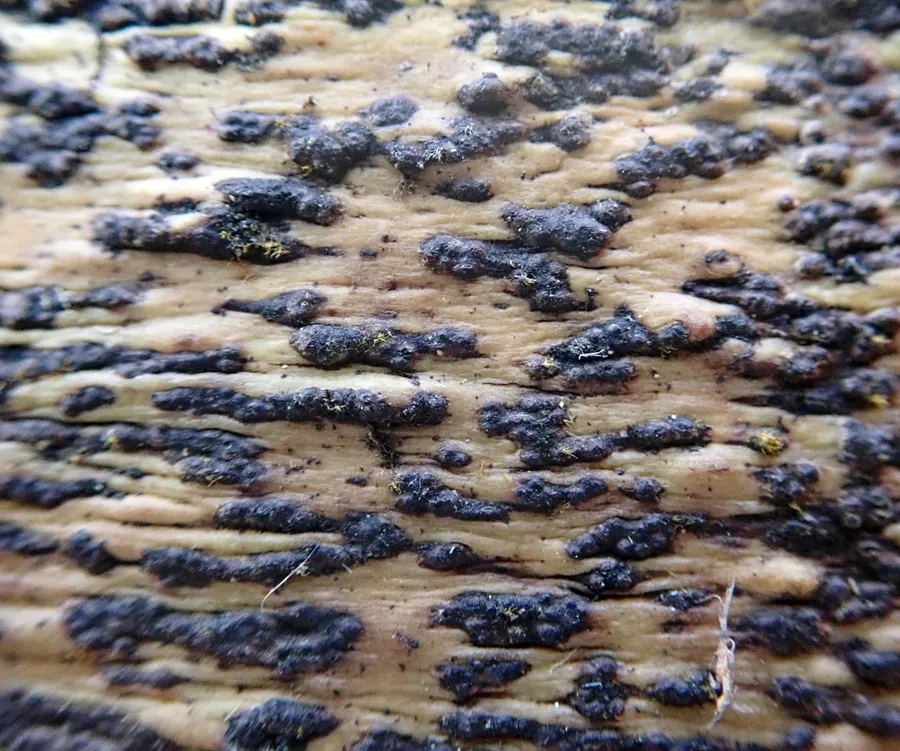
Dokumentasi Astrothelium nigratum menurut asosiasi foto pada record takson iNaturalist. Kredit: Peter de Lange. Identitas mengikuti sumber; bukan penentuan spesimen independen.
- Jenis
- Fotografi
- Kredit
- no rights reserved, uploaded by Peter de Lange
- Lisensi
- CC0 1.0
- Sumber media
- Buka entri sumber
Dokumentasi tambahan
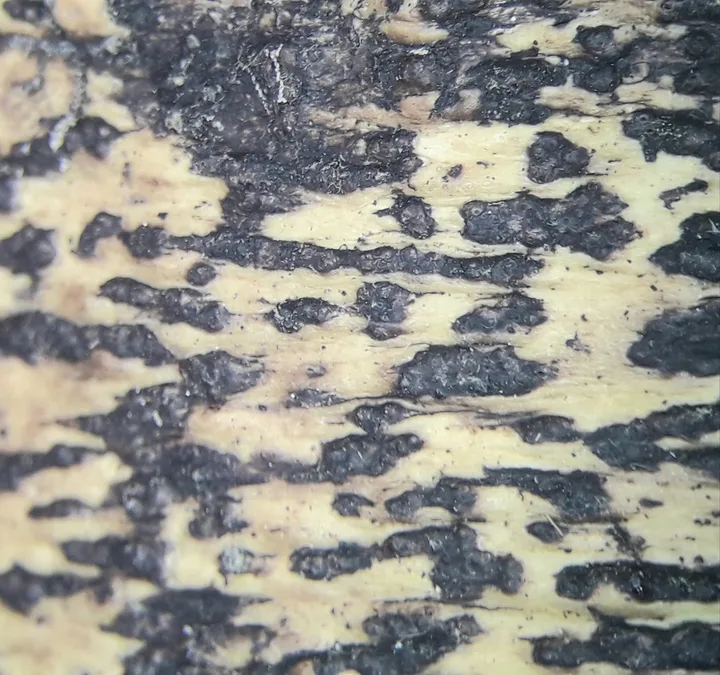
Foto yang diasosiasikan dengan Astrothelium nigratum pada iNaturalist. Identifikasi mengikuti sumber; bukan penentuan spesimen independen.
Kredit dan penggunaan
no rights reserved, uploaded by Peter de Lange
Ukuran dan format gambar disesuaikan tanpa pemotongan, retus, atau penambahan skala. Lisensi sumber dipertahankan.
Sumber profil
- [1] Astrothelium nigratum — Wikipedia (en)
- [2] Catalogue of Life Base2026-09-11 — Astrothelium nigratum
- [3] Dokumentasi visual — Astrothelium nigratum
- [4] Dokumentasi visual — Astrothelium nigratum
Rujukan halaman ini
Fungi. Astrothelium nigratum. Rilis data fungi-2026-10-12-expansion-2. https://fungi-atlas.mgadib.chatgpt.site/jamur/astrothelium-nigratum/.
Status: impor sumber; pemeriksaan editorial per profil belum selesai. Untuk klaim biologis, gunakan rujukan pada bagian terkait dan periksa konteks sumber aslinya.