Ciri dan struktur
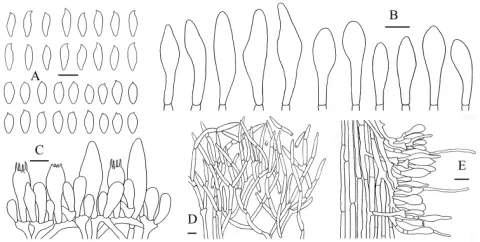
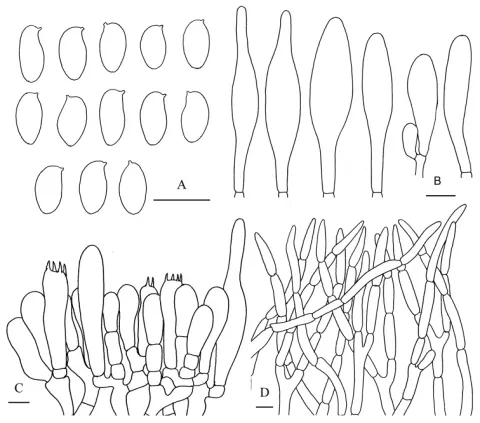
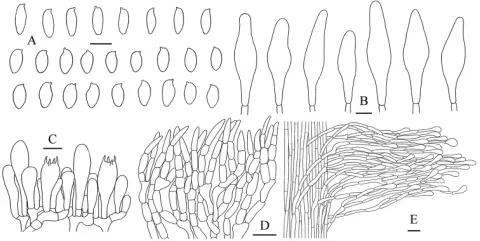
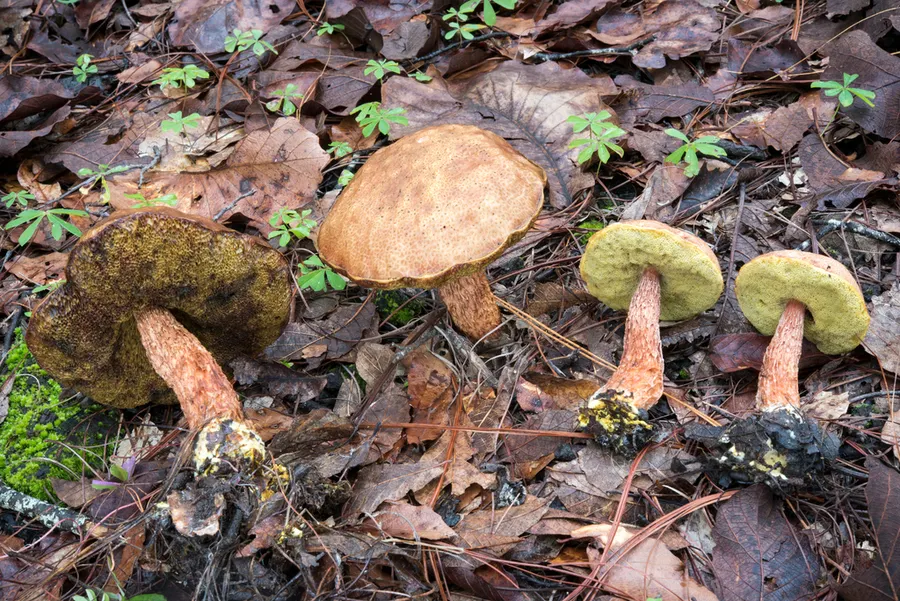
The cap is hemispheric to convex or broadly convex, reaching a diameter of 3-13 cm. The cap surface is initially velvety, with a margin rolled inward, but after maturing the cap becomes cracked and forms scale-like patches. The color is yellow-brown to reddish-brown to olive-gray, while the flesh is pale yellow to yellow. The pore surface is yellow to greenish yellow; when the pore surface is rubbed or injured it will turn a brighter yellow color. The pores are angular, and about 1 mm wide, while the tubes that comprise the pores are up to 2 cm deep. The stem is up to 20 cm long and 1-2 cm thick, and either roughly equal in width throughout, or slightly thicker at the base. Reddish brown to pinkish tan in color, the stem is solid (i.e. not hollow or stuffed with a pith), sometimes curved and viscid at the base. The surface texture is characterized by deep grooves and ridges, with the ridges torn and branched so as to appear shaggy. No partial veil or ring are present. The spore print is olive brown. The spores are ellipsoid, measuring 15–20 by 7–11 μm. Similar to the reticulation of the stem, the spore surfaces have deep longitudinal grooves and furrows, sometimes with a cleft in the wall at the top of the spore.
Habitat dan peran ekologis
Aureoboletus russellii dikenal dari Amerika Utara timur, di mana tumbuh sendiri atau beredar di tanah bersama dengan ek, hemlock, dan pohon pinus. Daerah geografis ini membentang dari timur Canada south ke Amerika Tengah, dan barat ke selatan Arizona Michigan and. Ia juga ditemukan di Asia, termasuk Korea and Taiwan.
- Habitat atau konteks temuan
- Informasi belum tersedia pada sumber rilis ini.
- Substrat
- tanah
- Peran atau konteks
- Belum dikategorikan pada rilis ini.
Reproduksi
The spore print is olive brown. The spores are ellipsoid, measuring 15–20 by 7–11 μm. Similar to the reticulation of the stem, the spore surfaces have deep longitudinal grooves and furrows, sometimes with a cleft in the wall at the top of the spore.
Catatan identitas dan cakupan
- Nama diterima mengikuti Catalogue of Life Base2026-09-11; uraian mempertahankan konsep dan nama sumber aslinya.
- Original geographic, specimen and life-cycle scope retained; source import awaits individual editorial review.
- Impor dan terjemahan otomatis belum diperiksa editorial per profil. Struktur reproduktif yang disebutkan tidak membuktikan seluruh siklus hidup diketahui.
- Pengukuran pada uraian mengikuti spesimen, kultur, dan metode sumber; angka tidak diperluas ke semua populasi.
Catatan distribusi dalam narasi mengikuti sumbernya. Dokumentasi spesimen atau foto mengikuti catatan sumber. Bukti wilayah Indonesia dan penilaian konservasi tidak disimpulkan dari gambar.
Melihat dengan konteks
Dokumentasi Aureoboletus russellii menurut asosiasi foto pada record takson iNaturalist. Kredit: Alan Rockefeller. Identitas mengikuti sumber; bukan penentuan spesimen independen.
- Jenis
- Fotografi
- Kredit
- (c) Alan Rockefeller, some rights reserved (CC BY), uploaded by Alan Rockefeller
- Lisensi
- CC BY 4.0
- Sumber media
- Buka entri sumber
Dokumentasi tambahan
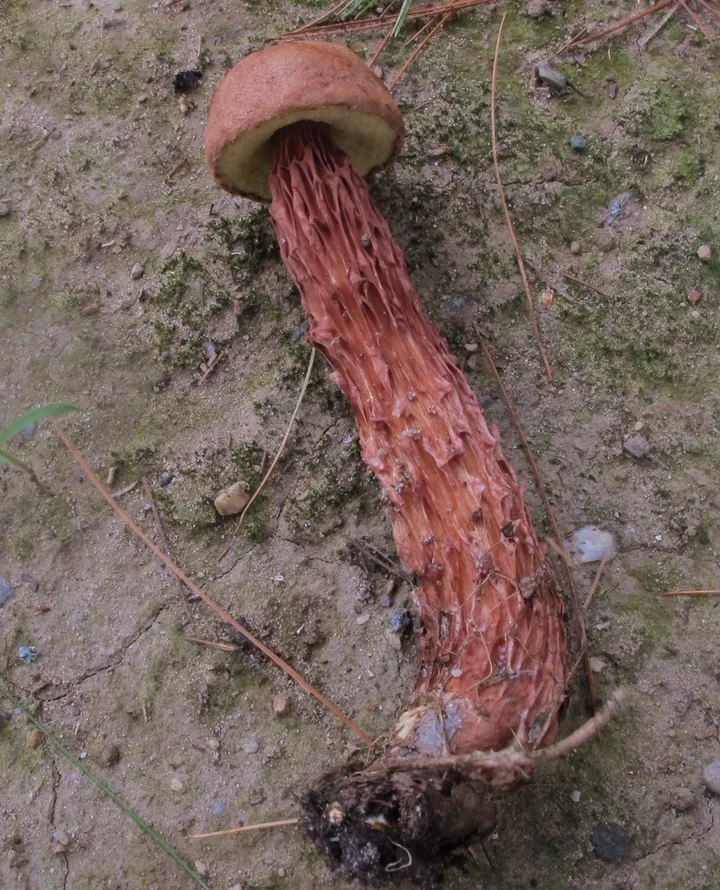
Foto yang diasosiasikan dengan Aureoboletus russellii pada iNaturalist. Identifikasi mengikuti sumber; bukan penentuan spesimen independen.
Kredit dan penggunaan
(c) mycowalt, some rights reserved (CC BY-SA), uploaded by mycowalt
Ukuran dan format gambar disesuaikan tanpa pemotongan, retus, atau penambahan skala. Lisensi sumber dipertahankan.
Sumber profil
- [1] Aureoboletus russellii — Wikipedia (en)
- [2] Catalogue of Life Base2026-09-11 — Aureoboletus russellii
- [3] Dokumentasi visual — Aureoboletus russellii
- [4] Dokumentasi visual — Aureoboletus russellii
Rujukan halaman ini
Fungi. Aureoboletus russellii. Rilis data fungi-2026-10-12-expansion-2. https://fungi-atlas.mgadib.chatgpt.site/jamur/aureoboletus-russellii/.
Status: impor sumber; pemeriksaan editorial per profil belum selesai. Untuk klaim biologis, gunakan rujukan pada bagian terkait dan periksa konteks sumber aslinya.