Ciri dan struktur
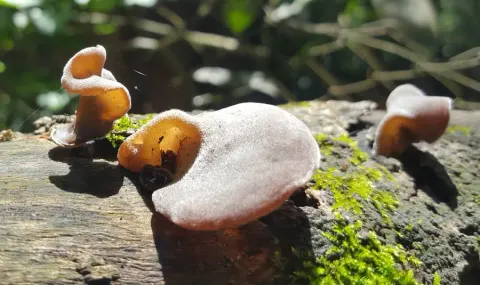
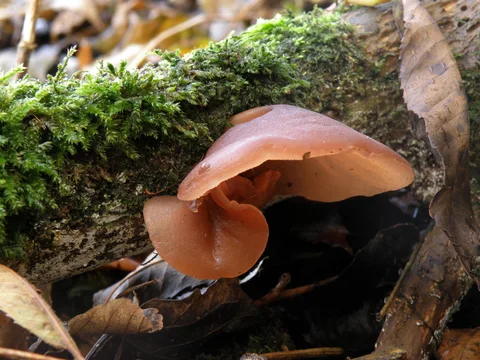
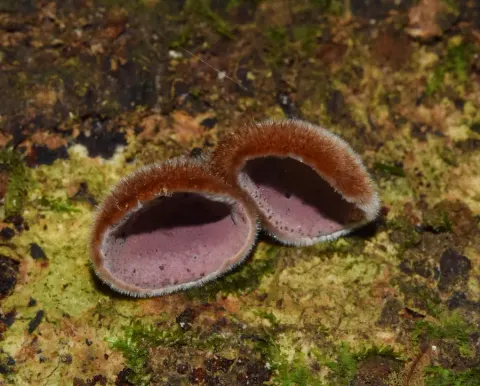
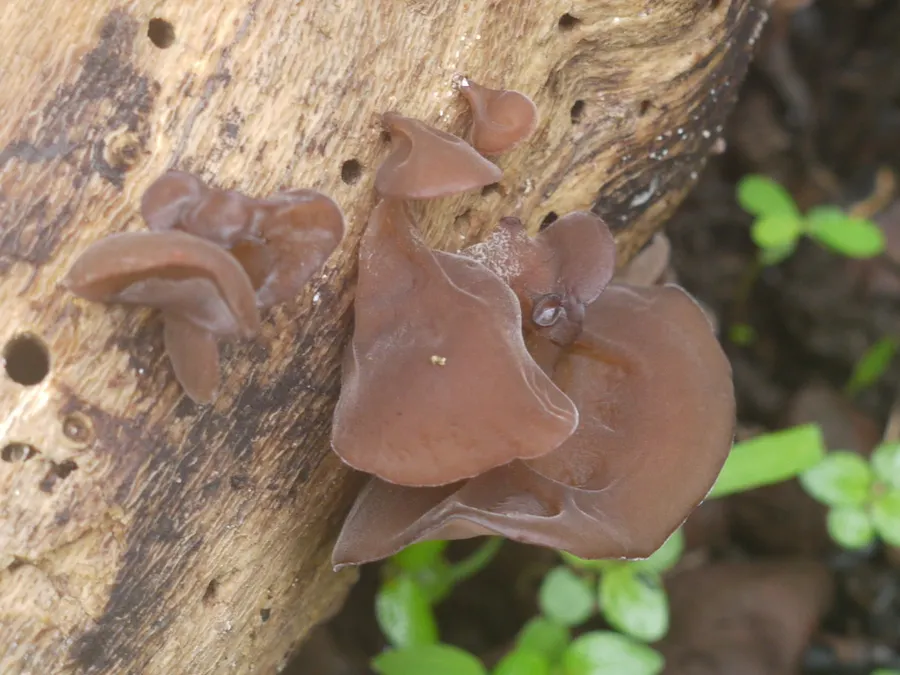
Fruitbodies are gelatinous, ear-shaped, and laterally attached to wood. They are up to 12 cm across and 1.5 mm thick. The upper surface is finely tomentose, coloured fawn to reddish brown when fresh, and coloured grey-brown when dry. The colour of cultivated specimens is often darker. The spore-producing underside is smooth to slightly veined, coloured pinkish buff when fresh, and coloured purplish grey when dry. The basidia are cylindrical, 40–65 x 3–6.5 μm, with three transverse septa. The basidiospores are allantoid (sausage shaped), 11–13 x 4–5 μm. Hairs on the upper surface are 50–150 x 4–6,5 μm. When cross-sectioned, a medulla (a central band of parallel hyphae) is normally present.
Habitat dan peran ekologis
Auricularia heimuer is a wood-rotting species, typically found on the dead standing or fallen wood of broadleaf trees. In the wild, it occurs most frequently on oak (Quercus) trees and less frequently on other broadleaf trees. In cultivation, it is sometimes grown on broadleaf logs, and is more commonly grown on growing media containing sawdust. The species occurs in temperate areas of northern China, as well as the Russian Far East, Korea, and Japan.
- Habitat atau konteks temuan
- Informasi belum tersedia pada sumber rilis ini.
- Substrat
- Informasi belum tersedia pada sumber rilis ini.
- Peran atau konteks
- Belum dikategorikan pada rilis ini.
Reproduksi
Fruitbodies are gelatinous, ear-shaped, and laterally attached to wood. They are up to 12 cm across and 1.5 mm thick. The upper surface is finely tomentose, coloured fawn to reddish brown when fresh, and coloured grey-brown when dry. The colour of cultivated specimens is often darker. The spore-producing underside is smooth to slightly veined, coloured pinkish buff when fresh, and coloured purplish grey when dry. The basidia are cylindrical, 40–65 x 3–6.5 μm, with three transverse septa. The basidiospores are allantoid (sausage shaped), 11–13 x 4–5 μm. Hairs on the upper surface are 50–150 x 4–6,5 μm. When cross-sectioned, a medulla (a central band of parallel hyphae) is normally present.
Catatan identitas dan cakupan
- Nama diterima mengikuti Catalogue of Life Base2026-09-11; uraian mempertahankan konsep dan nama sumber aslinya.
- Original geographic, specimen and life-cycle scope retained; source import awaits individual editorial review.
- Impor dan terjemahan otomatis belum diperiksa editorial per profil. Struktur reproduktif yang disebutkan tidak membuktikan seluruh siklus hidup diketahui.
- Pengukuran pada uraian mengikuti spesimen, kultur, dan metode sumber; angka tidak diperluas ke semua populasi.
Catatan distribusi dalam narasi mengikuti sumbernya. Dokumentasi spesimen atau foto mengikuti catatan sumber. Bukti wilayah Indonesia dan penilaian konservasi tidak disimpulkan dari gambar.
Melihat dengan konteks
Dokumentasi Auricularia heimuer menurut asosiasi foto pada record takson iNaturalist. Kredit: Dinesh Valke. Identitas mengikuti sumber; bukan penentuan spesimen independen.
- Jenis
- Fotografi
- Kredit
- (c) Dinesh Valke, some rights reserved (CC BY-SA)
- Lisensi
- CC BY-SA 4.0
- Sumber media
- Buka entri sumber
Dokumentasi tambahan
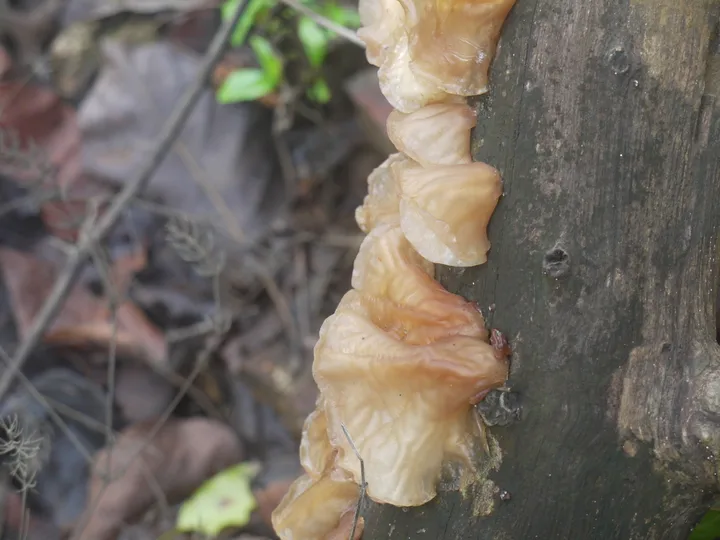
Foto yang diasosiasikan dengan Auricularia heimuer pada iNaturalist. Identifikasi mengikuti sumber; bukan penentuan spesimen independen.
Kredit dan penggunaan
(c) Dinesh Valke, some rights reserved (CC BY-SA)
Ukuran dan format gambar disesuaikan tanpa pemotongan, retus, atau penambahan skala. Lisensi sumber dipertahankan.
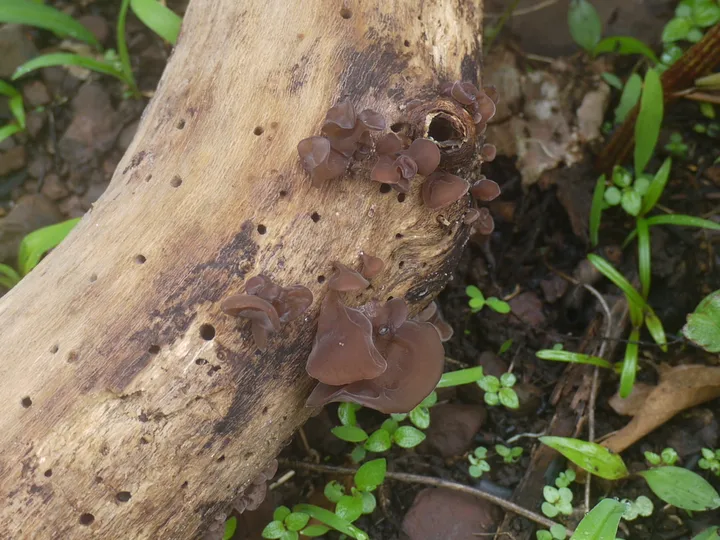
Foto yang diasosiasikan dengan Auricularia heimuer pada iNaturalist. Identifikasi mengikuti sumber; bukan penentuan spesimen independen.
Kredit dan penggunaan
(c) Dinesh Valke, some rights reserved (CC BY-SA)
Ukuran dan format gambar disesuaikan tanpa pemotongan, retus, atau penambahan skala. Lisensi sumber dipertahankan.
Sumber profil
- [1] Auricularia heimuer — Wikipedia (en)
- [2] Catalogue of Life Base2026-09-11 — Auricularia heimuer
- [3] Dokumentasi visual — Auricularia heimuer
- [4] Dokumentasi visual — Auricularia heimuer
- [5] Dokumentasi visual — Auricularia heimuer
Rujukan halaman ini
Fungi. Auricularia heimuer. Rilis data fungi-2026-10-12-expansion-2. https://fungi-atlas.mgadib.chatgpt.site/jamur/auricularia-heimuer/.
Status: impor sumber; pemeriksaan editorial per profil belum selesai. Untuk klaim biologis, gunakan rujukan pada bagian terkait dan periksa konteks sumber aslinya.