Ciri dan struktur
Cunningham (1965) transferred the species to Flaviporus Murr., while stating that apart from the presence of 'metuloids' the species could belong in Heterobasidion Bref. sensu Cunn. Comparison of the type specimens of Poria aroha, Polyporus tasmanicus Berk. (K), Fomes cuneatus Lloyd (K), and Polyporus suaderis Lloyd (K) show that all are conspecific, with P. tasmanicus being the oldest name. Macroscopically, the species varies from resupinate to distinctly pileate. The perennial, narrowly concentrically sulcate and zonate, often ungulate pileus and the pale pink to orange pore surface, when fresh, are diagnostic characters. In the descriptions of both H. tasmanicum and Flaviporus aroha, Cunningham (1965) mistakenly reported generative hyphae to be simple septate when, in fact, they have clamps. He also omitted to report that skeletal hyphae are strongly dextrinoid, becoming red-brown in Melzer's reagent. Skeletal hyphae often protrude into the hymenium, and at pore mouths the ends of skeletal hyphae are finely encrusted. The thick-walled metuloids described for F. aroha were found to be thin-walled, sometimes collapsed, apically encrusted cystidioles. They are more abundant in fertile specimens and may be scarce or absent in old specimens with a poorly preserved hymenium. Spores are elongate ellipsoid, smooth- and thin-walled, nonamyloid, nondextrinoid, and hyaline in the tubes. Those observed on the pileus surface however are light brown and often larger than those in the tubes. Average spore measurements are 8.5-13 x 3.5-6.5 µm. The unusual combination of characters found in P. tasmanicus means that the species cannot be accommodated in any of the four genera to which Cunningham assigned it.
Habitat dan peran ekologis
Cunningham (1965) transferred the species to Flaviporus Murr., while stating that apart from the presence of 'metuloids' the species could belong in Heterobasidion Bref. sensu Cunn. Comparison of the type specimens of Poria aroha, Polyporus tasmanicus Berk. (K), Fomes cuneatus Lloyd (K), and Polyporus suaderis Lloyd (K) show that all are conspecific, with P. tasmanicus being the oldest name. Macroscopically, the species varies from resupinate to distinctly pileate. The perennial, narrowly concentrically sulcate and zonate, often ungulate pileus and the pale pink to orange pore surface, when fresh, are diagnostic characters. In the descriptions of both H. tasmanicum and Flaviporus aroha, Cunningham (1965) mistakenly reported generative hyphae to be simple septate when, in fact, they have clamps. He also omitted to report that skeletal hyphae are strongly dextrinoid, becoming red-brown in Melzer's reagent. Skeletal hyphae often protrude into the hymenium, and at pore mouths the ends of skeletal hyphae are finely encrusted. The thick-walled metuloids described for F. aroha were found to be thin-walled, sometimes collapsed, apically encrusted cystidioles. They are more abundant in fertile specimens and may be scarce or absent in old specimens with a poorly preserved hymenium.
- Habitat atau konteks temuan
- Informasi belum tersedia pada sumber rilis ini.
- Substrat
- Informasi belum tersedia pada sumber rilis ini.
- Peran atau konteks
- Belum dikategorikan pada rilis ini.
Reproduksi
Cunningham (1965) transferred the species to Flaviporus Murr., while stating that apart from the presence of 'metuloids' the species could belong in Heterobasidion Bref. sensu Cunn. Comparison of the type specimens of Poria aroha, Polyporus tasmanicus Berk. (K), Fomes cuneatus Lloyd (K), and Polyporus suaderis Lloyd (K) show that all are conspecific, with P. tasmanicus being the oldest name. Macroscopically, the species varies from resupinate to distinctly pileate. The perennial, narrowly concentrically sulcate and zonate, often ungulate pileus and the pale pink to orange pore surface, when fresh, are diagnostic characters. In the descriptions of both H. tasmanicum and Flaviporus aroha, Cunningham (1965) mistakenly reported generative hyphae to be simple septate when, in fact, they have clamps.
Catatan identitas dan cakupan
- Nama diterima mengikuti Catalogue of Life Base2026-09-11; uraian mempertahankan konsep dan nama sumber aslinya.
- Historical description as cited by BiotaNZ. Preserve explicit New Zealand/locality, host and specimen qualifiers. Distribution is the cited source scope, not a current global range.
- Impor dan terjemahan otomatis belum diperiksa editorial per profil. Struktur reproduktif yang disebutkan tidak membuktikan seluruh siklus hidup diketahui.
- Pengukuran pada uraian mengikuti spesimen, kultur, dan metode sumber; angka tidak diperluas ke semua populasi.
Catatan distribusi dalam narasi mengikuti sumbernya. Dokumentasi spesimen atau foto mengikuti catatan sumber. Bukti wilayah Indonesia dan penilaian konservasi tidak disimpulkan dari gambar.
Melihat dengan konteks
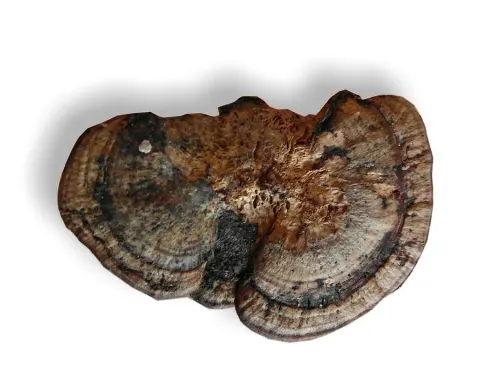
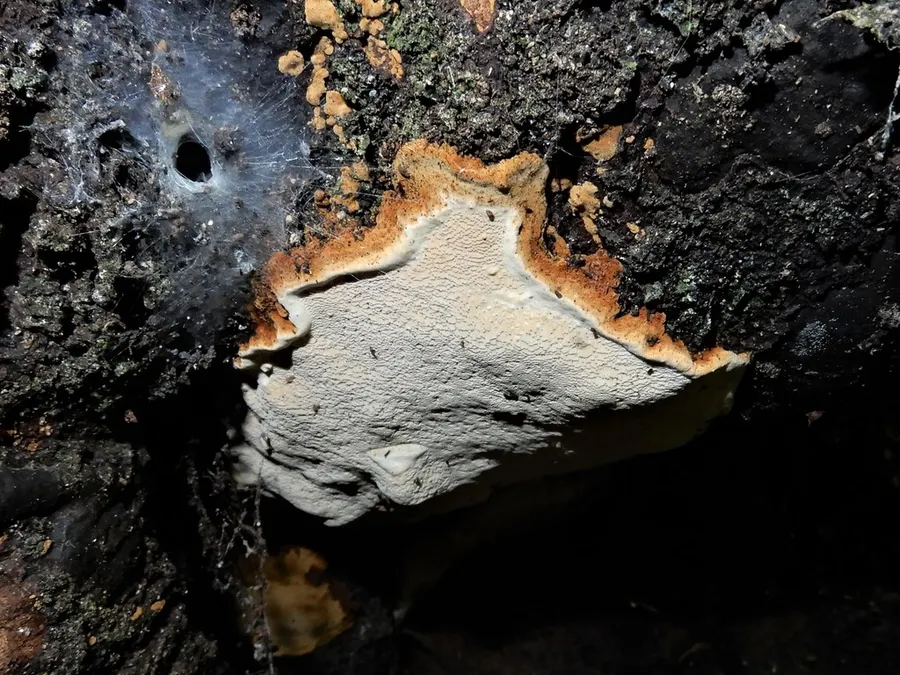
Dokumentasi Australoporus tasmanicus menurut asosiasi foto pada record takson iNaturalist. Kredit: Grey Smith. Identitas mengikuti sumber; bukan penentuan spesimen independen.
- Jenis
- Fotografi
- Kredit
- (c) Grey Smith, some rights reserved (CC BY), uploaded by Grey Smith
- Lisensi
- CC BY 4.0
- Sumber media
- Buka entri sumber
Dokumentasi tambahan
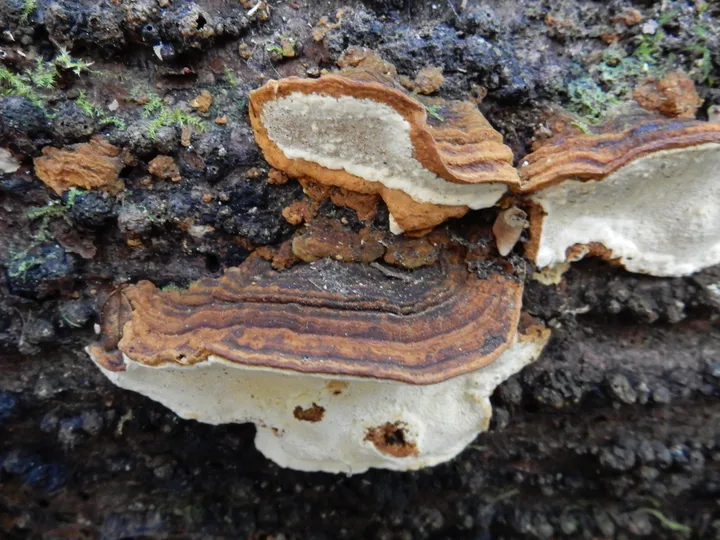
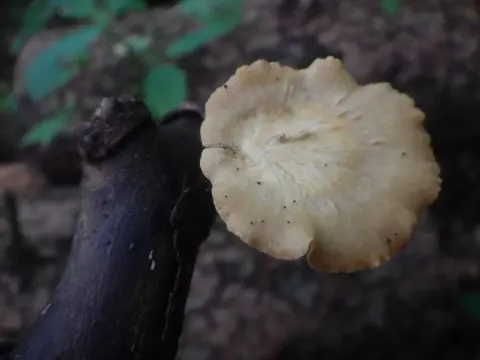
Foto yang diasosiasikan dengan Australoporus tasmanicus pada iNaturalist. Identifikasi mengikuti sumber; bukan penentuan spesimen independen.
Kredit dan penggunaan
(c) Ray Jackson, some rights reserved (CC BY), uploaded by Ray Jackson
Ukuran dan format gambar disesuaikan tanpa pemotongan, retus, atau penambahan skala. Lisensi sumber dipertahankan.
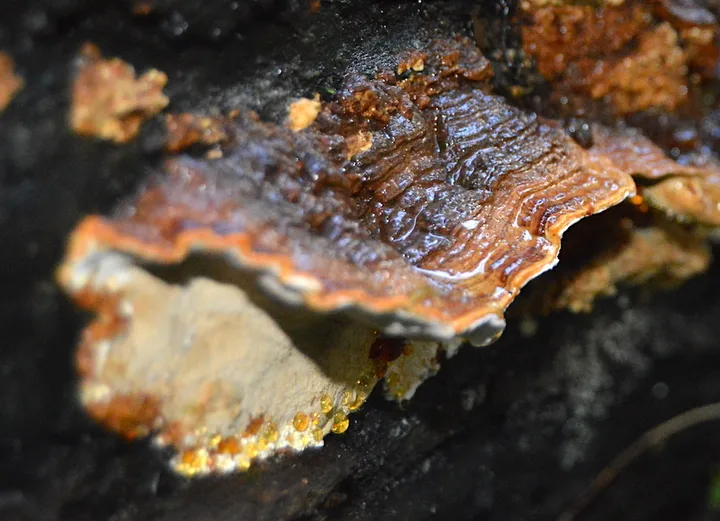
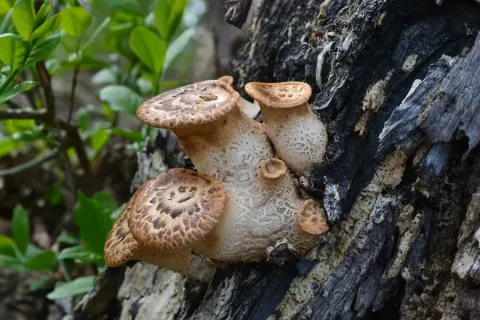
Foto yang diasosiasikan dengan Australoporus tasmanicus pada iNaturalist. Identifikasi mengikuti sumber; bukan penentuan spesimen independen.
Kredit dan penggunaan
(c) foreverfungi, some rights reserved (CC BY), uploaded by foreverfungi
Ukuran dan format gambar disesuaikan tanpa pemotongan, retus, atau penambahan skala. Lisensi sumber dipertahankan.
Sumber profil
- [1] Buchanan, P.K.; Ryvarden, L. 1988: Type studies in the Polyporaceae - 18. Species described by G.H. Cunningham. Mycotaxon 31(1): 1-38. — Australoporus tasmanicus
- [2] Catalogue of Life Base2026-09-11 — Australoporus tasmanicus
- [3] Dokumentasi visual — Australoporus tasmanicus
- [4] Dokumentasi visual — Australoporus tasmanicus
- [5] Dokumentasi visual — Australoporus tasmanicus
Rujukan halaman ini
Fungi. Australoporus tasmanicus. Rilis data fungi-2026-10-12-expansion-2. https://fungi-atlas.mgadib.chatgpt.site/jamur/australoporus-tasmanicus/.
Status: impor sumber; pemeriksaan editorial per profil belum selesai. Untuk klaim biologis, gunakan rujukan pada bagian terkait dan periksa konteks sumber aslinya.