01 / Morfologi

Ciri dan struktur

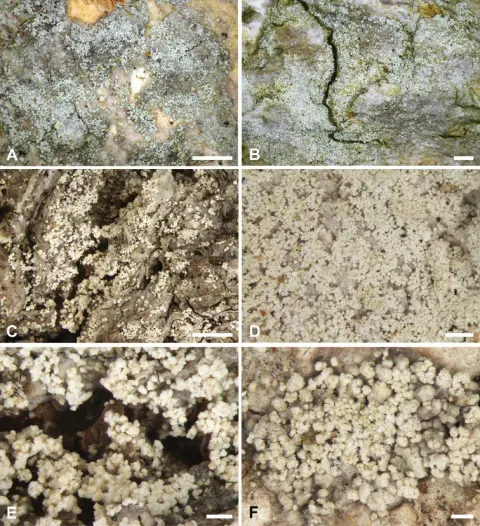
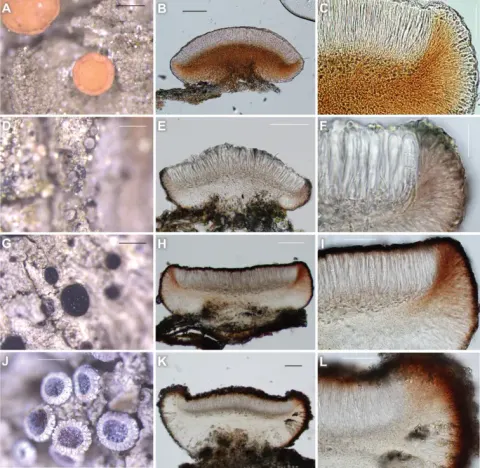
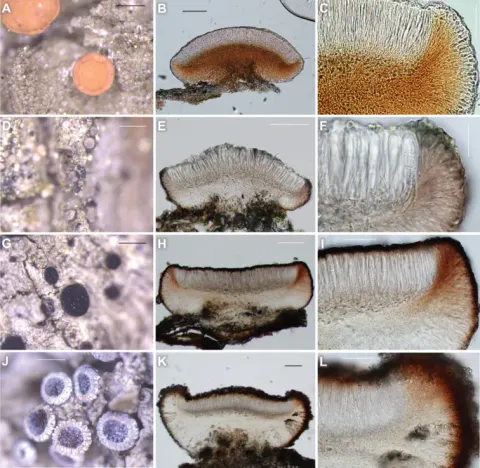
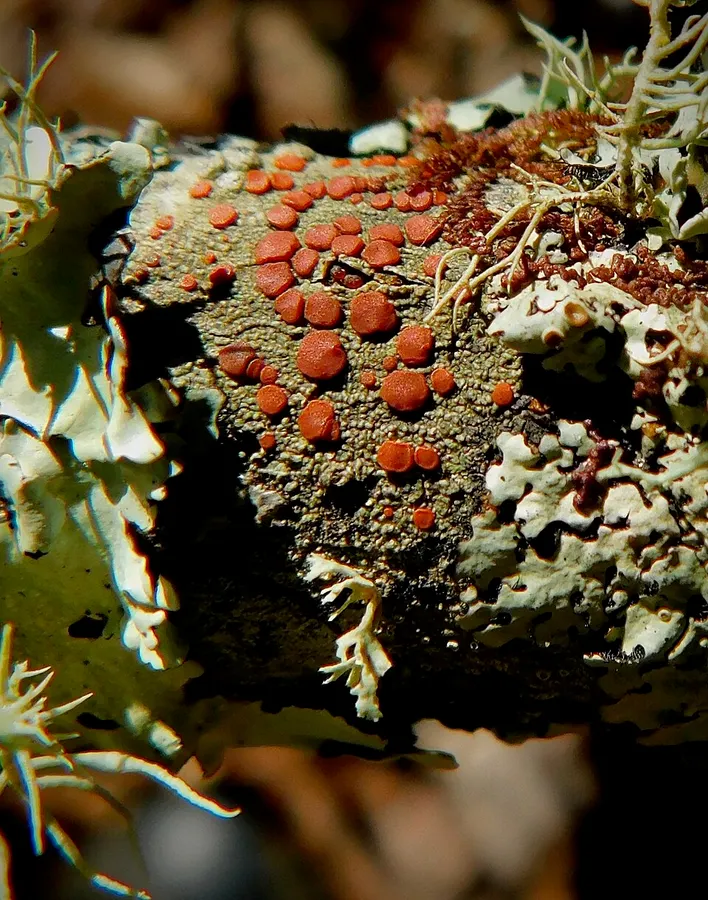
Bacidia rubella is characterized by a thallus (the main body of the lichen) that ranges in colour from grey to yellow-green. The thallus has a distinctive texture that varies from thinly to richly -, meaning it is covered with small granular structures (isidia) that measure 60–120 μm in diameter. The cells (the photosynthetic algal partner in the lichen symbiosis) are 5–17 μm in diameter. Apothecia (fruiting bodies) are often absent in this species. When present, they typically measure 0.7–1 mm in diameter and are usually distinctly constricted at the base. These apothecia are flat, sometimes becoming convex, and range in colour from pale to dark red-brown. The margin of the apothecia is sometimes covered with a white, powdery coating (). The (the rim or margin of the apothecium) is colourless in its lower part, while the upper part is pale yellow-orange or yellow-straw coloured. In pruinose specimens, the exciple sometimes displays radiating streaks of minute crystals. The exciple is composed of hyphae (fungal filaments) with internal spaces () measuring 1–2 μm in diameter, or up to 5 μm in diameter toward the outer edge. The hymenium (the spore-producing layer) is 70–105 μm high and is either colourless or faintly orange-red or yellow in its upper part. The (the tissue beneath the hymenium) is colourless, or pale yellow or orange-straw coloured in its upper part, and may intensify to yellow when treated with potassium hydroxide solution (K). The paraphyses (sterile filaments among the spore sacs) are 1–1.5 μm in diameter, either unbranched or forked in their upper portion, with their tips often slightly swollen to about 2.5 μm in diameter.

Sebagian uraian ditampilkan dalam bahasa sumber; terjemahannya belum tersedia atau belum lolos pemeriksaan.

Rujukan: [1]

Pengukuran mengikuti objek, spesimen atau kultur, dan metode yang disebutkan sumber. Baca uraian asli untuk konteks lengkap.

02 / Kehidupan

Habitat dan peran ekologis

In the United Kingdom, Bacidia rubella occurs mainly on the bark of mature trees, particularly those with nutrient-rich surfaces such as maple Acer, ash (Fraxinus), and elm (Ulmus). It is typically found in parklands, along roadsides, and within woodlands growing on fertile soils. On rare occasions, it may also inhabit sheltered gravestones or walls. This species is widespread throughout Britain and Ireland but becomes less common in western Scotland and is absent from areas affected by pollution. Bacidia rubella is broadly distributed beyond the United Kingdom, occurring across much of lowland central and northern Europe. Within the Mediterranean region, it typically occupies montane areas with climates that are more continental compared to coastal or lowland species within the group. Its ecological preference is nitrophilous, favouring habitats enriched by nutrients. This ecological adaptability enables Bacidia rubella to grow in a variety of continental environments, although it generally avoids heavily polluted areas. In Nepal, Bacidia rubella has been reported at 300 m elevation in a compilation of published records.

Sebagian uraian ditampilkan dalam bahasa sumber; terjemahannya belum tersedia atau belum lolos pemeriksaan.

Rujukan: [1]

Habitat atau konteks temuan
Informasi belum tersedia pada sumber rilis ini.
Substrat
Informasi belum tersedia pada sumber rilis ini.
Peran atau konteks
Pembentuk liken
Temukan hubungan serupa
03 / Siklus hidup

Reproduksi

Bacidia rubella is characterized by a thallus (the main body of the lichen) that ranges in colour from grey to yellow-green. The thallus has a distinctive texture that varies from thinly to richly -, meaning it is covered with small granular structures (isidia) that measure 60–120 μm in diameter. The cells (the photosynthetic algal partner in the lichen symbiosis) are 5–17 μm in diameter. The hymenium (the spore-producing layer) is 70–105 μm high and is either colourless or faintly orange-red or yellow in its upper part. The (the tissue beneath the hymenium) is colourless, or pale yellow or orange-straw coloured in its upper part, and may intensify to yellow when treated with potassium hydroxide solution (K).

Sebagian uraian ditampilkan dalam bahasa sumber; terjemahannya belum tersedia atau belum lolos pemeriksaan.

Rujukan: [1]

Sinonim menurut acuan taksonomi rilis: Bacidia luteola; Bacidia luteola f. porriginosa; Bacidia luteola var. porriginosa; Bacidia luteola var. rubella; Bacidia rubella f. luteola; Bacidia rubella f. porriginosa; Bacidia rubella var. luteola; Bacidia rubella var. porriginosa; Biatora luteola; Biatora luteola var. porriginosa; Biatora luteola var. rubella; Biatora rubella; Biatora vernalis f. luteola; Lecidea decolorans var. porriginosa; Lecidea granulosa var. porriginosa; Lecidea luteola; Lecidea luteola f. porriginosa; Lecidea luteola var. porriginosa; Lecidea vernalis var. luteola; Lichen luteolus; Lichen porriginosus; Lichen rubellus; Ochrolechia luteola; Patellaria luteola; Patellaria luteola var. porriginosa; Patellaria rubella; Patellaria rubella luteolus; Patellaria rubella rubellus; Secoliga rubella; Secoliga rubella f. porriginosa
04 / Batas informasi

Catatan identitas dan cakupan

  • Nama diterima mengikuti Catalogue of Life Base2026-09-11; uraian mempertahankan konsep dan nama sumber aslinya.
  • Original geographic, specimen and life-cycle scope retained; source import awaits individual editorial review.
  • Impor dan terjemahan otomatis belum diperiksa editorial per profil. Struktur reproduktif yang disebutkan tidak membuktikan seluruh siklus hidup diketahui.
  • Pengukuran pada uraian mengikuti spesimen, kultur, dan metode sumber; angka tidak diperluas ke semua populasi.

Catatan distribusi dalam narasi mengikuti sumbernya. Dokumentasi spesimen atau foto mengikuti catatan sumber. Bukti wilayah Indonesia dan penilaian konservasi tidak disimpulkan dari gambar.

05 / Dokumentasi

Melihat dengan konteks

Dokumentasi Bacidia rubella dari Wikimedia Commons. Frosty-rimmed Dot Lichen ( Bacidia rubella ) Identifikasi mengikuti record berkas sumber.

Jenis
Fotografi
Kredit
mjpapay
Lisensi
CC BY 4.0
Sumber media
Buka entri sumber

Gambar menunjukkan objek menurut identifikasi sumber, bukan verifikasi independen spesimen oleh Fungi. Tidak ada skala baru yang ditambahkan.

06 / Rujukan

Sumber profil

  1. [1] Bacidia rubella — Wikipedia (en)Bagian sumber: Frozen revision 1342675594
    Tanggal penghimpunan sumber: 2026-10-12
    Teks sumber: CC BY-SA4.0 · Wikipedia contributors
  2. [2] Catalogue of Life Base2026-09-11 — Bacidia rubellaBagian sumber: ColDP NameUsage.tsv ID 5VYCW; accepted species; source 2073
    Tanggal penghimpunan sumber: 2026-10-12
  3. [3] Dokumentasi visual — Bacidia rubellaBagian sumber: Individual media record; identification follows the source, not independent determination
    Tanggal penghimpunan sumber: 2026-10-12
    Media sumber: CC BY 4.0 · mjpapay

Adaptasi teks: CC BY-SA 4.0. Wikipedia contributors — Bacidia rubella — Wikipedia (en)

Uraian asli dan riwayat sumber

Riwayat atau halaman sumber

Ringkasan sumber

Bacidia rubella is a species of corticolous (bark-dwelling), crustose lichen in the family Ramalinaceae. First described in 1796, it features a grey to yellow-green thallus with small granular structures covering its surface. When present, its distinctive fruiting bodies (apothecia) range from pale to dark red-brown in colour, measuring up to 1 mm in diameter. The species occurs widely throughout Britain and Ireland and is also broadly distributed across lowland central and northern Europe, typically inhabiting nutrient-rich bark of mature trees such as maple, ash, and elm in parklands, roadsides, and fertile woodlands.

Revisi sumber

Morfologi sumber

Bacidia rubella is characterized by a thallus (the main body of the lichen) that ranges in colour from grey to yellow-green. The thallus has a distinctive texture that varies from thinly to richly -, meaning it is covered with small granular structures (isidia) that measure 60–120 μm in diameter. The cells (the photosynthetic algal partner in the lichen symbiosis) are 5–17 μm in diameter. Apothecia (fruiting bodies) are often absent in this species. When present, they typically measure 0.7–1 mm in diameter and are usually distinctly constricted at the base. These apothecia are flat, sometimes becoming convex, and range in colour from pale to dark red-brown. The margin of the apothecia is sometimes covered with a white, powdery coating (). The (the rim or margin of the apothecium) is colourless in its lower part, while the upper part is pale yellow-orange or yellow-straw coloured. In pruinose specimens, the exciple sometimes displays radiating streaks of minute crystals. The exciple is composed of hyphae (fungal filaments) with internal spaces () measuring 1–2 μm in diameter, or up to 5 μm in diameter toward the outer edge. The hymenium (the spore-producing layer) is 70–105 μm high and is either colourless or faintly orange-red or yellow in its upper part. The (the tissue beneath the hymenium) is colourless, or pale yellow or orange-straw coloured in its upper part, and may intensify to yellow when treated with potassium hydroxide solution (K). The paraphyses (sterile filaments among the spore sacs) are 1–1.5 μm in diameter, either unbranched or forked in their upper portion, with their tips often slightly swollen to about 2.5 μm in diameter.

Revisi sumber

Ekologi sumber

In the United Kingdom, Bacidia rubella occurs mainly on the bark of mature trees, particularly those with nutrient-rich surfaces such as maple Acer, ash (Fraxinus), and elm (Ulmus). It is typically found in parklands, along roadsides, and within woodlands growing on fertile soils. On rare occasions, it may also inhabit sheltered gravestones or walls. This species is widespread throughout Britain and Ireland but becomes less common in western Scotland and is absent from areas affected by pollution. Bacidia rubella is broadly distributed beyond the United Kingdom, occurring across much of lowland central and northern Europe. Within the Mediterranean region, it typically occupies montane areas with climates that are more continental compared to coastal or lowland species within the group. Its ecological preference is nitrophilous, favouring habitats enriched by nutrients. This ecological adaptability enables Bacidia rubella to grow in a variety of continental environments, although it generally avoids heavily polluted areas. In Nepal, Bacidia rubella has been reported at 300 m elevation in a compilation of published records.

Revisi sumber

Struktur reproduksi sumber

Bacidia rubella is characterized by a thallus (the main body of the lichen) that ranges in colour from grey to yellow-green. The thallus has a distinctive texture that varies from thinly to richly -, meaning it is covered with small granular structures (isidia) that measure 60–120 μm in diameter. The cells (the photosynthetic algal partner in the lichen symbiosis) are 5–17 μm in diameter. The hymenium (the spore-producing layer) is 70–105 μm high and is either colourless or faintly orange-red or yellow in its upper part. The (the tissue beneath the hymenium) is colourless, or pale yellow or orange-straw coloured in its upper part, and may intensify to yellow when treated with potassium hydroxide solution (K).

Revisi sumber

Rujukan halaman ini

Fungi. Bacidia rubella. Rilis data fungi-2026-10-12-expansion-2. https://fungi-atlas.mgadib.chatgpt.site/jamur/bacidia-rubella/.

Status: impor sumber; pemeriksaan editorial per profil belum selesai. Untuk klaim biologis, gunakan rujukan pada bagian terkait dan periksa konteks sumber aslinya.