01 / Morfologi

Ciri dan struktur

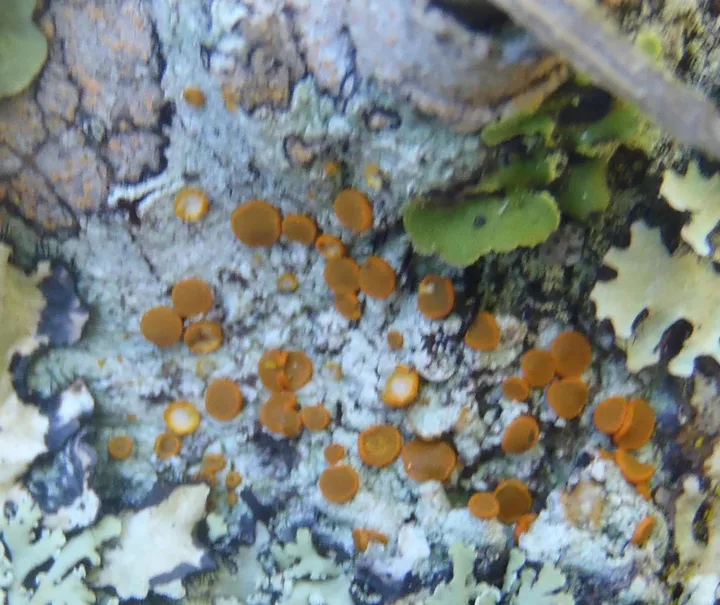
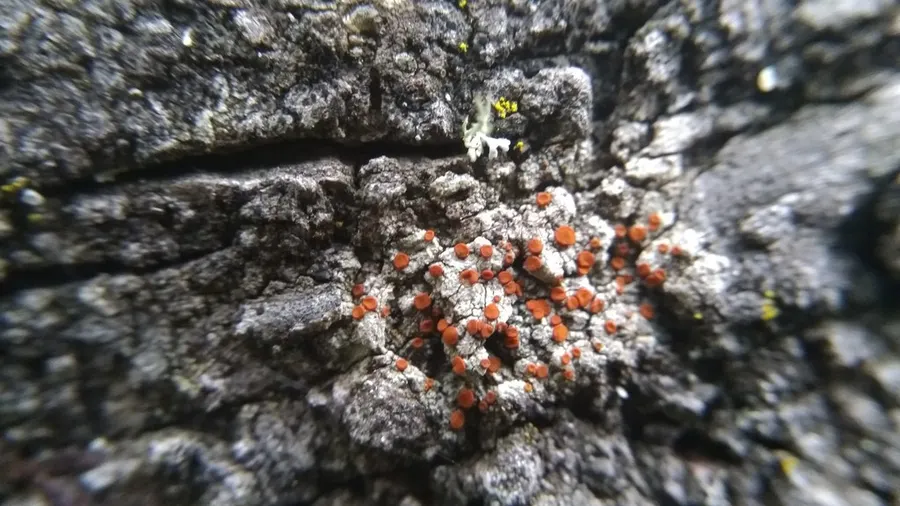
The pale grey to dark grey thallus of Blastenia ferruginea is typically or in the host bark, with a thin profile. It has a smooth texture and a white-grey hue, although it can sometimes appear darker. The thallus is K−. The apothecia of Blastenia ferruginea measure 1–2 mm in diameter, and often have a markedly uneven and margin. They are rust red to reddish brown in colour. Unlike Blastenia crenularia, the in B. ferruginea is scanty or absent beneath the hymenium, further distinguishing it from its relative. Blastenia ferruginea can be distinguished from its close relative, B. hungarica, based on the size of their apothecia. While the apothecia of Blastenia ferruginea typically measure between 0.8 and 1.5 mm in diameter, those of B. hungarica are smaller, usually less than 0.6 mm in diameter.

Sebagian uraian ditampilkan dalam bahasa sumber; terjemahannya belum tersedia atau belum lolos pemeriksaan.

Rujukan: [1]

Pengukuran mengikuti objek, spesimen atau kultur, dan metode yang disebutkan sumber. Baca uraian asli untuk konteks lengkap.

02 / Kehidupan

Habitat dan peran ekologis

Blastenia ferruginea has a cosmopolitan distribution. It primarily grows on the bark of trees such as Hazel (Corylus), common aspen (Populus tremula), ash (Fraxinus), and Sorbus, and is occasionally found on old timber. In the United Kingdom, it is scarce and appears to be declining, with recent records mostly from Northern and Western Scotland, Western Ireland, and sporadically in Cumbria, Hampshire, and Sussex. It has become rare or extinct in most parts of England, Wales, and Central Europe. In Belgium, it was considered locally extinct because it had not been recorded since 1890, but it was discovered growing on willow (Salix) 120 years later. In Germany, the lichen is thought to have declined significantly in the second half of the twentieth century due to pollution, but as of 2018 appears to be making a comeback. Blastenia ferruginea was recorded as new to tropical Africa in 2005, and had previously been reported from South Africa and from Morocco.

Sebagian uraian ditampilkan dalam bahasa sumber; terjemahannya belum tersedia atau belum lolos pemeriksaan.

Rujukan: [1]

Habitat atau konteks temuan
Informasi belum tersedia pada sumber rilis ini.
Substrat
Informasi belum tersedia pada sumber rilis ini.
Peran atau konteks
Pembentuk liken
Temukan hubungan serupa
03 / Siklus hidup

Reproduksi

Blastenia ferruginea has a cosmopolitan distribution. It primarily grows on the bark of trees such as Hazel (Corylus), common aspen (Populus tremula), ash (Fraxinus), and Sorbus, and is occasionally found on old timber. In the United Kingdom, it is scarce and appears to be declining, with recent records mostly from Northern and Western Scotland, Western Ireland, and sporadically in Cumbria, Hampshire, and Sussex. It has become rare or extinct in most parts of England, Wales, and Central Europe. In Belgium, it was considered locally extinct because it had not been recorded since 1890, but it was discovered growing on willow (Salix) 120 years later. In Germany, the lichen is thought to have declined significantly in the second half of the twentieth century due to pollution, but as of 2018 appears to be making a comeback.

Sebagian uraian ditampilkan dalam bahasa sumber; terjemahannya belum tersedia atau belum lolos pemeriksaan.

Rujukan: [1]

Sinonim menurut acuan taksonomi rilis: Amphiloma pusillum var. aurantiacum; Biatora aurantiaca; Biatora ferruginea; Blastenia aurantiaca; Callopisma aurantiacum; Callopisma ferrugineum; Caloplaca aurantiaca; Caloplaca ferruginea; Chrysomma aurantiacum; Chrysomma ferrugineum; Gasparrinia ferruginea; Lecanora aurantiaca; Lecanora ferruginea; Lecidea aurantiaca; Lecidea ferruginea; Lichen aurantiacus; Lichen ferrugineus; Lichen parietinus aurantiacus; Parmelia aurantiaca; Parmelia ferruginea; Patellaria aurantiaca; Placodium aurantiacum; Placodium cerinum var. aurantiacum; Placodium cerinum var. ferrugineum; Placodium ferrugineum; Pyrenodesmia aurantiaca; Scutellaria aurantiaca; Sporoblastia aurantiaca; Teloschistes aurantiacus; Teloschistes ferrugineus; Verrucaria ferruginea; Xanthocarpia aurantiaca; Zeora aurantiaca; Zeora ferruginea
04 / Batas informasi

Catatan identitas dan cakupan

  • Nama diterima mengikuti Catalogue of Life Base2026-09-11; uraian mempertahankan konsep dan nama sumber aslinya.
  • Original geographic, specimen and life-cycle scope retained; source import awaits individual editorial review.
  • Impor dan terjemahan otomatis belum diperiksa editorial per profil. Struktur reproduktif yang disebutkan tidak membuktikan seluruh siklus hidup diketahui.
  • Pengukuran pada uraian mengikuti spesimen, kultur, dan metode sumber; angka tidak diperluas ke semua populasi.

Catatan distribusi dalam narasi mengikuti sumbernya. Dokumentasi spesimen atau foto mengikuti catatan sumber. Bukti wilayah Indonesia dan penilaian konservasi tidak disimpulkan dari gambar.

05 / Dokumentasi

Melihat dengan konteks

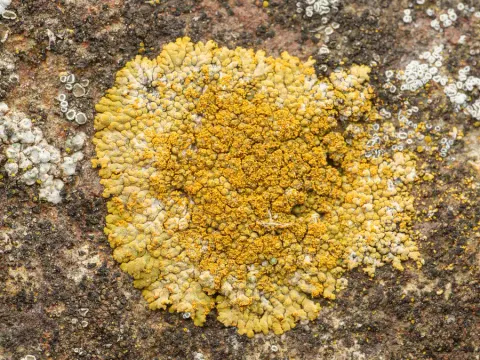
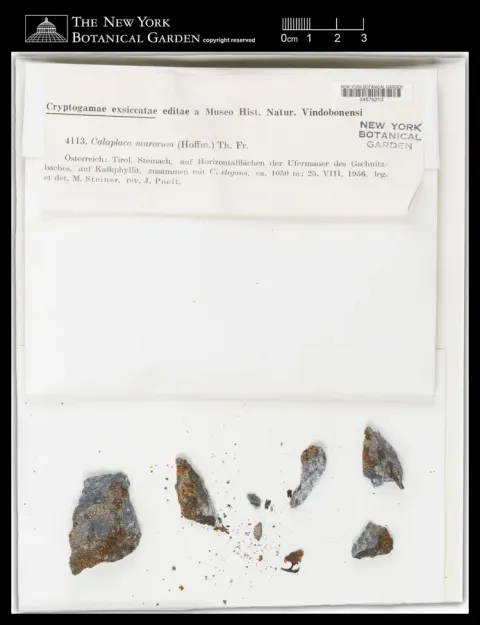
Dokumentasi Blastenia ferruginea menurut asosiasi foto pada record takson iNaturalist. Kredit: Rogelio Reyna-Hernández. Identitas mengikuti sumber; bukan penentuan spesimen independen.

Jenis
Fotografi
Kredit
(c) Rogelio Reyna-Hernández, some rights reserved (CC BY-SA), uploaded by Rogelio Reyna-Hernández
Sumber media
Buka entri sumber

Gambar menunjukkan objek menurut identifikasi sumber, bukan verifikasi independen spesimen oleh Fungi. Tidak ada skala baru yang ditambahkan.

Dokumentasi tambahan

06 / Rujukan

Sumber profil

  1. [1] Blastenia ferruginea — Wikipedia (en)Bagian sumber: Frozen revision 1297515582
    Tanggal penghimpunan sumber: 2026-10-12
    Teks sumber: CC BY-SA4.0 · Wikipedia contributors
  2. [2] Catalogue of Life Base2026-09-11 — Blastenia ferrugineaBagian sumber: ColDP NameUsage.tsv ID 68MF2; accepted species; source 2073
    Tanggal penghimpunan sumber: 2026-10-12
  3. [3] Dokumentasi visual — Blastenia ferrugineaBagian sumber: Identitas mengikuti sumber dokumentasi; bukan penentuan spesimen independen.
    Tanggal penghimpunan sumber: 2026-10-17
    Media sumber: CC BY-SA 4.0 · (c) Rogelio Reyna-Hernández, some rights reserved (CC BY-SA), uploaded by Rogelio Reyna-Hernández
  4. [4] Dokumentasi visual — Blastenia ferrugineaBagian sumber: Identitas mengikuti sumber dokumentasi; bukan penentuan spesimen independen.
    Tanggal penghimpunan sumber: 2026-10-17
    Teks sumber: CC BY-SA 4.0 · (c) Nicola van Berkel, some rights reserved (CC BY-SA), uploaded by Nicola van Berkel

Adaptasi teks: CC BY-SA 4.0. Wikipedia contributors — Blastenia ferruginea — Wikipedia (en)

Uraian asli dan riwayat sumber

Riwayat atau halaman sumber

Ringkasan sumber

Blastenia ferruginea is a species of corticolous (bark-dwelling), crustose lichen in the family Teloschistaceae. It has a cosmopolitan distribution.

Revisi sumber

Morfologi sumber

The pale grey to dark grey thallus of Blastenia ferruginea is typically or in the host bark, with a thin profile. It has a smooth texture and a white-grey hue, although it can sometimes appear darker. The thallus is K−. The apothecia of Blastenia ferruginea measure 1–2 mm in diameter, and often have a markedly uneven and margin. They are rust red to reddish brown in colour. Unlike Blastenia crenularia, the in B. ferruginea is scanty or absent beneath the hymenium, further distinguishing it from its relative. Blastenia ferruginea can be distinguished from its close relative, B. hungarica, based on the size of their apothecia. While the apothecia of Blastenia ferruginea typically measure between 0.8 and 1.5 mm in diameter, those of B. hungarica are smaller, usually less than 0.6 mm in diameter.

Revisi sumber

Ekologi sumber

Blastenia ferruginea has a cosmopolitan distribution. It primarily grows on the bark of trees such as Hazel (Corylus), common aspen (Populus tremula), ash (Fraxinus), and Sorbus, and is occasionally found on old timber. In the United Kingdom, it is scarce and appears to be declining, with recent records mostly from Northern and Western Scotland, Western Ireland, and sporadically in Cumbria, Hampshire, and Sussex. It has become rare or extinct in most parts of England, Wales, and Central Europe. In Belgium, it was considered locally extinct because it had not been recorded since 1890, but it was discovered growing on willow (Salix) 120 years later. In Germany, the lichen is thought to have declined significantly in the second half of the twentieth century due to pollution, but as of 2018 appears to be making a comeback. Blastenia ferruginea was recorded as new to tropical Africa in 2005, and had previously been reported from South Africa and from Morocco.

Revisi sumber

Struktur reproduksi sumber

Blastenia ferruginea has a cosmopolitan distribution. It primarily grows on the bark of trees such as Hazel (Corylus), common aspen (Populus tremula), ash (Fraxinus), and Sorbus, and is occasionally found on old timber. In the United Kingdom, it is scarce and appears to be declining, with recent records mostly from Northern and Western Scotland, Western Ireland, and sporadically in Cumbria, Hampshire, and Sussex. It has become rare or extinct in most parts of England, Wales, and Central Europe. In Belgium, it was considered locally extinct because it had not been recorded since 1890, but it was discovered growing on willow (Salix) 120 years later. In Germany, the lichen is thought to have declined significantly in the second half of the twentieth century due to pollution, but as of 2018 appears to be making a comeback.

Revisi sumber

Rujukan halaman ini

Fungi. Blastenia ferruginea. Rilis data fungi-2026-10-12-expansion-2. https://fungi-atlas.mgadib.chatgpt.site/jamur/blastenia-ferruginea/.

Status: impor sumber; pemeriksaan editorial per profil belum selesai. Untuk klaim biologis, gunakan rujukan pada bagian terkait dan periksa konteks sumber aslinya.