01 / Morfologi

Ciri dan struktur

The shape of the cap is convex to broadly convex, flattening with age, and reaching a diameter of 2 – 9.5 cm. The margin of the cap is inrolled in young specimens before flattening out. The cap is a red-brown color that becomes more orange-brown with age. The flesh is thick, and yellow, with no detectable taste nor odor. On the underside of the cap, the spore-bearing surface comprises vertically arranged minute yellow tubes with brownish pore-like openings. The tubes are 0.5 cm deep, adnate (fused) or subdecurrent to the stem, and the individual pores are round and small (about 1 per mm). The stem is 2.8 – 7 cm long, 1 – 1.5 cm thick at the apex and 1 – 2 cm thick elsewhere. The upper stem surface is covered with reticulations, and the stem is a dark red-brown and furry. The mycelium is yellow. The pore surface quickly turns blue with injury, as does the stem. Unlike similar species, its cap is never sticky, even after wet weather, and its pores are much shallower. Boletus pyrrhosceles grows in association with Colombian oak (Quercus humboldtii).

Sebagian uraian ditampilkan dalam bahasa sumber; terjemahannya belum tersedia atau belum lolos pemeriksaan.

Rujukan: [1]

Pengukuran mengikuti objek, spesimen atau kultur, dan metode yang disebutkan sumber. Baca uraian asli untuk konteks lengkap.

02 / Kehidupan

Habitat dan peran ekologis

Boletus pyrrhosceles grows in association with Colombian oak (Quercus humboldtii).

Sebagian uraian ditampilkan dalam bahasa sumber; terjemahannya belum tersedia atau belum lolos pemeriksaan.

Rujukan: [1]

Habitat atau konteks temuan
Informasi belum tersedia pada sumber rilis ini.
Substrat
Informasi belum tersedia pada sumber rilis ini.
Peran atau konteks
Belum dikategorikan pada rilis ini.
Temukan hubungan serupa
03 / Siklus hidup

Reproduksi

The shape of the cap is convex to broadly convex, flattening with age, and reaching a diameter of 2 – 9.5 cm. The margin of the cap is inrolled in young specimens before flattening out. The cap is a red-brown color that becomes more orange-brown with age. The flesh is thick, and yellow, with no detectable taste nor odor. On the underside of the cap, the spore-bearing surface comprises vertically arranged minute yellow tubes with brownish pore-like openings. The tubes are 0.5 cm deep, adnate (fused) or subdecurrent to the stem, and the individual pores are round and small (about 1 per mm). The stem is 2.8 – 7 cm long, 1 – 1.5 cm thick at the apex and 1 – 2 cm thick elsewhere. The upper stem surface is covered with reticulations, and the stem is a dark red-brown and furry.

Sebagian uraian ditampilkan dalam bahasa sumber; terjemahannya belum tersedia atau belum lolos pemeriksaan.

Rujukan: [1]

04 / Batas informasi

Catatan identitas dan cakupan

  • Nama diterima mengikuti Catalogue of Life Base2026-09-11; uraian mempertahankan konsep dan nama sumber aslinya.
  • Original geographic, specimen and life-cycle scope retained; source import awaits individual editorial review.
  • Impor dan terjemahan otomatis belum diperiksa editorial per profil. Struktur reproduktif yang disebutkan tidak membuktikan seluruh siklus hidup diketahui.
  • Pengukuran pada uraian mengikuti spesimen, kultur, dan metode sumber; angka tidak diperluas ke semua populasi.

Catatan distribusi dalam narasi mengikuti sumbernya. Dokumentasi spesimen atau foto mengikuti catatan sumber. Bukti wilayah Indonesia dan penilaian konservasi tidak disimpulkan dari gambar.

05 / Dokumentasi

Melihat dengan konteks

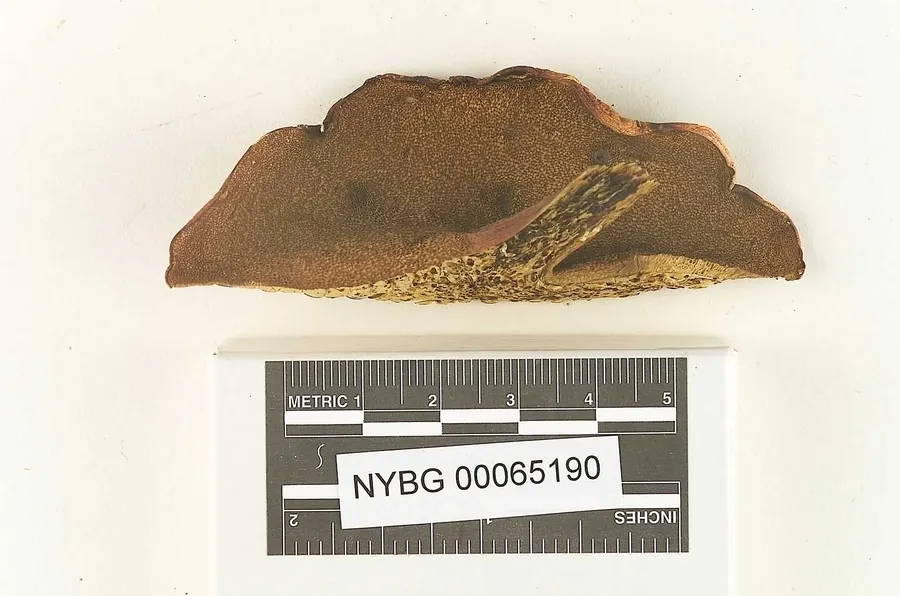
Voucher herbarium Boletus pyrrhosceles (65190), The New York Botanical Garden. Identifikasi mengikuti record spesimen sumber. Foto bahan, kemasan, atau label herbarium sebagaimana tersedia pada record institusi; bukan foto lapangan atau penentuan spesimen independen.

Jenis
Voucher herbarium
Kredit
The New York Botanical Garden
Lisensi
CC BY 4.0
Sumber media
Buka entri sumber

Gambar menunjukkan objek menurut identifikasi sumber, bukan verifikasi independen spesimen oleh Fungi. Tidak ada skala baru yang ditambahkan.

06 / Rujukan

Sumber profil

  1. [1] Boletus pyrrhosceles — Wikipedia (en)Bagian sumber: Frozen revision 1232873441
    Tanggal penghimpunan sumber: 2026-10-12
    Teks sumber: CC BY-SA4.0 · Wikipedia contributors
  2. [2] Catalogue of Life Base2026-09-11 — Boletus pyrrhoscelesBagian sumber: ColDP NameUsage.tsv ID MCYM; accepted species; source 2073
    Tanggal penghimpunan sumber: 2026-10-12
  3. [3] Dokumentasi visual — Boletus pyrrhoscelesBagian sumber: Individual media record; identification follows the source, not independent determination
    Tanggal penghimpunan sumber: 2026-10-12
    Media sumber: CC BY 4.0 · The New York Botanical Garden

Adaptasi teks: CC BY-SA 4.0. Wikipedia contributors — Boletus pyrrhosceles — Wikipedia (en)

Uraian asli dan riwayat sumber

Riwayat atau halaman sumber

Ringkasan sumber

Boletus pyrrhosceles is a species of bolete (pored mushroom) native to Colombia. It was described by Roy Halling in 1992 from material collected on 20 November 1988 near the highway between Pasto and Chachagüí in Nariño Department in the country's southwest, at an altitude of 2700 m. It was classified in section Luridii, and thought most similar to Boletus austrinus, Boletus flammans and Boletus rubroflammeus. The species name is derived from the Ancient Greek words pyrrhos "red" and skelos "legs", referring to its stem.

Revisi sumber

Morfologi sumber

The shape of the cap is convex to broadly convex, flattening with age, and reaching a diameter of 2 – 9.5 cm. The margin of the cap is inrolled in young specimens before flattening out. The cap is a red-brown color that becomes more orange-brown with age. The flesh is thick, and yellow, with no detectable taste nor odor. On the underside of the cap, the spore-bearing surface comprises vertically arranged minute yellow tubes with brownish pore-like openings. The tubes are 0.5 cm deep, adnate (fused) or subdecurrent to the stem, and the individual pores are round and small (about 1 per mm). The stem is 2.8 – 7 cm long, 1 – 1.5 cm thick at the apex and 1 – 2 cm thick elsewhere. The upper stem surface is covered with reticulations, and the stem is a dark red-brown and furry. The mycelium is yellow. The pore surface quickly turns blue with injury, as does the stem. Unlike similar species, its cap is never sticky, even after wet weather, and its pores are much shallower. Boletus pyrrhosceles grows in association with Colombian oak (Quercus humboldtii).

Revisi sumber

Ekologi sumber

Boletus pyrrhosceles grows in association with Colombian oak (Quercus humboldtii).

Revisi sumber

Struktur reproduksi sumber

The shape of the cap is convex to broadly convex, flattening with age, and reaching a diameter of 2 – 9.5 cm. The margin of the cap is inrolled in young specimens before flattening out. The cap is a red-brown color that becomes more orange-brown with age. The flesh is thick, and yellow, with no detectable taste nor odor. On the underside of the cap, the spore-bearing surface comprises vertically arranged minute yellow tubes with brownish pore-like openings. The tubes are 0.5 cm deep, adnate (fused) or subdecurrent to the stem, and the individual pores are round and small (about 1 per mm). The stem is 2.8 – 7 cm long, 1 – 1.5 cm thick at the apex and 1 – 2 cm thick elsewhere. The upper stem surface is covered with reticulations, and the stem is a dark red-brown and furry.

Revisi sumber

Rujukan halaman ini

Fungi. Boletus pyrrhosceles. Rilis data fungi-2026-10-12-expansion-2. https://fungi-atlas.mgadib.chatgpt.site/jamur/boletus-pyrrhosceles/.

Status: impor sumber; pemeriksaan editorial per profil belum selesai. Untuk klaim biologis, gunakan rujukan pada bagian terkait dan periksa konteks sumber aslinya.