Ciri dan struktur
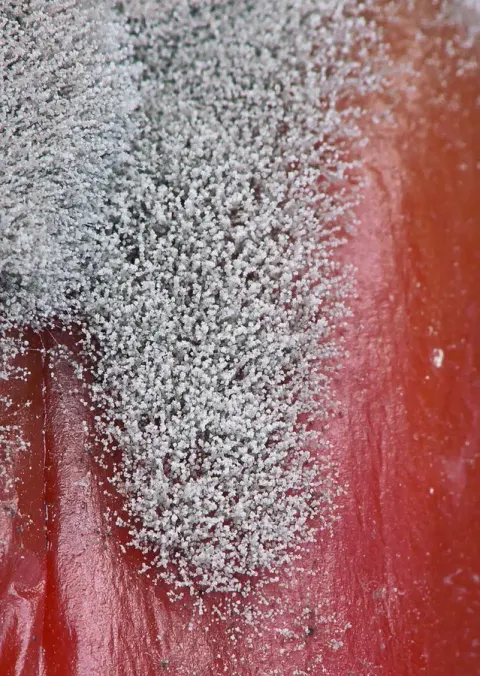
Colonies are hairy, non-pigmented and extensive with a pure white color. The main body of conidiophores are long branched and bear lateral. The side branches grow indeterminate with a clavate shape that is narrower at the attachment to the main body and broader at the tip. Up to six ampullaes can bear on one tip at the same time. The size of the conidia is 8-11μm long and 4-4.5 wide which forms an ellipsoid shape.
Habitat dan peran ekologis
Botryosporium longibrachiatum was largely recorded to grow on dead leaves and stems. It was also found on twine that was used in greenhouses to support plant growth such as tomatoes and eggplants. In general, the genus Botryosporium was rarely discovered from soil and there was only one record of Botryosporium in Ontario by 1968. Another possible place for Botryosporium to appear is above the potting soil in greenhouses. Several evidences have shown that the fungus favors cool and humid environment especially places like greenhouses.
- Habitat atau konteks temuan
- Informasi belum tersedia pada sumber rilis ini.
- Substrat
- Informasi belum tersedia pada sumber rilis ini.
- Peran atau konteks
- Belum dikategorikan pada rilis ini.
Reproduksi
Colonies are hairy, non-pigmented and extensive with a pure white color. The main body of conidiophores are long branched and bear lateral. The side branches grow indeterminate with a clavate shape that is narrower at the attachment to the main body and broader at the tip. Up to six ampullaes can bear on one tip at the same time. The size of the conidia is 8-11μm long and 4-4.5 wide which forms an ellipsoid shape.
Catatan identitas dan cakupan
- Nama diterima mengikuti Catalogue of Life Base2026-09-11; uraian mempertahankan konsep dan nama sumber aslinya.
- Original geographic, specimen and life-cycle scope retained; source import awaits individual editorial review.
- Impor dan terjemahan otomatis belum diperiksa editorial per profil. Struktur reproduktif yang disebutkan tidak membuktikan seluruh siklus hidup diketahui.
- Pengukuran pada uraian mengikuti spesimen, kultur, dan metode sumber; angka tidak diperluas ke semua populasi.
Catatan distribusi dalam narasi mengikuti sumbernya. Dokumentasi spesimen atau foto mengikuti catatan sumber. Bukti wilayah Indonesia dan penilaian konservasi tidak disimpulkan dari gambar.
Melihat dengan konteks
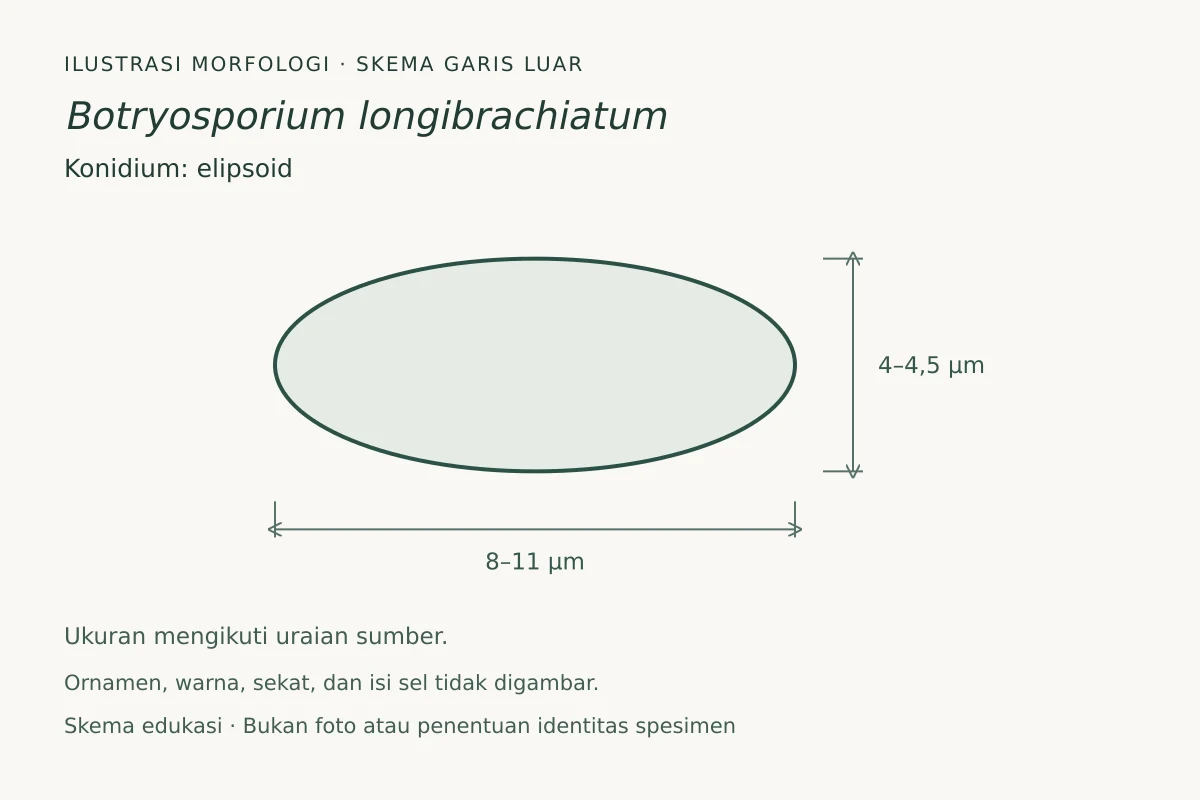
Ilustrasi skematis garis luar konidium Botryosporium longibrachiatum, berdasarkan uraian sumber; ukuran yang dilaporkan 8–11 × 4–4,5 µm. Proporsi disederhanakan, bukan salinan satu spesimen. Ornamen permukaan, warna, sekat, dan isi sel tidak direkonstruksi. Konidium elipsoid, panjang 8–11 µm dan lebar 4–4,5 µm. Satuan panjang dan lebar mengikuti satu kalimat ukuran yang sama. Ornamen, warna, sekat, dan isi sel tidak digambar. Skema edukasi, bukan alat identifikasi.
- Jenis
- Ilustrasi skematis
- Kredit
- Fungi, ilustrasi orisinal (2026); fakta morfologi berdasarkan Wikipedia contributors
- Lisensi
- CC BY-SA 4.0
- Sumber media
- Buka entri sumber
Sumber profil
- [1] Botryosporium longibrachiatum — Wikipedia (en)
- [2] Catalogue of Life Base2026-09-11 — Botryosporium longibrachiatum
Rujukan halaman ini
Fungi. Botryosporium longibrachiatum. Rilis data fungi-2026-10-12-expansion-2. https://fungi-atlas.mgadib.chatgpt.site/jamur/botryosporium-longibrachiatum/.
Status: impor sumber; pemeriksaan editorial per profil belum selesai. Untuk klaim biologis, gunakan rujukan pada bagian terkait dan periksa konteks sumber aslinya.