01 / Morfologi

Ciri dan struktur

The thallus of C. efflorescens is and yellow to green-yellow. are usually minute (to about 0.25 mm across) and soon become inconspicuous as they dissolve into soredia, though larger areoles can occur; a thin (about 10–15 μm thick) of one to three layers of near-isodiametric cells may be present. Soralia originate in the areoles, initially discrete, convex and well delimited (roughly 0.15–0.4 mm), then coalescing to form extensive continuous sorediate crusts. Soredia are fine (about 20–55 μm in diameter), yellow, with 10–15 photobiont cells (7–14 μm) surrounded by slightly elongated fungal cells often tinged yellow-brown. Fruiting bodies (apothecia) are infrequent and small (about 0.2–0.4 mm), in form, and have a flat to somewhat convex yellow-orange disc the same colour as the thallus. A distinct is generally lacking; the is thin and may become sorediate or excluded in older apothecia. In section, the thalline margin shows an indistinct of thin-walled, non-gelatinised hyphae; the comprises radiating hyphae with rectangular cells. The is colourless; the is reddish yellow to yellow-brown; the hymenium is about 70–75 μm tall. Paraphyses are mostly simple with slender tips. Asci are clavate and typically 24–30-spored. Ascospores are simple (rarely thinly septate), oblong to narrowly ellipsoid, about 10–15 × 3.5–5.0 μm.

Sebagian uraian ditampilkan dalam bahasa sumber; terjemahannya belum tersedia atau belum lolos pemeriksaan.

Rujukan: [1]

Pengukuran mengikuti objek, spesimen atau kultur, dan metode yang disebutkan sumber. Baca uraian asli untuk konteks lengkap.

02 / Kehidupan

Habitat dan peran ekologis

Candelariella efflorescens grows on well-lit bark of both deciduous and coniferous trees, and it can also occur on wood. It is often encountered along roadsides and in other nitrogen-enriched settings, and may be common locally in such habitats. NatureServe treats it as globally secure (G5). The species is widespread in temperate North America and Europe. ITS sequences also confirm its presence in Asia (Pakistan), where some sterile specimens had previously been reported as C. xanthostigmoides. Earlier sources treated the species as eastern North American, but material from both continents matches in diagnostic features and clusters together in molecular analyses.

Sebagian uraian ditampilkan dalam bahasa sumber; terjemahannya belum tersedia atau belum lolos pemeriksaan.

Rujukan: [1]

Habitat atau konteks temuan
Informasi belum tersedia pada sumber rilis ini.
Substrat
kayu
Peran atau konteks
Pembentuk liken
Temukan hubungan serupa
03 / Siklus hidup

Reproduksi

The thallus of C. efflorescens is and yellow to green-yellow. are usually minute (to about 0.25 mm across) and soon become inconspicuous as they dissolve into soredia, though larger areoles can occur; a thin (about 10–15 μm thick) of one to three layers of near-isodiametric cells may be present. Soralia originate in the areoles, initially discrete, convex and well delimited (roughly 0.15–0.4 mm), then coalescing to form extensive continuous sorediate crusts. Soredia are fine (about 20–55 μm in diameter), yellow, with 10–15 photobiont cells (7–14 μm) surrounded by slightly elongated fungal cells often tinged yellow-brown. Fruiting bodies (apothecia) are infrequent and small (about 0.2–0.4 mm), in form, and have a flat to somewhat convex yellow-orange disc the same colour as the thallus.

Sebagian uraian ditampilkan dalam bahasa sumber; terjemahannya belum tersedia atau belum lolos pemeriksaan.

Rujukan: [1]

04 / Batas informasi

Catatan identitas dan cakupan

  • Nama diterima mengikuti Catalogue of Life Base2026-09-11; uraian mempertahankan konsep dan nama sumber aslinya.
  • Original geographic, specimen and life-cycle scope retained; source import awaits individual editorial review.
  • Impor dan terjemahan otomatis belum diperiksa editorial per profil. Struktur reproduktif yang disebutkan tidak membuktikan seluruh siklus hidup diketahui.
  • Pengukuran pada uraian mengikuti spesimen, kultur, dan metode sumber; angka tidak diperluas ke semua populasi.

Catatan distribusi dalam narasi mengikuti sumbernya. Dokumentasi spesimen atau foto mengikuti catatan sumber. Bukti wilayah Indonesia dan penilaian konservasi tidak disimpulkan dari gambar.

05 / Dokumentasi

Melihat dengan konteks

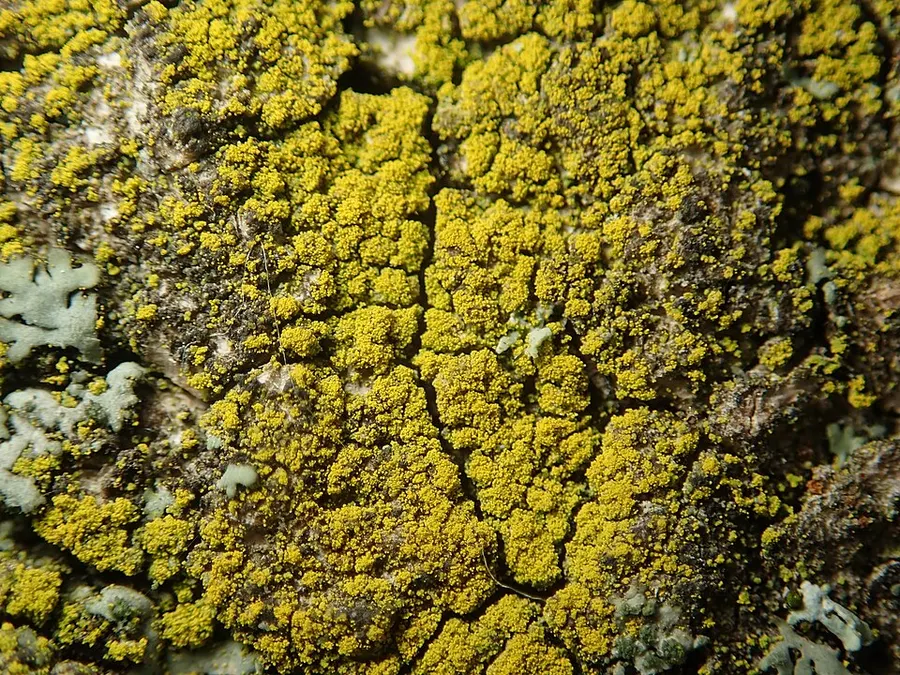
Dokumentasi Candelariella efflorescens dari Wikimedia Commons. Powdery Goldspeck ( Candelariella efflorescens ) Identifikasi mengikuti record berkas sumber.

Jenis
Fotografi
Kredit
Alexis
Lisensi
CC BY 4.0
Sumber media
Buka entri sumber

Gambar menunjukkan objek menurut identifikasi sumber, bukan verifikasi independen spesimen oleh Fungi. Tidak ada skala baru yang ditambahkan.

06 / Rujukan

Sumber profil

  1. [1] Candelariella efflorescens — Wikipedia (en)Bagian sumber: Frozen revision 1335172340
    Tanggal penghimpunan sumber: 2026-10-12
    Teks sumber: CC BY-SA4.0 · Wikipedia contributors
  2. [2] Catalogue of Life Base2026-09-11 — Candelariella efflorescensBagian sumber: ColDP NameUsage.tsv ID QKWM; accepted species; source 2073
    Tanggal penghimpunan sumber: 2026-10-12
  3. [3] Dokumentasi visual — Candelariella efflorescensBagian sumber: Individual media record; identification follows the source, not independent determination
    Tanggal penghimpunan sumber: 2026-10-12
    Media sumber: CC BY 4.0 · Alexis

Adaptasi teks: CC BY-SA 4.0. Wikipedia contributors — Candelariella efflorescens — Wikipedia (en)

Uraian asli dan riwayat sumber

Riwayat atau halaman sumber

Ringkasan sumber

Candelariella efflorescens, commonly known as the powdery goldfleck lichen, is a sorediate, corticolous (bark-dwelling) crustose lichen in the family Candelariaceae. It is widespread in temperate parts of North America and Europe and has also been confirmed from Asia (Pakistan) by DNA sequence data. The thallus consists of minute yellow that quickly "effloresce" into fine yellow soredia to form a continuous powdery crust; fruiting bodies (apothecia) are rare and small. When fertile, the species has multispored asci (typically 24–30 ascospores), a character separating it from several superficially similar eight-spored species now recognised alongside it.

Revisi sumber

Morfologi sumber

The thallus of C. efflorescens is and yellow to green-yellow. are usually minute (to about 0.25 mm across) and soon become inconspicuous as they dissolve into soredia, though larger areoles can occur; a thin (about 10–15 μm thick) of one to three layers of near-isodiametric cells may be present. Soralia originate in the areoles, initially discrete, convex and well delimited (roughly 0.15–0.4 mm), then coalescing to form extensive continuous sorediate crusts. Soredia are fine (about 20–55 μm in diameter), yellow, with 10–15 photobiont cells (7–14 μm) surrounded by slightly elongated fungal cells often tinged yellow-brown. Fruiting bodies (apothecia) are infrequent and small (about 0.2–0.4 mm), in form, and have a flat to somewhat convex yellow-orange disc the same colour as the thallus. A distinct is generally lacking; the is thin and may become sorediate or excluded in older apothecia. In section, the thalline margin shows an indistinct of thin-walled, non-gelatinised hyphae; the comprises radiating hyphae with rectangular cells. The is colourless; the is reddish yellow to yellow-brown; the hymenium is about 70–75 μm tall. Paraphyses are mostly simple with slender tips. Asci are clavate and typically 24–30-spored. Ascospores are simple (rarely thinly septate), oblong to narrowly ellipsoid, about 10–15 × 3.5–5.0 μm.

Revisi sumber

Ekologi sumber

Candelariella efflorescens grows on well-lit bark of both deciduous and coniferous trees, and it can also occur on wood. It is often encountered along roadsides and in other nitrogen-enriched settings, and may be common locally in such habitats. NatureServe treats it as globally secure (G5). The species is widespread in temperate North America and Europe. ITS sequences also confirm its presence in Asia (Pakistan), where some sterile specimens had previously been reported as C. xanthostigmoides. Earlier sources treated the species as eastern North American, but material from both continents matches in diagnostic features and clusters together in molecular analyses.

Revisi sumber

Struktur reproduksi sumber

The thallus of C. efflorescens is and yellow to green-yellow. are usually minute (to about 0.25 mm across) and soon become inconspicuous as they dissolve into soredia, though larger areoles can occur; a thin (about 10–15 μm thick) of one to three layers of near-isodiametric cells may be present. Soralia originate in the areoles, initially discrete, convex and well delimited (roughly 0.15–0.4 mm), then coalescing to form extensive continuous sorediate crusts. Soredia are fine (about 20–55 μm in diameter), yellow, with 10–15 photobiont cells (7–14 μm) surrounded by slightly elongated fungal cells often tinged yellow-brown. Fruiting bodies (apothecia) are infrequent and small (about 0.2–0.4 mm), in form, and have a flat to somewhat convex yellow-orange disc the same colour as the thallus.

Revisi sumber

Rujukan halaman ini

Fungi. Candelariella efflorescens. Rilis data fungi-2026-10-12-expansion-2. https://fungi-atlas.mgadib.chatgpt.site/jamur/candelariella-efflorescens/.

Status: impor sumber; pemeriksaan editorial per profil belum selesai. Untuk klaim biologis, gunakan rujukan pada bagian terkait dan periksa konteks sumber aslinya.