01 / Morfologi

Ciri dan struktur

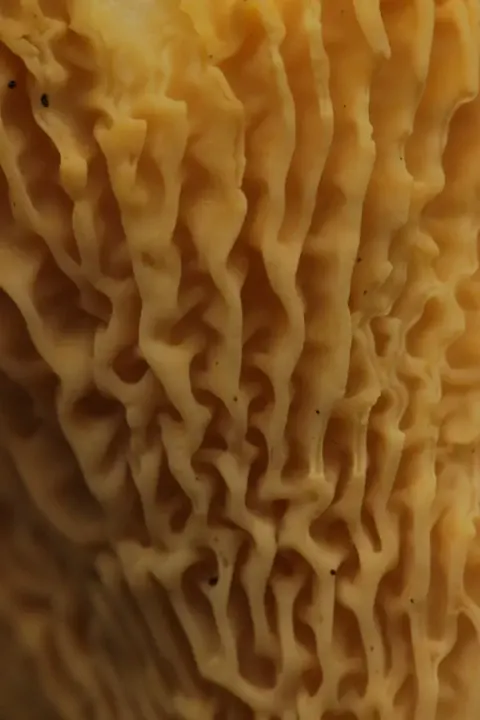
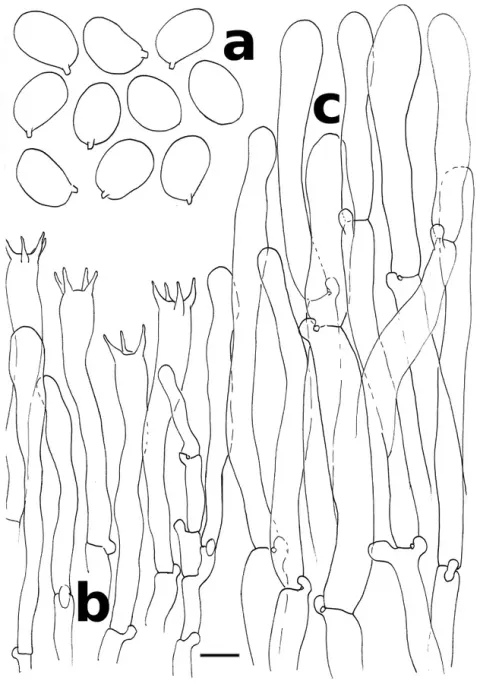
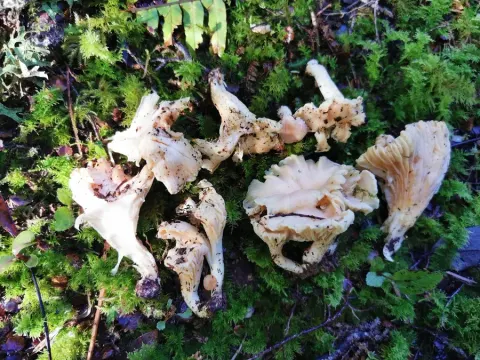
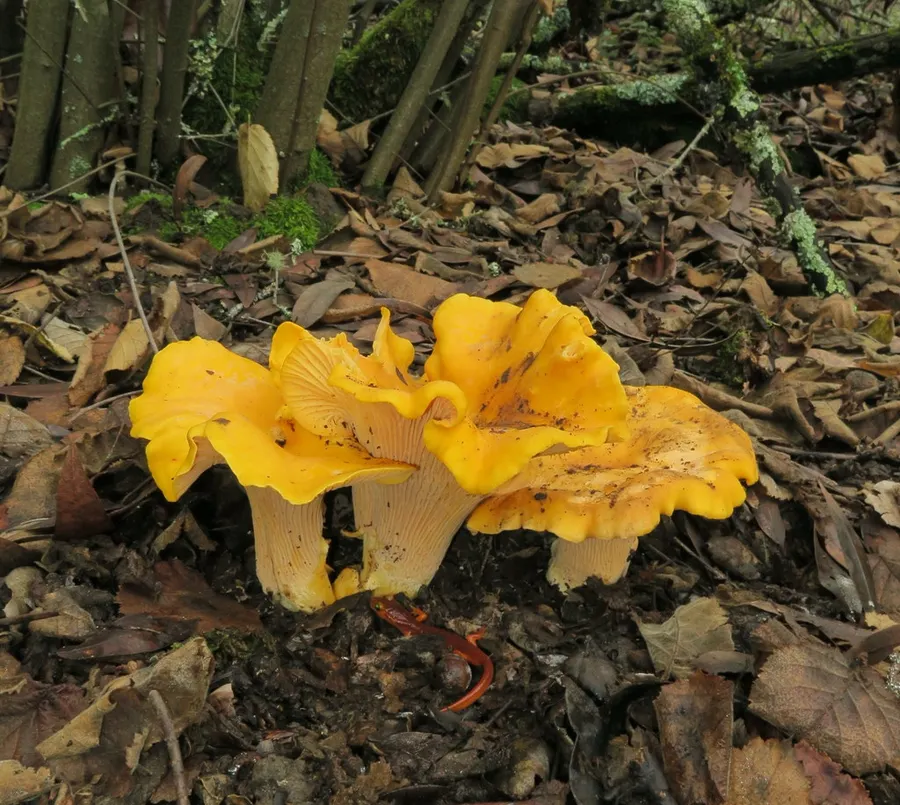
The pileus (cap) of C. californicus is 5 – 30 cm wide, exceptionally 50 cm, and yellow-orange in color (although adhering leaf litter may cause a mottled color); it may become brownish with age. The hymenium is folded into decurrent ridges (false gills) and cross-veins, which deepen with age. The color of these ridges is usually similar to the cap but paler. The stipe (stem) is 2-10 cm long and 1-4 cm wide, with coloration similar to the hymenium. The spores are creamy yellow, elliptical, and smooth. individual specimens up to 2 kg are reported, making it the largest-known species of chanterelle. Their unusual size is due in part to their capacity for indeterminate growth, making C. californicus specimens actively grow for far longer than most other mushrooms.

Sebagian uraian ditampilkan dalam bahasa sumber; terjemahannya belum tersedia atau belum lolos pemeriksaan.

Rujukan: [1]

Pengukuran mengikuti objek, spesimen atau kultur, dan metode yang disebutkan sumber. Baca uraian asli untuk konteks lengkap.

02 / Kehidupan

Habitat dan peran ekologis

Cantharellus californicus membentuk sebuah asosiasi mikoriza dengan ek, terutama ek hidup pantai di hutan Pantai California. Hal ini juga telah ditemukan dalam hubungan dengan interior live oak, California black oak, canyon live oak, tanoak, dan mungkin Pacific madrone dan manzanita. C. californicus adalah makanan liar yang populer di San Francisco Bay Area, dan paling umum antara November and April.

Rujukan: [1]

Habitat atau konteks temuan
Informasi belum tersedia pada sumber rilis ini.
Substrat
Informasi belum tersedia pada sumber rilis ini.
Peran atau konteks
Mitra tumbuhan
Temukan hubungan serupa
03 / Siklus hidup

Reproduksi

The pileus (cap) of C. californicus is 5 – 30 cm wide, exceptionally 50 cm, and yellow-orange in color (although adhering leaf litter may cause a mottled color); it may become brownish with age. The hymenium is folded into decurrent ridges (false gills) and cross-veins, which deepen with age. The color of these ridges is usually similar to the cap but paler. The stipe (stem) is 2-10 cm long and 1-4 cm wide, with coloration similar to the hymenium. The spores are creamy yellow, elliptical, and smooth.

Sebagian uraian ditampilkan dalam bahasa sumber; terjemahannya belum tersedia atau belum lolos pemeriksaan.

Rujukan: [1]

04 / Batas informasi

Catatan identitas dan cakupan

  • Nama diterima mengikuti Catalogue of Life Base2026-09-11; uraian mempertahankan konsep dan nama sumber aslinya.
  • Original geographic, specimen and life-cycle scope retained; source import awaits individual editorial review.
  • Impor dan terjemahan otomatis belum diperiksa editorial per profil. Struktur reproduktif yang disebutkan tidak membuktikan seluruh siklus hidup diketahui.
  • Pengukuran pada uraian mengikuti spesimen, kultur, dan metode sumber; angka tidak diperluas ke semua populasi.

Catatan distribusi dalam narasi mengikuti sumbernya. Dokumentasi spesimen atau foto mengikuti catatan sumber. Bukti wilayah Indonesia dan penilaian konservasi tidak disimpulkan dari gambar.

05 / Dokumentasi

Melihat dengan konteks

Dokumentasi Cantharellus californicus menurut asosiasi foto pada record takson iNaturalist. Kredit: Alan Rockefeller. Identitas mengikuti sumber; bukan penentuan spesimen independen.

Jenis
Fotografi
Kredit
(c) Alan Rockefeller, some rights reserved (CC BY), uploaded by Alan Rockefeller
Lisensi
CC BY 4.0
Sumber media
Buka entri sumber

Gambar menunjukkan objek menurut identifikasi sumber, bukan verifikasi independen spesimen oleh Fungi. Tidak ada skala baru yang ditambahkan.

06 / Rujukan

Sumber profil

  1. [1] Cantharellus californicus — Wikipedia (en)Bagian sumber: Frozen revision 1363613820
    Tanggal penghimpunan sumber: 2026-10-12
    Teks sumber: CC BY-SA4.0 · Wikipedia contributors
  2. [2] Catalogue of Life Base2026-09-11 — Cantharellus californicusBagian sumber: ColDP NameUsage.tsv ID QMKK; accepted species; source 2073
    Tanggal penghimpunan sumber: 2026-10-12
  3. [3] Dokumentasi visual — Cantharellus californicusBagian sumber: Individual media record; identification follows the source, not independent determination
    Tanggal penghimpunan sumber: 2026-10-12
    Media sumber: CC BY 4.0 · (c) Alan Rockefeller, some rights reserved (CC BY), uploaded by Alan Rockefeller

Adaptasi teks: CC BY-SA 4.0. Wikipedia contributors — Cantharellus californicus — Wikipedia (en)

Uraian asli dan riwayat sumber

Riwayat atau halaman sumber

Ringkasan sumber

The pileus (cap) of C. californicus is 5 – 30 cm wide, exceptionally 50 cm, and yellow-orange in color (although adhering leaf litter may cause a mottled color); it may become brownish with age. The hymenium is folded into decurrent ridges (false gills) and cross-veins, which deepen with age. The color of these ridges is usually similar to the cap but paler. The stipe (stem) is 2-10 cm long and 1-4 cm wide, with coloration similar to the hymenium. The spores are creamy yellow, elliptical, and smooth.

Revisi sumber

Morfologi sumber

The pileus (cap) of C. californicus is 5 – 30 cm wide, exceptionally 50 cm, and yellow-orange in color (although adhering leaf litter may cause a mottled color); it may become brownish with age. The hymenium is folded into decurrent ridges (false gills) and cross-veins, which deepen with age. The color of these ridges is usually similar to the cap but paler. The stipe (stem) is 2-10 cm long and 1-4 cm wide, with coloration similar to the hymenium. The spores are creamy yellow, elliptical, and smooth. individual specimens up to 2 kg are reported, making it the largest-known species of chanterelle. Their unusual size is due in part to their capacity for indeterminate growth, making C. californicus specimens actively grow for far longer than most other mushrooms.

Revisi sumber

Ekologi sumber

Cantharellus californicus forms a mycorrhizal association with oaks, particularly coast live oak in the woodlands of Coastal California. It has also been found in association with interior live oak, California black oak, canyon live oak, tanoak, and possibly Pacific madrone and manzanita. C. californicus is a popular wild edible in the San Francisco Bay Area, and is most common between November and April.

Revisi sumber

Struktur reproduksi sumber

The pileus (cap) of C. californicus is 5 – 30 cm wide, exceptionally 50 cm, and yellow-orange in color (although adhering leaf litter may cause a mottled color); it may become brownish with age. The hymenium is folded into decurrent ridges (false gills) and cross-veins, which deepen with age. The color of these ridges is usually similar to the cap but paler. The stipe (stem) is 2-10 cm long and 1-4 cm wide, with coloration similar to the hymenium. The spores are creamy yellow, elliptical, and smooth.

Revisi sumber

Rujukan halaman ini

Fungi. Cantharellus californicus. Rilis data fungi-2026-10-12-expansion-2. https://fungi-atlas.mgadib.chatgpt.site/jamur/cantharellus-californicus/.

Status: impor sumber; pemeriksaan editorial per profil belum selesai. Untuk klaim biologis, gunakan rujukan pada bagian terkait dan periksa konteks sumber aslinya.