Ciri dan struktur
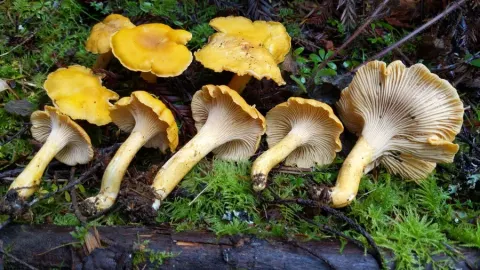
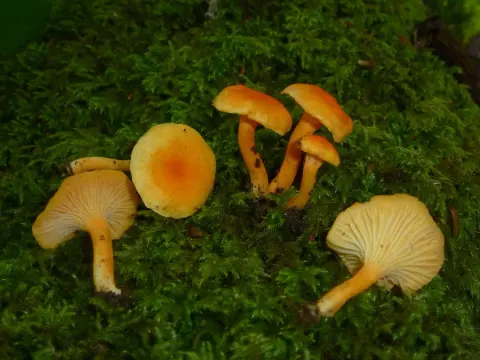
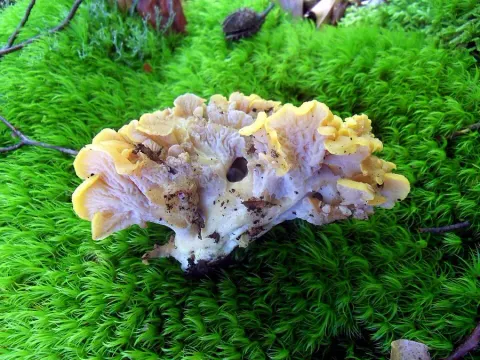
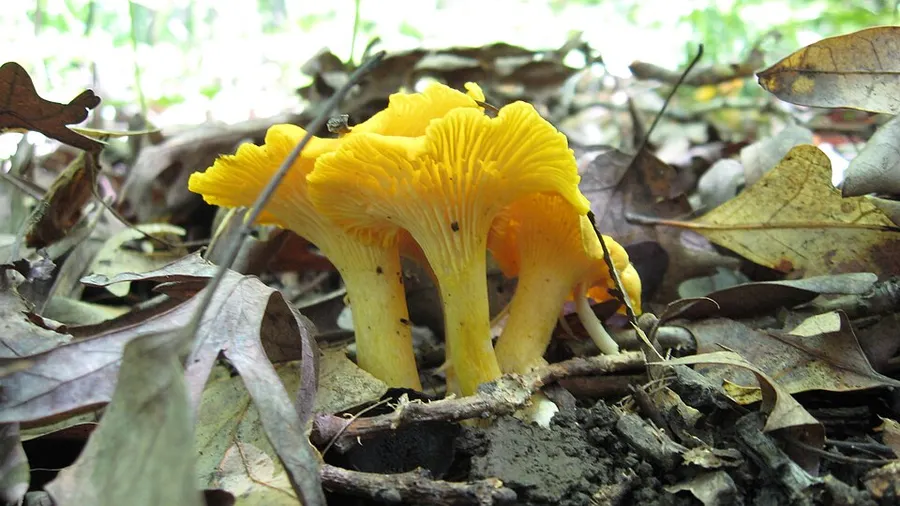
The cap is convex when young, flattening out, and arching with age, developing a depressed center. When mature, it can be broadly infundibuliform. The basidia measure 75–80 by 7–9 μm and have 4–6 sterigma. The taste is mild and slightly peppery and the odour is faintly of apricots.
Habitat dan peran ekologis
The distribution of C. flavus is obscure due to its previous grouping with other species as C. cibarius. Its presence has been confirmed in Wisconsin, Tennessee, North Carolina and Texas, though it is presumed that it is common throughout eastern North America. It prefers growing under oak, but can also grow under hardwoods, or a mixed stand of hardwoods and conifers. It is likely ectomycorrhizal with oak (Quercus spp.). It is found in well-drained soils, often on hillsides. It typically grows from July to September and can grow clustered, solitary, or scattered. It was categorised as "least concern" by the IUCN red list in 2021.
- Habitat atau konteks temuan
- Informasi belum tersedia pada sumber rilis ini.
- Substrat
- Informasi belum tersedia pada sumber rilis ini.
- Peran atau konteks
- Mitra tumbuhan
Reproduksi
The cap is convex when young, flattening out, and arching with age, developing a depressed center. When mature, it can be broadly infundibuliform. The basidia measure 75–80 by 7–9 μm and have 4–6 sterigma.
Catatan identitas dan cakupan
- Nama diterima mengikuti Catalogue of Life Base2026-09-11; uraian mempertahankan konsep dan nama sumber aslinya.
- Original geographic, specimen and life-cycle scope retained; source import awaits individual editorial review.
- Impor dan terjemahan otomatis belum diperiksa editorial per profil. Struktur reproduktif yang disebutkan tidak membuktikan seluruh siklus hidup diketahui.
- Pengukuran pada uraian mengikuti spesimen, kultur, dan metode sumber; angka tidak diperluas ke semua populasi.
Catatan distribusi dalam narasi mengikuti sumbernya. Dokumentasi spesimen atau foto mengikuti catatan sumber. Bukti wilayah Indonesia dan penilaian konservasi tidak disimpulkan dari gambar.
Melihat dengan konteks
Dokumentasi Cantharellus flavus dari Wikimedia Commons. Specimens imaged are part of the actual holotype collection of this species, which has been accessioned at the Field Museum of Natural History in Illinois. Mushroom Observer # 135599 Identifikasi mengikuti record berkas sumber.
- Jenis
- Fotografi
- Kredit
- Matthew Foltz
- Lisensi
- CC BY-SA 4.0
- Sumber media
- Buka entri sumber
Sumber profil
- [1] Cantharellus flavus — Wikipedia (en)
- [2] Catalogue of Life Base2026-09-11 — Cantharellus flavus
- [3] Dokumentasi visual — Cantharellus flavus
Rujukan halaman ini
Fungi. Cantharellus flavus. Rilis data fungi-2026-10-12-expansion-2. https://fungi-atlas.mgadib.chatgpt.site/jamur/cantharellus-flavus/.
Status: impor sumber; pemeriksaan editorial per profil belum selesai. Untuk klaim biologis, gunakan rujukan pada bagian terkait dan periksa konteks sumber aslinya.