Ciri dan struktur
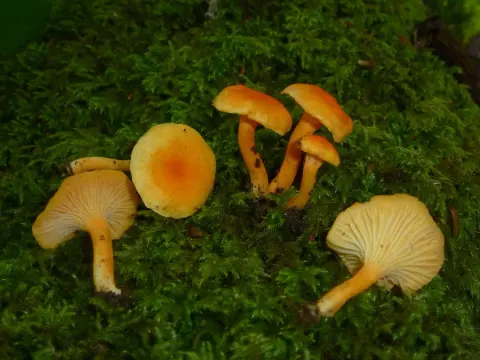
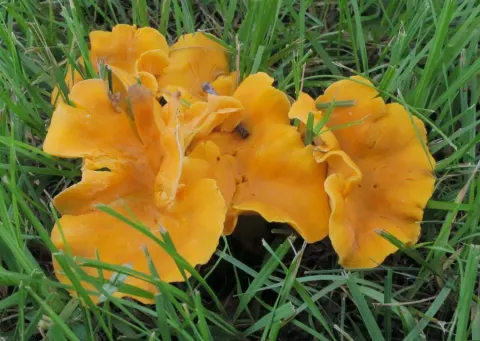
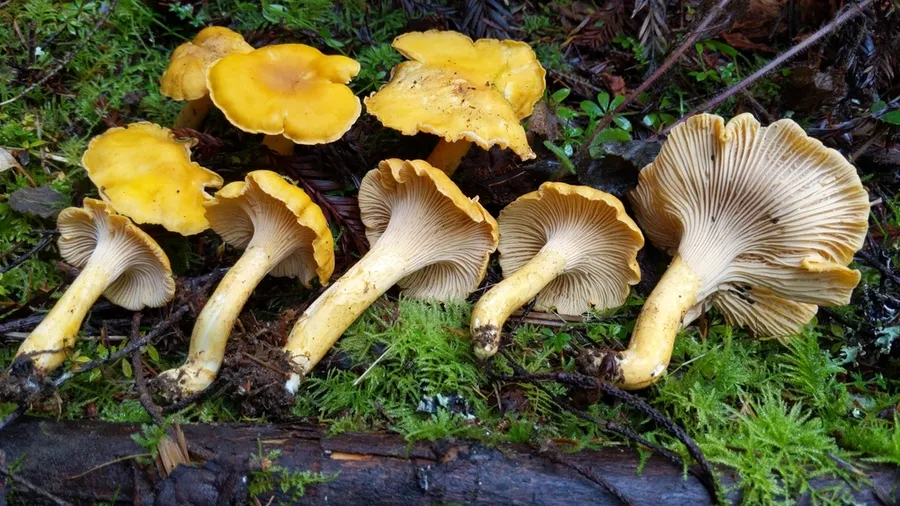
Fruiting bodies of C. formosus range from 2 - 15 cm wide,' with cap colors varying depending on light levels and weather. In dry weather, the cap is medium orange yellow to light yellow brown, but wet weather may brighten the cap to brilliant to soft orange yellow. In low light conditions, caps may not develop the yellow pigmentation, resulting in salmon to rosy buff colors. The false gills may be yellow, salmon, buff, or even whitish depending on conditions, but are usually paler than the cap. The stem is colored similarly to the cap, and is either equal-width or tapering downwards. The spore print is a yellowish white color.
Habitat dan peran ekologis
Cantharellus formosus has been reported from British Columbia to California, and is particularly abundant in the conifer forests of Washington and Oregon. Ini membentuk hubungan mikoriza dengan pohon Douglas dan hemlock barat, dan telah terbukti lebih umum di hutan yang lebih muda (40 - 60 tahun) daripada di hutan yang tumbuh tua. Ini tumbuh solitaris menjadi gregarious, dari July to Desember.
- Habitat atau konteks temuan
- hutan
- Substrat
- Informasi belum tersedia pada sumber rilis ini.
- Peran atau konteks
- Mitra tumbuhan
Reproduksi
Fruiting bodies of C. formosus range from 2 - 15 cm wide,' with cap colors varying depending on light levels and weather. In dry weather, the cap is medium orange yellow to light yellow brown, but wet weather may brighten the cap to brilliant to soft orange yellow. In low light conditions, caps may not develop the yellow pigmentation, resulting in salmon to rosy buff colors. The false gills may be yellow, salmon, buff, or even whitish depending on conditions, but are usually paler than the cap. The stem is colored similarly to the cap, and is either equal-width or tapering downwards. The spore print is a yellowish white color.
Catatan identitas dan cakupan
- Nama diterima mengikuti Catalogue of Life Base2026-09-11; uraian mempertahankan konsep dan nama sumber aslinya.
- Original geographic, specimen and life-cycle scope retained; source import awaits individual editorial review.
- Impor dan terjemahan otomatis belum diperiksa editorial per profil. Struktur reproduktif yang disebutkan tidak membuktikan seluruh siklus hidup diketahui.
- Pengukuran pada uraian mengikuti spesimen, kultur, dan metode sumber; angka tidak diperluas ke semua populasi.
Catatan distribusi dalam narasi mengikuti sumbernya. Dokumentasi spesimen atau foto mengikuti catatan sumber. Bukti wilayah Indonesia dan penilaian konservasi tidak disimpulkan dari gambar.
Melihat dengan konteks
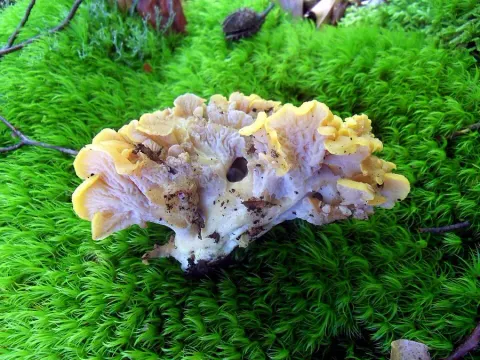
Dokumentasi Cantharellus formosus menurut asosiasi foto pada record takson iNaturalist. Kredit: Alan Rockefeller. Identitas mengikuti sumber; bukan penentuan spesimen independen.
- Jenis
- Fotografi
- Kredit
- (c) Alan Rockefeller, some rights reserved (CC BY), uploaded by Alan Rockefeller
- Lisensi
- CC BY 4.0
- Sumber media
- Buka entri sumber
Dokumentasi tambahan
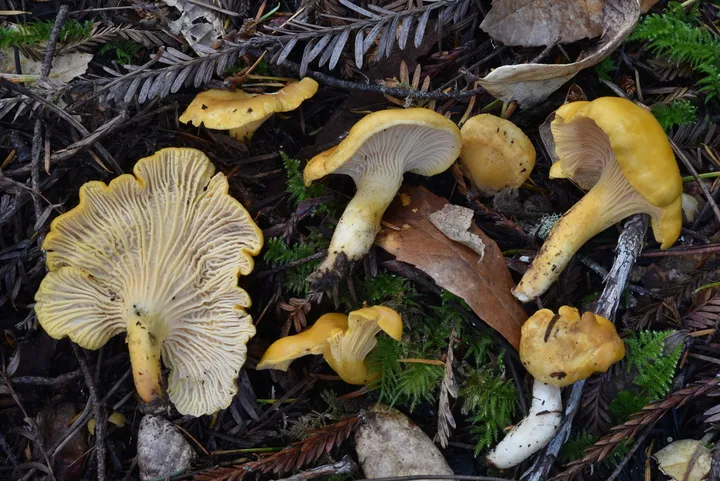
Foto yang diasosiasikan dengan Cantharellus formosus pada iNaturalist. Identifikasi mengikuti sumber; bukan penentuan spesimen independen.
Kredit dan penggunaan
(c) Alan Rockefeller, some rights reserved (CC BY), uploaded by Alan Rockefeller
Ukuran dan format gambar disesuaikan tanpa pemotongan, retus, atau penambahan skala. Lisensi sumber dipertahankan.
Sumber profil
- [1] Cantharellus formosus — Wikipedia (en)
- [2] Catalogue of Life Base2026-09-11 — Cantharellus formosus
- [3] Dokumentasi visual — Cantharellus formosus
- [4] Dokumentasi visual — Cantharellus formosus
Rujukan halaman ini
Fungi. Cantharellus formosus. Rilis data fungi-2026-10-12-expansion-2. https://fungi-atlas.mgadib.chatgpt.site/jamur/cantharellus-formosus/.
Status: impor sumber; pemeriksaan editorial per profil belum selesai. Untuk klaim biologis, gunakan rujukan pada bagian terkait dan periksa konteks sumber aslinya.