Ciri dan struktur
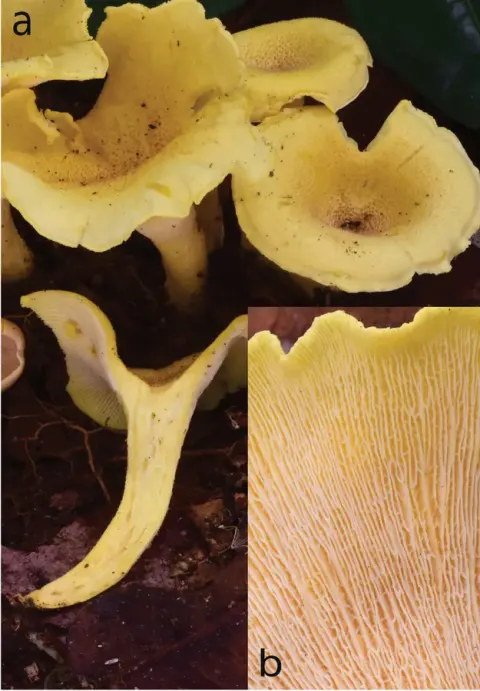
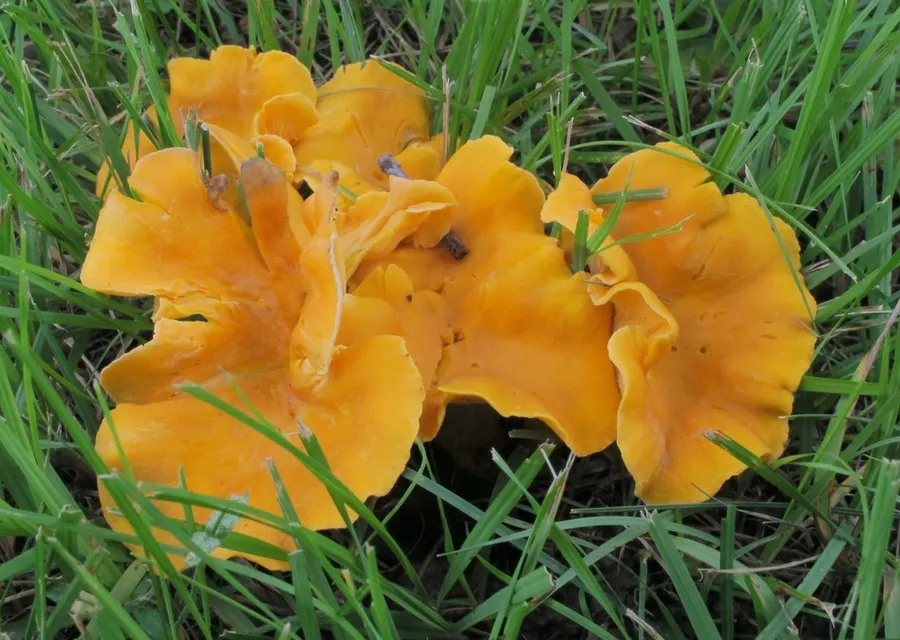
The caps of the C. lateritius fruiting bodies typically range between 2 and 12 cm in diameter, with a flattened to somewhat funnel-shaped top surface and a wavy margin. The cap surface is dry, slightly tomentose (covered with a layer of fine hairs), and a deep and bright orange-yellow color, with older specimens fading to more yellow in age; the distinctive margins of the cap are a paler yellow, In deposit, such as in a spore print, the spores are light yellow orange, slightly club-shaped, and with a distinctly thickened wall at the base. Clamp connections (short branches connecting one cell to the previous cell to allow passage of the products of nuclear division) are present in the hyphae of all parts of the fruiting body.
Habitat dan peran ekologis
Cantharellus lateritius tersebar di Amerika Utara, Afrika, Malaysia, dan Himalaya (khususnya, Almora hills di Uttar Pradesh). Di Amerika Utara, muncul dari June to September, dengan rentangnya di Amerika Serikat States extending ke utara ke Michigan and New England. Typically found tumbuh sendiri, dalam kelompok atau dalam kelompok di bawah pohon kayu keras, jamur menghasilkan tubuh buah di musim panas dan musim gugur. Di New England area Amerika Serikat, ahli mikologi Howard Bigelow has mencatat bahwa tanaman ini tumbuh di atas bahu jalan di rumput dekat ekor; ia juga cenderung tumbuh di tepi sungai yang miring. Di Malaysia, ia ditemukan tumbuh di tanah di hutan, sebagian besar di bawah spesies Shorea (pohon hutan hujan dalam keluarga Dipterocarpaceae). C. lateritius telah dilaporkan dari Ghats Barat, Kerala, India, membentuk ektomikoriza hubungan dengan spesies pohon endemik seperti Vateria indica, Hopea parviflora, Diospyros malabarica, dan Myristica malabarica di hutan semi-hijau hingga hijau abadi.
- Habitat atau konteks temuan
- hutan
- Substrat
- Informasi belum tersedia pada sumber rilis ini.
- Peran atau konteks
- Mitra tumbuhan
Reproduksi
The caps of the C. lateritius fruiting bodies typically range between 2 and 12 cm in diameter, with a flattened to somewhat funnel-shaped top surface and a wavy margin. The cap surface is dry, slightly tomentose (covered with a layer of fine hairs), and a deep and bright orange-yellow color, with older specimens fading to more yellow in age; the distinctive margins of the cap are a paler yellow, In deposit, such as in a spore print, the spores are light yellow orange, slightly club-shaped, and with a distinctly thickened wall at the base. Clamp connections (short branches connecting one cell to the previous cell to allow passage of the products of nuclear division) are present in the hyphae of all parts of the fruiting body.
Catatan identitas dan cakupan
- Nama diterima mengikuti Catalogue of Life Base2026-09-11; uraian mempertahankan konsep dan nama sumber aslinya.
- Original geographic, specimen and life-cycle scope retained; source import awaits individual editorial review.
- Impor dan terjemahan otomatis belum diperiksa editorial per profil. Struktur reproduktif yang disebutkan tidak membuktikan seluruh siklus hidup diketahui.
- Pengukuran pada uraian mengikuti spesimen, kultur, dan metode sumber; angka tidak diperluas ke semua populasi.
Catatan distribusi dalam narasi mengikuti sumbernya. Dokumentasi spesimen atau foto mengikuti catatan sumber. Bukti wilayah Indonesia dan penilaian konservasi tidak disimpulkan dari gambar.
Melihat dengan konteks
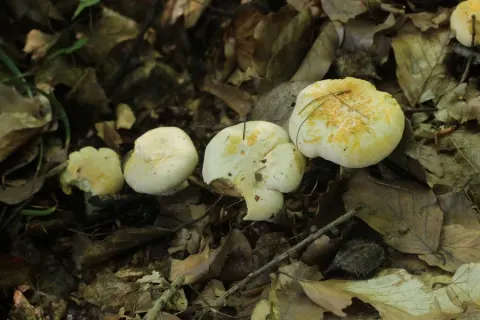
Dokumentasi Cantharellus lateritius menurut asosiasi foto pada record takson iNaturalist. Kredit: mycowalt. Identitas mengikuti sumber; bukan penentuan spesimen independen.
- Jenis
- Fotografi
- Kredit
- (c) mycowalt, some rights reserved (CC BY-SA), uploaded by mycowalt
- Lisensi
- CC BY-SA 4.0
- Sumber media
- Buka entri sumber
Dokumentasi tambahan
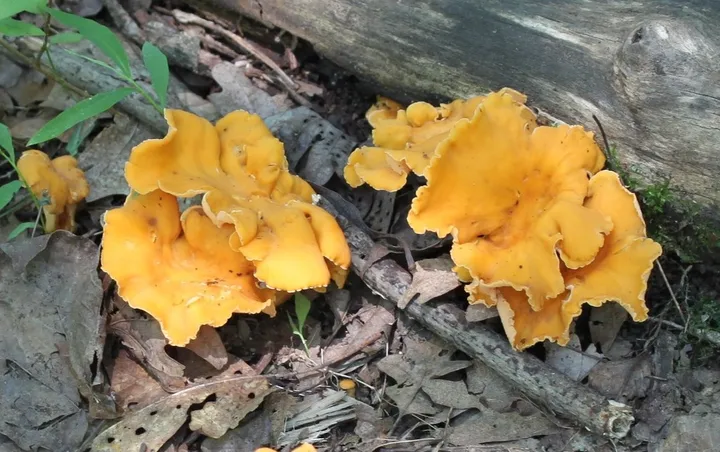
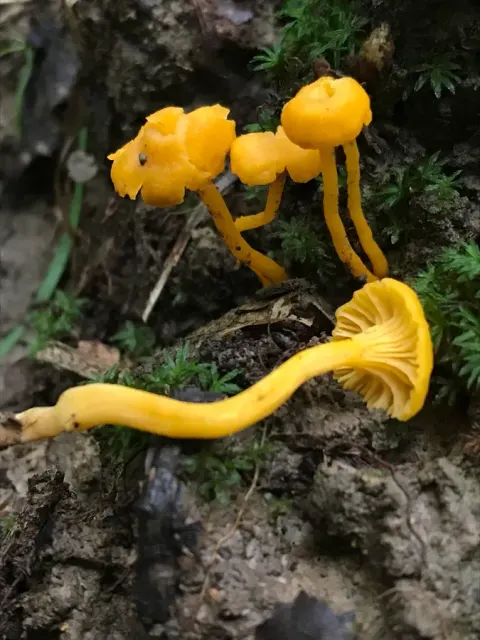
Foto yang diasosiasikan dengan Cantharellus lateritius pada iNaturalist. Identifikasi mengikuti sumber; bukan penentuan spesimen independen.
Kredit dan penggunaan
(c) Fluff Berger, some rights reserved (CC BY-SA), uploaded by Fluff Berger
Ukuran dan format gambar disesuaikan tanpa pemotongan, retus, atau penambahan skala. Lisensi sumber dipertahankan.
Sumber profil
- [1] Cantharellus lateritius — Wikipedia (en)
- [2] Catalogue of Life Base2026-09-11 — Cantharellus lateritius
- [3] Dokumentasi visual — Cantharellus lateritius
- [4] Dokumentasi visual — Cantharellus lateritius
Rujukan halaman ini
Fungi. Cantharellus lateritius. Rilis data fungi-2026-10-12-expansion-2. https://fungi-atlas.mgadib.chatgpt.site/jamur/cantharellus-lateritius/.
Status: impor sumber; pemeriksaan editorial per profil belum selesai. Untuk klaim biologis, gunakan rujukan pada bagian terkait dan periksa konteks sumber aslinya.