Ciri dan struktur
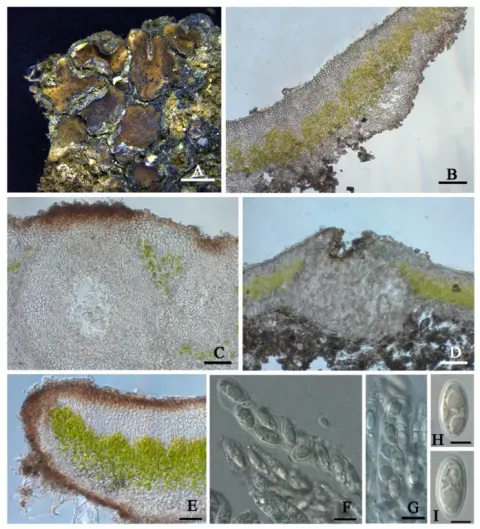
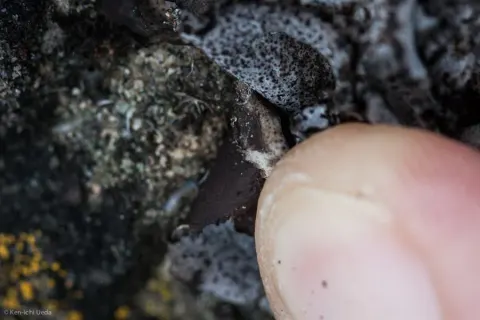
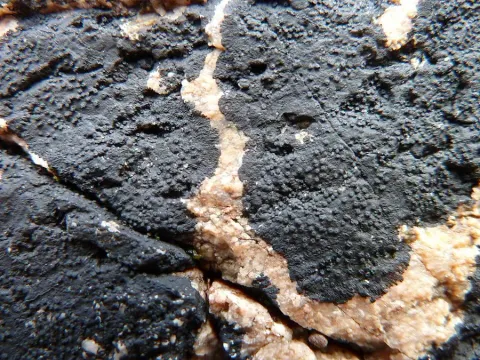
Catapyrenium boccanum is a characterised by scattered to contiguous (scale-like structures) that measure 2–4 mm across. These squamules are firmly attached to their substrate throughout most of their area, though they may have slightly upturned margins. They are irregularly circular (orbicular) or somewhat lobed in shape. The upper surface displays a brown colouration that can be matt or slightly glossy in appearance. The lower thallus surface is distinctively black all the way to the margin, creating a visible dark rim around each squamule. The lower (protective outer layer) consists of round to somewhat angular cells. The rhizoidal hyphae (fungal filaments that anchor the lichen) are colourless. Reproductive structures of C. boccanum include immersed perithecia (flask-shaped fruiting bodies), with an (outer wall) that is pale except around the ostiole (opening). The asci (spore-containing structures) are cylindrical in shape. The (sexual spores) measure 12–16 by 5.5–7.5 μm, are ellipsoidl in shape, and arranged in a single row (). The species also produces pycnidia (asexual fruiting bodies) that are (situated on the surface) and immersed. These structures contain cylindric-ellipsoidal conidia (asexual spores) that are 3–4 μm in length.
Habitat dan peran ekologis
In Europe, the lichen has a largely Mediterranean distribution, although scattered records are known from western and southern Europe. It is also found in Turkey. Catapyrenium boccanum is quite rare in the United Kingdom, known only from single collections that were made in South Devon and Somerset.
- Habitat atau konteks temuan
- Informasi belum tersedia pada sumber rilis ini.
- Substrat
- Informasi belum tersedia pada sumber rilis ini.
- Peran atau konteks
- Pembentuk liken
Reproduksi
Reproductive structures of C. boccanum include immersed perithecia (flask-shaped fruiting bodies), with an (outer wall) that is pale except around the ostiole (opening). The asci (spore-containing structures) are cylindrical in shape. The (sexual spores) measure 12–16 by 5.5–7.5 μm, are ellipsoidl in shape, and arranged in a single row (). The species also produces pycnidia (asexual fruiting bodies) that are (situated on the surface) and immersed. These structures contain cylindric-ellipsoidal conidia (asexual spores) that are 3–4 μm in length.
Catatan identitas dan cakupan
- Nama diterima mengikuti Catalogue of Life Base2026-09-11; uraian mempertahankan konsep dan nama sumber aslinya.
- Original geographic, specimen and life-cycle scope retained; source import awaits individual editorial review.
- Impor dan terjemahan otomatis belum diperiksa editorial per profil. Struktur reproduktif yang disebutkan tidak membuktikan seluruh siklus hidup diketahui.
- Pengukuran pada uraian mengikuti spesimen, kultur, dan metode sumber; angka tidak diperluas ke semua populasi.
Catatan distribusi dalam narasi mengikuti sumbernya. Dokumentasi spesimen atau foto mengikuti catatan sumber. Bukti wilayah Indonesia dan penilaian konservasi tidak disimpulkan dari gambar.
Melihat dengan konteks
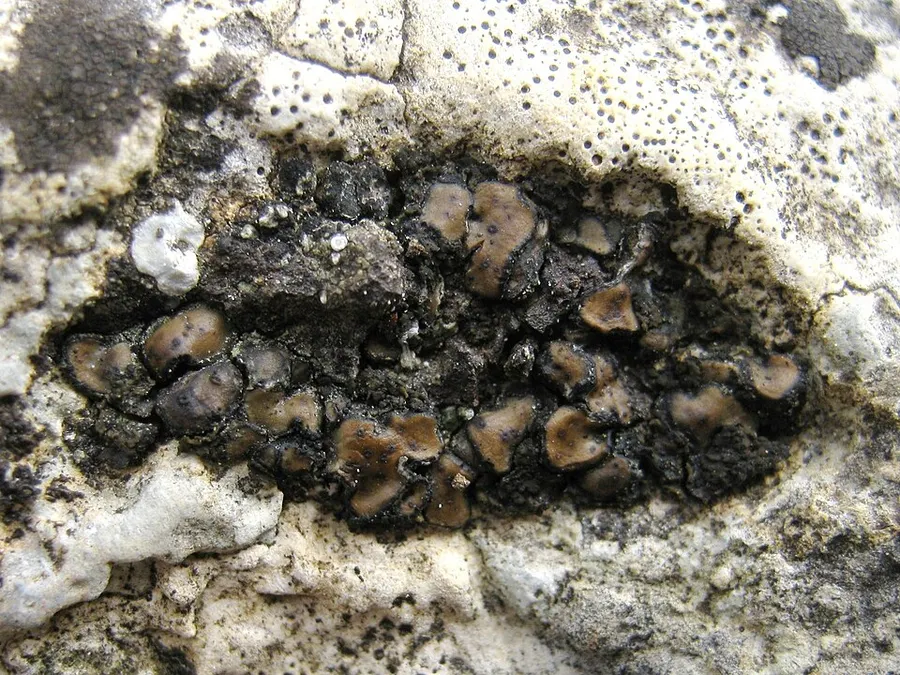
Dokumentasi Catapyrenium boccanum dari Wikimedia Commons. The squamulose lichen Catapyrenium boccanum , growing in a depression of a calcareous rock; photographed in Planalto das Cezaredas, Portugal Identifikasi mengikuti record berkas sumber.
- Jenis
- Fotografi
- Kredit
- zaca (Zaca Lepista)
- Lisensi
- CC BY-SA 3.0
- Sumber media
- Buka entri sumber
Sumber profil
- [1] Catapyrenium boccanum — Wikipedia (en)
- [2] Catalogue of Life Base2026-09-11 — Catapyrenium boccanum
- [3] Dokumentasi visual — Catapyrenium boccanum
Rujukan halaman ini
Fungi. Catapyrenium boccanum. Rilis data fungi-2026-10-12-expansion-2. https://fungi-atlas.mgadib.chatgpt.site/jamur/catapyrenium-boccanum/.
Status: impor sumber; pemeriksaan editorial per profil belum selesai. Untuk klaim biologis, gunakan rujukan pada bagian terkait dan periksa konteks sumber aslinya.