Ciri dan struktur
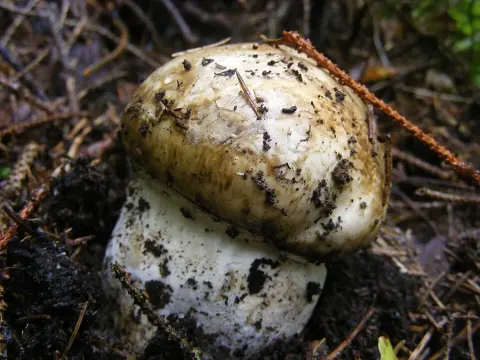
The genus includes the commoner C. imperiale and C. ventricosum, but the type species, C. evanescens, seems extremely rare. In 1914 it was only known from the location of the initial find, which is at an altitude of 3500 m. in the Medicine Bow Mountains of Wyoming. It is distinguished from the other species because the gills are fairly distant ("subdistant") and because it has a large persistent volva around the base of the stipe. The species name may refer to the evanescent ring. The following summary is taken from Mrs. Lovejoy's original description. Cap: 13 cm, broadly convex, white (but cream in the center). Gills: White, very decurrent, "subdistant", with short and long ones mixed. Stem: White, thick (4 cm.) but very short (1 cm.), with bulbous base, delicate evanescent ring, and large white persistent volva. Spores: smooth, white, elliptical to fusiform, 14 - 17.5 × 3 - 5 μm.
Habitat dan peran ekologis
Genus ini termasuk jenis biasa C. imperiale dan C. ventricosum, tetapi spesies tipe, C. evanescens, tampaknya sangat jarang. Di 1914 hanya diketahui dari lokasi temuan awal, yang berada di ketinggian 3500 m. di Medicine Bow Mountains of Wyoming. It is distinguished from the other species because the gills are fairly distant ("subdistant") and because it has a large persistent volva around the base of the stipe. Nama spesies mungkin mengacu pada cincin yang hilang. Ringkasan berikut diambil dari Mrs. Deskripsi asli Lovejoy. Kap: 13 cm, lebar konveksi, putih (tetapi krim di tengah). Gills: Putih, sangat mengalir, "jauh", dengan pendek dan panjang dicampur. Batang: Putih, tebal (4 cm.) tetapi sangat pendek (1 cm.), dengan dasar bulbous, cincin evanescent halus, dan volva besar putih yang bertahan. Spor: halus, putih, eliptik hingga fusiform, 14 - 17.5 × 3 - 5 μm.
- Habitat atau konteks temuan
- Informasi belum tersedia pada sumber rilis ini.
- Substrat
- Informasi belum tersedia pada sumber rilis ini.
- Peran atau konteks
- Belum dikategorikan pada rilis ini.
Reproduksi
Cap: 13 cm, broadly convex, white (but cream in the center). Gills: White, very decurrent, "subdistant", with short and long ones mixed. Stem: White, thick (4 cm.) but very short (1 cm.), with bulbous base, delicate evanescent ring, and large white persistent volva. Spores: smooth, white, elliptical to fusiform, 14 - 17.5 × 3 - 5 μm.
Catatan identitas dan cakupan
- Nama diterima mengikuti Catalogue of Life Base2026-09-11; uraian mempertahankan konsep dan nama sumber aslinya.
- Original geographic, specimen and life-cycle scope retained; source import awaits individual editorial review.
- Impor dan terjemahan otomatis belum diperiksa editorial per profil. Struktur reproduktif yang disebutkan tidak membuktikan seluruh siklus hidup diketahui.
- Pengukuran pada uraian mengikuti spesimen, kultur, dan metode sumber; angka tidak diperluas ke semua populasi.
Catatan distribusi dalam narasi mengikuti sumbernya. Dokumentasi spesimen atau foto mengikuti catatan sumber. Bukti wilayah Indonesia dan penilaian konservasi tidak disimpulkan dari gambar.
Melihat dengan konteks
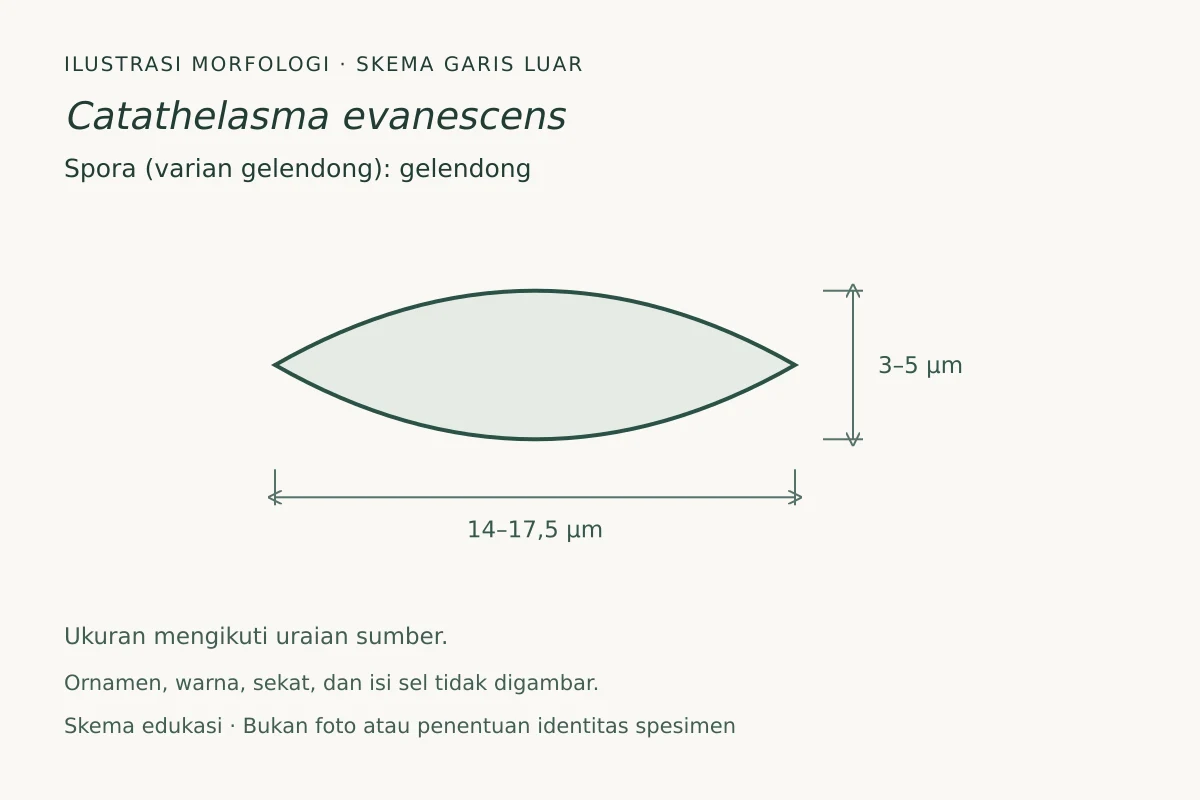
Ilustrasi skematis garis luar spora (varian gelendong) Catathelasma evanescens, berdasarkan uraian sumber; ukuran yang dilaporkan 14–17,5 × 3–5 µm. Proporsi disederhanakan, bukan salinan satu spesimen. Ornamen permukaan, warna, sekat, dan isi sel tidak direkonstruksi. Varian spora berbentuk gelendong, 14–17,5 × 3–5 µm, dari uraian spesies C. evanescens. Spesies lain yang disebut sebagai pembanding tidak digunakan. Ornamen, warna, sekat, dan isi sel tidak digambar. Skema edukasi, bukan alat identifikasi.
- Jenis
- Ilustrasi skematis
- Kredit
- Fungi, ilustrasi orisinal (2026); fakta morfologi berdasarkan Wikipedia contributors
- Lisensi
- CC BY-SA 4.0
- Sumber media
- Buka entri sumber
Sumber profil
- [1] Catathelasma evanescens — Wikipedia (en)
- [2] Catalogue of Life Base2026-09-11 — Catathelasma evanescens
Rujukan halaman ini
Fungi. Catathelasma evanescens. Rilis data fungi-2026-10-12-expansion-2. https://fungi-atlas.mgadib.chatgpt.site/jamur/catathelasma-evanescens/.
Status: impor sumber; pemeriksaan editorial per profil belum selesai. Untuk klaim biologis, gunakan rujukan pada bagian terkait dan periksa konteks sumber aslinya.