Ciri dan struktur
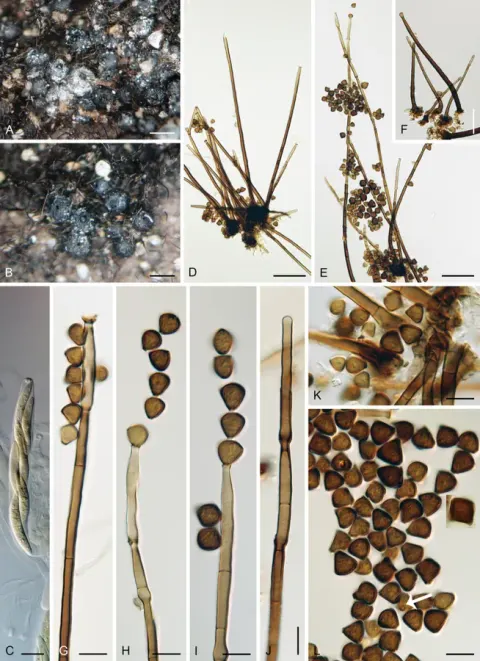
Colonies on natural substrate effuse, hairy or tufted, dark brown to black, mycelium partly immersed, partly superficial, brown; colonies composed of conidiophores, capitate hyphae and sometimes ascomata. Anamorph. Conidiophores 100–350(–530) × 6–7.5(–8) μm, 8.5–10.5 wide above the base, macronematous, solitary or in tufts, with dark brown stromatic hyphal cells around the bases, erect, straight or flexuous, unbranched, brown to dark brown, thick-walled, slightly paler towards the apex. Capitate hyphae 110–160 × 5.5–6 μm, 6.5–7 μm wide above the base, scattered among the conidiophores, erect, straight, brown to dark brown, paler towards the apex, apical cell sterile, thin-walled, subhyaline, slightly swollen, ca. 7 μm wide, broadly rounded with a hyaline gelatinous cap that disappears with age. Conidiogenous cells 40–59 × 5.5–6.5 μm, not tapering, terminal, integrated, monophialidic, extending percurrently, cylindrical, brown, producing conidia successively; collarettes 9.5–12.5 μm wide and 10–12.5 μm deep, funnel-shaped, brown, slightly roughened, with an irregularly frayed margin. Conidia (9–)10.5–13.5 μm long, 7–9.5 μm wide at the apical end, 3.5–4.5 μm wide at the basal hilum (mean ± SD = 11.8 ± 0.7 × 8.0 ± 0.6 μm × 4.0 ± 0.3 μm), cuneiform in side view, with (3–)4(–5) blunt corners when viewed from above, flattened to broadly rounded at the apex, truncate at the base, aseptate, fulvous, brown to dark brown, thick-walled, smooth; formed singly, adhered in basipetal chains.
Habitat dan peran ekologis
Saprobe on decaying wood of Carpinus betulus, Fagus sylvatica, Fraxinus excelsior, Hedera sp., Ilex sp., Quercus sp., Salix alba, Ulmus sp. and other unknown hosts. Most of the records originate from Europe in Belgium, Czech Republic, France, Slovak Republic and the United Kingdom (Berkeley and Broome 1871; Hughes 1965; Holubová-Jechová 1973; this study). Hughes (1965) suggested that C. cupulifera is apparently only known from Europe. However, findings of this species also come from other continents. Catenularia cupulifera has been reported from foam in a river in Venezuela (Fernández and Smits 2018), wood of Ulmus americana in the USA, Illinois (Shim 1969) and decaying leaves of Pandanus sp. in Mauritius (Whitton et al. 2012).
- Habitat atau konteks temuan
- Informasi belum tersedia pada sumber rilis ini.
- Substrat
- kayu
- Peran atau konteks
- Belum dikategorikan pada rilis ini.
Reproduksi
Colonies on natural substrate effuse, hairy or tufted, dark brown to black, mycelium partly immersed, partly superficial, brown; colonies composed of conidiophores, capitate hyphae and sometimes ascomata. Anamorph. Conidiophores 100–350(–530) × 6–7.5(–8) μm, 8.5–10.5 wide above the base, macronematous, solitary or in tufts, with dark brown stromatic hyphal cells around the bases, erect, straight or flexuous, unbranched, brown to dark brown, thick-walled, slightly paler towards the apex. Capitate hyphae 110–160 × 5.5–6 μm, 6.5–7 μm wide above the base, scattered among the conidiophores, erect, straight, brown to dark brown, paler towards the apex, apical cell sterile, thin-walled, subhyaline, slightly swollen, ca. 7 μm wide, broadly rounded with a hyaline gelatinous cap that disappears with age.
Catatan identitas dan cakupan
- Nama diterima mengikuti Catalogue of Life Base2026-09-11; uraian mempertahankan konsep dan nama sumber aslinya.
- Preserve original treatment localities, hosts and substrate scope. Materials examined describe documented specimens, not the full global range.
- Impor dan terjemahan otomatis belum diperiksa editorial per profil. Struktur reproduktif yang disebutkan tidak membuktikan seluruh siklus hidup diketahui.
- Pengukuran pada uraian mengikuti spesimen, kultur, dan metode sumber; angka tidak diperluas ke semua populasi.
Catatan distribusi dalam narasi mengikuti sumbernya. Dokumentasi spesimen atau foto mengikuti catatan sumber. Bukti wilayah Indonesia dan penilaian konservasi tidak disimpulkan dari gambar.
Melihat dengan konteks
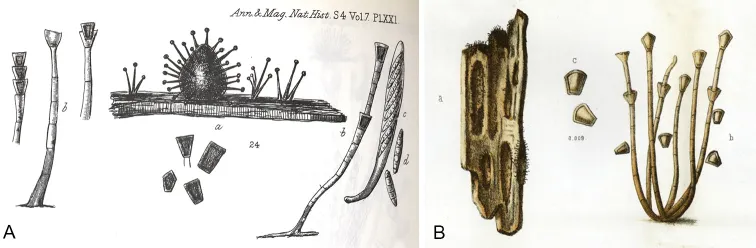
Illustrations of teleomorph and anamorph of Catenularia cupulifera A Sphaeria cupulifera: ascoma, ascus and ascospores with sporulating conidiophores (holotype, Berkeley and Broome 1871) B Psilonia cuneiformis: conidiophores with conidia (holotype, Richon 1877).
- Jenis
- Pelat ilmiah
- Kredit
- Martina Réblová, Jana Nekvindová, Andrew N. Miller
- Lisensi
- CC BY 4.0
- Sumber media
- Buka entri sumber
Dokumentasi tambahan
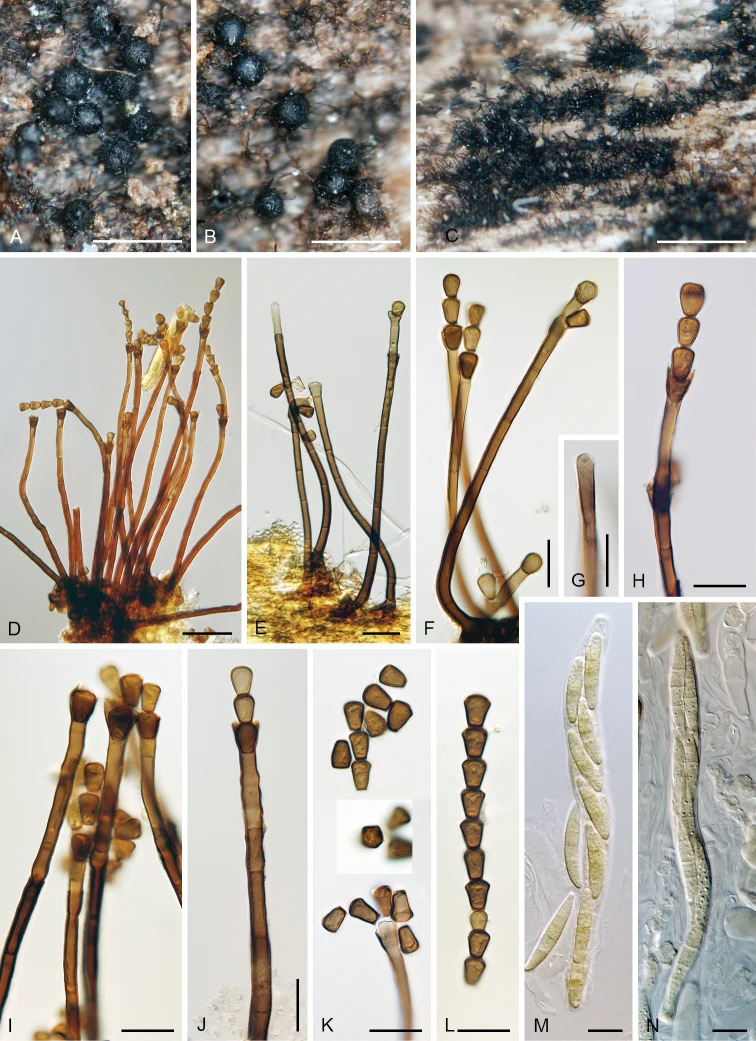
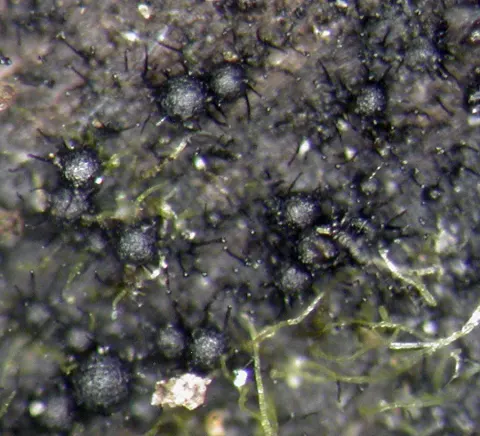
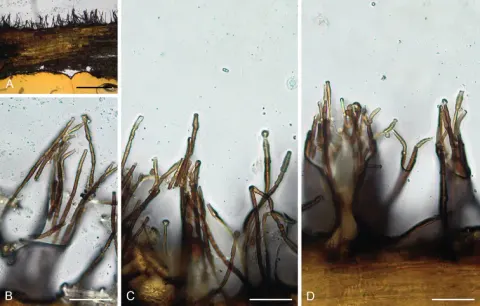
Catenularia cupulifera A, B ascomata accompanied by conidiophores and capitate hyphae C colony composed of conidiophores and capitate hyphae D–F conidiophores G capitate hypha H–J upper parts of conidiophores with conidia K, L conidia M, N asci with ascospores. Images: W7972 (A, B, M); W7973 (C, D, H, I); PRA -19893 (E–G, J–L); JF 99018 (N); on natural substrate (A–N). Scale bars: 500 μm (A–C); 50 μm (D); 25 (E); 20 μm (F–L); 10 μm (M, N).
Kredit dan penggunaan
Martina Réblová, Jana Nekvindová, Andrew N. Miller
Ukuran dan format gambar disesuaikan tanpa pemotongan, retus, atau penambahan skala. Lisensi sumber dipertahankan.
Sumber profil
- [1] Phylogeny and taxonomy of Catenularia and similar fungi with catenate conidia — Catenularia cupulifera
- [2] Catalogue of Life Base2026-09-11 — Catenularia cupulifera
- [3] Dokumentasi visual — Catenularia cupulifera
- [4] Dokumentasi visual — Catenularia cupulifera
Rujukan halaman ini
Fungi. Catenularia cupulifera. Rilis data fungi-2026-10-12-expansion-2. https://fungi-atlas.mgadib.chatgpt.site/jamur/catenularia-cupulifera/.
Status: impor sumber; pemeriksaan editorial per profil belum selesai. Untuk klaim biologis, gunakan rujukan pada bagian terkait dan periksa konteks sumber aslinya.